
Translated material
ISS - for 20 years in orbit! Here are the most interesting events from her story
Cave on Bowie, Padalki Record, Cosmic Marathon
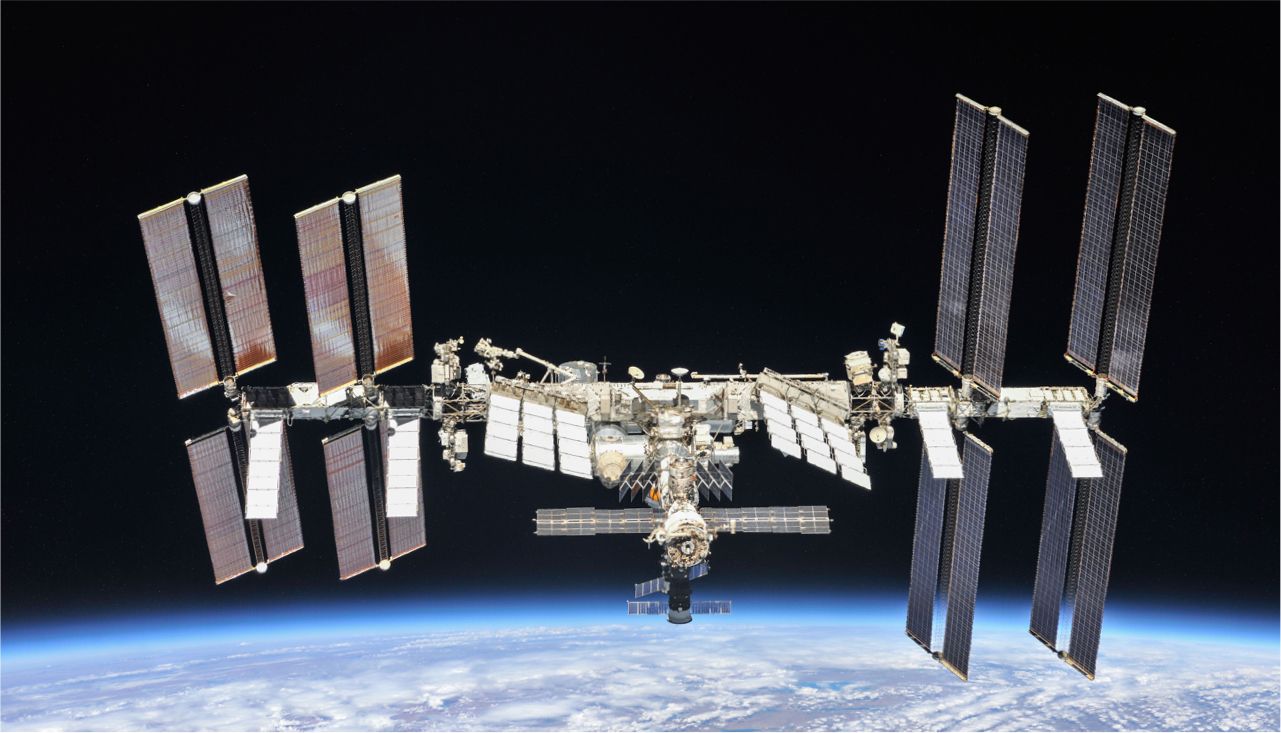
On November 20, 1998, the first element of the International Space Station (ISS) - a large orbital complex created by the joint efforts of Russia and the United States was brought into orbit. Since then, almost all space powers took part in the work of the ISS, and dozens of people visited the station. Medusa talks about six cosmonauts and astronauts, whose flights to the ISS were especially memorable.
Gennady Padalka
878 days in space; He flew to the ISS in 2002-2015
The Padalka spent more time in space than any other astronaut - 878 days (almost two and a half years!). He began to fly even at the Mir station, but spent more time on the ISS. In the first flight in 2002, the Padalka went out into outer space four times. In the next three expeditions - four more times.
In 2012, while at the ISS, he stated that the astronauts have an instruction developed by the UN on how to behave in the first contact with aliens. “Sooner or later, we will meet the brothers in mind,” said Padalka.
In 2015, he went to the ISS for the fourth time. The union that happened inside the “Union” on the way to the space station was shot on the video. An hour after the start, the scenter, along with other astronauts (Mikhail Kornienko and Scott Kelly), made a sad conversation about their work; The video later spread widely in social networks.
Padalka*: E-mine, Gaise, for a whole year. The Whole Year, Guys.*
Kornienko*: Don't remind ...*
Padalka*: You, ***** [interjection], Hirou. You Will Be Heroes.*
Kelly*: Yes.*
Padalka*: Everything will be fine there, don't worry.*
(...)
Padalka*: Oh, *** [interjection] ... I always like it, ***** [interjection]: wires, starts, and then I think: ***** [why] I am going here?*
Kornienko*: Ha ha, yes. Then heavy everyday life and kirdyk come.*
Padalka*: Interesting there: children below, girls, escort, tears. And I think: we need it, huh?*
Kornienko*: Yes, when you arrive, depressed. And then nothing, it seems to be dispersed.*
Padalka*: Nothing, *** [interjection], yes.*
Kornienko*: This is fine. Normal condition.*
Padalka*: But I am all, ****** [end], the last time ***** [interjection].*
Kornienko*: Ha ha ha. Ivanovich.*
Padalka*: What, *** [interjection]?*
Kornienko*: Come on - when you get out again, you have a bottle.*
Padalka*: YES, Guys. Guys, itʼs True. ITʼS My LAST FLIGHT. All. Itʼs so, guys.*
Kornienko*: I hear it from you for the tenth time.*
Padalka*: Well, well.*
Kornienko*: We live while we work, fly. On the sofa lay ... and Kirdyk, *** [interjection]. So do not be forgotten. In, 270 kilometers to the station. And there they are waiting for us already. We will open canned food, eat.*
Padalka*: Lamb, ***** [interjection]. Hot tea.*
In April 2017, the Padalka left a detachment of astronauts due to a conflict with the center of training of astronauts. He published an open letter in which he accused the head of the center of unprofessionalism.
Attention! In this video there is a mat. If it seems unacceptable to you, look at the video for the song by David Bowie from the next slide.
Chris Hatfield
165 days in space; Fly on the ISS in 2012-2013
Chris Hatfield is the first Canadian who went into outer space and, apparently, the main popularizer of space research and the ISS of recent years.
In 2013, while on the ISS, he recorded a cover version of David Bowie “Space Oddity” and shot a clip on it-in the video an astronaut with a guitar in his hands moves around the station and shows what the earth looks like from it. By November 2018, the clip collected about 42 million views.
In 2015, Hatfield published the documentary book “The Astronaut’s Guide on Life on Earth. What they taught me 4,000 hours in orbit. ” In it, he spoke about preparing for the ISS flights, communicating with Russian astronauts, sensations from outer space. “Going into outer space is almost like climbing the mountain, lifting the bar, repair a small machine and fulfill the intricate ballet pa,” wrote Hatfield. “And do it all at the same time.”
Gemini Kelly
Scott Kelly - 520 days in space; He flew to the ISS in 2007-2016; Mark Kelly-54 days in space, flew to the ISS in 2007-2011
The twin brothers and military pilots Scott and Mark Kelly got into the Astronaut group in 1996. Since then, they flew into space on the shuttle of Discovery and in the Union - and participated in the assembly of the ISS modules (now it consists of 15 main modules). In 2011, the brothers were supposed to meet in orbit for the first time, but the start of the ship with the crew of Mark was postponed and the meeting did not take place.
In 2015, NASA began an experiment in which it was supposed to evaluate how long -term stay in space affects a person; One of its participants was Scott Kelly - he spent 340 days at the ISS. The lack of gravity greatly affects the body: in a person, muscles atrophy, every month it loses one and a half percent of bone mass, worsens vision, the heart weakens.
During the year, NASA experts monitored changes in the brothers' body. They found that a long stay in space negatively affected the memory, slowed down the pace of bone formation, changed the composition of microflora in the intestines - but at the same time it could lead to rejuvenation of cells. After returning from space, all these effects disappeared.
Having stayed in space for almost a year, Kelly managed to dress up in a gorilla costume to chase the ISS for colleagues.
Sunita Williams
321 days in space; Fly on the ISS in 2006-2012
On April 16, 2007, Sunita Williams was the first to run in space in space in history. It started simultaneously with the beginning of the Boston Marathon (at that moment the ISS was above the Pacific Ocean) and after 4 hours 23 minutes overcame 42 kilometers of 195 meters (the ISS flew over Russia). For running in zero gravity, a special simulator with mounts to the body was created to simulate the effect of gravity.
In addition, Williams remains the owner of a record among women to the ISS: she made seven outputs into outer space and spent more than 50 hours there.
After it, marathon races on the ISS became a tradition. In 2016, the British Tim Peak set a new record; He ran a marathon for almost an hour faster Williams - in 3 hours 35 minutes.
Donald Petit
369 days in space; He flew to the ISS in 2002-2012
Now, at the age of 63, petite is the oldest active astronaut in NASA. Seven years ago, while at the ISS, he began to conduct a series of experiments “Science Off the Sphere”. Each experiment was recorded on the video and posted on one or two weeks on the Internet. For example, he checked whether it is possible to play yo-yo on the ISS or what will happen if the load on the spring is swinging. A year later, pettitis launched birds from the Angry Birds Game to the ISS to explain how an object launched in zero gravity (and advertise the game) would behave.
Petit was not only in space, but also in Antarctica-in 2006-2007 he participated in an expedition who was looking for meteorites there; At some point, the astronaut, in particular, had to carry out the work of the dentist. He also invented a mug with zero gravity - to calmly drink coffee in zero gravity.
Daniil Turovsky