
Translated material
The largest oil spill occurred on the Husky platform off the coast of Canada
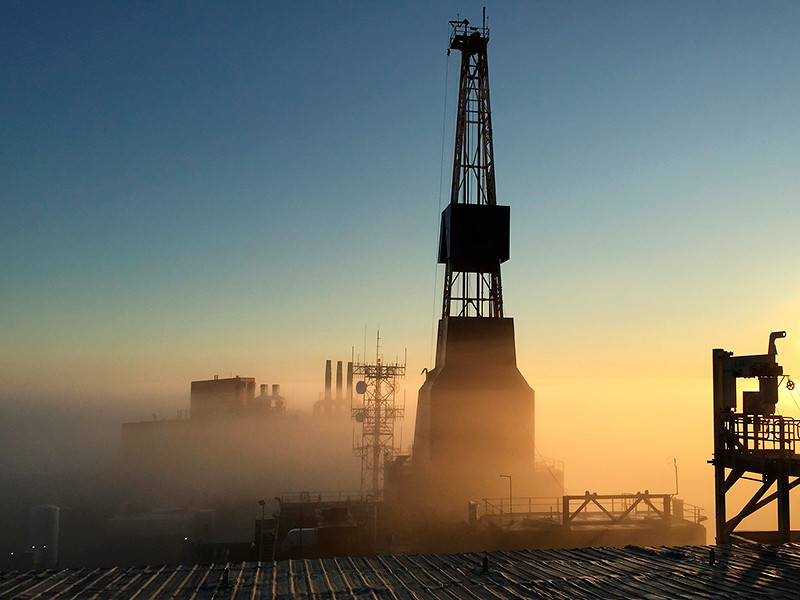
On the Husky Energy platform, the largest shelf oil spill in the history of Canadian Newfoundland occurred. Experts calculated that the leakage volume was 250 cubic meters (250 thousand liters). This was reported by the Canadian Press portal.
Oil spill occurred on November 16 due to the strongest storm. People working on the platform reported a sharp decrease in pressure in the underwater pipeline. All platforms on the shelf were closed for unscheduled inspections. Experts began an investigation into the incident. Ecologists monitor the impact of what happened on Flora and Fauna. According to the source, so far only four birds were noticed, the plumage of which was stained with oil. At the moment, oil leaks are not observed.
According to representatives of environmental organizations, officials have repeatedly stated that they are able to protect oceans from risks associated with the spill oil, but in practice everything is more complicated. “In extreme weather, it is impossible to determine how much oil it was shed, much less trying to clean the ocean. And this is the worst of the possible scenarios,” said the representative of Greenpeace Canada Kate Stuart.
Representatives of the Husky Energy initially refused to comment, which caused the discontent of the Minister of Natural Resources of Canada Shiban Cody. “They are obliged to report what is happening, and what they are doing to eliminate the consequences of the incident,” said Cody, the words of which are quoted by CBC News . According to her, the absence of a clear leak may mean that oil was mixed with water: an underwater shooting will be carried out to assess the damage, according to the results of which it will be possible to establish the presence or absence of a constant leak.
Husky Energy published on her website a press release about the situation on the platform only on November 19. It follows that oil production operations are suspended due to operational safety problems as a result of difficult weather conditions. The company involved a remotely controlled underwater apparatus to inspect the flow lines and confirm the leak source.
After the initial spill of other traces of oil on the surface, no surgery was found. The company, the Sea Oil Council of Canada and the provinces of Newfoundland and the authorities of the Canadian coastal protection continue to monitor oil and influence on the wild. "Personnel safety and environmental protection remain the priority number 1 for Husky," the press release says.
According to the Executive Director of the Canadian Committee for the Supervision of the Shelphus Production of Oil, Scott Tesye, the province was caught by a strong hurricane, and weather conditions remained dangerous the next day. The height of the waves reached 8.4 meters, at a time when the employees of the SEAROSE oil production platform tried to resume production. “We will carefully study this incident, and investigate all the circumstances of the case,” said Tieta.
In the ward of the assembly, the question was raised about why SEAROSE tried to resume work during the storm. In response to this, Tesie replied that the company itself was made by the decision to resume the work, and it is not required by the regulation of the regulatory advice. Each New Foundland oil company is making its own decisions to stop and launch the oil pipeline in a storm. In such situations, companies are required to follow the plans for security plans. Whether the Husky Energy has adhered to the safety and environmental protection plan is unknown. "If they acted in accordance with the protocol, then the protocol is time to change," said Minister Cody.
This is the second incident since the beginning of the year related to the work of the company. In January, the production on the platform was suspended due to the Iceberg incident, which came too close to the platform. The Committee intends to establish whether the operator’s problems are systemic, and to withdraw his license for operation in case of a positive answer. The Canadian government also conducts its own investigation of the incident.
Another incident associated with the oil refining industry in Canada occurred in October of this year at the largest NPA of Canada in the city of Saint-John, the province of New Brahsuik, where the explosion thundered. According to local residents, a fire occurred at an enterprise owned by Irving Oil, strong smoke and fire were visible. It was not reported about the victims, it is known that the oil refinery was closed to planned inspection from October 1.