
Translated material
It won't be worse
Economist Vladislav Inozemtsev offers his view to the question of our discussion: what Putin hopes for
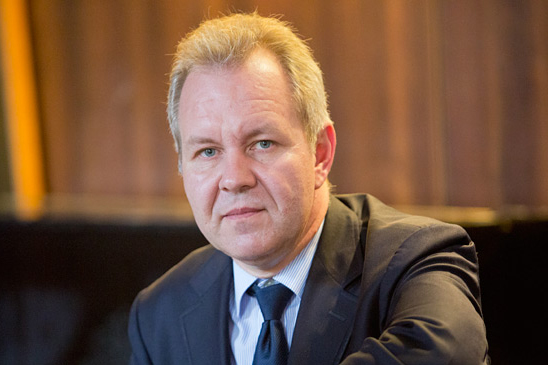
A decrease in approval indicators of both Vladimir Putin and the ruling party, caused by the far from brilliant state of the domestic economy, raising the retirement age and the constant growth of taxes and prices, forced experts to once again think about what the president hopes, what his further steps will be and what Russia awaits “after Putin”.
Star
The latest actions of the authorities differ significantly from everything that we saw during the crises of 2008/09 and 2011/12, no matter how different the crises may be. In the first case, the authorities, horrified by the upcoming economic collapse, carried out the most large -scale financial injections into the economy in the entire post -Soviet history, holding the incomes of the population at the pre -crisis level and even slightly raising them, which was not able to any of the Western countries (then Yegor Timurovich Gaidar Giidar, wrote about the crisis and departure from it). In the second case, the Kremlin went to the reform of the electoral system, returned the elections of governors in an attempt to keep the political situation under control, which, it should be admitted that he also completely succeeded. Now we are observing a completely opposite picture: neither in the economy nor in politics no concessions, not to mention changing the course, is expected: taxes will continue to grow (even with a surplus budget), and unpopular candidates will be pushed to power posts (although the “opposition” are no less contractual).
Why is the bet on the “hard” option this time? In my opinion, there are a number of reasons.
Firstly, Putin is not that he lost a sense of reality-he, in my opinion, was finally convinced that he was not managing the people, but an amorphous mass, which had long ceased to feel his own subjectivity. And he is right, if we compare the speeches against pension reform with events in France in 1995, and the reaction to taxes and prices with the same France, but already today. He does not expect opposition to his policy, and the ratings of popularity mean nothing in a society where there are no, if not elections, then the opposition.
Secondly, the president, observing the tightening sanctions, an unstable price of oil and a stagnant economy, probably hopes for a miracle that has happened to what happened many times during his reign. And he himself and his closely became economists in the sense that follows from a famous joke (“How do we cope with the fall of citizens?” Asks the Russian, the American. Improve Investment Climate - It's Only About Economy. Just Economy! - answers the one. Thank you! Icons, so icons! ”). And therefore, the president’s next trip to his confessor is all that we can expect in response to economic problems.
Thirdly, it should be borne in mind that the political course in the country today determines the sect of the so-called “methodologists”, headed by Sergei Kiriyenko, whose basic principle of the effect is to create the situation of role-playing games, where the customer is gradually gradually placed in an increasingly critical situation, and then must find a way out of it. Today we observe the first phase of this process, and while it looks quite controlled, and still far from the real crisis.
Fourth, pressure from the outside world, which many in Russia hoped, as an accelerator of changes, is exhausted: the West does not see the reasons to sacrifice their interests to undermine the stability of the regime against which its own citizens are very reluctant. Radical measures such as disconnecting Russia from international financial clearing systems or an embargo for importing energy supplied to it look unrealistic.
The main threat to him is now not subjects, but a bureaucracy, since the growth of its unproductive expenses, which are a kind of “loyalty fee”, is able to ground the effect of any increase in taxes
Choosing Putin
All these circumstances force me to believe that in the near future the situation will continue to deteriorate - and almost certainly not all the “trump cards” of Vladimir Putin are still taken out of the sleeve (for example, constitutional reform remains on the agenda, which should provide him with lifelong power). However, I still do not see the reasons for such a deterioration to cause some revolutionary changes: if we look at the history of all post-Soviet countries, including the most difficult moments and the poorest of these states, we will not see a single example of large-scale destabilization caused by purely economic problems-all the more so (as an increase in retirement age, inflation or taxes) citizens. Therefore, I do not think that the president will need to occupy Belarus and start a war somewhere in Africa to support his rating. The main threat to him is now not subjects, but bureaucracy, since the growth of its unproductive expenses, which are a kind of “loyalty fee”, is able to zero the effect of any increase in taxes: the growing budget expenditures have not been covered by the physical increase in public goods they provided, and in this direction the matter will only worsen. It is on whether it will be possible to change something here, ultimately depends on the survival of Putinism, for which the population is increasingly losing any meaning.
The most diverse intra -elite groups will find ways to unite, and even be readiness to mutually limit their claims to the wealth they taken from the people in order to minimize the threats of a political explosion
The strength of the system
Will the system existing in Russia destroy in the coming years? In my opinion, no, and for two reasons.
On the one hand, the economy showed itself much more stable than many expected, even in very difficult conditions. Oil will be in demand for a long time, and manipulating the ruble with stagnant growth and low inflation allows for a long time to ensure financing government spending. On the other hand, we live in a state captured by the mafia, which does not have a way back to normality: even Russian laws adopted in the interests of this elite are violated so shamelessly that the collapse of the regime will not survive in its current status (albeit not hierarchical, but at least property) of those who consider themselves now the owners of life. Therefore, I am sure that the most diverse intra -elite groups will find ways to unite, and will even show a willingness to mutually limit their claims to the wealth they taken from the people in order to minimize the threats of a political explosion.
Thus, Putin’s visible calmness regarding the situation both in the country and in the world has several reasons, and none of them can be considered unfounded. The modern Russian political regime secured a fairly strong foundation for itself, and the lifelong rule of its creator seems to be very probable.
It will no longer be worse than it is, and both the way from the North Pole leads to the south, so any option of collapse of the existing regime will mean a change for the better
The choice of Russia
The last question, which is discussed very often today, concerns what will happen to the country if the regime for some reason collapses. Is it worth it to say that if Putin does not become, then there will be no Russia, as the first deputy AP, and now the speaker of the State Duma) Vyacheslav Volodin stated at one time? Of course, no: Russia was, there is, in one form or another, it will remain for many centuries. It can bother or expand slightly in geographically - however, given its history, it should be recognized that the spatial factor is not the main one for national identity. Assessing the consequences of Putin's rule, in my opinion, it is worth focusing on something else.
Russia many times ended up in power (and sometimes, in fact, in the property) of narrow elite groups - but when the group previously disposed of the country was so criminal and so inadequate to the tasks of its development. For twenty years, she launched society from the future to the past, correct all the principles of social justice and marginalized Russia in the international arena. Today, the regime is able to protect this state of affairs for quite some time, but it is unlikely that the next elite group will be able to maintain this trend. Experts, frightening that “after Putin” Russia will become even more aggressive, closed, and oligarchic, forget one pattern, which is consistently manifested in Russian history: after the stage of over -the -wings, the time of relaxation follows, after the increase in the external world - the era of search for ways of cooperation with it. These periods can be replaced quickly: how much time has passed since the first Crimean war before the great reforms? From the "case of doctors" to the Khrushchev thaw? From the Andropov attempt to “drag the nuts” to the apotheosis of perestroika? Russia is developing on the principle of the “pendulum”, and the more this pendulum deviates from the state of balance, the stronger its fluctuation in the opposite direction is after the moment of force that holds it in an unnatural state is weakening (in fairness it must be said that this applies to both the reaction periods and the reforms). I think that there is no reason to fear large -scale changes in Russia.
What can you be afraid today? Increasing the share of plundered public property? It's hard to imagine. The emergence of power at the helm is even less professional managers? Where did they get from after two decades of negative selection? The next department of Chechnya from Russia? This step, in my opinion, could only be welcomed. Radical concessions to the West? Against the background of reptiles in front of China, any of them seems extremely acceptable. The more I peer into the existing situation, the more my opinion is strengthened that it will no longer be worse than it, and just as any way from the North Pole leads to the south, so any variant of the collapse of the existing regime will mean a change for the best ...
Read the same:
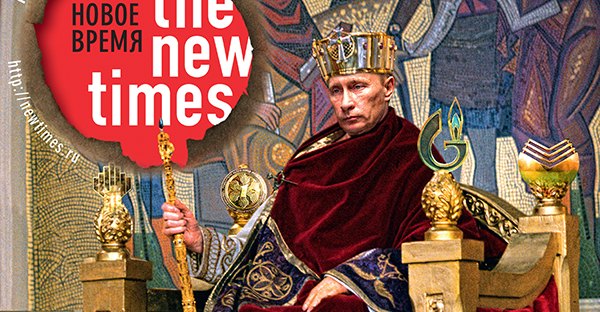
Andrey Kolesnikov, "Patriarch of All Rus' is required"
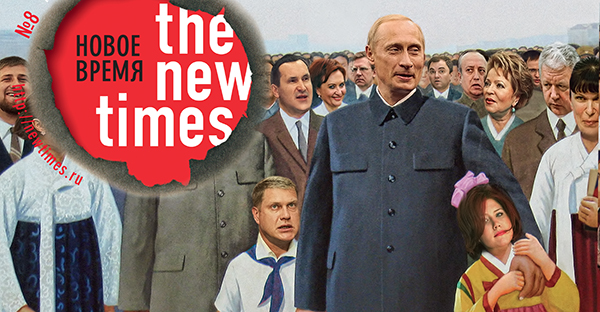
Ivan Davydov, "President and his mission"
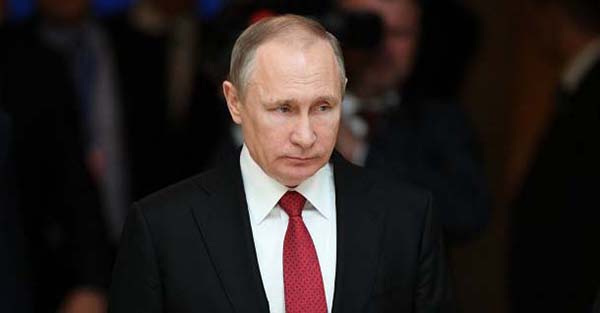
Georgy Satarov, “When will this disgrace end? - If you wait, then - for a long time "