
Translated material
Your chemistry is wrong
Russian diplomacy failed to prevent the expansion of the authority of the organization to prohibit chemical weapons (OPCO)
Now this international organization receives the right not only to document cases of using chemical weapons, but also to investigate them, to call guilty or probable suspects.
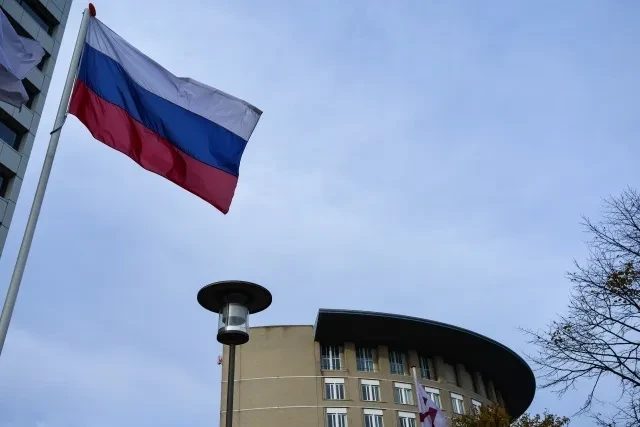
Using new powers, the OPCW will send a special expert group to Syria at the beginning of next year to investigate information about the alleged use of poisonous substances. Thus, the next international tool is being created, which is in addition to the UN Security Council in which Russia uses the right of the veto. Russian diplomacy against such a turn of events, reasonably believing that he is losing leverage.
The West insists that in March, in British Salisbury, Sergey and Julia Skripale was poisoned by Russian military intelligence agents, and in Syria the Assad regime supported by the Kremlin has used chemical weapons against the opposition.
At the 23rd Conference of the OZCHU member of the Russian OZCHU, the Russian delegation and China, who opened on Monday, made an attempt to revise the decision on the new powers of the organization, adopted on June 27 amid scandals with Skripals poisoning and a chemical attack in the Syrian city of the Duma. They proposed to create a “group of experts” to study the issue of a new role of OPCO to how the organization can start work to identify persons who committed chemical attacks. That is, to delay or completely cancel the entry into force of the expanded powers of the OPCO.
The proposal of Moscow and Beijing caused a violent discussion at the conference, which goes beyond the scope of diplomatic etiquette.
Representatives of Washington, London and Paris accused Moscow and its allies of wanting to "turn back the wheel of history."
The Permanent Representative of Russia to the OPCO Ambassador Alexander Shulgin claimed that the new OPCO functions are “illegal” and go beyond the scope of the Chemical Weapons Convention. In response, the American colleague Kenneth Ward accused him of "glaring hypocrisy."
30 out of 193 members of the organization, including Iran and Syria, voted for the Russian-Chinese proposal, 82 countries against-31 countries abstained, and ten during the vote simply left the hall. “A clear majority against the attempt to sabotage the historical June decision,” wrote a representative of Great Britain in OPCW Peter Wilson on Twitter. Similarly, the victory was welcomed by French Ambassador Philip Lallo.
And on Tuesday evening, the OPCW budget for 2019 was voting. Russia opposed its increase in comparison with the 2018 budget. Because the growth in the project by 2.1% is intended just to finance the so -called attribute mechanism to determine the guilty of the use of chemical weapons. “We are categorically against the fact that the money of the Russian Federation is used to finance activities with which we disagree for fundamental reasons,” said Ambassador Shulgin. Russia and Iran demanded a revision of the draft budget.
The results of the budget voting completed the diplomatic defeat of Russia. The project, against which she lobbied with such efforts, was approved by 99 votes at 27 against. The Russian-Iranian proposal is rejected. And the hall greeted this with applause.
The accepted budget is required for execution by all members, no matter how anyone voted.
Russia has a difficult choice. Probably freeze membership in an authoritative international organization or completely get out of it by slamming the door. Since "everything is against us." Or wait for it to fall apart, torn by contradictions.
Or, having stepped on the throat of your own song, try to connect to its new functions.
Awarded to the Nobel Prize of the 2013 World, OPCW is responsible for control over the implementation of the Convention on the prohibition of chemical weapons (KHO), which prohibits the production and accumulation of chemical weapons. Since his entry into force in 1997, it contributed to the liquidation of 96.5% of the declared global chemical weapons reserves. That is, she proved her benefit.
The new Director of the OPCU, the Spanish diplomat Fernando Arias, who took office at the end of July, admitted that the organization was experiencing a “difficult time” against the backdrop of the frequent incidents using poisonous substances.
According to Arias, the OPCO creates a “quick response mission” to investigate any use of chemical weapons in the world, as well as a “very small but very strong team” of attribution for Syria, whose work should begin at the beginning of next year. A team of a dozen experts will identify persons responsible for chemical attacks committed in Syria since 2013. Until 2017, a group of specialists from the UN and OPCU had a mandate for an investigation in Syria. But after the Russian veto in the UN Security Council, he was not extended. The OPCW will soon publish a comprehensive report on the use of chemical weapons in the city of Duma in April this year. Preliminary results indicate that chlorine, not neuro-paralytic gas, could be used there. In any case, the investigation must be carried out, and to whom it is not OPCHU to do this.