
Translated material
The world is without rules
Mark Urban, The Skripal Filies (Skripal dossier), Ben Macintyre, The Spy and the Traitor (Spy and Traitor) - what we learned and why it makes sense to read these books
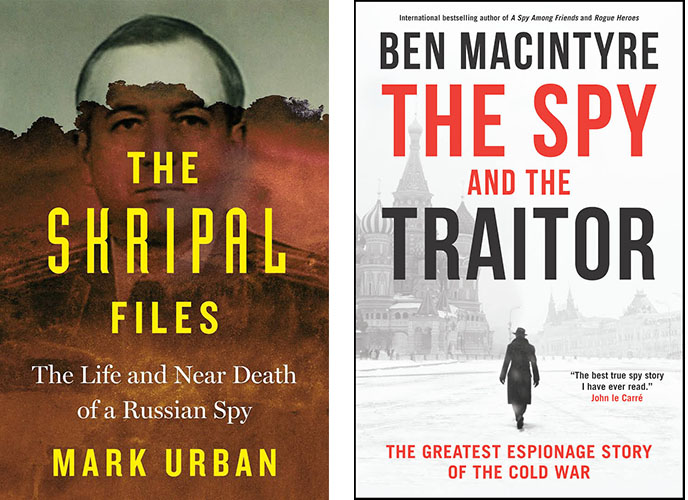
Without a doubt, the books of the British authors of Mark Urban and Ben Mcyntire about Russian rebiegers Sergey Skripale and Oleg Gordievsky, who were released in the fall one after another, have already been studied in detail in the GRU and the SVR. But these books will not disappoint a person who is far from the gloomy world of English and Russian special services.
As you know, who got access to information about their secret operations will not give any special services. Both author received unprecedented access to the primary sources, and this is not by chance.
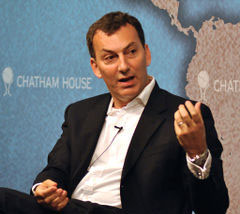
Mark Urban is the famous journalist of the Newsnight Air Force and the author of books, the best of which UK Eyes Alpha is a very critical book about British intelligence MI6 under Thatcher. Mark worked a lot in hot spots, including Afghanistan and Iraq. In his youth, he did not serve in the Royal Tank Regiment for long - the circumstance due to which he most likely got the opportunity to communicate with the former Colonel GRU Skripal, who settled after the “spy” exchange in 2010 in Britain - the Skripal curator served in one with the marriage of the unit.
Ben Mcyntair is the author of the bestseller about British intelligence, such as the “spy among friends” about Kim Filby and “Agent Zigzag” about the most famous agent of the Second World War Eddie Chapman. The Makintira today is the most popular author of the British intelligence books, and he used his authority to find out the details of the secret operations of the 70s and 80s first-hand-from MI-5 and Mi-6 retirees, which recruited Gordievsky, provided him with cover and developed a plan for its exfiltration.
The Skripalu liked the cottage, and he came to the next meeting with a detailed GRU scheme, which included the names and positions of the special services leadership. This level of information in the Mi-6 has not received 18 years since Suvorov
The story of the Skripal
The book about Skripal is based on an interview with Mark Urban, who spent many hours with the ex-colonel of the GRU in his house in the cozy town of Salisbury, as he was before people appeared with documents in the name of Petrov and Boshirov.
All the information about the Skripal - his biography in the GRU, the recruitment, the life of a double agent and, in the end, a failure - is of great interest, because the little that was known about him used to come from the FSB that put the spy into prison and, for obvious reasons, did not give out unnecessary details.
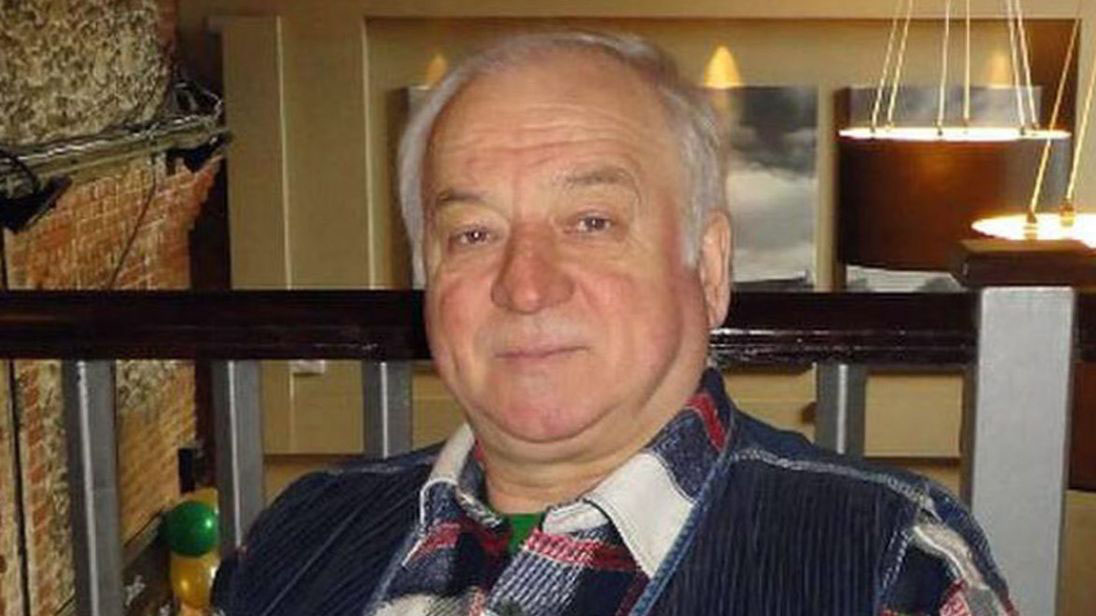
Military intelligence of the GRU, where Skripal, a graduate of the military engineering school, spent most of his career, rising from the service in the 345th Airborne Regiment to the scout position under the diplomatic cover, the most secret intelligence service in Russia. Unlike others, she never had a press service, she does not conduct briefings for journalists, no interviews with former employees-all her activities are covered with darkness. So far, only books about the special forces of the GRU and research on the history of military intelligence have been published. The most popular source about the GRU was the Aquarium Viktor Suvorov (Vladimir Rezun), an employee of the GRU residency in Geneva, who ran to the British in 1978.
The most important point in the life of a double agent is the recruitment and motives by which the scout decided to expose at a huge risk of his rather stable position in society. Viktor Suvorov claimed that the system stepped on his tail and he ran away from it. Kim Filby, the legendary spy of her Majesty’s secret service, was a convinced communist and for ideological reasons began to cooperate with the NKVD in the 1930s.
With Sergers, having made a book, everything was much easier. The colonel who served in military residency in Madrid under the guise of the post of first secretary of the embassy was recruited by the Mi-6 Pablo Miller employee in 1996. Miller Mark Urban takes in the book under the pseudonym Richard Bagnell. The Englishman introduced himself as a businessman from Gibraltar and at one of the meetings in the restaurant brought the book of Suvorov “Aquarium” - a hint that is difficult not to understand, and at another meeting a gift from London, a small model of the English cottage. The Skripal cottage liked more, and he came to the next meeting with a detailed GRU scheme, which included the names and positions of the special services management.
According to Urban, she has not received this level of information in the Mi-6 since Suvorov. The value of this information increased by the fact that Skripal personally knew some managers and, unlike Suvorov, remained in the service and had access to fresh data. In exchange for valuable information, he received money. A little - several thousand dollars at each meeting. In the 1990s, the salary of scouts looked more modest than in Soviet times, and Skripal had a moral excuse: he swore allegiance to the Soviet Union, and since there is no more country, his obligations were canceled.
When Skripal returned to Moscow, to the old headquarters of the GRU, he received a position in the personnel department, which meant access to the dossier of residencies in Western Europe. Mark Urban gives shocking details about how secret information was transmitted: for example, once, when Skripal’s wife Lyudmila went to Spain to rest, the colonel asked her to convey to his curator Pablo Miller a book. Secret information about new purposes in European residences was applied between the lines with invisible ink, which turned into a text either when heated or when applying a special reagent - a technique well known since the time of the Bolsheviks. The wife brought a souvenir from Pablo to Moscow, in which several thousand dollars were hidden. The information transmitted by the Skripal helped British special services to calculate the position of the GRU in the country.
In 1999, the colonel quit GRU and lost his vigilance. He continued to supply his curator with the information that he now received from former colleagues, but now he went to meetings abroad himself. A few years later he was arrested by the FSB, and then, as you know, he was exchanged for Russian illegal immigrants caught in the United States.
What is quite unusual for such books, the author does not try to make a hero from the Skripal, and honestly talks about his motives. Therefore, it looks so strange that Mark Urban calls Pablo Miller, with whom he has been familiar with a fictional name for decades. It is clear that this was required by the Mi-6, but Pablo Miller FSB “lit up” in the early 2000s in the footsteps of another spy case, and information about him was repeatedly published by the world media, and the document on the joint service of the author and curator of the Skripal from the Mi-6 is with free access on the Internet . There are also completely no links in the book. However, links cannot be found in any of the books of Urban.

Oleg Gordievsky and Oldrich Eims
In the title of Makintire’s book “Spy and Traitor”, only the first word refers to Oleg Gordievsky, an employee of the first main department of the KGB, who fled to Britain in 1985. A traitor is an employee of the CIA Aldrich Aims, who issued the KGB not only to a dozen CIA agents, but also by Gordievsky himself, about whom the Americans learned in the process of cooperation with the British.
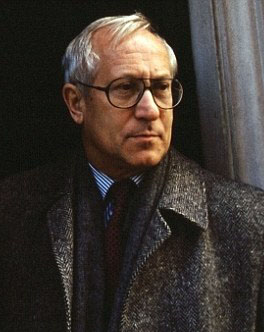
The operation to export Gordievsky, which rose to the position of the head of the London residency, in the trunk of a car of the British embassy across the Finnish border - one of the most exciting stories about the work of special services. True, she, like many other details of his incredible life and career, was already told by Gordievsky himself in his autobiography, and was perfectly told. Why read another book?
Firstly, then that he is impossible to tear her away. John Le Carre, no accident, called the book the best true story that he had ever read, and he cannot be accused of excessive sympathy for the British intelligence services.
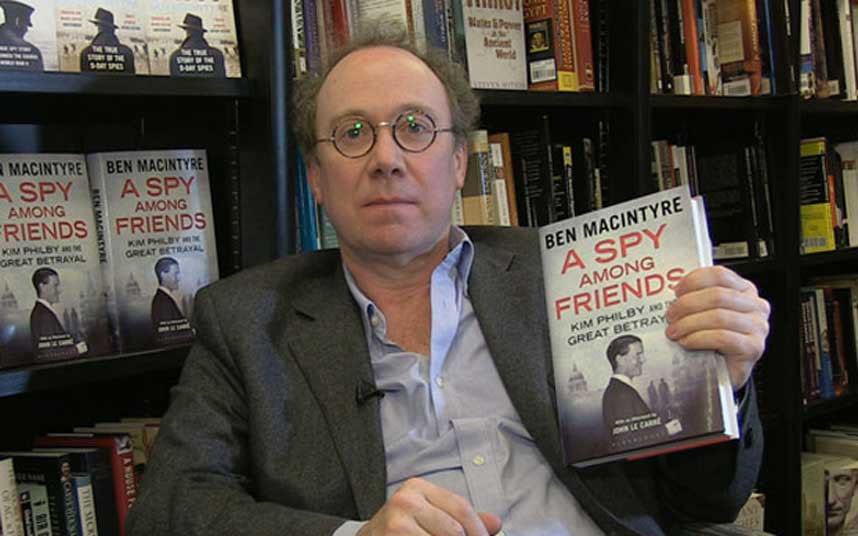
Secondly, Macyntare complements the history of Gordievsky with details on the other hand and tells who and how in the Mi-6 and Mi-5 helped the super-target agent to spy on the British and at the same time finge some information to the Russians so that they would not suspect anything. The author also spent a lot of time with the hero of the book and learned a lot, as a result, the story gets volume - events are visible in different projections.
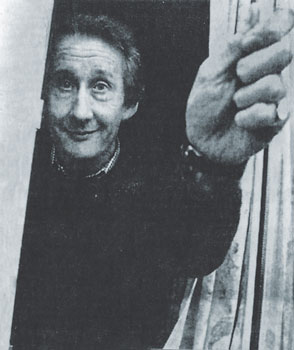
For example, the story of Michael John Bettanyy, an employee of the British counterintelligence who wanted to become an agent of the KGB and stubbornly threw letters with information about the composition of the Soviet resident right into the resident mailbox. The frightened Gordievsky informed the curators about this, Bettani was detained and taken for interrogation to the apartment belonging to the Mi-5, where he demanded a bottle of whiskey, which he drank to the bottom.
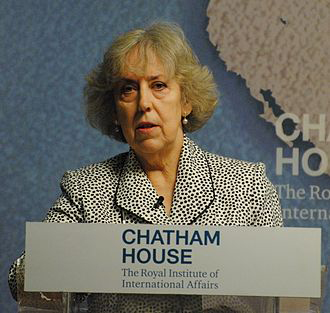
The future director of Mi-5 Eliza Manningham-Buller personally conducted an interrogation, but did not succeed-he did not admit anything. In the morning, she prepared Bettani’s hangover breakfast, from which he refused and just left the apartment. (Soon he surrendered).
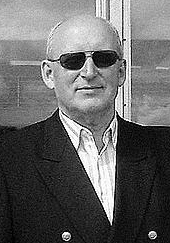
This story intersects as Gordievsky himself was interrogated by a colonel from the external counterintelligence of PSU Viktor Budanov , when the suspicions of Gordievsky became too serious. Gordievsky was offered to drink, some serum of truth was mixed into alcohol, he lost control, but did not admit.
Given that later Viktor Budanov founded a security company that is now protecting the American embassy in Moscow, history is in touch with modernity. Purely theoretically, it can be assumed that if Budanov also told his version of what happened in detail, then the story would play with new colors. But this is hardly possible - the SVR prefers to keep secrets, even if they have already become the secrets of the postgraduate.
After reading these books, one cannot fail to notice the difference in the selection of employees in two Soviet intelligence. The GRU relied on such as Skripal paratrooper - with combat experience (he passed Afghanistan), but poorly owning foreign languages, which are difficult to adapt to life in other countries. Sergei Skripal grew up in a simple family and saw the army as the only chance to make a career.
Judging by Petrov and Boshirov, this principle of selection of personnel in military intelligence has not changed. Foreign intelligence of the KGB nominated such as Gordievsky-a graduate of MGIMO, the son of an NKVD officer and the brother of the KGB officer, married to the daughter of General of the KGB.
The motives of the betrayal of Gordievsky also look more complicated. He first made it clear that he was ready to cooperate with Western intelligence to his classmate in MGIMO - a Czech intelligence officer, who ran to the west in horror from the invasion of Soviet troops in Czechoslovakia in 1968. After the escape, the Czech knocked on the apartment of Gordievsky in Copenhagen, and the old friend did not drive him out. Gordievsky did not like how the rules in the KGB were changing after 1968. He was so ambitious or conceited that he believed that he could sing a better song.
It is not known whether these important books will be translated into Russian. For example, the book of Peter Early (Peter Early) Comrade J (Comrade Jean) with the revelations of the defector from the SVR Sergey Tretyakov, who was released in 2008 in the United States, was not published in Russia. Moreover, on the fact of her publication, the FSB opened a criminal case of the disclosure of GOSTINA.
* GRU was renamed the Main Directorate (GU), but the new name did not take root
Dossier
Irina Borogan , a journalist, in collaboration with Andrei Soldatov published the books “New Nobility” (about the FSB) and “Battle of Runet” (about the Kremlin’s attempts to put the Internet in Russia under control).