
Translated material
In Ukraine, the presidential election is coming soon. You have not even heard about many (popular!) Candidates, and the highest rating has Yulia Tymoshenko
The Verkhovna Rada of Ukraine, despite the introduction of martial law , approved the date of the presidential election - March 31, 2019. Medusa talks about the most popular applicants for this post - what they will bet in their campaign and how they are going to return Crimea and Donbass.
Petro Poroshenko
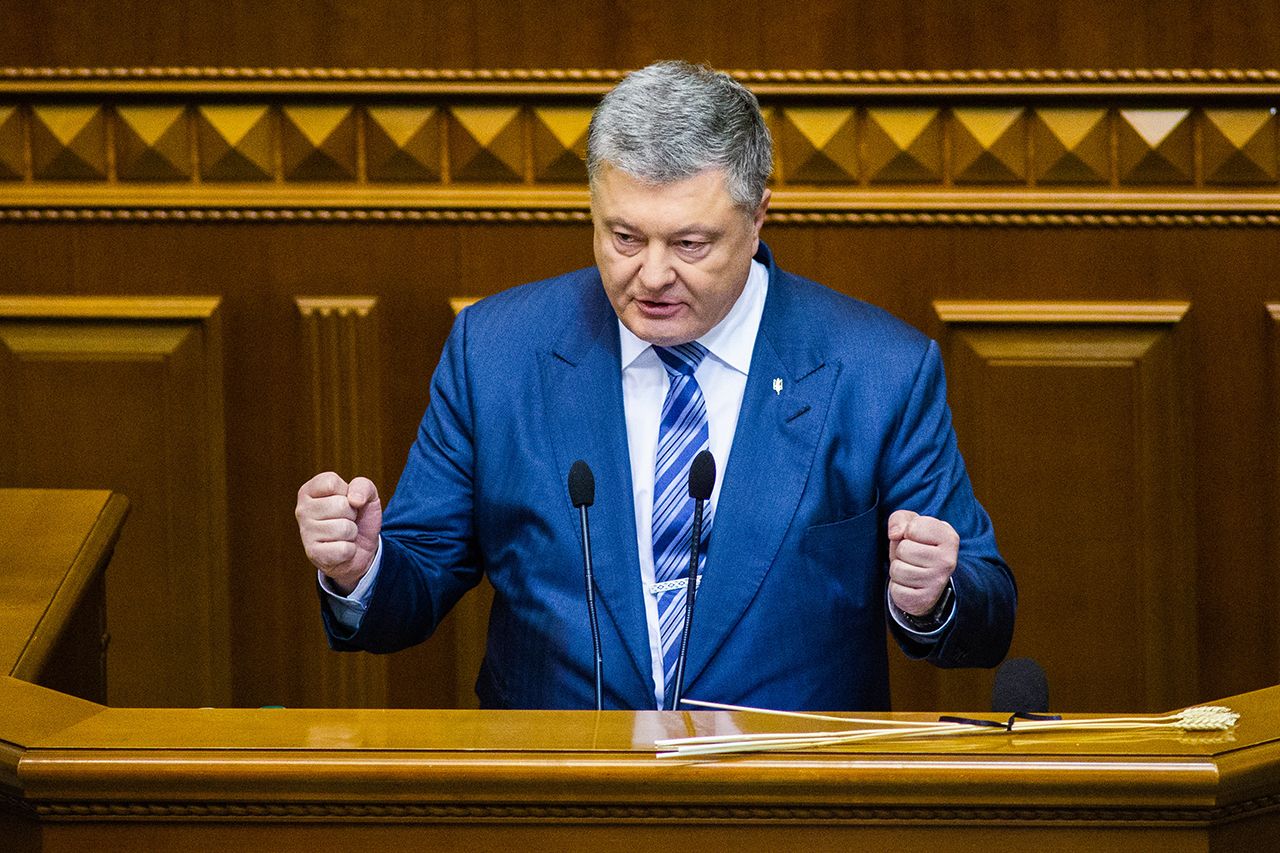
Biography. Petro Poroshenko was elected President of Ukraine in May 2014. He became the first Ukrainian politician who won the elections in the first round, but already in the fall his parliamentary bloc only with the help of one-mandate candidate was able to form the largest faction following the election in the Verkhovna Rada. During the reign of the Rating, Poroshenko fell over more than five times. Officially, he still has not confirmed his participation in the elections, but in his faction back in July they said that the election headquarters had already been created.
Basic ideas. "Army. Language. Vera ” - posters with these words and signature of Petro Poroshenko appeared in Ukrainian cities in August, by Independence Day of Ukraine. In September, Poroshenko called this "the formula of modern Ukrainian identity." At the same time, the administration of Poroshenko said that they were not related to political advertising. It is not clear whether this means that the slogan is recognized as unsuccessful.
One way or another, unlike the rest of the candidates, not only new promises, but also a report on the previous ones will be expected from Poroshenko. He can include a visa -free regime with the European Union, the decentralization of power and the election of mayors of large cities in two rounds, and not one, as before before. He fulfilled Poroshenko and the promise not to increase the presidential powers. He also did not allow the new Maidan and a full -scale political crisis.
“Diplomatic talent and political experience”, which he promised to use on the eve of previous elections, was not enough to end the war in the Donbass and to start negotiations on joining the European Union. After two years of falling in 2014 and in 2015, the Ukrainian economy began recovery, but it is still far from it even before the 2014 indicators. In his previous program, Poroshenko promised to guarantee the Russian language a special status - now, judging by the word “language” on a par with the “army” and “faith”, as well as according to the new linguistic law , his views have changed.
How to return Crimea and Donbass. Poroshenko has not expressed any new ideas on this occasion, and the usual ones have come down to continuing external sanctions pressure on Russia.
Rating. Sociologists believe that now Poroshenko could gain 7.8% and is unlikely to go to the second round. If this nevertheless happens, then he will lose to almost any possible opponent. Oddly enough, Poroshenko’s exit on the second round is most beneficial to Yulia Tymoshenko, because only his and “candidate of the East” Yuri Boyko, she wins for sure. This intrigue promises to make the campaign especially exciting.
Yulia Tymoshenko
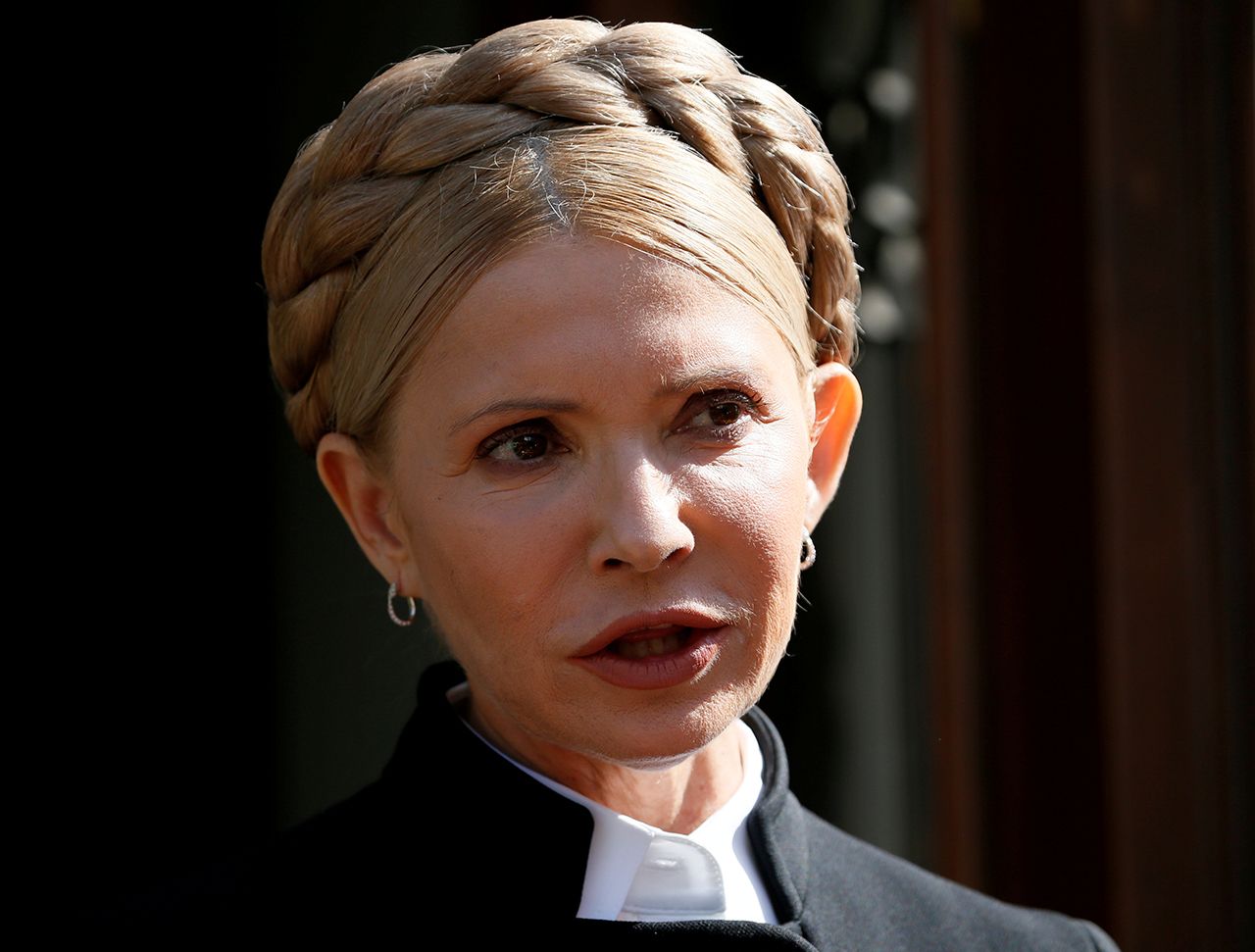
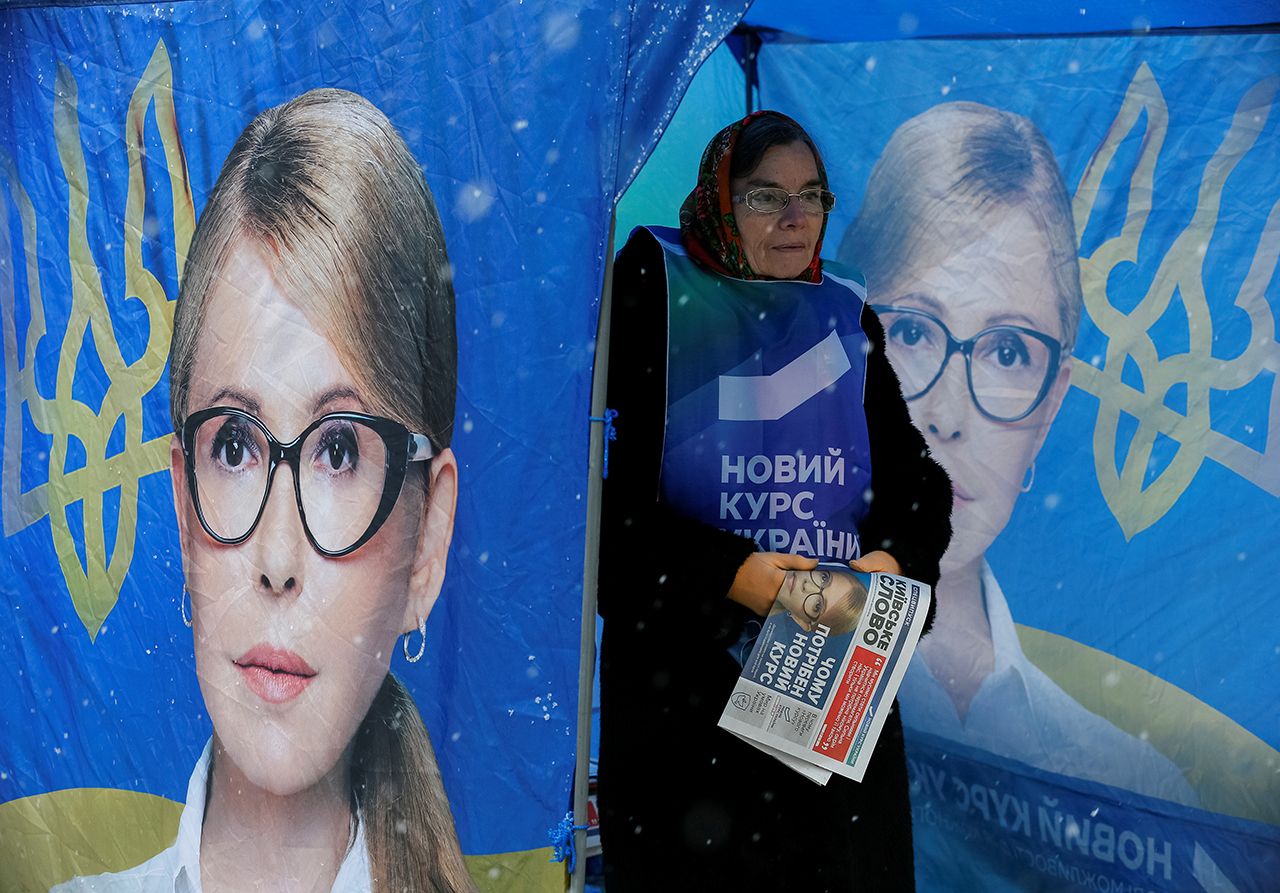
Biography. Tymoshenko first entered the Ukrainian government back in the 1990s and was one of the leaders of the 2004 Orange Revolution, which first led pro-Western political forces to power in Kyiv. Twice, in 2005 and in 2007-2010, she headed the Ukrainian government, and under Viktor Yanukovych, she spent two and a half years in prison "For exceeding power and official powers when concluding gas agreements with Russia." After the victory of Euromaidan Tymoshenko, she was released, but lost the elections of Poroshenko, with whom she conflicted during the years of the Orange Revolution.
Basic ideas. Tymoshenko hints that her course is akin to the actions of the great politicians of the past and the present. She promises to adopt a new Constitution, which will make Ukraine a parliamentary republic “with a chancellor at the head” - a clear hint of Germany and Angel Merkel. And its program is called the "new course" - like President Franklin Roosevelt, who led the United States from the Great Depression.
How to return Crimea and Donbass. The main thing that wants to convey to the voter Tymoshenko is that she is not Poroshenko at all. Under him, the Minsk agreements were concluded - she calls them a "absolute dead end." Poroshenko says that the Budapest memorandum needs to be forgotten - she advocates to return the Crimea and the Donbass on its basis. Under him, the Donbass received a “special status” - it is categorically against it and objects to the reintegration of these territories with its preservation, because, in her opinion, this can lead the “invaders” to power throughout the country. Last year, the payment of Ukrainian pensions was suspended residents of the DPR and LPR - Tymoshenko criticizes the authorities for "breaking the connection with this population and giving up to the isolation of the occupation power." Now the fighting in eastern Ukraine is called an anti -terrorist operation, and Tymoshenko wants to declare them a full -fledged war and create an “impeccable contract army”.
Immediately after the election, she promises to invite the leaders of the countries who signed the Budapest Memorandum to Ukraine, including Vladimir Putin, and file a lawsuit against Russia in the European Court of Human Rights worth more than 100 billion euros. Her associates are sure that Ukraine will be able to attract Western countries to the process, since "the implementation of Budapest guarantees returns trust in the Western world and increases the efficiency of efforts aimed at nuclear disarmament on the planet."
Rating. In mid -November, sociologists predicted Tymoshenko a confident victory in the first round with a ranking of 18.5%. But in the second, she can lose to Vladimir Zelensky, gaining 24.7% against 28.4% (the rest did not decide). And according to some reports , Anatoly Gritsenko.
Vladimir Zelensky
Biography. The former Kavaenchik, the current stand-up comedian and film actor, Vladimir Zelensky began to actively speak out on political topics after the actual transition of Crimea under the power of Russia. He began with the alteration of the song “Do not renounce loving” on the Crimean theme.
In November 2015, the series “Servant of the People” with Zelensky in the title role was released on the screens. According to the plot, schoolchildren photographed the indignant monologue of their history teacher, posted it on the Internet, he gained tens of millions of views, and the teacher himself elected the president of Ukraine. In this post, he successfully fights the oligarchs and corrupt officials, led by the prime minister, and former classmates, whom he appointed to key positions, help him in this matter.
In December 2017, a party entitled “Servant of the People” was registered. It is not known whether Zelensky is officially in it, but Ivan Bakanov heads it. His full namesake leads the Kvartal 95 studio, in which the actor acts. The party still has neither a program nor an official page on the Internet, but it still takes second place in the ratings.
Basic ideas. The main thing is to understand whether Zelensky is going to run for the presidency and what serves: a popular show is a promotion of a new politician or political rumors - an additional promotion of the show. He previously admitted that he could not imagine himself at the presidential post. Many Ukrainian journalists believe that behind the political career of the actor stands an entrepreneur Igor Kolomoisky, on the channel “1+1” the programs “95th quarter” are published. But the oligarch says that rather he himself is Zelensky's “puppet”.
How to return Crimea and Donbass. It is incomprehensible. Nothing specifically for this (as, indeed, on other), Zelensky does not speak. In the series “Servant of the People”, which draws the image of the ideal Ukraine of the future, the war and the separated peninsula are not shown at all.
Rating. Zelensky can count on 10.8% of the vote in the first round and on the victory over any rival in the second. It is most actively supported by him in the south of the country and in the central regions.
Yuri Boyko
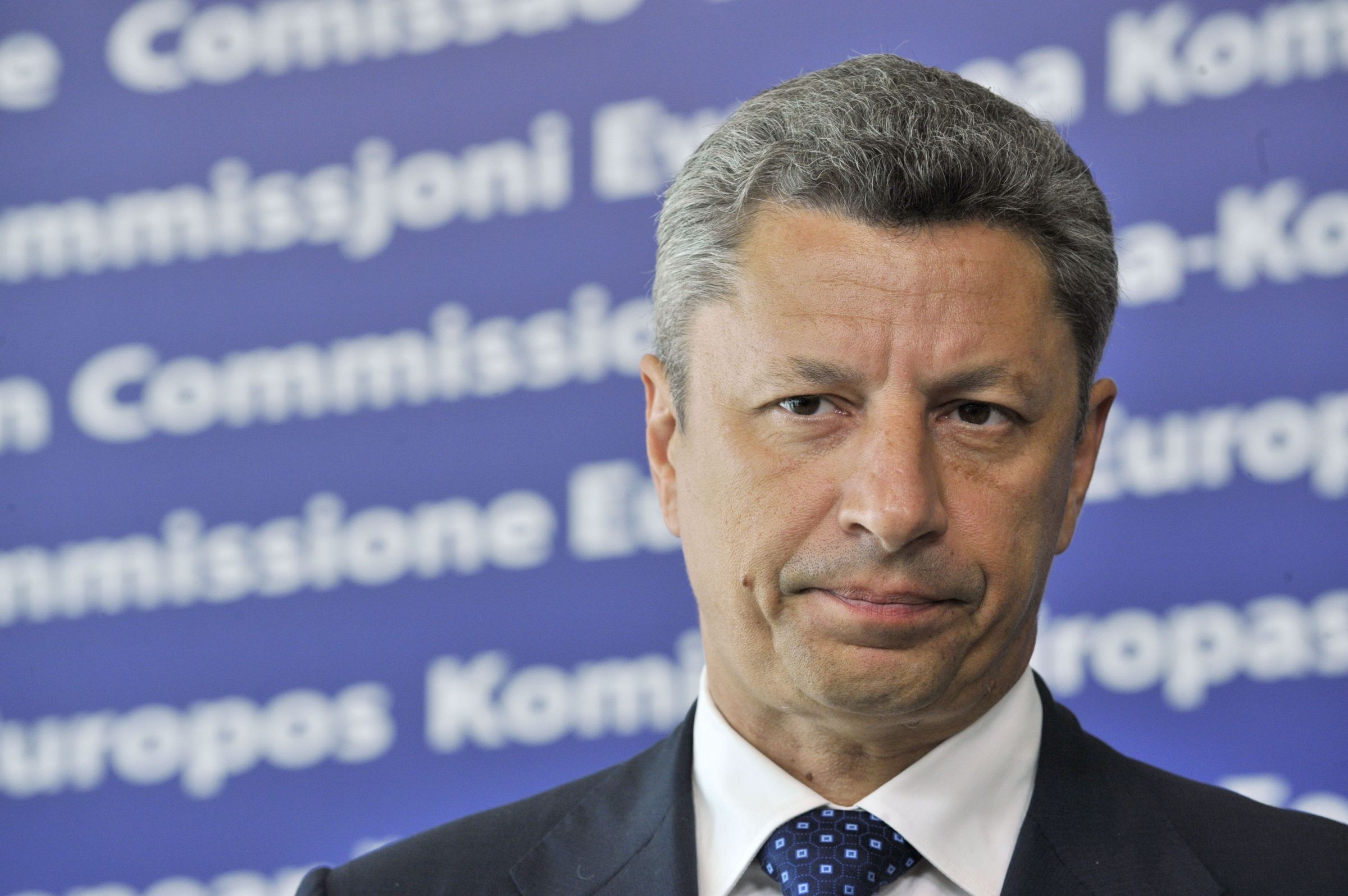
Biography. Yuri Boyko is a native of the Lugansk region, who headed Naftogaz of Ukraine, a former Minister of Fuel and Energy, Deputy Prime Minister, who resigned immediately after the victory of Euromaidan. He participated in the 2014 elections, but received only 0.19% of the vote. Nevertheless, it was Boyko that the “Opposition Bloc” created in the same year, which replaced the Party of Regions as the main spokesman of the interests of many Russian -speaking voters of Ukraine.
Basic ideas. Before the current election, Boyko has the same problem as the past: first you need to agree with all the other candidates claiming the votes of the East of Ukraine. And this is taking into account the fact that the pro -Russian forces have already lost many voters and can no longer seriously count on a national victory. The Opposition Bloc itself united politicians and entrepreneurs with various business interests and sometimes opposite views on the future of the country. In mid -November, Boyko was hastily expelled from his own faction for an alliance with Vadim Rabinovich - another popular politician with an entrepreneurial background, a long -term imprisonment for theft of state property and, possibly, Israeli citizenship.
How to return Crimea and Donbass. Back in February 2015, Boyko proposed his bill on the return of Donbass, which, in particular, suggested direct negotiations with Russia, the introduction of peacekeepers and the restoration of all Ukrainian social payments to residents of the DPR and the LPR. Not so long ago, he cited Colombia as an example , where, according to him, the Minister of Internal Affairs "was sitting at the same table with the commanders of the partisan formations, and they directly negotiated several states." In the Donbass conflict, Boyko believes, two sides will be enough - Russia, which would be responsible for the actions of the DPR and the LPR and the United States responsible for Ukraine.
The Crimea speaks about how to return the Crimea even more vaguely. He only emphasizes that not a single Ukrainian politician recognizes him Russian, and scolds the current authorities for the economic blockade of the peninsula.
Rating. With an indicator of about 8%, briskly fights for third place in popularity. But it is difficult to say what role his own charisma plays here, and what kind of “opposition block” was for him to the last.
Anatoly Gritsenko
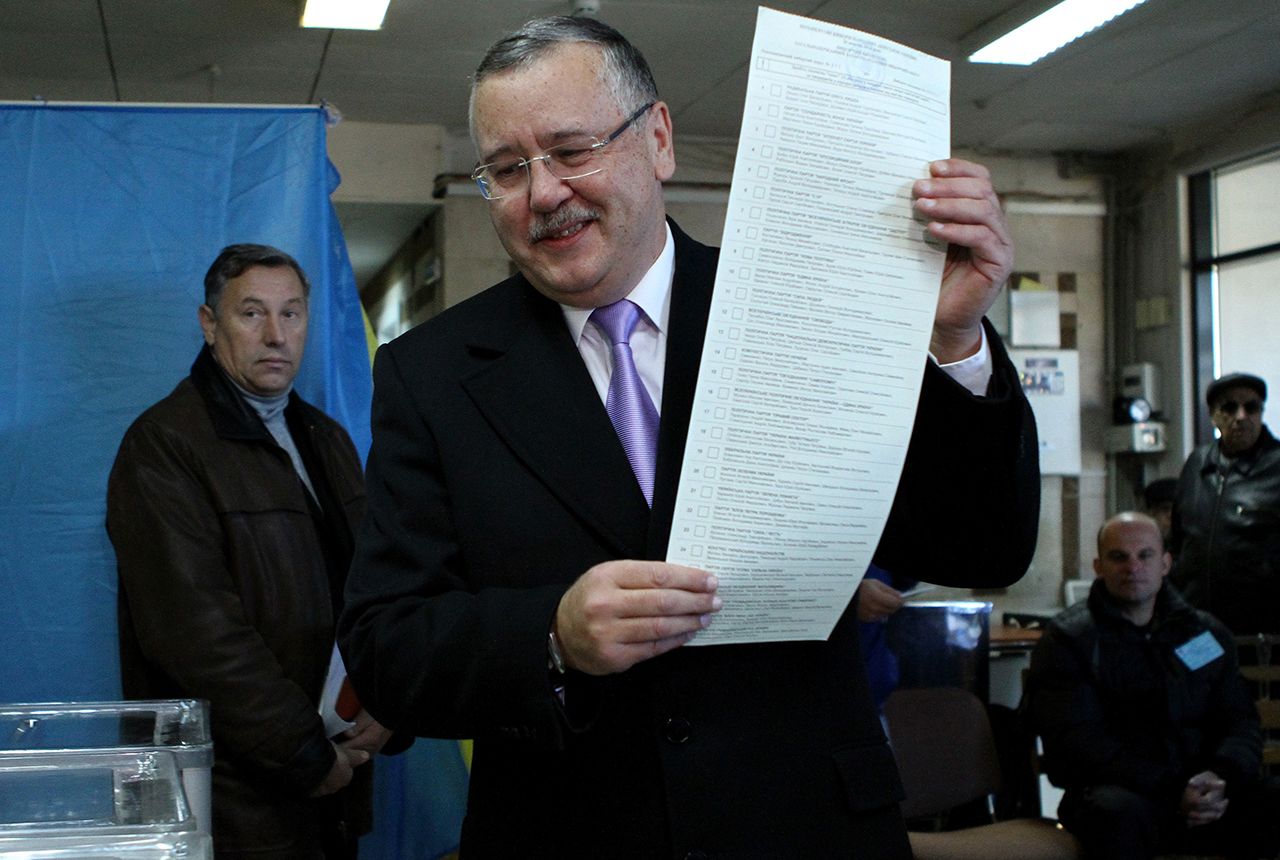
Biography. Another veteran of Ukrainian politics, Anatoly Gritsenko in 2005-2007 headed the Ministry of Defense of Ukraine, for which, like many other leaders of this department of the pre -war period, periodically receives charges of the collapse of the Ukrainian army. In Soviet times, Gritsenko was a teacher of a military school, and in the early nineties, a year's internship at army universities was held. Upon his return, he worked in the team of Alexander Rozumkov, then Deputy Secretary of the Council of People's Commissars of Ukraine. After the death of Rozumkov, he went to the Ukrainian Center for Economic and Political Studies founded by him, and a few years later married his widow.
Gritsenko is considered the author of the presidential program Viktor Yushchenko, who headed Ukraine in 2004. After a two -year stay in the post of head of the Ministry of Defense at Yushchenko, he participated twice in the presidential election: in 2010 and 2014. The first time I received a little more than one percent, the second is already 5.5% and became the fourth most popular. During the hostilities in the east of Ukraine, Gritsenko called Vladimir Putin a “fascist” and suggested that if he had arrived in Kiev, “there would be patriots who would simply kill him and would do the right thing.”
Basic ideas. During the first election campaign, Gritsenko called himself “the first impassable”, and the image of a politician, obviously deprived of a chance of a big victory, entrenched in him for many years. In the 2019 elections, it, however, is increasingly called a full -fledged “alternative candidate”, capable of attracting an pro -Western electorate to their side, which is disappointed in the previous leaders - Tymoshenko and Poroshenko. By the way, this is how the current president himself came to power, who during the Euromaidan was in the shadow of his other leaders, but there were fewer complaints about him than to the rest. In his interview, Gritsenko hints that the West trusts him. True, this is not that this is confirmed by something other than benevolent articles in authoritative media.
How to return Crimea and Donbass. The peace plan to return Donbass, apparently, will become the basis of Gritsenko’s election campaign. True, he spoke about his existence and that he was already laying on the tables of Poroshenko, Putin, Macron, Merkel and Trump, he spoke back in July, and still has not reported specific details. Gritsenko also does not tell about people in the West, who allegedly negotiate with him. Ukrainian journalists are also concerned about who is part of the “adequate part of Putin’s environment”, which, according to the politician, also participates in consultations.
From what Gritsenko nevertheless told, it is clear that, first of all, he plans to deprive the militants of the LPR and the DPR of control over the Russian-Ukrainian border. “If Russia does not agree that we control the border at the first stage,” he said . - The main thing is that she is blocked. Let anyone control it: Austrians, Australians, Swedes, Finns. ” In almost every interview, Ukrainian journalists ask him what can make Putin go for it. Gritsenko trusts in sanctions.
He emphasizes that the return of Donbass can only be peaceful, because otherwise the sanctions will be introduced against Ukraine itself. This will take from three to five years, and only then it will be possible to talk about the fate of Crimea.
Rating. According to polls , Gritsenko in November would have received almost 8% of the vote and fought for a third or fourth place in the race. This means that the result of the second round will largely depend on his position.
Who else?
About a dozen politicians are called possible candidates for the presidency, but most of them can apply for one or two percent of the vote.
Nationalists. Contrary to the numerous statements of Russian propaganda, nationalists have not yet become serious political force. This, however, is due to the fact that some of their slogans borrowed mainstream policies. The leader of the radical party of his own name Oleg Lyashko, who makes the appropriate, is best on this flank on this flank - to release the Donbass as a result of a combined operation from “radical economic growth”, “radical economic sanctions” and “radical military measures”.
Competitors Poroshenko, Tymoshenko and Gritsenko. A few years ago, the mayor of Lviv Andrei Sadovy, who turned to Christian democratic rhetoric, was considered one of the most promising Ukrainian politicians and spoke about the expansion of local self-government rights. Instead of the center of Ukrainian nationalism, he tried to turn Lviv into the European capital of Ukraine. However, the garbage crisis of recent years, caused by the inability of the city authorities to utilize waste, lowered its rating up to 3%. Since the beginning of 2015, the Eurooptimist group has been working in the Verkhovna Rada, uniting young supporters of liberal reforms, but she has not nominated her candidate.
Competitors are brisk. The Kharkov politician Yevgeny Muraev became famous for his bright performances at the Ukrainian television show and, according to some reports , could get up to 5% of the vote. He is a supporter of the non -block status of Ukraine and radical federalization of the country, up to the provision of special status to all regions. The former governor of Donetsk Sergey Taruta and ex-mayor Kharkov Mikhail Dobkin, known for the nickname of Dopa, also claim the role of an alternative “candidate from the East”.
Another artist. The leader of the Elsa Ocean group Svyatoslav Vakarchuk was one of the main musical frontmen of Euromaidan. He has long been considered as a potential presidential candidate, although he himself never said that he was ready to run. True, he recently released a video in which he wondered: “Do we really allow dinosaur -like politicians, oligarchs and their puppets to demoralize us, breed us, manipulate us, pushing our foreheads?” The rating of Vakarchuk himself reaches 7%.
Dmitry Kartsev