Date
Author
Арнольд Хачатуров, Лилит Саркисян
Source

Preserved copy
Translated material
Navalny and mathematics
"Smart Voting" will combine the protest electorate
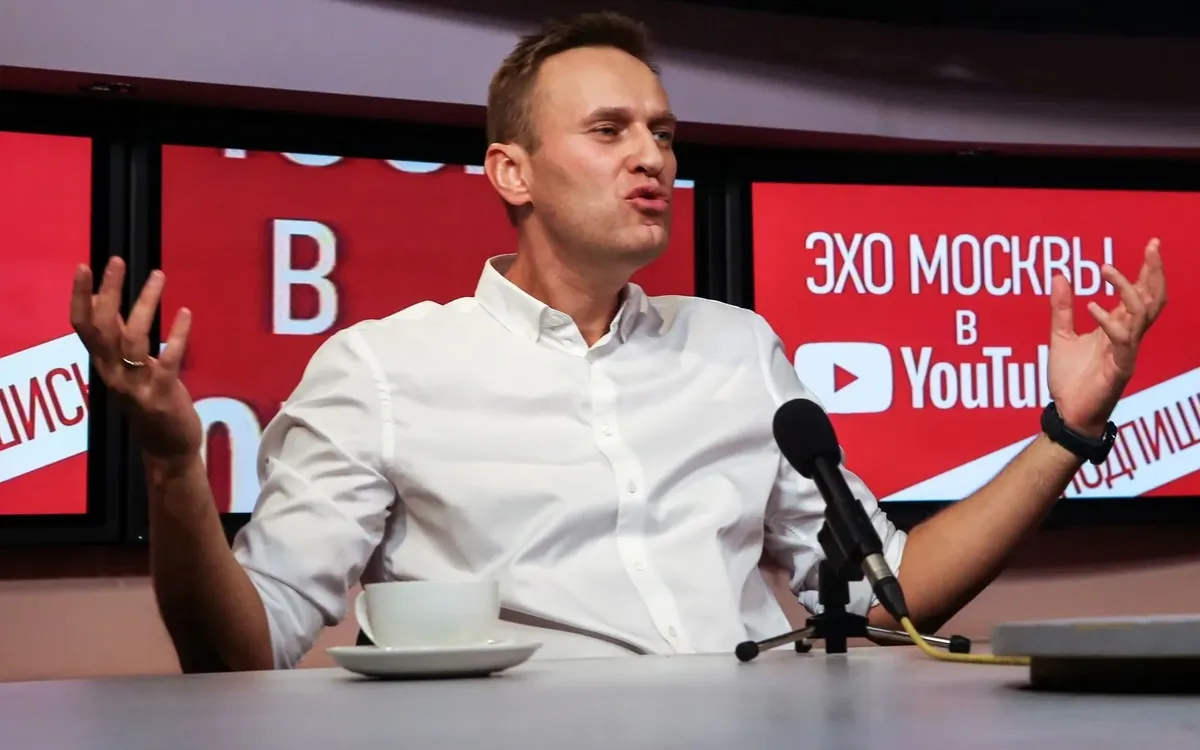
Alexey Navalny launched a new project - the Smart Voting website, which is designed to combine a protested electorate against United Russia. The project that determines the most powerful candidates from the opposition in each constituency based on the data of hundreds of polls is dedicated to the start of the new electoral cycle. In 2019, regional elections of different levels will be held throughout the country, including elections to the Moscow City Duma and the election of the Governor of St. Petersburg. “We are different, but we have one policy - we are against the monopoly of“ United Russia ”. Everything else is mathematics, ”writes the opposition.
The formula of electoral success
The Smart Voting Strategy lies in pure mathematics, says Navalny: usually in the election, candidate unorgene wins with 35–45% of the vote, and the remaining 55–65% are distributed between representatives of the parliamentary and non-system opposition. His project, based on the results of the previous elections and sociological data, will select each voter of the most popular candidate from the opposition. A protest vote should be consolidated around one candidate - whether it be a representative of the Communist Party, LDPR, “Just Russia” or “Yabloko” - for the sake of victory over the United Russia.
The proposal to support all candidates, except for United Russia, sharply contrasts with the previous political strategy of Navalny. Last year, the opposition announced a boycott to the presidential election after the CEC did not register him as a candidate. Prior to this, the opposition was repeatedly tried to unite against the authorities: Navalny himself in 2011 called for vote in the elections to the State Duma for “any party, against“ United Russia ”, which he then first called the party“ crooks and thieves ”.
But the democrats are rare to act as a united front. Navalny’s association with another opposition candidate for the post of President of Russia, Ksenia Sobchak, did not occur. Navalny campaigned his supporters to boycott the elections in order to reduce the appearance and thereby cast doubt on the legitimacy of their results.
The shift of the trajectory - from a boycott to protest mobilization - the oppositionist explains by the fact that, unlike the presidential election, there is a real chance of winning in the regions:
- There are rallies, there are promotions, there are investigations, etc. etc., but there are elections. They are different, we treat them differently. Some can only boycott, as it was with the last presidential. In some, participating is almost useless due to the level of falsifications. But in some it is quite possible to win. First of all, this applies to elections in large cities.
Recall that the Navalny project, created in order to “help” the voter choose the right candidate, is not the first one kind. In 2017, the team of Dmitry Gudkov and Maxim Katz launched the “political uber” - a platform for democratic nominees in the municipal elections in Moscow. Using the service, you could find out which voter represents the Democrats in each of the districts. As a result, in a number of municipal tips, the majority of places received the opposition.
Surrogate opposition
Creating the Smart Voting system, Navalny pursues two main goals: to prepare for the elections to the Moscow City Duma in 2019, in which his supporters will take part, and “fit” into the protest voting strategy, which shot during the last regional elections, said Alexei Makarkin, political strategist of the Center for Political Technology.
The phenomena of Furgal, Konovalov, Ishchenko and Sipyagin, who staggered the position of candidates from the authorities, showed that people are ready to vote for anyone, just not for United Russia.
This trend may continue next year. An irritation caused by raising the retirement age will not disappear by 2019, says political strategist Vladimir Perevoschikov, and although a single voting day will take place only the next fall, the Navalny project is a good start for combining a protest electorate on this basis. “The protest electorate is not for the democrats or against the Communists and Socialist -Revolutionaries. He votes for the one who in a particular region or district more expresses protest opinions, ”the expert says.
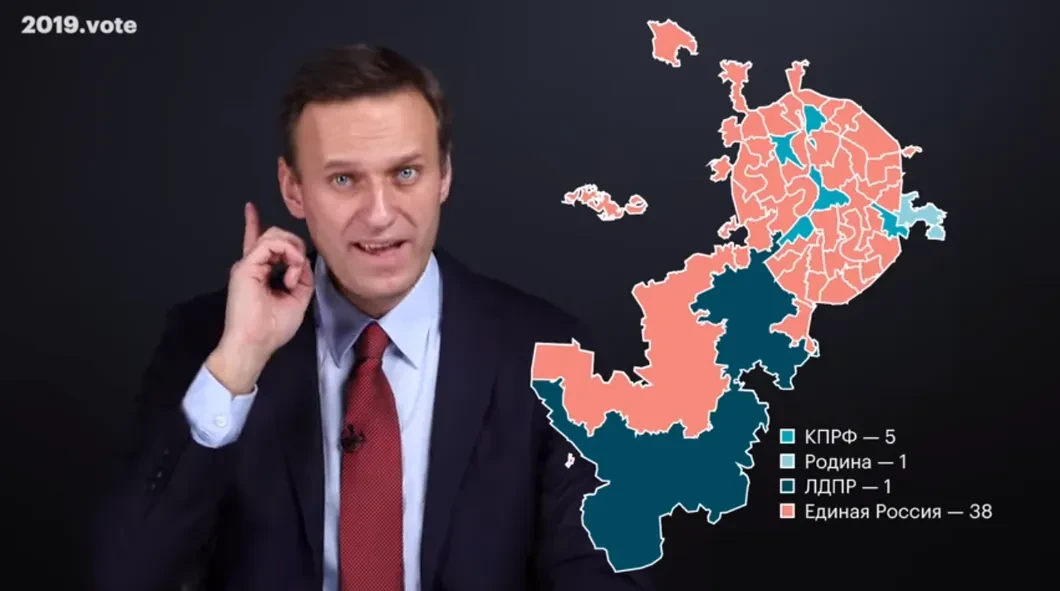
“I think that, first of all, Navalny was focused on elections to the Moscow City Duma, but Gudkov had a similar project, so he had to come up with something of his own,” says Makarkin. Gudkov’s platform urged to support only democrats, with the exception of several situational nominates from parliamentary parties, for example, Elena Shuvalova from the Communist Party, which opposed renovation. At the same time, many other candidates from the Communists played the role of spoilers.
“I am not against this system, but you need to carefully consider the criteria for the selection of candidates,” says Gudkov. - I would support primarily supporters of our views representing a real opposition. It is necessary to support everyone except United Russia, but only those who are disloyal to the leadership of parliamentary parties, who more or less make decisions on their own. And it is important not to support those who, under the guise of the opposition, will pass from the parliamentary parties. ”
At the same time, the Navalny project does not provide for any preference to the democratic opposition to the system of the system, complains the chairman of the Yabloko party Emilia Slabunova:
- Of course, I was surprised that Alexei Navalny recorded the Communists, the LDPR, and just Russians in the opposition, although a huge number of examples of their political actions demonstrate that they are not an opposition. Parliamentary parties could have long been brought to the State Duma initiatives that change the electoral legislation: for example, the abolition of the municipal filter.
Mathematics instead of a boycott
Unlike Gudkov’s platform, which involved the registration of the candidates themselves and assistance in conducting the campaign, the Navalny system will be purely informational and oriented to the voter. This can play into the hands of system candidates who do not want to be affiliated with the Democrats.
“Usually, parliamentary parties do not interact with Navalny, but here they will have an alibi, since they are not registered anywhere. This may be important in the elections of the heads of regions, where opposition candidates cannot pass due to the municipal filter, but at least one parliamentary party is present, ”Makarkin believes.
The Novice Communist Party said that they support any initiatives that increase the protest voting and attract voters to sites, but categorically opposed the “drying” of the turnout and boycott of the elections.
“We always act as opponents of United Russia, because the party of power with its political program does not fully comply with our program. This is proved in all elections of different levels. This process [unification of folk patriotic forces] has been going on for a long time, regardless of what Navalny decided to say now, ”said the press secretary of the Communist Party Alexander Yushchenko.
Now the strategy of the boycott of the elections is rapidly losing its supporters, but there are no guarantees that the new “electoral mathematics” from Navalny will be a more effective approach. The defeat of "United Russia" does not always lead to the victory of democratic candidates. “The mayor of Novosibirsk Anatoly Lokot and the governor of the Irkutsk region, Sergei Levchenko, willingly cooperate with the authorities and are notorious from the United Russia,” says Makarkkin. This also applies to a new wave of “opposition” heads of regions: if they also easily compromise with the Kremlin, then the protest voter will inevitably be disappointed in this strategy.
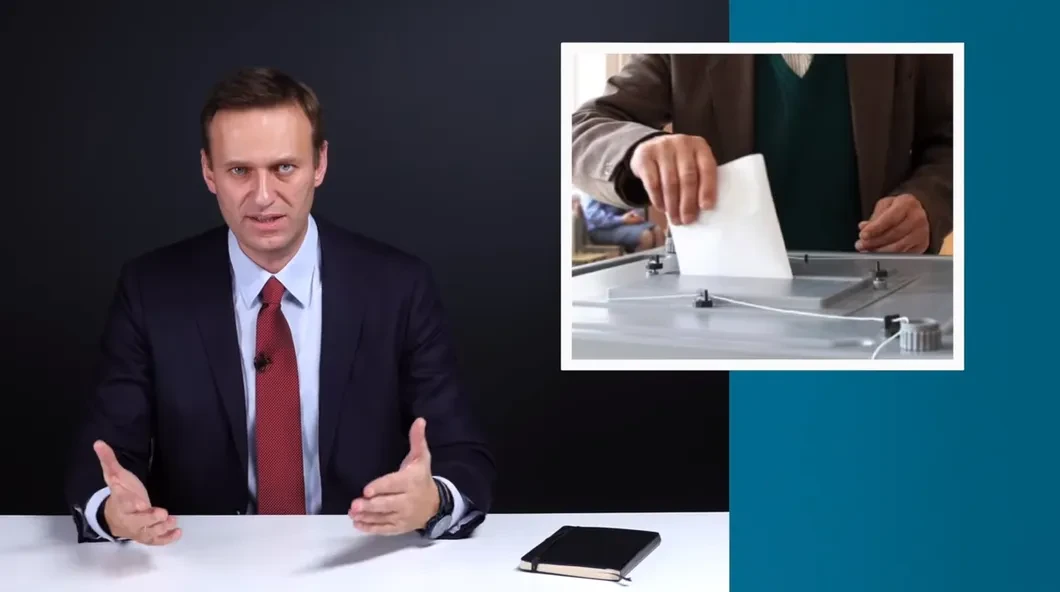
In addition, conflict situations may arise within the democratic forces themselves. For example, who to support in a situation where the candidate from Yabloko at the start is a little behind the Candidate of the Communist Party? Gudkov informed Novy that he did not plan to compete with Navalny and put forward his own list of candidates as in the municipal elections in 2017, but advocated an “exclusively democratic coalition”.
The protest candidate must be consolidated, but there are no guarantees that parliamentary and unsystematic parties will be able to agree and choose one candidate in each individual district, carriers believes. “If attempts to unite even inside an unsystematic opposition suffered a collapse over and over again, counting on agreements with parliamentary parties is even more difficult due to ideological contradictions,” the expert says.
The liberal part of the Russian electorate can also negatively respond to the appearance of representatives of system parties on the list of Navalny. “What is more important - to harm the authorities by voting for a candidate whom Navalny considers the most passable, or to conduct an ideologically close candidate? Here liberal voters can be divided, ”Makarkin believes.
Navalny himself claims that voters should “first of all ruin the monopoly of“ United Russia ”, and secondly, to reflect our personal ideological preferences.”
Another controversial question is the methodology by which the Navalny team will determine the chances of the candidate for victory. On the basis of what sociological data will the most popular candidates be selected to support the protest electorate? The results of the previous elections do not always allow us to make the right forecasts, says Slabunova: "All this gives space for manipulation by voters."
Another drawback of the Navalny project, which should mobilize the entire protest electorate, is that it is on the Internet, the political strategist Vladimir Perevonschikov notes: “The voter still needs to be brought to the polling station.” However, the very idea of consolidating the protest against the party in power is quite logical in a situation of high protest moods against the backdrop of pension reform. Those people who went to anti -vene rallies, organized as Navalny, then went to the plots and voted against the united Russia.