
Translated material
"May Allah will instruct you!"
The meeting on the border between Ingushetia and Chechnya in the Constitutional Court of Russia was held with the Caucasian accent
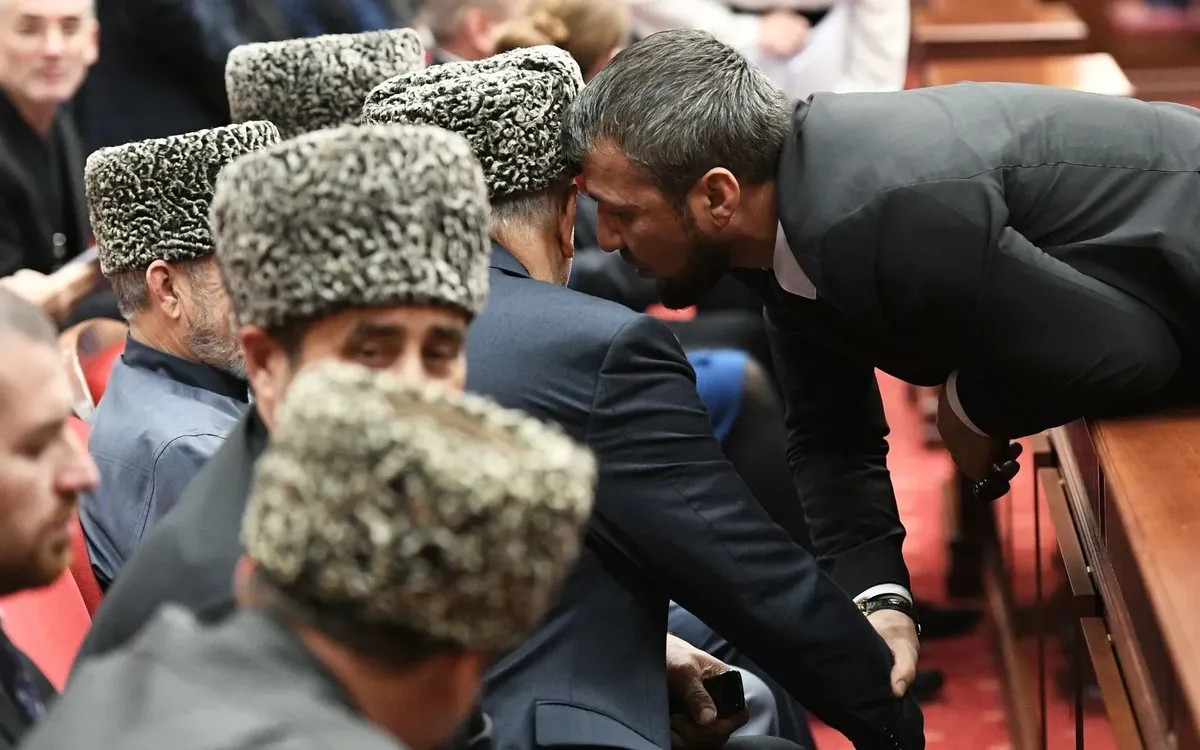
On Tuesday, near the building of the Constitutional Court on Senate Square of St. Petersburg it was crowded. The court had to consider the issue of the Chechen-Ingush border, about the legitimacy of which the head of Ingushetia Yunus-Bek Evkurov has not been able to agree with his people for two months. The point in this dispute is designed to put the Constitutional Court of Russia.
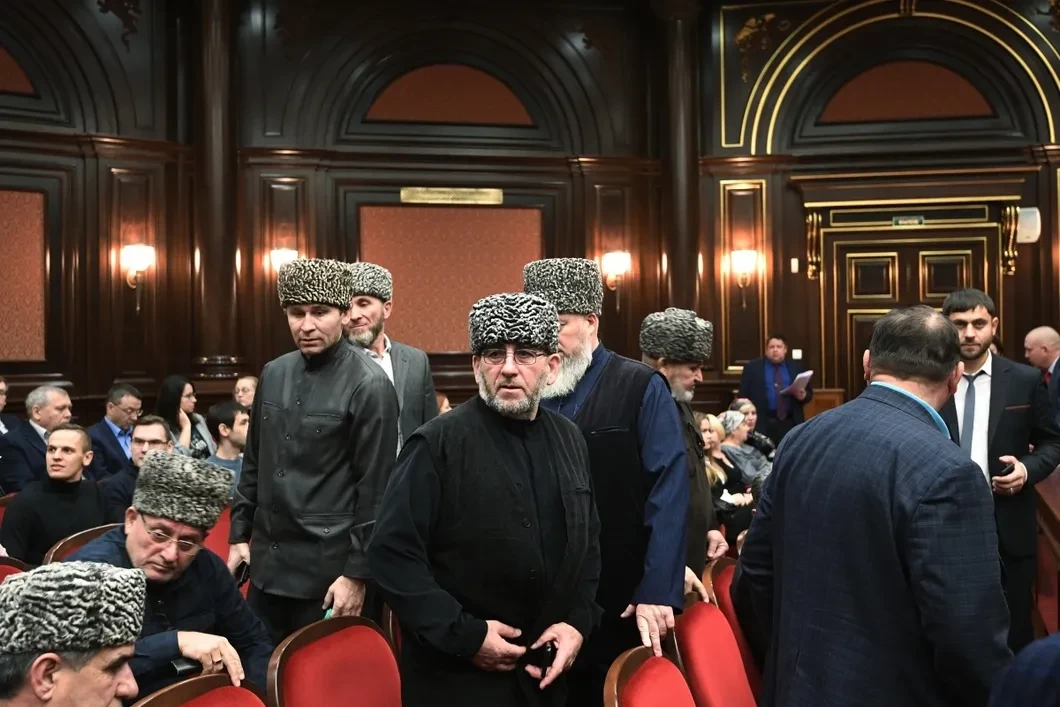
A large hall of meetings for one hundred and fifty seats was scored. Silver caracular papachi interspersed with traditional women's scarves - most of those present flew on the eve of the flights from the Caucasus - to support one of the parties to the dispute. But by a strange coincidence, only Chechen listeners were allowed for the meeting, and the majority listeners from among the Ingush remained on the street surrounded by autozaks and reinforced police outfits. “There are no places in the hall,” the security guard laconly announced to them through the entrance.
On the eve of the meeting, Ramil Akhmetgaleev, the lawyer of the Human Rights Office of Agora, representing the interests of the Congress of the Ingush people ( the representative body of the I. G. ) received threats.
From an unknown number he received an SMS:
“Happy you are a family man, Ramil. Beautiful wife, and daughter is a beauty! I would have spent more time with them in your place, making confident self -setting. Why do you need a raw city - Peter? It would be better to sit in the warmth ... maybe you will still get sick and the temperature will rise ”( the spelling of the original is preserved ).
The meeting was scheduled at 10 in the morning. Five minutes before it starts
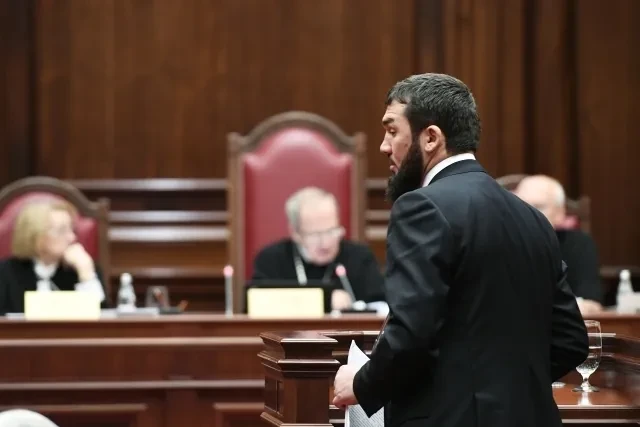
A delegation of long -bearded men quickly entered the hall - tight, frisky, dressed from a needle. A thick fleur of expensive perfume hung in the air. The elderly in the papaki, as if on command, jumped from their seats in order to testify their respect and give way.
So the chairman of the parliament of the Chechen Republic Magomed Daudov arrived at the meeting. It was Daudov from the Chechen side that headed a commission that studied the issue of disputed territories.
Let me remind you of the background of the dispute.
On September 26, 2018, Yevkurov and Kadyrov signed an agreement on the Chechen-Ingush border. This decision was made without publicity, which is possibly explained by the soreness of the moment: over the past years, the question of the border, which has not been resolved since 1992, when the Chechen-Ingush Autonomous Soviet Socialist Republic has repeatedly became the subject of the conflict between the republics. Any discussion was reduced to fierce disputes about the historical documents of which prescription should appeal when determining the boundaries, since in Soviet times the border between the Ingush and Chechens ran differently, and before that, no one thought about the formal distinction between the tribes.
And for some reason, right now, there was a need for a clear definition of the border.
To ratify the agreement, it was necessary that the parliaments of both republics approve it as a law with their vote. In the Chechen Republic, everything went smoothly. In Ingushetia, the excitement began: the news was rapidly spread, as if a significant part of the territories in favor of Chechnya had rejected the republic. The numbers from 17 to 33 thousand hectares were called (which included the lands, which are still designated on the maps as the territory of Chechnya, is unlawful, according to many Ingush).
After the voting of the Ingush parliament, the official results of which read - 17 deputies of 32 “for” - one after another, the people's elected chosen ones began to declare that they voted “against”, which means that the voting results were falsified.
A huge rally stood in Magas for almost two weeks. 11 deputies of the parliament filed a complaint with the Constitutional Court of Ingushetia with a request to verify the law on the border for compliance with the Constitution of the republic. The KS Ingushetia decided: the law was adopted with violations and contradicts the basic principles of the Constitution of the Republic, one of which reads: "The establishment and change of borders occurs only taking into account the opinion of the people of Ingushetia." The head of the republic could not stand it: he stated that the head of the Constitutional Court of Ingushetia Ayup Gagiev “Prostraten”, raised the question of his competence and appealed to the Constitutional Court of Russia.
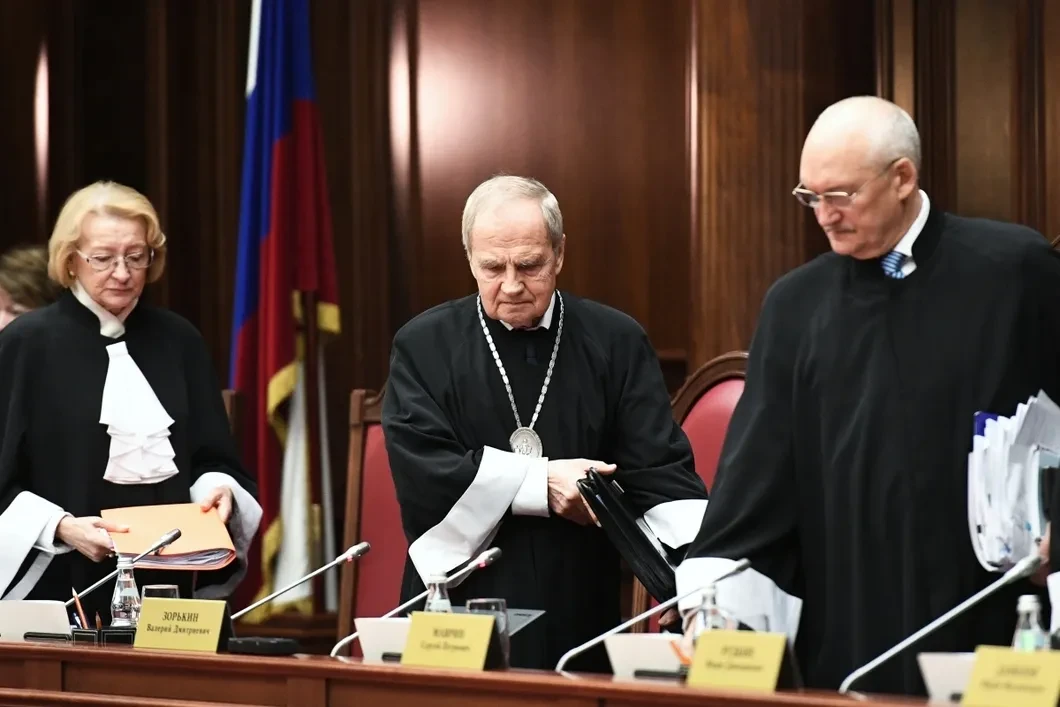
The head of the Constitutional Court of Ingushetia himself Ayup Gagiev did not come to the meeting. In his letter addressed to the judge Sergei Mavrin, who acted as a speaker at the meeting, he explained his act like this: “In accordance with part 4 of Article 27 of the Law“ On the Judicial System of the Russian Federation ”, the Constitutional Court of the Russian Federation does not have the right to revise the decisions of regional constitutional courts. <...> In fact, a request ( Yunus-Bek Evkurov. - I.G. ) is nothing more than a veiled form of appeal of the decision of the Constitutional Court of Ingushetia. In such circumstances, I consider my participation in the meeting impossible, ”wrote Ayup Gagiev.
The head of the Constitutional Court Valery Zorkin read out this letter aloud, he regretted Gagiev’s “such decision”, but the colleague did not comment on the legal component.
Indeed, if you follow the letter of the law, the Constitutional Court of Russia is not higher in relation to regional constitutional courts. He has the right to revise solutions only on those issues that are either purely under the jurisdiction of the Constitutional Court of the Russian Federation, or in joint jurisdiction with the regions. According to Articles 71 and 72 of the Constitution of the Russian Federation, the question of determining borders does not apply to such. Nevertheless, the Constitutional Court accepted the appeal of Yunus-Bek Evkurov to consideration.
At the meeting, another curious conflict appeared.
Perhaps for the first time, the position of Yunus-Bek Evkurov, moreover, on such a sensitive question, the word in word coincided with the opinion of Ramzan Kadyrov.
Disagreements between them over the past 10 years have repeatedly become the subject of the federal agenda, but in the dispute about the border both leaders showed amazing unanimity. Their joint position was the following. Since the collapse of the Chechen-Ingush Autonomous Soviet Socialist Republic, for 26 years, the border between the republics has not been approved, which gave birth to numerous administrative difficulties in both republics. The last six years have been working on both sides, the opinions of all residents on both sides of the border were taken into account. Ramzan Kadyrov and Yunus Bek Evkurov took on “courage and responsibility” to put an end to this matter.
Representatives of the Congress of the Ingush people consider it differently. In their opinion, the Ingush, including the inhabitants of the disputed Sunzhensky district, did not ask. The agreement was signed secretly, and the procedure for adopting the law passed with violations. The traditions of the collective solution of problems in this region have developed for centuries, they correspond to the Constitution of the republic. And you can not pay attention to them. “Ingushetia is the smallest and densely populated region of the country. 135 people per square kilometer with an average density in Russia 9 people. 33 thousand hectares are Tip Ortsha's tribal lands, whose representatives live both in Chechnya and in Ingushetia. These lands make up 10% of the entire territory of the republic, ”said Akhmet Pogorov, co -chair of the Congress of the Ingush people.
According to the usual regulations of the Constitutional Court of the Russian Federation, the meeting has the right to act exclusively invited by the judges themselves. And purely in legal points. But this meeting passed according to its Caucasian rules. The word present in the hall took the word repeatedly. They spoke emotionally, wished the judges of health and that Allah would instruct them on the true path when making a decision. The difference in the positions of the peoples of Chechnya and Ingushetia on the border was unexpectedly summed up by the representative of Tip Orkhstoy from the Chechen side of Said Isaripov.
“I am a simple builder and far from politics,” he said. - From the entire previous one you might think that there is no people from the Chechen side, but the people have no opinion. And it is. We are worried too. It's just that we Chechens are fully relying on the leadership of our republic and its solutions. We are sure that Ramzan Kadyrov and Yunus Bek Evkurov will never allow infringement of the rights of our peoples. And we trust them entirely. We must trust the authorities. And this is our difference with Ingush.
Then it was the turn of the speeches of representatives of the federal authorities: the Prosecutor General, State Duma, the Council of the Federation, the Ministry of Justice. All of them supported the agreement.
The latter was the representative of the President of Russia in the Constitutional Court Mikhail Krotov. His speech was long and complex, sometimes the abundance of legal terms was sometimes even lost meaning. The essence of his speech came down to the following: precedents, when the Constitutional Court of Russia revised the decisions of regional courts, were already. On this issue, the opinion of the people cannot replace the decision of the parliament, which means that a referendum is not needed. The law on the distinction between the Chechen-Ingush border of the legitimumen entered into force. And cannot be canceled.
- The decision will be made by the Constitutional Court of Russia in closed mode. The date of the announcement will be reported later, ”said the chairman of the court, closing the meeting.