
Translated material
Parliament wants to judge the president
So far only the former - and only in Kyrgyzstan
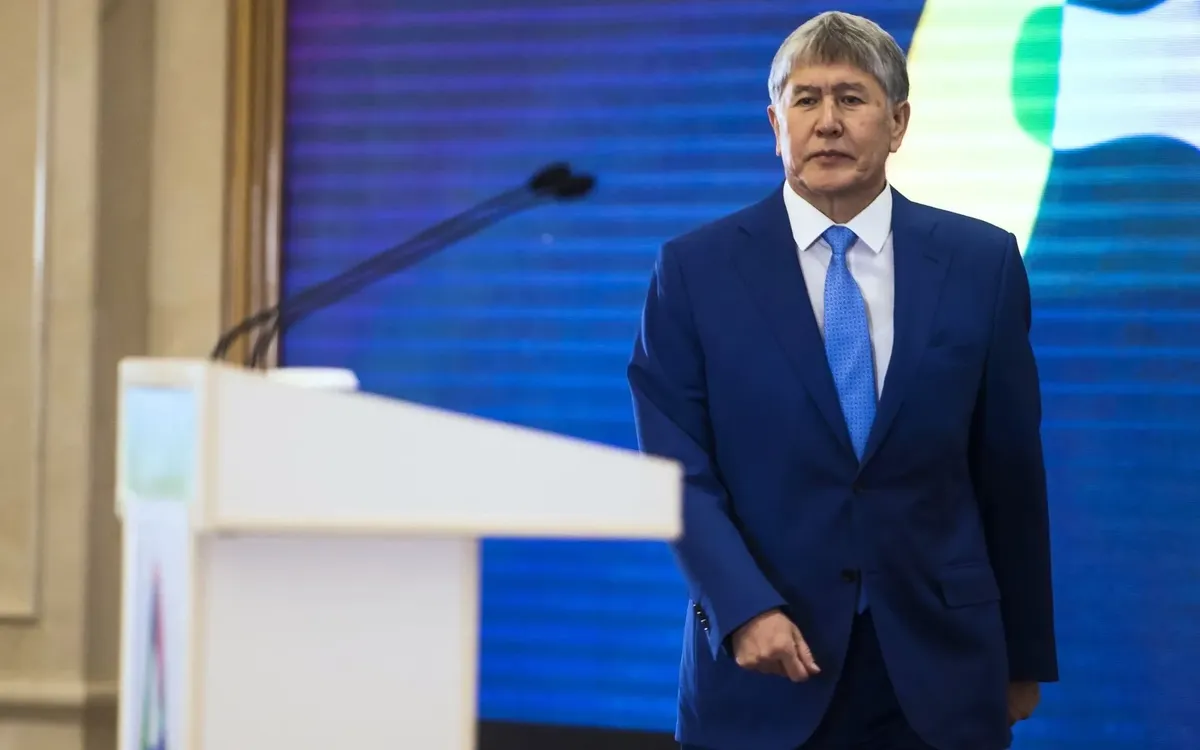
Kyrgyzstan regularly confirms the status of the “White Crow” in Central Asia. Not only is the president by law in the country are elected only for one period, but now the former head of state can no longer feel safe. This week, the Committee of the Kyrgyz Parliament on constitutional legislation, state system, judicial issues and regulations approved in the first reading of amendments, which allow us to remove the ex-presidents of the guarantee of immunity. This will allow them to be held accountable - up to the criminal, the authors of the amendments are the deputies of the Jogorku Kenesh (as parliament is called in the country) Iskhak Masaliev and Kurmankul Zulushev.
In the country there is a law “On guarantees of the Presidential Activities”, the 12th article of which just guarantees immunity from all persecution after leaving the post. However, at first the deputies, and then the Constitutional Chamber, considered that the right to live without prosecution is too chic even for the president (and actually contradicts the main postulate of the equality of all before the law). The authors of the amendments want, by the way, to remove immunity even from the current president - but for this there is already impeachment, so such bold initiatives are unlikely to be approved even in Kyrgyzstan. A little more chances of the proposal to remove article 18 of the Law on the President: it is proposed that the head of state must defend his honor and dignity, automatically grab nobody for jokes for him.
As for the main initiative, the removal of inviolability from the ex-president in his procedure will not be easier than impeachment. The Prosecutor General will have to prove that the ex-head of the state committed a crime, and Jogorku Kenesh must agree with this and initiate the persecution immediately after the removal of immunity. This two -way, by the way, suspiciously resembles the program of the recent Kurultay opposition, at which the former president of the country Almazbek Atambayev was accused of “betraying the ideals of the revolution” and demanded his condemnation.
In principle, the version, that the amendments are made precisely under Atambayev, has the right to exist, says the “new” political scientist Seitek Kachkynbai. For that matter, there were four chapters in the country before the current president of the Uboronbai Jeenbekov, but the two-Askar Akayev and Kurmanbek Bakiev-are even deprived of the status of the “ex-president” (they are not very ceremony with leaders in Kyrgyzstan), and Rosa Otunbaev was only the president of the transitional period-and the attitude towards it-with reservations-still normal. Only Atambayev remains.
“The persecution of Atambayev has two reasons,” says Kachkynbai. -Firstly, everyone was just tired of him: during his rule, he made many enemies, putting his former associates in prison. Secondly, Atambayev formally retired, but did not leave politics: he is not going to give the ruling Social Democratic Party, where he is a chairman, and the authorities (president and AP- V.P. ) want to leave it for themselves. ”
The current President Uzoronbai Zheenbekov Atambayev is unhappy, and the Kyrgyz media carefully write about the discord between the two politicians: the initially the current president was the creature of the previous one, but now Atambayev in all interviews claims that it was Zheenbekov who owes almost his entire career.
“But Zheenbekov is also not from a simple family,” Kychynbai grins. “The family doesn't like it.”
Party affairs also cannot delight Jeenbekov: immediately after the elections last year, the SDPK under the chairmanship of Atambayev held an intra -party meeting, for which, under various pretexts, supporters of the current president were not allowed. From there and a split went.
The “betrayal of the ideals of the revolution” as an accusation also arose not from scratch. Repression against former comrades-in-arms of the revolution is a frequent historical process, but in Kyrgyzstan this annoys people: discord, but why in Kutuzka why? But the main claim is not even that.
“Atambayev’s environment began to demand from the current government such a rule as in Russia in 2008-2012,” the political scientist states.
Jeenbekov’s arrival was initially conceived as the phenomenon of Kyrgyz Medvedev under Atambayev-Putin, but now Medvedev has become stronger and sends his senior comrade an unequivocal signal: you will not calm down-there will be legal soil to plant you. Yes, and for some reason the Kyrgyzstanis were not enthusiastic about the idea that they would still rule their ex.
The process of adopting amendments that remove immunity from the former presidents is not yet in the final stage, but it can be assumed that Jeenbekov will still sign it, carefully predicts the Seite of Kachkynbai-even despite the fact that in the future the same law can be directed against him. The current president is not a cold -blooded example of his predecessors, so he has probably already calculated all these risks.
In the same week, representatives of Russia, sympathizing with the Eurasian Union, spoke about the need for greater interpenetration of elements of different states within the association. First of all, it was meant that Kazakhstan, Armenia, Belarus and Kyrgyzstan should also introduce antisanctions against the West. But the states have to borrow experience, as Kyrgyzstan showed, there is something more interesting.