
Translated material
Memory. Vera Voloshina
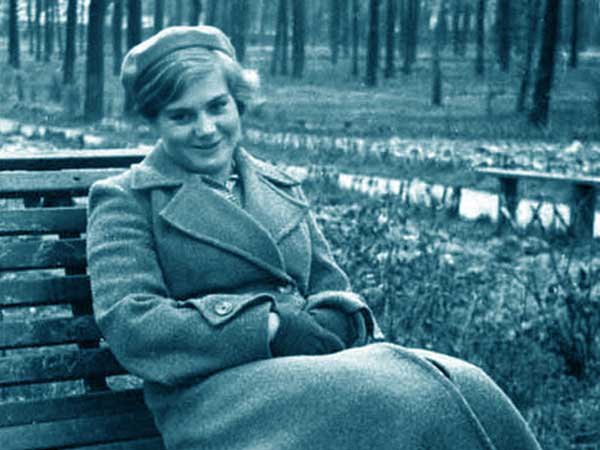
Personal business
Vera Danilovna Voloshina (1919-1941) was born in Kemerovo, in the family of Shakhtar and teacher. From the first grades of the school she was playing sports: gymnastics and athletics. In high school, she won the city jump championship. At the end of the ten grades she moved to Moscow and entered the Moscow Institute of Physical Culture and Sports. In parallel, she was engaged in the Moscow flying club, where she mastered the piloting of I-153 Seagull aircraft and parachute jumping. She was fond of shooting, drawing and poetry. In 1936, Vera Voloshina wrote a statement about the desire to take part in the Civil War in Spain, but was refused.
In the first year, Voloshin, among other students, went to the winter sports camp near Serpukhov. There she seriously caught a cold, the disease gave a complication to her feet, so that in the end, Vera was forced to quit her studies at the sports institute and entered the Moscow Institute of Soviet Cooperative Trade.
In the summer of 1941, Vera passed exams for the third year and went to the suburbs of Zagorsk to undergo production practice. Immediately after the start of the Great Patriotic War, it was mobilized to dig trenches and anti -tank ditches on the approaches to Moscow. In October, she voluntarily joined the Red Army and was enrolled in the military unit No. 9903 intelligence department of the headquarters of the Western Front to work in the rear of the enemy. Vera went on her first task on October 21, 1941 to the area of the Zavidovo station near Moscow. After that, she had six more successful sending to the rear to the Germans.
He died on November 29, 1941 during the implementation of a combat mission.
What is famous
Vera Voloshina was in one partisan detachment with Zoe Kosmodemyanskaya and died with her on the same day. However, the circumstances of her heroic death became known much later - 16 years later.
On November 21, 1941, a large group of scouts went to the rear of German troops, in which Vera Voloshin and Zoe Kosmodemyanskaya were also. After the front transition, the detachment fell under fire and broke up into two random groups. The group, which included Cosmodemyanskaya, went towards the village of Petrishchevo.
Vera was in the second group. Not far from the village of Golovkovo, her group again fell under fire. Vera was seriously injured, but the comrades could not take her, since German soldiers very quickly arrived at the shelling place. In the morning, two of the group tried to find faith or her corpse, but could not.
For a long time, Vera Voloshin was listed as missing. And only in 1957, the writer and journalist Gennady Frolov found out how Vera died and found her grave.
On November 29, the Germans brought wounded Voloshin to Golovkovo and hung on roadside Iva. According to the memoirs of local residents, standing in the back of a German truck with a loop around her neck, the girl sang “International”, and when the car started, she managed to shout: “Farewell, comrades!”.
On the same day, 10 km from the place of execution of Vera Voloshina was hanged by Zoya Kosmodemyanskaya.
What you need to know about
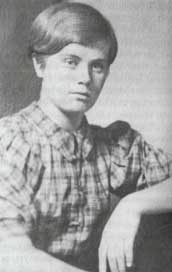 Vera Voloshina
In 1935, the sculptor and artist I. D. Shadr received a state order to create a series of sculptures for the Moscow Park of Culture and Rest named after Gorky. According to legend, Vera Voloshin, which the sculptor saw in the pool of the Institute of Physical Education, was the main model for the first version of the statue “Girl with the oar”.
The sculpture was installed in the center of the fountain on the Main Highway of the Central Bank of the Central Bank named after Gorky in 1935. She portrayed a completely naked girl in full height with an oar in her right hand. The height of the figure, together with the bronze pedestal, was about 12 meters.
However, the sculpture was criticized and in the same year it was moved to the Park of Culture and Rest of Lugansk. Its reduced copy is stored in the Tretyakov Gallery.
In 1936, Shadr created a new, already eight -meter, sculpture of "Girls with an oar." The model for her was the gymnast Zoya Bedrinskaya (Belorucheva). The sculptor changed his hairstyle, removed the powerful muscles of the hands, the girl’s figure itself became thinner and more romantic. The new "girl with the oar" was installed on the site of the former - in the center of the fountain. In 1941, it was destroyed during the bombing.
It is mistaken that it was the sculptures of the “girls with the oar” by Ivan Shadra that served as prototypes to create numerous gypsum copies, which were massively installed in parks almost throughout the USSR. In fact, these were copies of the statues of the sculptor R. R. Iodko with the same name, created by him for the Dynamo water stadium in 1936.
Direct speech
“Roby, strong, she kept somehow especially straight. Two heavy almost white braids pulled her head, and from this she seemed to some asked. But this did not bother us, because we knew Vera well - how simple and responsive it is, ” Valentina Savitskaya, a friend of Vera Voloshina.
“In the tenth grade, Vera gave me a postcard, where an old woman was depicted, broken by paralysis. And on this postcard she wrote: “How do I want to live! I really die? I don’t want to live forever and the way I live now. After all, these are the best days in a person’s life ...” ”, - Zinaida Mikhailova, a classmate of Vera Voloshina .
“Mamush, I could not finish the institute, but I end it after the war. I'm at the front now, mommy. Just do not worry, there is nothing wrong with, and then, death happens only once, ” - from a letter to Vera Voloshina Mother from the front, 19.11. 1941
5 facts about Vera Voloshina
- On June 22, Vera Voloshina bought a wedding dress for herself. She was going to marry a classmate Yuri Two -Zhilny, who made her an offer. On the same day, she found out that the war had begun.
- Residents of Golovkovo were able to bury Vera Voloshin only in mid -December 1941. After the retreat of the German troops, they took out the girl’s body from the loop and buried right at the roots of willow, on which she was hanged. Later, the remains of faith were transferred to the mass grave in the village of Kryukovo, Naro-Fominsky district of the Moscow region.
- On May 6, 1994, Vera Voloshina was posthumously awarded the title of Hero of the Russian Federation.
- The name of Vera Voloshina is named the Malaya Planet 2009 Voloshina.
- Since 2003, a suburban electric train "Hero of Russia Vera Voloshina" has been running on the Yaroslavl direction of the Moscow Railway.
Materials about Vera Voloshina
Documentary " Vera Voloshin: Killed twice" (Studio "Third Rome", 2007)
Site dedicated to the memory of Vera Voloshina
Article about Vera Voloshina on Wikipedia