
Translated material
Emigration or underground. What to choose Jehovah Russian witnesses?
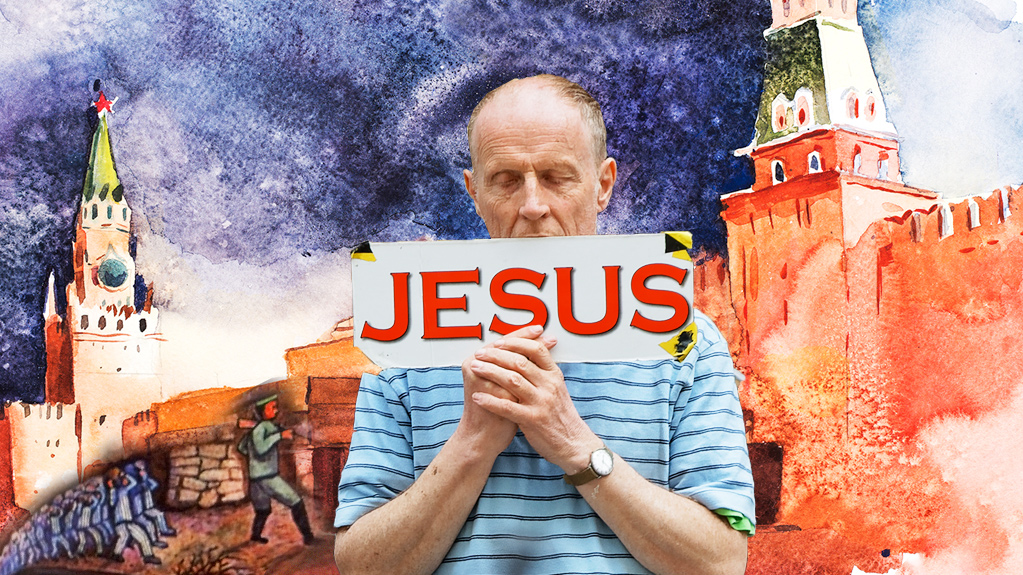
Emigration or "conditional underground" - a choice that came to Jehovah's Russian witnesses
After in April 2017 the Supreme Court of the Russian Federation banned the religious organization of Jehovah's Witnesses, recognizing its activities to the extremist , more than five thousand Jehovahors left Russia. Many of them found a shelter in Finland. But most of the Russian Jehovists, despite the persecution, remains in Russia. Radio correspondent Freedom talked with representatives of this religious organization on both sides of the Russian border.
Imatra. Finland
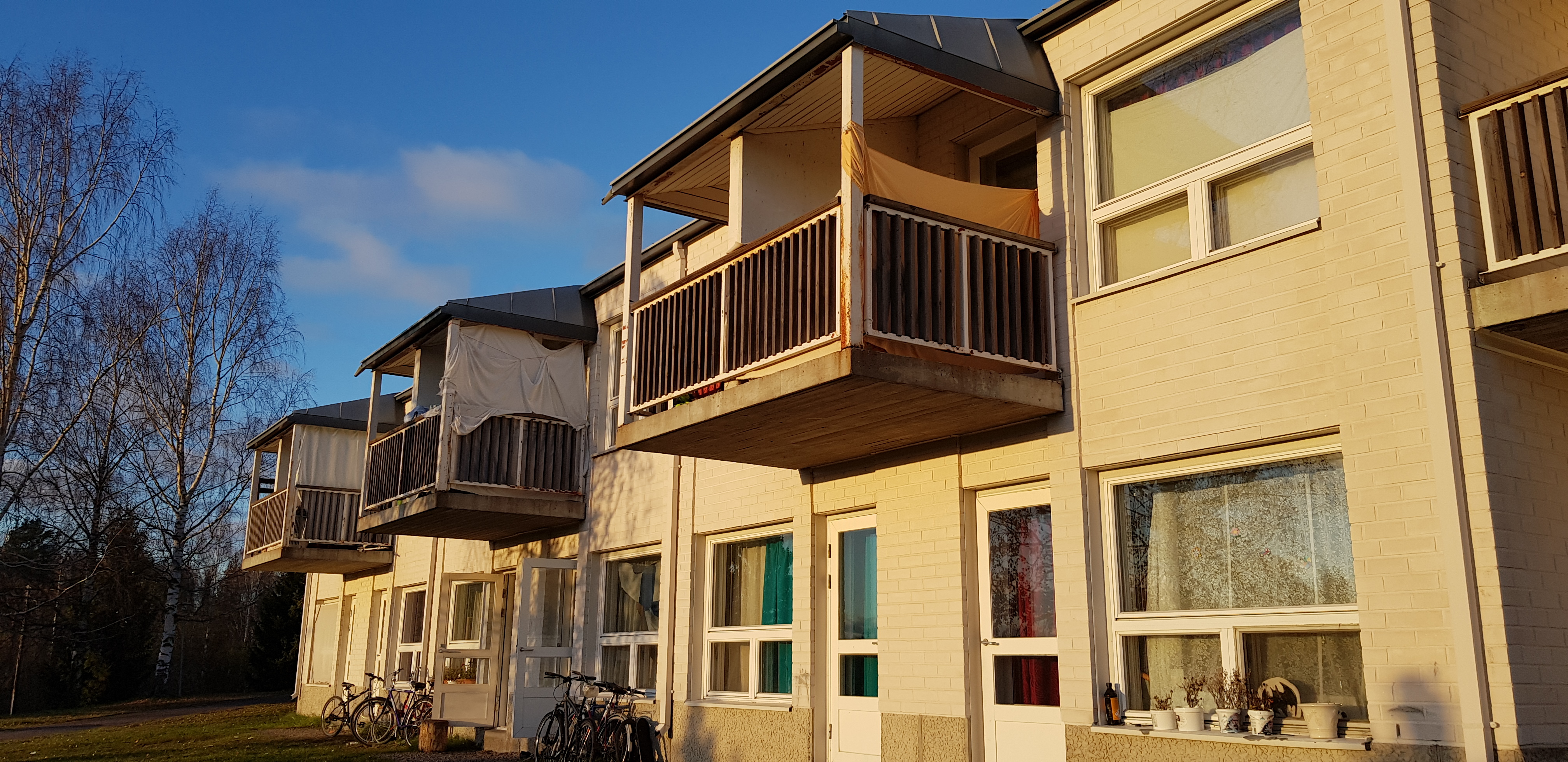
The two -story gray building with the sign "Vuoksenhovi" in early 2017 met guests of the Finnish city of Imatra with modest apartments with a view of the Vuoksa River. The proximity to the Russian border for many years provided the hotel owners with good profit. But today it is impossible to find a free number here: they all turned into apartments with guests from around the world. A year ago, the hotel became a refugee camp who asked for asylum from the Finnish state.

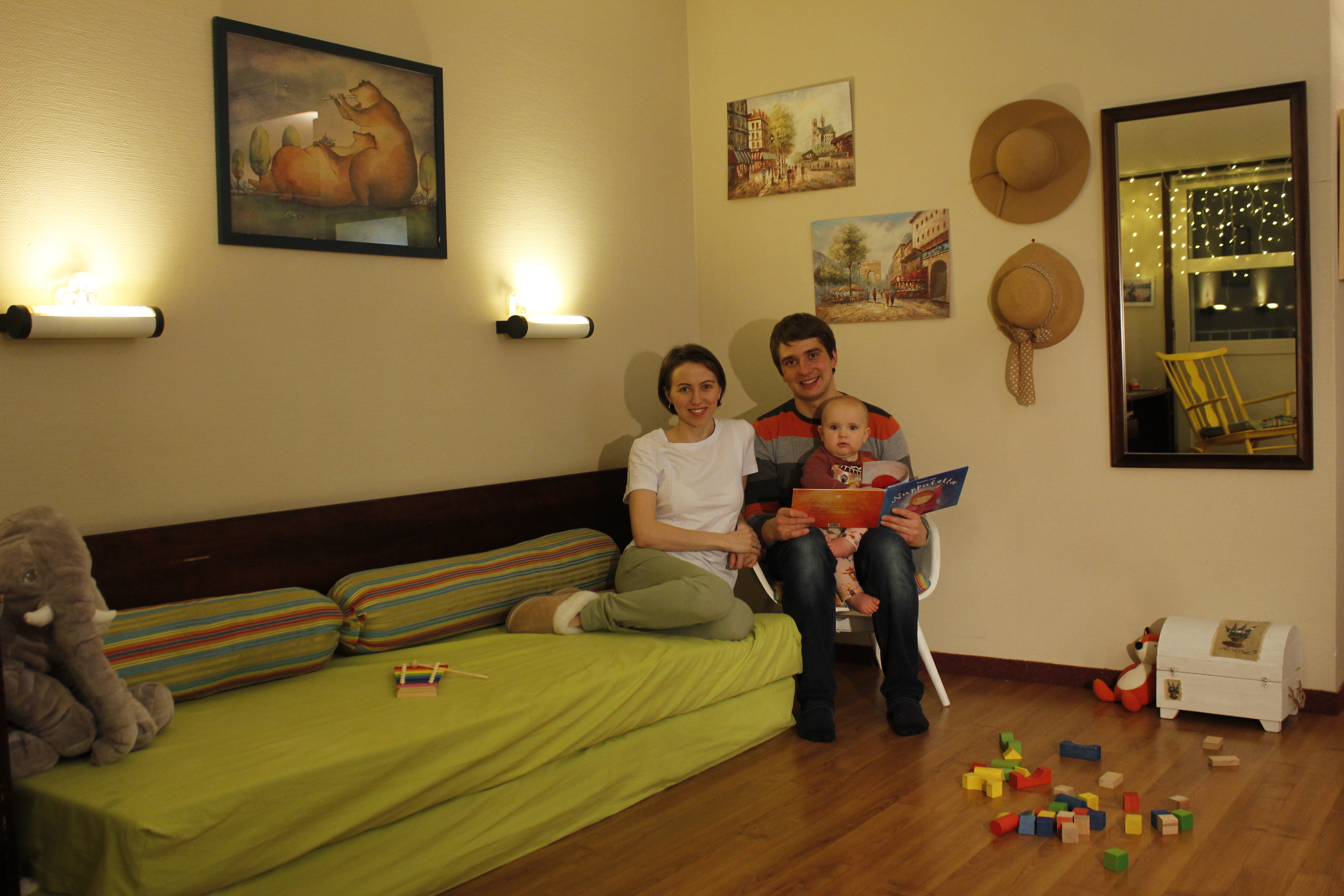
Among the inhabitants of the camp are the family of Sergei Kotelnikov from Karelia. Together with his wife and a 8-month-old daughter, they live in a former hotel room of 16 square meters. At the entrance to the building - watch: all guests need to register, to all residents - show documents. The Sunday evening that we met with Sergey, most of the inhabitants of the camp in Imatra spend "houses": in the big hall on the second floor, people play billiards, watch TV, children run around the corridors, aromas of oriental seasonings and freshly made bread are heard from the common kitchen.
Together with the family of Sergei Kotelnikov, about a hundred other refugees from Afghanistan, Syria, Iraq, Pakistan, as well as from different regions from Russia live in this camp. Several families, as well as Kotelnikovs, are Jehovah's Witnesses.
Sergey Kotelnikov was born and raised in Moscow, at the age of 16 he went through the baptism of the Jehovah's Witnesses. According to Sergey, his mother led him to faith, but he calls his decision to make faith completely independent and meaningful.
- To become a witness, you must change your life, you must live according to the principles from the Bible. Just say "I love, I believe, I am ready to be believers" not enough - you need knowledge, you need certain actions, - says Sergey. - Baptism is a special relationship with God, a symbol that shows that you belong to a particular religion. A person must consciously do this, understand that this requires responsibility - to live according to certain principles, norms. I studied, compared and decided that I agree with this teaching, I saw that these people live according to the Bible, that what they teach, corresponds to what is written in the Bible. So he decided to be baptized as a witness to Jehovah.
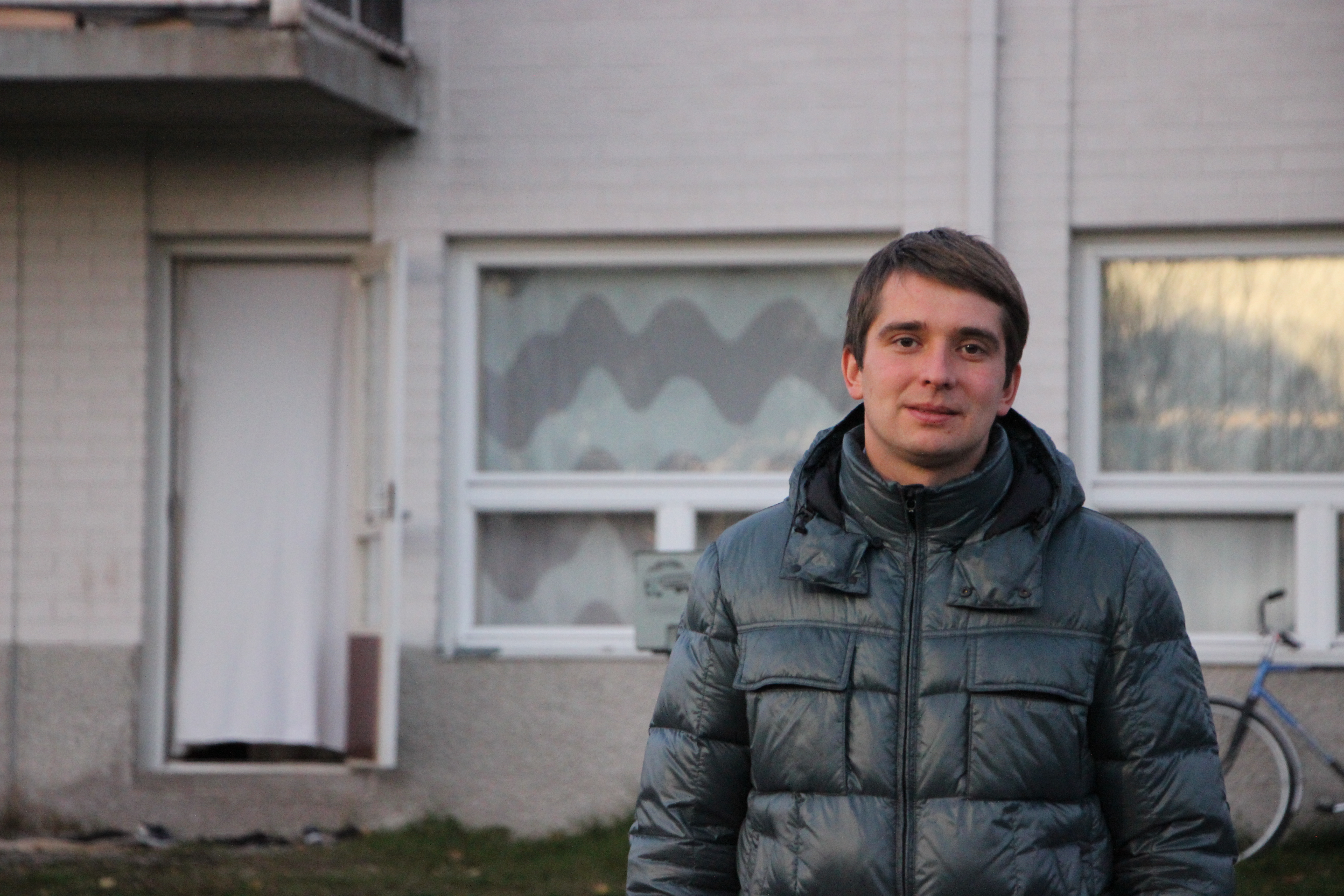
In Moscow, Sergei met his future wife Anna, her family, also witnesses, came to the capital from Siberia. However, young people did not want to live in Moscow, after the wedding they decided to move away from the hustle and bustle and closer to nature. On the advice of friends, the Kotelnikovs chose the Karelian city of Sortavala, which is 30 kilometers from the border with Finland. There was already a strong community of Jehovah's witnesses. For four years, the Kotelnikov family lived in a quiet Karelian outback: Sergey was engaged in the development of sites, Anna - needlework, both led active life in the community of witnesses. Everything changed after April 20, 2017, when the Supreme Court of Russia recognized the religious organization of Jehovah's Witnesses Extremist, and the activity was banned throughout the country.
“It's like any person to ban it to be.” Suppose if they decided to ban all Sergeev or Natalia, how to live with it? You have been such a person all your life, with your beliefs, views, and suddenly someone forbids you. How to be? What will be the relationship of people? How can one prohibit beliefs if they do not cause any harm to society? It seems that this does not correspond to either human values or human rights, ”Sergei says, recalling the first emotions after the organization was banned.
Even before the court forbade the organization, to preach the creed and live Jehovah's Witnesses in Sortaval, it became more and more difficult. According to Sergey, there were times when they were threatened: in border villages, during communication with people, the employees of the border service were rude to believers and "promised troubles." And after the court’s decision, the witnesses felt the negative from ordinary people, especially after a series of reports on federal channels: in the plots of Jehovah's followers they portrayed as obsessed fanatics and sectarians. According to Sergey, this greatly influenced the attitude of ordinary people towards them.
You have been such a person all your life, with your beliefs, views, and suddenly someone forbids you. How to be?
Together with the news about the ban on the organization, the Kotelnikovs learned that they would soon become parents. It was this event that was the reason that Sergei and Anna decided to leave Russia.
- There were thoughts that the situation would aggravate with witnesses, and in general with those who promote or promote free views. This was evident even before the court decision, when the organization was banned, considering it extremist. After the court’s decision, there was an amendment to the law in relation to children in preparation that it would be possible to select children from those who belong to extremist organizations. After analyzing this, we decided to leave. Again, [Sortavala] is small, many knew about us as witnesses, we talked a lot with the administration, with various organs, when everything was open. That is, there would be no problem in order to find us, ”says Sergey.
The Kotelnikovs were carefully chosen for the crossing the country: they studied the rules for granting refugee status, talked with friends and acquaintances, who already had the experience of moving to the USA, Canada, France, Germany, Finland. It was neighboring with Karelia, a good familiar Finland Sergei and Anna, and chose for moving. In the fall of 2017, the Kotelnikovs collected things, passports, arrived in the city of Kotka and in the local police department asked to provide them with asylum.
- Difficulties are related to the language, if there was America, it would be easier, but in other matters everything is fine, everything suits. With regard to how quickly they consider the case, everywhere in different ways, many who live in America have been waiting for the first interview for several years. Here this issue is considered longer than in other European countries, but, on the other hand, during this time you can learn a language, try to get a job, in some other way to manifest. The most difficult thing in Finland is to get a residence permit. Everything else is already easy to do, ”says Sergey.
A little more than a year has passed since the move. During this time, Kotelnikovs had a daughter Emily. At first, the Finnish state provided the Jehovah's family with Jehovah's Witnesses in a refugee camp in Connunsuo, and recently the Kotelnikovs moved to the camp in Imatra. The decisions on the issue of providing the official status of a refugee from the Finnish state Sergei and Anna have been waiting for more than six months. According to Sergey, the situation with Jehovah's witnesses from Russia for Finland is new, so the terms of consideration of applications are delayed, and it is difficult to predict the decision of the migration service.
-It is difficult, because there are no specific documents on the persecution, they say that you need to appeal, justify the reason. Perhaps this is due to the fact that Russia is a safe country. Here the question is more complicated than with Eritrea, Syria, but even to those countries where the open war is going on, they are sent back, because the war does not go throughout the country, and supposedly, you can move to the part where there is no war. And there are many cases when people are sent back. In our situation, we were asked: "If you move to another city in Russia"? But the decision was made throughout the territory, so there is no difference for us, ”says Sergey.
Migration service, Finland
According to the Migration Service of Finland, for 2017, as well as the first 10 months of 2018, 811 citizens of Russia submitted applications for the provision of asylum in Finland. However, Finnish officials do not provide the exact statistics of the reasons why the Russians request refuge. According to approximate calculations of the Suomi migration service, at the moment, the number of refuge petitioners includes about 250 Jehovah's witnesses. Of these, in only several cases, decisions were made (both positive and negative), however, in each case, according to the Finnish state, the reasons are individual.
In anticipation of the decision from the Finnish migration service, the Kotelnikovs are trying to use the time as useful for their family - they are engaged in raising a child, go to language courses, study the local labor market, and go to the local Jehovah's Witnesses twice a week. There, Russian advisers were accepted with understanding.
“They can help, tell me something.” When there were questions related to the paperwork, the Finns responded, are always ready to help, spend their time, effort. They worry, of course. They ask if you need something, ”says Kotelnikov.
I do not want the daughter to grow without a father or mother. When you understand that this is quite possible, I don't want to take risks
Kotelnikovs do not complain about living conditions: they accept the current situation with humility. Today they live the three of them in a room of 16 square meters. Of the pluses: their own bathroom, calm neighbors. Not enough, they say the Kotelnikovs, their kitchen, partially they solved this issue with the help of a multicooker and microwaves, but they still have to share a stove with neighbors. The Finnish state also gives the family a monthly allowance: 250 euros per adult and 200 per child. With Finnish prices, this is enough only for paramount needs.
Most of all, according to Sergey, they miss their relatives and friends who remained at home. But the issue of security in their situation is considered more important than anything else. Kotelnikovs are not going to return to Russia, in case of refusal of Finland to provide asylum, they intend to look for other options for emigration.
- I do not want the daughter to grow without a father or mother. When you understand that this is quite possible, I do not want to take risks. We will do our best so that our family is in a safe place. If they refuse here, we will use other points, we will exhaust all the possibilities. If not, we will try another country, maybe. While the situation in Russia does not change, it makes no sense to return. Already at the border you will have to communicate that you have violated the 90-day stay, should tell you for what reason. The probability that after that you will remain free is not big, ”says Sergey Kotelnikov.
Russia. Moscow
According to the official website of Jehovah's Witnesses in Russia, on November 19, 2018, 93 people are subjected to certain forms of criminal prosecution throughout the country. Of these, 25 people are in jail, 23 people under house arrest, 35 people under the subscription about the lower room. Most of them face six to 10 years in prison. Despite the increasingly difficult living conditions in the country for Jehovah's Witnesses, not many are decided to leave. Of the 175 thousand witnesses, only five thousand left Russia. The rest choose the path of a "conditional underground".
"We proceed from the fact that a judicial error is made"
Now only legal status has been liquidated, but at the same time believers are persecuted for their beliefs
Jehovah's Witness with more than 20 years of experience Nikolai (the name was changed at the request of the hero)-a native Muscovite. He came to faith after serving in the army at 21. Today he recalls the history of 1998, when, at the request of the prosecutor's office, for the first time in modern Russia, a lawsuit began on the ban on the activities of the Moscow community of Jehovah's Witnesses and its liquidation. In total, the trial lasted almost six years, in March 2004, the Moscow court decided to ban and liquidate the Moscow community of Jehovah's Witnesses. However, then it was the prohibition of the organization that the believers themselves continued to meet at meetings and confess religion. Today, according to Nikolai, from the point of view of the law, the situation differs from the former only in that all regional representative offices have fallen under the ban, but in practice it turns out that believing prohibits the creed, criminal proceedings are being developed on ordinary people, and placed under arrest.
- Then the decision then did not affect the life of believers in Moscow, because the believers held meetings. Now only legal status has been eliminated, but at the same time believers are persecuted for their beliefs, because they profess this religion. They put them in jail precisely for the fact that they believe. At the level of officials it is stated that witnesses are prohibited only as a legal entity, and doctrine is not prohibited. But in practice, we see that power structures are differently interpreted and applied against ordinary individuals. This contradiction should sooner or later resolve in some logical way, ”says Nikolai.
According to Nikolai, the persecution and pressure on believers are especially acute in the regions of Russia, and Moscow and St. Petersburg live in a state of "calm before the storm". Nikolai connects this lull in the cities of the capital's status with different factors: firstly, in the central region, mass detentions may have more publicity, and secondly, the power structures are waiting for decisions in the case against Dennis Kristensen, who has been in jail for two years and is waiting for a trial. According to Nikolai, in the event of a conviction to Kristensen, it is this case, which involves the strongest lawyers, which is followed by the Danish kingdom and the international community, can become a "trigger" for repressions against Jehovah's Witnesses.
There are cases when people were going to relax together in a cafe, and they were arrested and charged
Nikolai himself admits that the current situation around the witnesses presses psychologically every day: he has a wife, a child, and get a real term of conclusion, which already threatens some advancer in the regions of the country, the prospect of frightening. According to Nikolai, they already had to abandon mass meetings with other community members and meet in small groups. All, without exception, began to behave more carefully.
- There are cases when people were going to relax together in a cafe, and they were arrested, and charged. These are all conditions of pressure, persecution, all that I feel and see. But I believe that some nonsense is happening. Some of the most peaceful citizens are accused of extremism, pursued as the last terrorists. These are clearly incorrect things, I think that this should change for the better, ”says Nikolai. - Meetings are an integral part of worship of God, for us this ministry, a way to receive mutual encouragement of spiritual, such food from each other thanks to these meetings. Therefore, the meetings continue. Now we were forced to switch to such meetings, realizing that we do not violate our constitutional rights in this way. We proceed from the fact that a judicial error is made when a legal entity is prohibited in Russia, and persecution measures are applied to individuals, to citizens who are separately gathering in small groups, and no one took this right.
Those who remained in Russia today, according to Nikolai, are in standby mode: they believe that the persecution will stop. With his family, Nikolai also decided to wait for "better times", he considers it unfair that the authorities actually force citizens to leave the country because of faith. However, it does not exclude the fact that in a critical situation he and his family will have to leave.
- For me, the center of life interests is Russia. In Moscow, I was born, raised, I have relatives here, here is the opportunity to work, keep my family, I have many friends here. And I would not want to leave Russia. Despite the fact that such a situation develops, for me it is a homeland, a native country, ”says Nikolai.
"Everything has become a little different, but we are favorably different from the fascist Germany"
We stay, because here we have friends, prompting, some moral duty to support each other
A similar position is taken by the adviser to Nikolai from the Moscow community Eugene . Despite the fact that his mother lives in Israel and there is an opportunity without difficulties to leave Russia, neither Eugene himself, nor his wife Lyudmila want to leave the country.
-We stay, because here we have friends, prompting, some moral duty to support each other. While we can do this, we live in Russia. If for some reason it will be impossible, then we emigrate. But I would not want to. We love Russia, ”explains Eugene.
Eugene compares the current position of Jehovah's Witnesses in Russia with Hitler Germany. Then the Gestapo agents caught believers, put in concentration camps, and about 2,000 Jehovah's witnesses were executed. Свидетелям предлагали подписать бумагу об отречении веры взамен на свободу и сохраненную жизнь, но верующие отказывались от сделок. Сейчас, по словам Евгения, некоторым также предлагают подписать аналогичную бумагу и прекратить уголовное преследование, обыски, допросы, задержания, но люди отказываются.
– В этом плане есть схожесть и разница [с Германией], потому что все-таки некоторые представители силовых структур воспитаны, в отличие от фашизма, на идеях относительного гуманизма. Все стало немного по-другому, но мы выгодно отличаемся от фашистской Германии, – говорит Евгений.
Осторожно мы продолжаем делиться с другими тем, во что верим. Большими группами мы можем встретиться очень редко
При этом он подчеркивает, что и в гитлеровской Германии Свидетели Иеговы не прекратили встречаться даже в концлагерях. Такие встречи для верующих – это неотъемлемая часть религии. В Библейских книгах Свидетелей дается повеление собираться вместе, "чтобы укрепить веру друг друга, ободрить, восхвалить Бога речами, молитвами, песнями, жизнелюбие, желание помогать, нести библейские ценности другим людям".
– Осторожно мы продолжаем делиться с другими тем, во что верим. Большими группами мы можем встретиться очень редко. Недавно у нас была такая встреча в одном регионе. Мы видели, что за нами следят, мы переживали, что приедут люди в масках. But everything worked out. Но все это вызывает стресс, тем более что, когда встречаемся в квартирах, бывают случаи, когда приезжают люди в масках. Мы продолжаем это делать осторожно, но с радостью, потому что мы любим Библию, Бога, любим ближних. Видно, сила любви побеждает. Это не фанатизм, это желание встретиться с теми, кого мы любим, – поясняет Евгений.
По словам Евгения, религия Свидетелей Иеговы не осуждает тех, кто решает уехать от преследований, скорее, наоборот, считает это возможностью расширить проповедническое служение.
– Это похоже на одуванчик – на него дуют, семена разлетаются, благая весть разлетается. Семья моей жены в Сибирь попала "благодаря" силовой операции "Север" в 1951 году, когда около 5 тысяч семей Свидетелей Иеговы принудительно переселили в Сибирь. Но там они много доброго сделали для Бога, они там проповедовали, и там теперь много крепких общин. Так что те, кто куда-то уезжают, они помогают местным. И это хорошо, – подытоживает Евгений.
По информации Евгения, в 2018 году многие Свидетели Иеговы покинули свои города, кто-то уехал из страны, но есть и те, кто, наоборот, приезжает в Россию из-за границы, чтобы поддержать соверующих в непростое для них время. Среди них есть те, кто остается в России ненадолго, но и есть и те, кто находит работу и остается жить. По подсчетам Евгения, таких людей становится все больше.