
Translated material
How Sweden got rid of great power
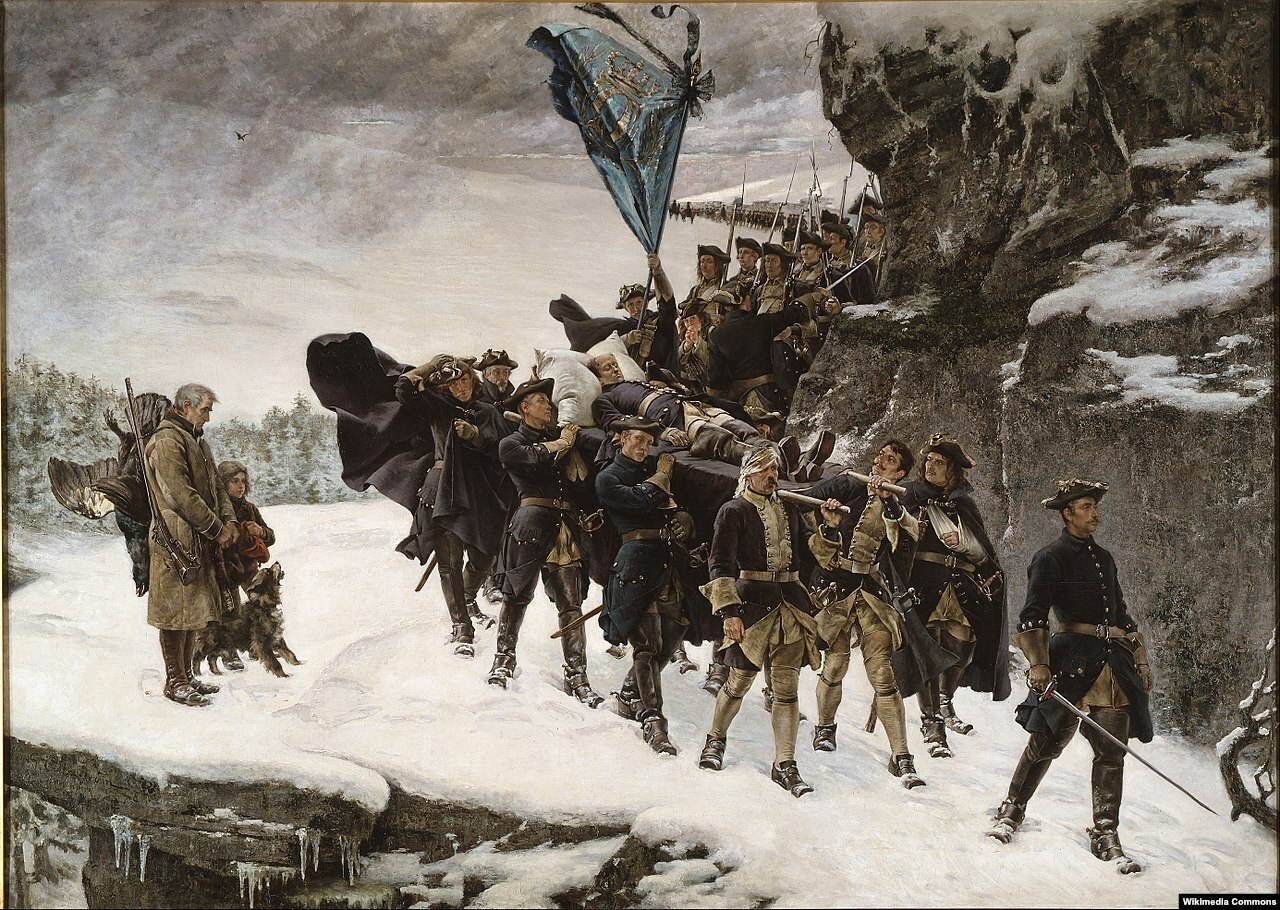
300 years ago, December 30, 1718, King of Sweden Karl XII died. Upon learning of his death, Peter I was sincerely upset and called Karl a brother.
At the end of the XVII century, the Moscow state remained a political teenager. The main players on the European stage were adult powers. The Russian king looked among them by some amateur, which became especially noticeable during the Grand Embassy undertaken by Peter.
In July 1698, alarmed by the report of the Streltskiyskiyskiyas, the king interrupted the tour and rushed from Vienna to Moscow, but made a stop in Silesia near Rava to meet with the Saxon Elector and the King of Poland Augustus II. Peter was fascinated by this bonvivan and tireless womanizer and recognized him his ideal. The four -day summit consisted of heavy libations and exercises in shooting from serf guns. In between, they talked about the fact that it was time to crop the Swedes, but did not decide anything concrete. “Upon returning to Moscow,” writes Sergey Solovyov, “Peter flaunted in the caftan and sword of Augustus, did not find words to praise his incomparable friend.”
16-year-old Charles XII, who entered the throne a year before, had not yet known in Europe. But the formidable power of the Swedish expeditionary corps, invincible Carolines, was very well known.
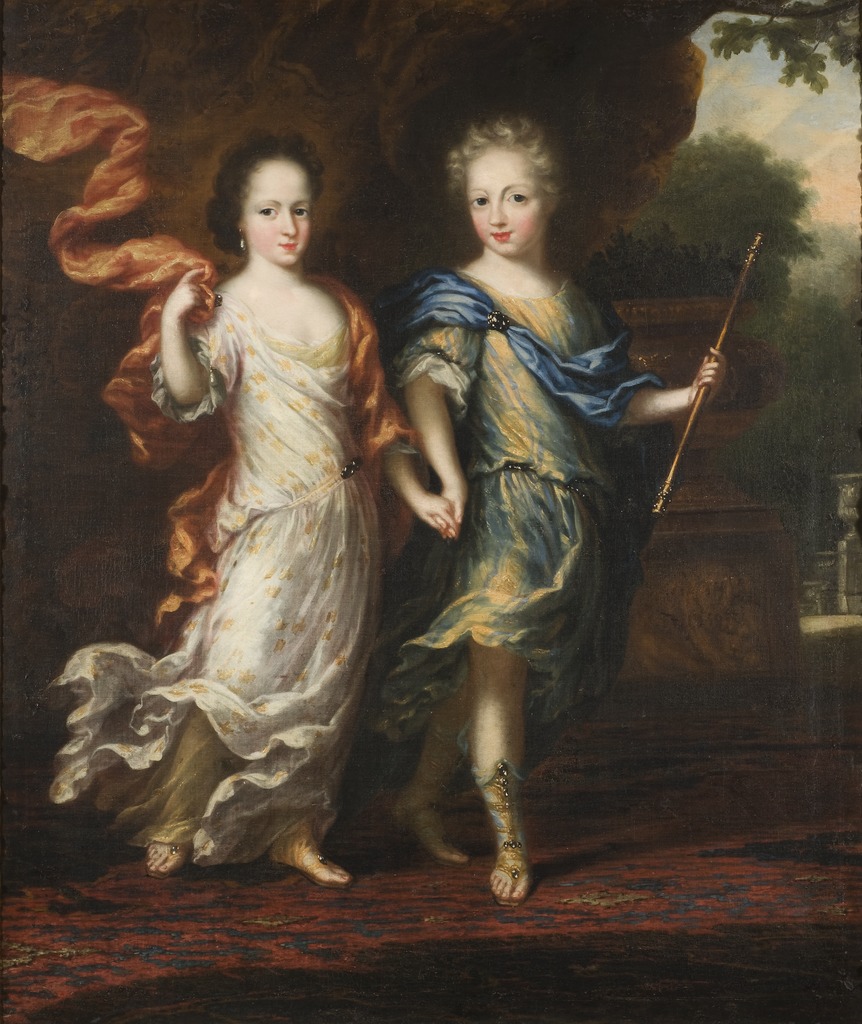
Ascetic and pious Lutherin, Karl was the exact opposite of both Peter and Augustus. A teenager by age, he seems to be a native of some other fabulous eras-either the Vikings or ancient heroes. Kazimir Valishevsky draws an expressive portrait of the young king:
It belongs to the wild horde of a shirt ... I stole the saber from the city to the city, from the village to the village, fighting without rest, living for war and war, aging and dying in armor, in the middle of the air, saturated with a murder, with a body covered with hands, tarnished with terrible atrocities, but with a pure soul and proud.
One of the memoirists, who accompanied Karl in his Russian campaign, likes the Swedish military leaders to the leaders of the Achaeans near Troy. He calls Karl Achilles. It is worth noting that on the eve of the Poltava battles, the king was wounded in the heel .
He inherited a great power from his father. It included Finland with Karelia, Ingermanland, Estland, Livonia, most of Pomerania, Bishoprics Bremen and Verden. The Yunosha King was determined to protect and expand these possessions.
The American series "Peter the Great". The script of Edward Anhalet and Robert Massey. Directors Marvin Chomski and Lawrence Schiller. Peter is Maximilian Shell, Karl is Christophe Aichgorn. NBC, 1986. In reality, Peter and Karl have never met.
Almost two years passed after Peter's meeting with August, before the Anti -Swedish Union of Denmark, Saxony and Russia began to gain real outlines. The allies did not have a common goal, but confused, stupid, arrogance and irresponsibility were enough. Therefore, Karl had every reason to believe that it would easily deal with each of them alone. So it happened.
In February 1700, the Saxons invaded Livonia, the richest Swedish province with the largest city in the Swedish kingdom - Riga. Nothing came out of the first siege of Riga: the Saxon army did not have siege artillery with him, and its number was insufficient. But in July, King August himself arrived at the walls of the city and demanded surrender. Governor Eric Dalberg, one of the best engineers-formers of his time, refused. In August, the Danish troops entered the Holstein, the eternal subject of the Danish and Swedish dispute. However, the Swedes undertook a counter -Ranger - they landed near Copenhagen, and the king of Denmark Frederick IV hastened to conclude peace with Karl, and even paid the indemnity. Fearing the arrival of the Swedish reinforcement, August took off the siege from Riga.
Peter did not know that Denmark had dropped out of the coalition - otherwise he would probably refrain from the declaration of Sweden's war. In general, he greatly overestimated his allies. At the end of August, the Russian army set off from Moscow and a month later reached Narva, hoping to quickly take the city with a small garrison and help the forces of Augustus near Riga. But Narva was too tough for the Muscovites. The siege of Narva was delayed, the hungry soldiers mowed the disease, the guns and gunpowder were unsuitable for use, the wagons with supplies were drowned in the autumn thaw. And in October, in the Russian camp it became known that Karl himself was coming for the revenue of Narva.
Russian and Soviet historians showed miracles of ingenuity, explaining the decision of Peter to leave the army. But the truth is banal: the king was chopped. The Swedes defeated the Russian forces that were four -exceeding their forces so famously that the “Narva Confusion” for a long time became the subject of the most offensive ridicule over Peter in Europe.
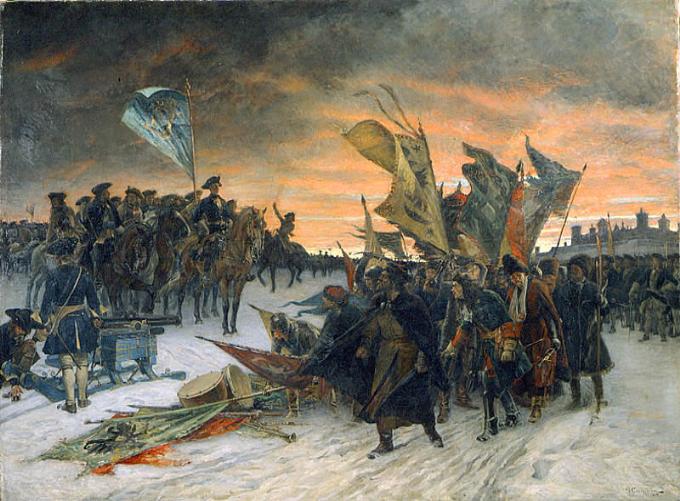
The king was hysterical despair. It seemed to him that all his great plans came an inglorious end. His kingdom crumbled. He offered the Swedes the world on any conditions. The victorious Karl was expected in Novgorod, Pskov, Tver, Moscow. Why didn’t Karl develop an offensive? Why did he unfold the troops and went away at such a psychologically advantageous moment? Why, instead of finishing the demoralized Russian army, did he go to fight with August, who was ready to conclude the world? Among the many explanations, the most paradoxical, but perhaps the most faithful was given by Count de Giskar, the French ambassador at the Headquarters of Karl: "The King of Sweden is afraid to be left without enemies."
The future seven years, as long as Karl smashed in Europe of the Saxons, Peter was engaged in the mobilization of resources and forced and superficial Europeanization of Russia. He was interested in exclusively the technical side of Western civilization. To the achievements of European philosophical thought, culture, ethics, ideas of humanism, he remained completely deaf and blind. In Europe, meanwhile, a large war began for the Spanish inheritance. The division of the Baltic lands has turned into a third -rate question.
Polish series "Countess Cosselle". Director of Jerzy Antchak. Charles XII - Daniel Olbrysky, August II - Mariusz Dmokhovsky. Zespół Filmowy Iluzjon, 1968. Meeting of kings in the capital of Saxony Leipzig. Karl and August call each other cousins, because they have a common grandfather on the female line - the king of Denmark Frederick III (1648–1670).
Peter never outlived a set of amazing. He was panicky afraid of the Swedish invasion and, when it began in the spring of 1708, ordered the troops to retreat, avoiding the general battle, and if he retreated, leaving behind the scorched land in order to "tire the ruin" of the enemy.
Ladoga governor Peter Apraksin cheerfully reported the king on August 10, 1702:
According to your sovereign decree, a military campaign in the enemy side of the Oregkhovskaya county and below the city of Oreshka along the Neva River to the Tosny River and to the most Izhora lands with your sovereign military people, and their enemy dwellings passed, many clergy and every village stole and ruined without a trace.
But Peter also demanded to try (from a letter General Field Marshal Boris Sheremetev to Livonia, August 17, 1702):
If you are still pleased to stay there, and how it is possible to ruin the earth, or what other noble help in God's help, so that the enemy of the refuge and the SICUCE (help. - V.A.) was impossible to submit to their cities.
Entire villages and forests were burned, the civilian population was destroyed or stolen for sale in slavery in the slave markets of Moscow and Crimea. Scandinavist historian Valery Skogrin clearly qualifies these actions as genocide .
From ruin, Karl and went to Ukraine-in the hope that the king will not ruin his land. Hope was in vain.
On 40 miles of the path, all villages were burned, all the supplies and fodder were spoiled, so we did not find anything there except the naked desert and forest spaces, in which a great many people and countless horses and other livestock died ... We were in the devastated country.
So recalled the Swedish soldier Christopher Gassman. A campaign in the left -bank Ukraine. Another evidence is the Frenchman in the Swedish service of Constanten de Tursville:
And Karl after two years spent in Saxony to collect exorbitant indemnities, despite all the pleasures that he received from August, he went from there in order to lose the fruits of seven years of triumph and glory in one day. I do not presume to describe here all the details of the terrible campaign that we committed to meet with the king, who, as a skilled commander, always set fire to, ruined or took everything that could give means for the existence of the army.
The general battle was for Karl the only way to put an end to the hardships that his army suffered. The war chronicle Daniel Krman writes :
There was no one who would not expect the enemy with joy, thinking that this day would be decisive and that the Swedes will finally get rid of hunger and other disasters that tormented them, like a slow death.
But the shortest and most capacious characteristics of the position of the Swedes are with Pushkin in "Poltava":
Wandered with the glory useless
The brave Carl glided over the abyss.
Today, Poltava Victoria has become a propaganda resource, a double -edged gun in the information war of Moscow and Kyiv. In this discussion, Sweden faded into the background, as if they were not fought with her. And this is understandable: the Swedes have long got rid of the Great Power Complex, for one and a half years they have not been fighting with anyone and soberly evaluate the results of the Northern War. “The Swedes,” writes historian Peter Englund, “left the stage of world history and took places in the auditorium.”
"Peter the Great." Second series. Scenario of Alexei Tolstoy, Vladimir Petrov, Nikolai Leshchenko. Director Vladimir Petrov. Karl XII - Edgar Garrik, Mazepa - Alexey Vatulya. Mosfilm, 1938.
King Charles was destined for nine and a half years of life, unheard of and homeless. He left Stockholm with a 17-year-old young man and never saw him again. In his kingdom, he was absent for 15 years. Chancellor Osterman, who conducted peace negotiations with Sweden on the Aland Islands, informed Peter from the words of the Swedish courtyard in May 1718:
The king has already become the whole seventh and smoked, and tokmo on both sides of the coomes of a little hair was left ... In the testimony of his great courage, Baron Shparu told that when the king was in Norway near Friedrichsgam, the king, although the whole city was already flared up, but did not want to retire before, while he had to retire, and the one was to be sophisticated, but to burn it, but to burn it, but Not far from that bridge, as an example, from the fortress to the Gostiny Dvor, there was a Danish battery about 16 guns, of which they constantly beat on the bridge; And when the king was retreating through that bridge, he went with big steps, but having already crossed the bridge he remembered that he ordered officers and soldiers to go in small steps; For the sake of him, so that he could not blame him that he walked with big steps, while others were small, he went through that bridge back and then turned in the third in small steps.
In Norway, with the siege of the Fredricksten fortress, his crazy bullet overtook his shallow, day a day with his victory under Narva.
Charles XII became the last European monarch who died on the battlefield. It is not for us to judge him today by Kutza Merka. We better listen to the songs about the northern war of the poet, translator and bard Ekaterina Chevkina, united in the Parliamentor cycle.
And a volley will break through - like a flash of blitz.
... in the album of the Lord in the picture -
Semenovets with a farmlian*
They will remain in an embrace forever.
And at home, burning
And at home - grief
And to nothing to both widows,
That the lion and the eagle shared the sea,
The cut of the surge of Europe is new.
* The Dalregege Meeting Infantry Regiment is the elite part of the army of Charles XII, its unofficial guard.