
Translated material
Constantinople acts in Visanthic
The date of the announcement of Ukrainian autocephaly is postponed, and it itself is becoming more and more limited
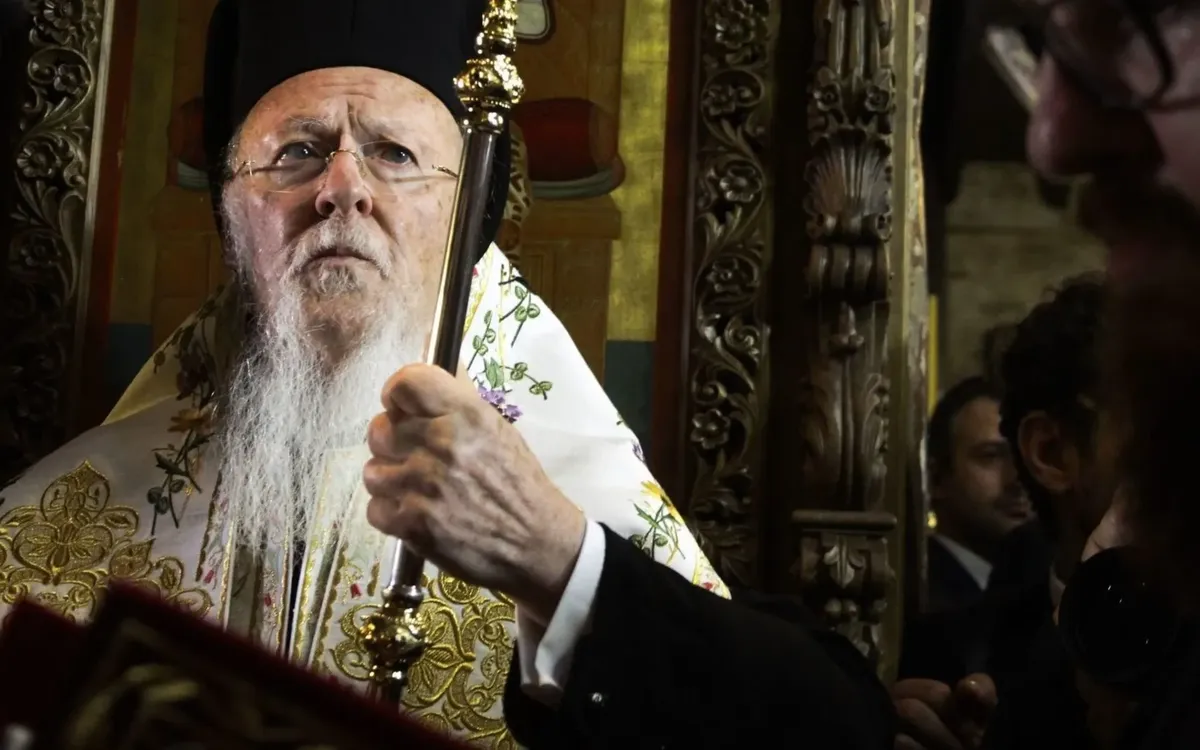
Truly Byzantine history with the provision of the Constantinople patriarch of autocephaly of the Ukrainian church continues. The Constantinople Synod, sitting on November 27–29 - the last time this year, did not give an exact answer when long -suffering autocephaly was proclaimed. “The Greeks are trading” - so they perceived the next uncertainty in Kyiv ...
In search of the "new model"
However, Rostislav Pavlenko, an adviser to the President of Ukraine, responsible for the project of autocephaly and personally traveling to a meeting in Istanbul, is trying to radiate optimism. According to him, “everything is going according to plan”: as promised by the Patriarchate of Constantinople in his press release of November 19, the unifying cathedral of the autocephalous church in Kyiv will be gathering during December, the Primate of the new Church will be elected on it, which will immediately go to Constantinople after Tomos about autocephaly. By the way, this is a very significant adjustment in the previously “approved” scenario:
Now there is practically no chance that the Ecumenical Patriarch Bartholomew will personally come to hand Tomos to Kyiv.
There is not so much known about the results of the last meeting of the Synod. The extremely laconic press release confirms the readiness of Constantinople to provide autocephaly with the Ukrainian Church (this phrase invariably appears in similar press releases since April of this year), Tomos is mentioned in passing and-most importantly, it is reported that the Synod agreed on a project of a certain constitutional charter of the new Ukrainian church. If you express our terms more familiar to us, we are most likely about the charter of the Church, an integral part of which will be Tomos. It is assumed that since Constantinople is so carefully working out the charter, which, in theory, should be adopted by the Ukrainian bishops themselves at the Unification Council, which means that it means that
He is looking for a certain “new model” of autocephaly, in which the independence of the Ukrainian church will be limited by its significant dependence on Constantinople.
In general, in the modern Orthodox world there are autocephals of “two types” - ancients that arose back in the time of the Ecumenical Councils of the 4th - 8th centuries. Both these cathedrals mentioned in the canons, and new, national, arose in the process of the collapse of empires (Byzantine, Ottoman or Russian). Ancient autocephalys make up the so -called “pentarchy” (“five -year”), which the Monk Theodore Studit likened to five senses, without which the body of the church cannot normally function. After falling from the Orthodoxy of the Roman Church in the Pentarchy, only four members remained - the patriarchy of Constantinople, Alexandria, Antioch and Jerusalem. Historically, they were all Greek, however, the Antioch Patriarchate gradually passed under the control of the Orthodox Arabs.
Nevertheless, the rest of the existing autocephalous churches received their status from Constantinople in the era of the late Middle Ages or in modern times. They do not have the same authority of antiquity and the same degree of independence as the Patriarchate of the Pentarchy. The leaders of the latest autocephaly Constantinople do not even give the title of Patriarch - they are content with the level of the archbishop or metropolitan.
An important symbolic sign of the dependence of these latest autocephalys on Constantinople is a ban on worldview: the sacred fragrant oil used in the anointing of the newly baptized or when the churches are consecrated, these churches are required to receive in Istanbul.
Experts suggest that now, after the actual rupture of the Patriarchate of Constantinople with his, in fact, the only competitor in the Orthodox world of the Russian Orthodox Church MP, the claims of the Ecumenical Church for leadership among other churches will increase significantly, and the charter of the new Ukrainian church will be used as a declaration of this new status of Constantinople. That is
The volume of Ukrainian autocephaly will be even more modest than that of the “second level” autocephaly, established in the twentieth century (Romanian, Polish, Albanian or Czech lands and Slovakia).
Stavropia for the Patriarch
The peculiarity of the Ukrainian situation also lies in the fact that Constantinople, in fact, leads the matter of constituting three parallel Orthodox jurisdictions in the country. In addition to the autocephalous church itself, thousands of parishes of the Moscow Patriarchate will remain in Ukraine, which, most likely, will be renamed the “Russian Orthodox Church in Ukraine”. The Russian Orthodox Church, as you know, broke the canonical communication with the Patriarchate of Constantinople, but he, for his part, did not break communicating with the Russian Orthodox Church, and therefore will continue to count these parishes with canonical ones. In addition, according to the agreement signed on November 3, the President of Ukraine with Patriarch Bartholomew (and still, by the way, not published), the Ukrainian state is a guarantor of restoring the historical “Stavropias” of Constantinople in the country.
At one time, in the XVI - XVII centuries, when the authorities of the Commonwealth, which included most of the territory of Ukraine, tried to deprive the Orthodox Church of the legal status and force their Orthodox subjects to accept the union with the Catholic Church (where all the Orthodox bishops of Ukraine gradually crossed), Constantinople accepted the most important monasteries and fraternities of Ukraine into its Brotherhood in its St. jurisdiction. Such an extraterritorial status, when the Patriarch sees a particular community from the power of the local bishop and subordinates directly to himself, and is called in the Greek tradition of "Stavropy."
Now we are talking about the restoration of 7 to 20 Constantinople Stavropias in Ukraine, and these are the most tidbits of church real estate: from the St. Andrew Church and the Pechersk Lavra in Kyiv to the Assumption Church in Lviv and the Manyavsky monastery at the Carpathians.
Knowing about the traditional piety of the Ukrainian people, Constantinople expects to significantly increase the revenue part of its budget with the help of these Stavropigia.
The catch only in the fact that all these objects are already in the use of communities of any of the three main Ukrainian churches-the UOC-MP, the UOC of the Communist Party, or the UAC. And if the seizure of the St. Andrew's Church in Kyiv at the UAPC has passed relatively painlessly, since it is not yet known to be, for example, with a change in the status of the Kiev-Pechersk Lavra of the UOC or the Manyavsky Sign of the UOC, Ukrainian authorities do not know.
Candidate No. 1
Over time, there is more clarity in the “sacramental” issue of who will lead the new church. From the stories of the bishops of the Kyiv Patriarchate, who owns the “control package” of votes in the future unification cathedral, it became clear that 89-year-old Patriarch Filaret (Denisenko) would not insist on his re-election. The fact is that his candidacy is not approved by Constantinople, and this has become perhaps the main factor in the delay in the process of providing autocephaly.
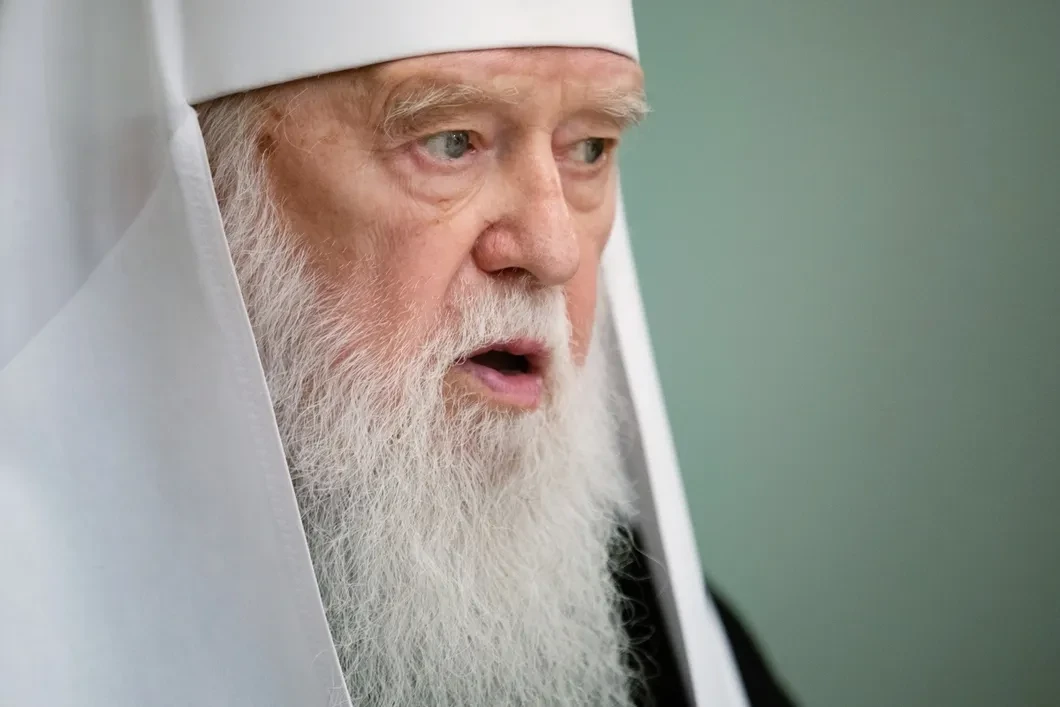
In October, Constantinople removed the anathema imposed on him from Filaret, but recognized him only as a metropolitan without a department. For the Moscow Patriarchate and his supporters in other local churches, Filaret remains a simple monk, excommunicated from church communication and a devoted curse.
Given the dead -end situation, Filaret seemed to agree to transfer to the younger candidate, but continues to insist on recognizing himself as an “honorary patriarch” and on the right to preside at meetings of the autocephalous synod. Besides,
Filaret achieves the mention of his name in the tomos about autocephaly, or at least in the preamble to the charter of the new church. He does not officially announce this yet, preserving the intrigue to the cathedral itself.
In the case of self-discharge of Filaret, candidate No. 1 becomes the current patriarchal governor of the UOC-KP 39-year-old Metropolitan Epiphanius (Dumenko). He became a bishop in 2009, but made a quick church career because he uses a reputation as one of the most educated people in the Kiev Patriarchate (the future Metropolitan has trained at the Faculty of Philosophy of the University of Athenian and learned Greek quite well).
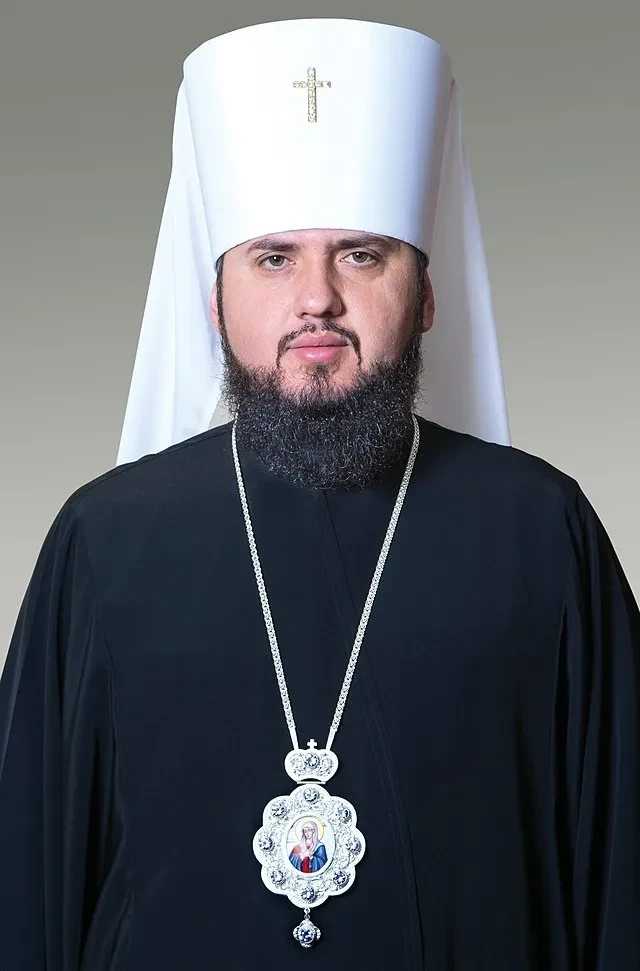
Now Epiphanius is heading the Kyiv Orthodox Theological Academy, the Synodal Directorate for Spiritual Education, the editorial board of two theological magazines and has about 50 scientific publications.
At the same time, it is very difficult to talk about some special “program” of Epiphanius as a candidate in the Primate-unlike such distinctive hierarchs of the UOC-KP, as Archbishop Evstratius (Zorya) or Metropolitan Dimitri (Rudyuk), he did not particularly manifest himself in the church and public sphere, always remaining in the shadow of more powerful hierarchs: at first the Rivne Metropolitan Daniil (Chokalyuk), and then Patriarch Filaret.
This gives reason to consider the Epiphanius of Alter Ego Filaret.
SBU against the UOC MP
The situation around the UOC MP, meanwhile, is aggravated. The last days were marked by two scandals with the participation of the SBU: at first, a number of pro-Office bishops began to complain that they were called in the special service “for a conversation”, and on November 30 a demonstration search was conducted in the luxurious estate of the governor of the Kiev-Pechersk Lavra Metropolitan Paul (Lebed) near Kiev.
The Metropolitan, which Ukrainian media is often called Pasha-Mercedes for addiction to luxury machines and gross violation of traffic rules, is more of a comic reputation in Ukraine.

From time to time, he appears on Orthodox channels with conspiracy therapy sermons that have a very distant attitude to religion. The last hit was his story about how the United States created four secret laboratories in Ukraine, where mosquito mosquitoes are bred, from whose bites millions of Ukrainians die. The SBU suspects Paul of inciting inter -religious growth through very sharp statements to the Primate of two “competing” churches - the UOC -KP and UAPC.
Against the background of martial law, declared in 10 regions of Ukraine, and a radical restriction for Russians the right to cross the border of the SBU also made a statement that Moscow had sent scouts to Ukraine under the guise of monks and clergy.
From now on, obviously, the mass of distribution of Ukrainian species for foreigners at the petition of Orthodox communities will be completely discontinued in the past.
***
Of course, any delay in the proclamation of autocephaly of the Ukrainian Church is perceived as a small “Victory of Moscow”. Now, when the unification cathedral did not take place on November 22 (namely, on this day it was pronounced by the speaker of the Verkhovna Rada Andrei Parubiy), as a new date is considered on December 13 - the holiday of St. Apostle Andrei the First -Called. According to legend, captured in the "Tale of Bygone Years", he preached in Rus' and predicted the foundation of Kyiv. That is why the most beautiful temple of the city is dedicated to this apostle, and it was this temple that transmitted to the first Stavropia of the Patriarchate of Constantinople in Ukraine. The Apostle Andrei is also revered as the founder of the Church of Constantinople, that is, as a living symbol of the kinship of Kyiv and Constantinople.
But this beautiful symbolism, alas, does not depend much. Constantinople took into account the decision on the appointment of the date of the cathedral. And the only thing we know for sure is that this date will be announced during December.