
Translated material
The official testing of drones in Moscow will begin in 2019. A set of rules was prepared for the participants in the movement
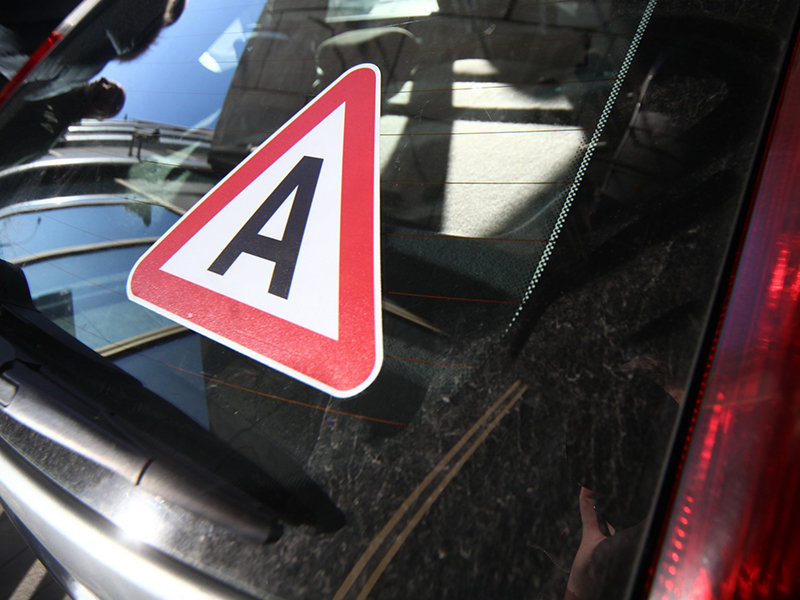
On December 1, Russia, previously signed by the head of government, Dmitry Medvedev, a decree on the conduct of a three -year experiment to test in Moscow and Tatarstan of unmanned vehicles on public roads. A number of companies are already preparing to take part in this experiment, and experts have developed a list of rules for interaction with drones for other participants in the movement.
According to RBC , the press secretary of the National Technological Initiative "Autonet", which acts as a technical consultant to the project, Yaroslav Fedoseyev, the testing of unmanned vehicles on the streets of Moscow will begin in early 2019, and Yandex, KamAZ, MADI and participants in the unmanned vehicle testing in the winter conditions of the winter city intend to take part in the tests.
As Fedoseev specified, Yandex plans to register about 200 unmanned vehicles in the experiment, which will drive in Moscow and Tatarstan. It is still difficult to talk about how much the company will spend on this project, but Fedoseev pointed out the need to consider the possibility of commercial use of drones, for example, as a taxi. Note that Yandex unmanned machines are already taking tests as a taxi in Innopolis and Skolkovo .
It is assumed that in the framework of the Moscow part of the experiment, unmanned vehicles participating in it will be able to drive throughout the city, including on the third transport ring and on the Moscow Ring Road.
“You need to understand how to conduct a highly automated vehicle in the central regions of the city, on the outskirts, in sleeping areas, on the tracks to collect maximum information about the behavior of artificial intelligence in different conditions of urban traffic,” Fedoseev said, clarifying that the traffic controls will observe the traffic rules, and there will be engineers who can take up control if there will be control if the management will take control if the management is in this way. There will be a need.
The conditions of the experiment also provide for a constant video recording of drones of drones using cameras installed outside the machine and in the cabin. Records from cameras will be stored in the Ministry of Internal Affairs and at the developers of the machine.
10 rules that should be observed at the sight of an unmanned machine
Fedoseev also said that unmanned vehicles will receive a marking in the form of a special sign “A” (autonomous driving), and for the safety of other participants in the movement, Autonet experts developed a set of ten rules, which should be adhered to at the sight of a drone:
1. If at the intersection you see an unmanned car, then strictly follow the rules of movement at a traffic light (on the "yellow" - stand still).
2. Do not stick out of the window and do not clash your hands in front of the drone.
3. It is necessary to use turn signals and other light flashing signals when performing maneuvers. Automated transport reads them and determines the further path and speed, based on the data obtained.
4. Do not try to pay attention to the engineer-pilot of an automated car to yourself, alarm for no reason.
5. Drivers of motorcycles are not worth passing next to drones, trying to touch the automated vehicle.
6. Keep calm! Do not be distracted from the road, trying to shoot a functioning drone on video.
7. For precautions, do not try to run up to the drone, even if you see the "zebra".
8. During the intersection of the carriageway, be as concentrated as possible, look around, since a car with letter "A" may appear at any time.
9. Pedestrians should be carried out only by appropriate markings, observing the safe distance of the intersection.
10. During the intersection of the carriageway, it is better to remove the hood (or other elements of clothing that limit the review) and not use technical means such as headphones, a headset and so on, which can also prevent the perception of the environment.
Note that in general, all these rules are reasonable to observe and, regardless of the presence of unmanned machines on the road.