
Translated material
Constitution days
For transit from authoritarianism for democracy, you must prepare today: interviews of the professors of the NIU-VSE Elena Lukyanova and Ilya Shablinsky
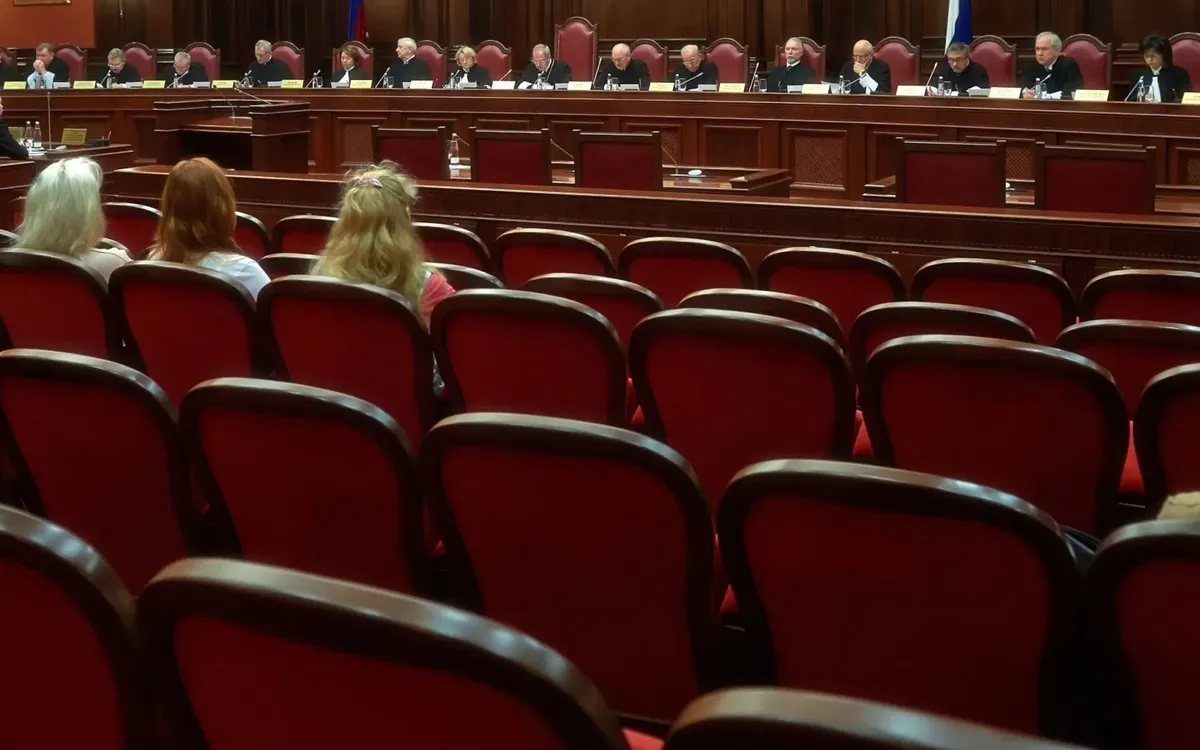
On December 12, the current Constitution of the Russian Federation marks a quarter century. Is this the very document that, in the latter, so far in the Russian history of the referendum on December 12, 1993, supported 58 percent of Russians?
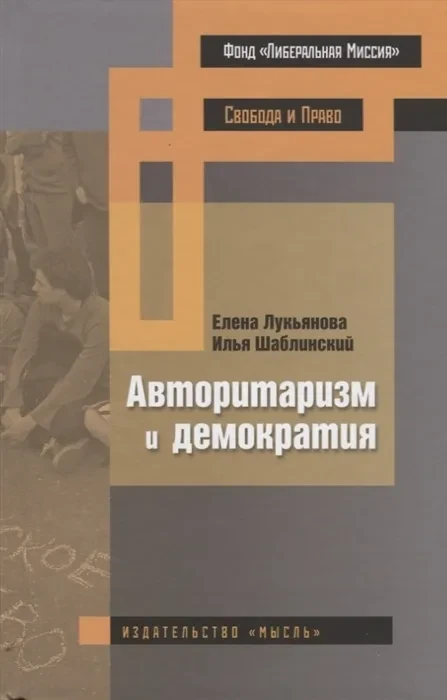
In the same anniversary, year, the Liberal Mission Foundation and the Publishing House of Thought issued the book by Elena Lukyanova and Ilya Shablinsky “Authorism and Democracy”, in which two professors of the Higher School of Economics analyze not formal, but actual changes in the constitutional system in Russia over the past 25 years. The observer of the “New” Leonid Nikitinsky talked to them (the opinions of both authors do not contradict each other and for the convenience of reading their answers are combined).
- We still remember another holiday: the day of the Soviet Constitution on December 5 (since 1936, when it was adopted). In 1993, this birthday moved only for a week. But is the difference between these two constitutions great? If the texts still play a decorative role rather, is it all the same, what is written there?
“Well, it’s not worthwhile either.” The Stalin Constitution of 1936 was adopted without any calculation that it would protect someone’s rights, and even then, although much later, it turned out to be "a little acting." When the USSR, wanting to have a good person in the international arena, signed the Helsinki act in 1975, he took the obligation to observe a well -known set of human rights, and this was the result of the fact that the Jews, who wanted to emigrate to Israel, began to release a little, although he was up to many difficulties. The normative text is always charged on action and stores this energy - a question in those public forces (both within the country and in the international community), which can give it “acceleration” or, on the contrary, to slow down until a complete stop.
Unlike the Soviet text of the 1993 Russian Constitution, he was conceived and was not accepted at all, and this force continues to influence our lives. It is very difficult, overcoming a lot of obstacles deliberately created by the bureaucracy, including at the legislative level, not fully and often selectively selectively, but still the Constitution works - thanks to the civil society, the European Court of Human Rights, which has preserved individual independent media and sometimes even thanks to the constitutional court. In conditions of growing restrictions, we are still free in movement around the world, we can hold public events, create parties and public organizations. We can watch the elections and talk loudly about this, at least in the "new". This is a narrow democratic portal for the future transit to democracy, and it must be carefully protected, therefore, we consider it necessary to treat the Constitution with appropriate respect. What then happened with the actual regime is only to some extent from the shortcomings of its text, but mostly it became the result of other factors, including a historically random and personal nature.
- And what, in fact, are the shortcomings of the text? And how could they appear there if the best lawyers of the country worked on the text of the Constitution in 1993?
- Yes, then there were still such lawyers. But many of them have already died, and the voice of others has become less audible or has changed a lot - this is, perhaps, the whole thing. And in 1993, the process of preparing the text of the Constitution was quite democratic, but the process of its adoption itself is only externally: such complex and important texts should not be put on a popular vote at all. “All the people”, if he was even able to evaluate all the nuances, could no longer change anything in the project, in which the conjunctural, purely political amendments were also introduced before the referendum.
However, the fact that the “no” constitution was said by more than 40 percent of the voted, talks about the situation in which the situation it was accepted.
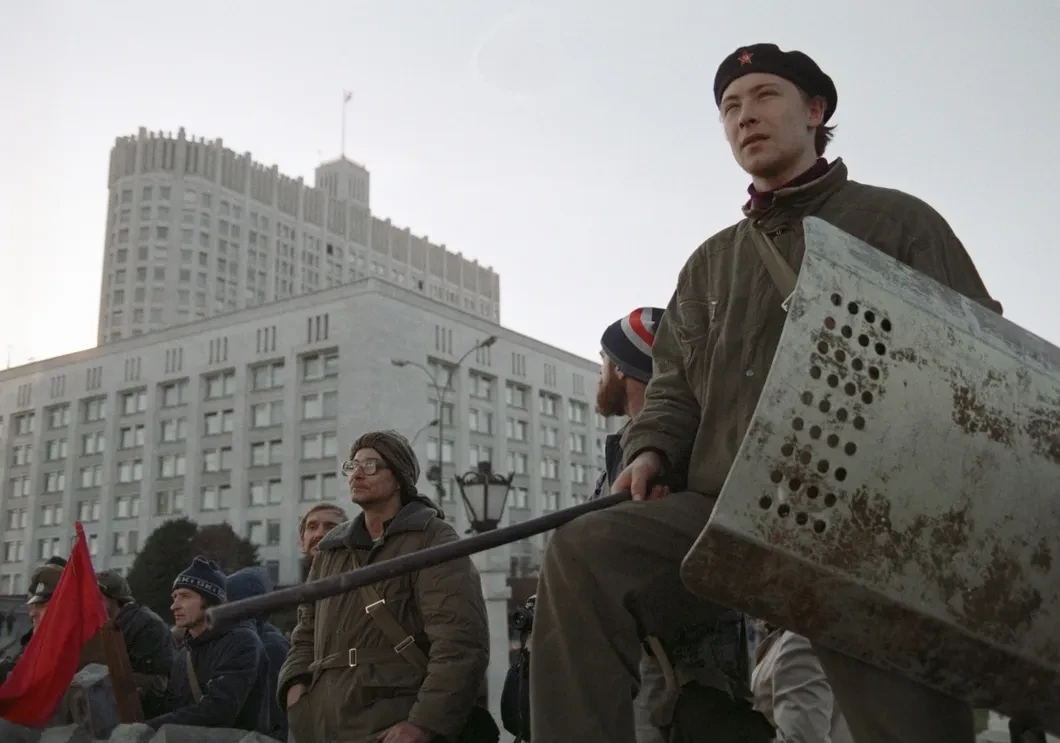
The very moment of the referendum: two months after the forced acceleration by President Yeltsin Parliament (Supreme Council) in October 1993 - dictated the choice in the project of a tough presidential form of government. But at the same time, for Yeltsin, human rights were still not an empty sound. As a result, the design turned out to be internally contradictory (to the degree of antagonism): chapters 1, 2 and 9 fix the democratic foundations of the reign and postulate the inviolability of the basic human rights, and chapters 3–8 create a strong basis for the authoritarian regime of government.
And yet the main trouble is not in the norms. By themselves, they could also serve democracy. The point is still in the mores. Authoritarian regimes most often do not need any legal basis. But if it is laid down, this creates for the appeal for undivided power and additional opportunities, and difficult to tempts.
What is the authoritarian bias of this constitution? In the right of the president to appoint the head of government, ignoring the disagreement of parliament. In his right to resign the government, without receiving the consent of the Duma. The fact that the Federation Council is not elected, but “is formed” in the manner that is not established by the Constitution. In that, finally, that the president has the right to single -handedly determine the foundations of domestic and foreign policy, as well as, which is extremely important, to form the courts and corps of the judicial authorities.
These generic injuries will then give a lot of anti -constitutional complications, although their development is still restrained by the fact that in accordance with Art. 135 of the Constitution of the provisions of its chapters 1, 2 and 9 cannot be revised by the Federal Assembly.
- But even chapter 3-8 made only point, albeit important, amendments, the rest of their text remained unchanged, and in the meantime we were already in a completely different country.
- We would designate this as creeping anti -constitutionalism, and we describe this process in detail and in stages in our book. Russian constitutional transformation - the creation of the hands of the winners in the political struggle, which, legally coming to power, received the opportunity to change the conditions of political and economic competition with it. All the counter-reforms of de jure did not go beyond the constitution: the cancellation of the elections of members of the Federation Council in 2000 and the heads of the constituent entities of the Federation in 2004, numerous amendments to the election legislation that impede the creation of parties and the nomination of independent candidates, amendments to the mechanism of the appointment of higher courts. Changes in budgetary legislation are fundamental and inconspicuous for non -specialists, which, in fact, cancel the federal structure and eliminate local self -government (although they are directly enshrined in the Constitution).
“Creeping anti -constitutionalism” imperceptibly “crawls” into areas, as if far from constitutional and even legislative. The defeat of NTV at the very beginning of the zero seemed to have nothing to do with legislative regulation, but sharply and for a long time changed the regime of freedom of speech in the country. In the end, the monster of the “presidential administration (AP)”-the shadow government over the government-arose not only somewhere on the side of the Constitution, where there is not a word about him, but his activity was not regulated at all by any laws. Meanwhile, the foundations of domestic and foreign policy are determined here, candidates for senior positions are selected, including in the regions, political parties are created or prohibited, and in general the nuts are “twisted”. All this happens outside the framework of the Constitution, and point amendments to the laws of a lower level, when necessary or want, they just serve this non -institutional process “for beauty”.
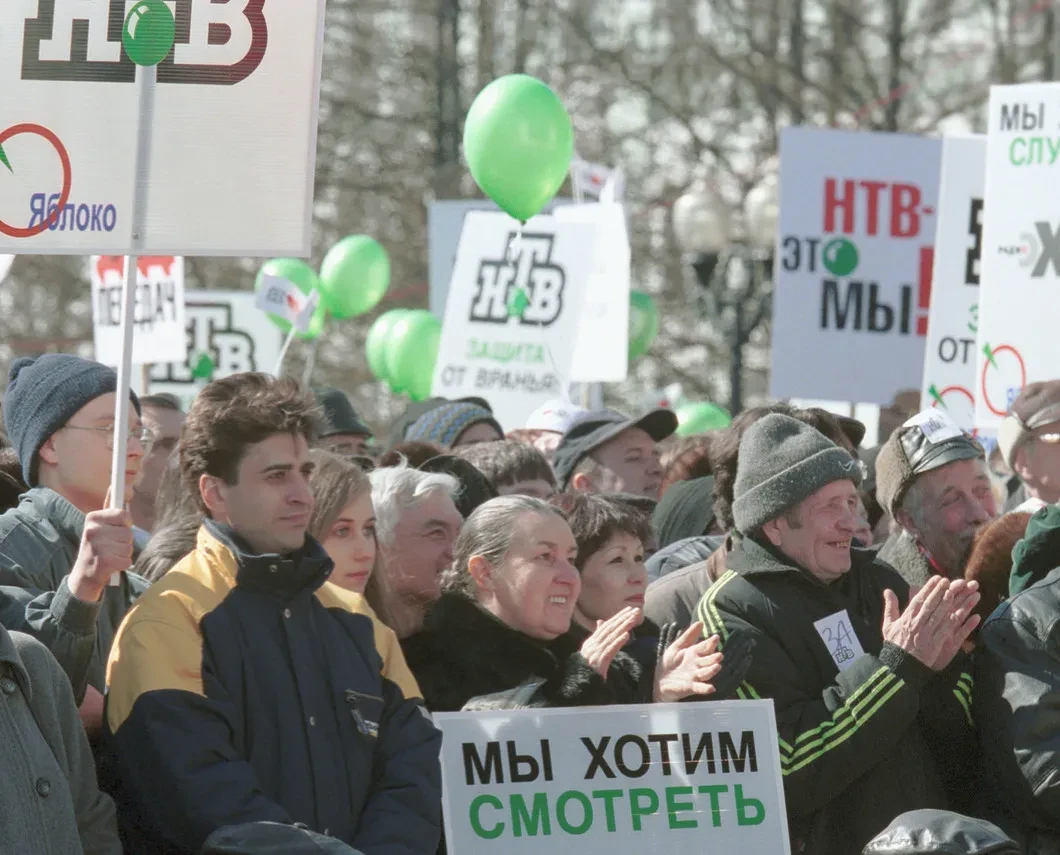
-In order for the differences between the “person” and “the wrong side” of state power to reach such (at the same time understandable specialists) degree, it is necessary to disable those mechanisms of the Constitution that were laid down precisely in order to compare de-jure with “de-facto”.
- Of course, and this is primarily the courts starting with the constitutional: the judiciary as an independent branch of the authorities must be put under control. Yeltsin also dealt with the Constitutional Court: when adopting the Constitutional Law on him in 1994, the Constitutional Court was deprived of his former right to evaluate the constitutionality of laws on his own initiative. The rest under the new president was completed not so much by legislative as personnel methods: by establishing control over the appointment and displacement of judges and chairmen of courts using an opaque personnel commission, AP achieved that the judges (not fools) themselves understand which decisions and sentences to pass (or rather, which are better not to pass). In addition, it had to be canceled by parliamentary control, but this is achieved by manipulating the elections, and to drive journalists into a stall - well, this is already a fairy tale about a white bull.
- In the book “Authoritarianism and Democracy” you both position yourself as lawyers - this is even specially emphasized in reservations about the methodology. But others, “acting”, lawyers will tell you that you reason as “political scientists” (I put quotes, because in today's Russia this specialty is really not very clear, which means).
- The question is important from the point of view of the fact that today is covered by “legal positivism”: they say, Dura Lex Sed Lex, or “The Court decided,” because you are not opponents of the rule of law? No, we, on the contrary, are adherents of the rule of law, but law and law are not the same thing, and to the extent that the “law on foreign agents” violates constitutional rights to unite and destroys civil society, this is not right. After the “case of Yukos”, which began in 2003, the mechanism of election enforcement arose and quickly honed and quickly honed - the main tool not of the constitutional system, but the actual regime. But if the right is not equal to everyone, then this is not it, and here the sacramental “Law is the Law” does not convince anyone. And the price of those “lawyers” who do not compare, as you yourself just formulated, “de jure” with “de fact”: we must look at the result of the law, and not just the law itself as a fetish.
- If the Russian regime has become the result of historical and random, including personal, factors, then how to explain similar processes in other post -Soviet states?
- But this is an inaccurate question, and it still needs to be expanded. Firstly, not all.
It is characteristic that the states are the former Soviet republics, which initially elected the parliamentary form of government (Latvia, Lithuania, Moldova, Estonia), the authoritarian scenario was avoided.
Others came to one or another forms of parliamentary republics after severe shocks (Kyrgyzstan, Georgia, Armenia). The basis of all Ukrainian Maidans was also a choice towards restrictions on the presidential authority. That is, today there are seven and a half such countries (since there is no final clarity with Ukraine) out of fifteen - exactly half of the former Soviet republics.
On the other hand, in Azerbaijan, in Belarus, in Kazakhstan, Uzbekistan, Turkmenistan and Tajikistan, the Russian Constitution was copied to one degree or another, in any case, the regimes similar to the Russian, albeit with national features, were formed in terms of dominant presidential powers. At the same time, the first stages of this process in different post -Soviet states were significantly different. In Azerbaijan, Belarus, Russia and Kazakhstan, the first years after the collapse of the USSR, relatively democratic constitutions acted (including the former Soviet, democratic in form and supplemented by dozens of amendments), for some time there were elements of real political competition, parliaments, parties, NGOs and media functioned relatively freely.
For the development of an authoritarian tendency, it was required that the post of head of state was taken by a person who strives to concentrate in his hands all the full power and perceives democratic institutions either as an annoying obstacle (which should be eliminated), or as an element of the political facade (which should play only a decorative function). But, interestingly, such leaders appeared in all cases. The temptation of the “hard hand” was great and justified authoritarianism in the eyes of voters, especially since all these countries passed through great economic difficulties. It was probably affected by the fact that the elites pushing up the first persons were formed even under Soviet authoritarianism.
And the personal factor - what! -It turns out that it was more important than we were once inspired in the course of "historical materialism." We see how democratic transit weakened in the Czech Republic with the departure of Vaclav Havel. But the point, probably, is not in the origin of leaders from special services or from the former party elites (after all, Gorbachev came from the party elite), but rather in education in the broad sense of the word, in the ability to see the world in all its diversity. As democracies grow up, the meaning of the personal factor weakens, which is confirmed by today's example of the United States, but for becoming democracies and states in the process of historical transit, it is critical. By the way, the fact that the Russian Federation, unlike some post-Soviet states, still did not slide down to totalitarianism, is also explained to a large extent, probably the personality of the head of state: Putin, of course, is an adherent of authoritarian methods of government (“vertical of power”), but
He is not cruel, does not enjoy the opponents of the opponents - for him this is not a goal, but only costs.
Speaking about the role of personality, one must always connect this issue with the role and strength of institutions. A quarter of a century ago, it was generally accepted to believe that it was enough to establish democratic political institutions, and then democracy would earn itself as perpetuum mobile. But our practice itself showed that this is not so: political institutions are like fortresses: they must not only be well designed, but also inhabit it correctly. Ultimately, the legitimacy is created by the “population”, the consensus of his majority.
- Here we approached the most painful and controversial issue. Is there a choice of “hard hand”, that is, authoritarianism, the choice of who, according to the Constitution (Article 3, paragraph 1), remains the “bearer of sovereignty and the only source of power”, namely the “multinational people of the Russian Federation”? Is this not the same “special path” or “identity”, which Valery Zorkin is interpreted about, with whom Elena Anatolyevna loves to polemicize so much? What if for the human society an authoritarian structure is generally more natural than democracy?
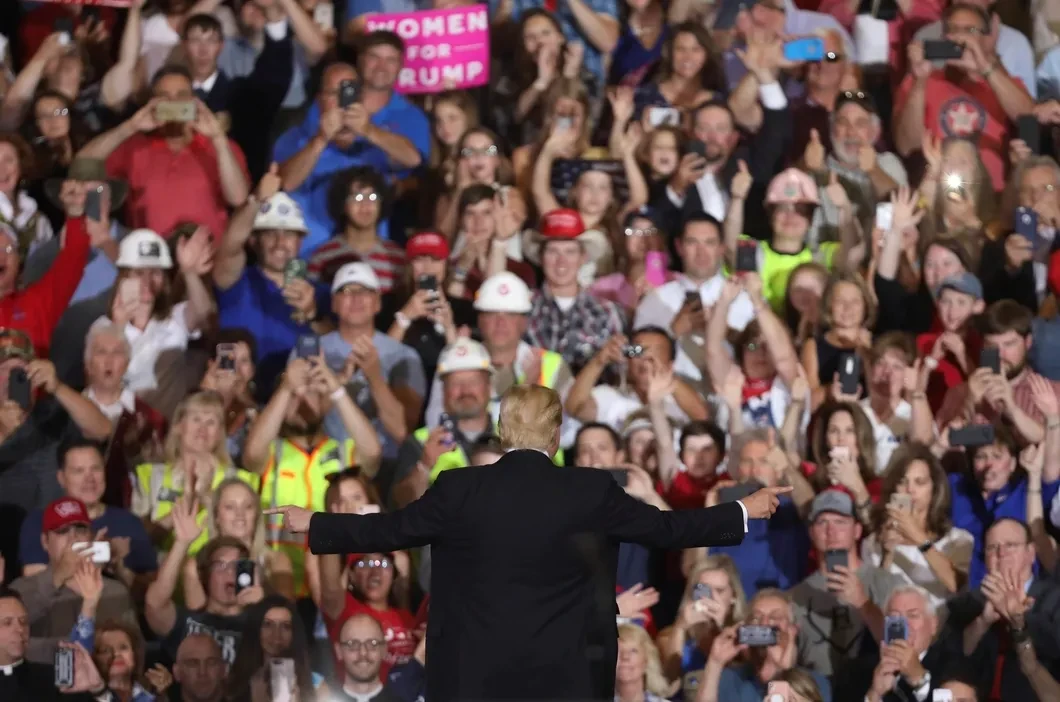
- To this question to us, two authors of the same book, it is not easy for us to give the same answer, but we will still try. "Identity"? And Trump? And "Brexit", and Hungary, and Poland? The temptation to close and appeal to archaic traditions always and everywhere, especially since democracy, probably, has not yet managed to adapt its institutions to the fundamentally new and constantly changing conditions of digital society. This is a civilizational choice that faces the peoples again and again. But on the side of democracy there is the argument that closed societies already in the twentieth century were economically and intellectually uncompetitive, and in modern conditions all the more. The “naturalness” of authoritarianism remained somewhere in the 17th century, at Hobbes, who, on the one hand, put forward the idea of a social contract as an alternative to the “war of all against all”, and on the other, remained a convinced supporter of the “hard hand”. The twentieth century gave rise not only by hellish totalitarian systems like the Stalinist USSR and Hitler Germany (not to mention Cambodia), but gave, especially closer to the end of the century, even more examples of reverse transit from authoritarianism to democracy.
-There are many of them in your book, and they inspire hopes, although for the most part they are some kind of exotic, like Indonesia.
- Let's look at the country comparable to Russia - Brazil, Mexico, Argentina. In all these states, for 20-30 years, authoritarian dictatorships existed-in the 60-90s of the last century. They were distinguished, in particular, that they imitated democratic institutions well: there were their own cardboard parliaments, where the majority always had the most, the courts obedient to police authorities. The press was something allowed, but television was under tight control. In reality, in every such state, all power belonged to the leader - more often the military - and his closest friends. Almost always this led to the unprecedented enrichment of this group. Although the main goal of these regimes most often proclaimed the modernization of the economy.
Modernization projects were largely a success in South Korea, in Taiwan, partly in Brazil and Chile. And in Mexico, Argentina, Indonesia, long -term stay in power of authoritarian leaders did not help these countries cope with poverty. And ultimately, in all these states, a monopoly on the power of one group or family from some point began to be perceived as a brake for development. В Бразилии и Мексике возвращение к честным выборам и независимости судов произошло мирным путем и постепенно, тем более важен тут пример Испании. А в Индонезии и на Филиппинах кончилось восстаниями. Тут многое зависело от характера, замашек вождей и их окружения. Но в конечном итоге сегодня во всех этих странах политическая и экономическая жизнь развивается на более или менее демократической и правовой основе.
На самом деле тут никакой экзотики — это экономические законы, которые работают в целом везде одинаково. Да что далеко ходить за примерами: разве СССР по тем же причинам не прошел транзит от сталинской тирании через хрущевскую оттепель и брежневский «застой» к демократии эпохи Горбачева? Следовательно, нынешний авторитаризм — скорее тоже исторический эпизод, возможен и новый транзит.
— Возможность еще не есть действительность.
— Наше дело превратить ее в действительность. Надо готовиться, хотя, скорее всего, такая возможность представится не завтра. Возвращаясь к вашему первому вопросу: не фейк ли Конституция? — надо еще раз сказать: нет. Она искусственно приспособлена к роли декорации, но в силу изначально заложенных в ней демократических принципов в этой декорации постоянно возникают дыры. Диагноз «авторитаризм» (но не «тоталитаризм», до этого Россия все-таки не дотягивает) мы ставим режиму, а не Конституции. И он не окончательный: эти «дыры» рано или поздно еще сработают на обратный транзит от авторитаризма к демократии.