
Translated material
Three octaves novel
Galina Yuzefovich - about how Brisben works, the most musical book of Evgeny Vodolazkin
In Elena Shubina , Brisben , the fourth novel by Evgeny Vodolazkin, the author of Solovyov and Larionov, Lavra and Aviator , was published. The Literary critic of Medusa Galina Yuzefovich believes that, despite some plot roughnesses, the new book of Vodolazkin in style and tongue is close to perfection, and the writer again managed to create a novel, completely unlike all three previous ones.
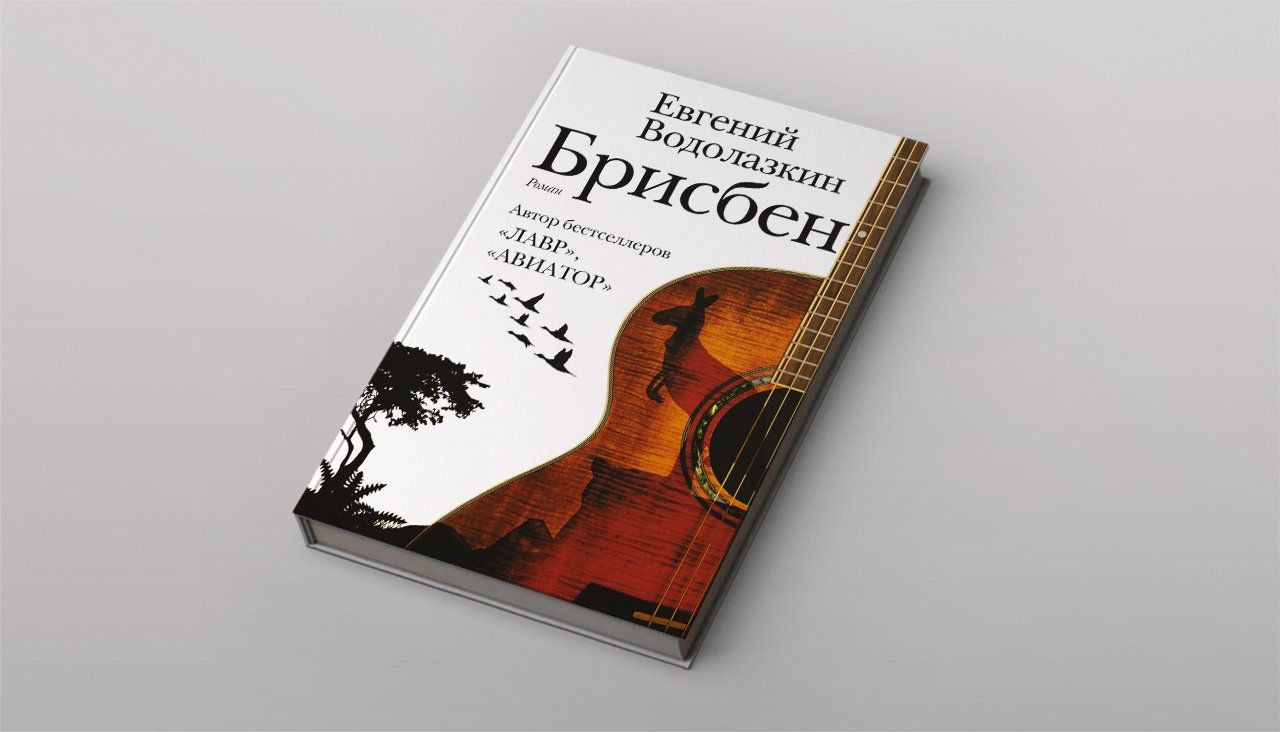
Evgeny Vodolazkin. Brisben. M.: AST, editorial office of Elena Shubina, 2018
Evgeny Vodolazkin, the main one must immediately report the main thing about the new novel: he again does not look like all the previous ones. It does not have a multi -layer game philologism “Solovyov and Larionov”, nor the excellent medieval atmosphere “Lavra”, nor the dry and conceptual plot of the “aviator”. It is likely that it is most correct to say that, unlike the writer's previous books, Brisben was written primarily for the sake of the text itself and its melodic sound. The main character of the novel, Gleb Yanovsky is a musician, a professional guitarist, but his role in the novel is partly official. In a sense, he can be likened to the mediator - an intermediary between his hand and sound: Gleb himself and his profession need Vodolazkin mainly in order to extract music from the word, and turn the novel into a classic two -voice fugue.
In accordance with the laws of Solfezhio, the narrative in Brisben breaks down into two votes that sound alternately (no coincidence before the music is seriously engaged, the hero of Brisben studies a philologist, and the theme of his diploma is a polyphony in Bakhtin). The first voice tells-or, if you like, sings-about 2012-2014, when Gleb Yanovsky, an international superstar at the zenith of glory, is diagnosed with Parkinson's disease. Voice number two describes a longer period-since 1971, when Gleb picked up the instrument for the first time (at first not even the guitar, but the Ukrainian four-built domra), and until the 1990s, when the guitarist is already the first great success.
The chapters relating to the childhood and youth of the hero are written from a third person, while in the chapters of modern “he”, a burning “I” replaces, and the lyric-integrated intonation is replaced by tragically defeated. However, in general, both votes sound in unison: they are intertwined, complement each other and, throwing up parallels and allusions, and take a single theme together. It is hardly possible to retell this topic with words (the question “what is this music about?”, Clearly, it makes no sense at all), but the key concepts by which the melodic drawing of the novel is built without difficulty: music, love, death, faith, immortality.
However, the presence of a single through musical theme in the novel does not cancel the presence of the plot - or rather, even several conjugated plots.
Gleb, the son of a Ukrainian and Russian, is growing in Kyiv, studying in a Ukrainian school, and, accordingly, two crops - paternal and maternal, are equally rights to it, between which he stubbornly refuses to draw a border. Its is equal to impeccable Ukrainian and Russian languages - although not without difficulty - to refuse to choose over and over again, which allows you to read Gleb’s biography as a history of the unity of two opposing principles.
You can also see a love story in it: a series of platonic and not quite Platonic love leads Gleb to a meeting with the love of his whole life - with a German Katya, Katarina, on which he marries at twenty years old, even at the university. The marriage based on a deep mutual feeling is barren - Katya dreams of children, but he cannot have them, and in their relationship with Gleb begins to sound the Old Testament motive of Jacob, Leah and Racheli (he, by the way, also sounds in another episode, the father of Gleb, the unsuccessful musician Fedor, compares with Lia Domra, on which the boy must learn to play earlier than he deserves the right to take the right to take the right to take the right Hands of the Rahil guitar). Katya dreams that another woman gives birth to a child from Gleb - for example, her own sister, and for this she is ready to endure the betrayal of her husband, which he himself, on the contrary, is not quite ready.
In his youth, the acquired faith in God becomes a way for the hero to get out of depression, into which he is immersed at 15, after breaking with his first love, the wayward cellist Anna. The daughter of this very Anna, an inconspicuously sick and musically gifted girl Vera, arises in Gleb's life at the darkest hour - to at least briefly give them a new hope with Katya.
And, of course, all the earthly roads, leaving beyond the horizon, are led to Brisben - a kind of analogue of the Tolkinovsky overseas West, a blessed land, where she left (or did not leave?) Gleb's mother.
The plot is not the strongest side of the novel, and with a great desire to Brisben, many complaints can be made. The milestones of Gleb's dizzying career are conveyed with foggy stinginess, probably designed to disguise the fact that the author himself does not quite represent how it all happened - that ascended the Kyiv boy, an ordinary teacher with a music school and a phylofak on the top of a musical Olympus.
The scene on the Maidan (in the winter of 2014, Gleb arrives in Kyiv covered by the excitement of Kiev, and because of his Russian passport, he almost becomes a victim of the rebellious masses) is excessively theatrical and looks artificial and awkward tribute to some strangely understood relevance. And the image of the St. Petersburg writer Nestor, creating, is not a chronicle, but Gleb’s biography, and even makes you recall the rude iron bracket, designed to hold the collapsing parts in the very least.
The list of constructive shortcomings and absurdities could be continued, but, I admit, this requires a supply of severity much more than the one that the reader usually has. The musicality and gravity of the text that permeates his rhymes, filigree work with intonation (in Brisben, Vodolazkin demonstrates the stylistic range of three octaves-from exalted pathos and heroics to soft irony), and, finally, the sky-high composition-and not plot-the harmony of the novel, make any claims not that insolvent, but which are insolvent, but which unnecessary.
“Play with the nuances,” his teacher at the music school instructs little Gleb, and Evgeny Vodolazkin himself strictly follows this recommendation. In essence, his “Brisben” is the endless nuance of the main topic, a pantyon game, overflows of style, immersing the reader in a series of magical dreams in reality and forcing to fully divide everything that is happening to the hero.
Is Gleb sit near the body of the drowned woman on the Dnieper coast, admires large southern stars in the society of a Polish farmber, or shaking from the cold and unsatisfied passion inside the ice rostral column, we will be afraid with him, freeze, admire and experience a dozen other emotions, and not in a figurative sense, but in the very very one. Almost bodily.
In other words, in Brisben we are dealing with one more - not that radically new, but earlier than the implied than manifested in full force - the line of Vodolazkin's talent: verbal, stylistic, musical. The magic, which used to happen in the novels of Vodolazkin at the level of thought or entourage, went down one more floor down - and is now happening at the level of word and sound. And the fact that, by his fourth big novel, Vodolazkin retains the ability to surprise the reader with a different manner every time, makes him look at him with admiration, which this time a note of surprise is also mixed up: it is necessary, he can also.
Galina Yuzefovich