
Translated material
Defender of his time
What was Lyudmila Alekseev and what she did to observe human rights in Russia
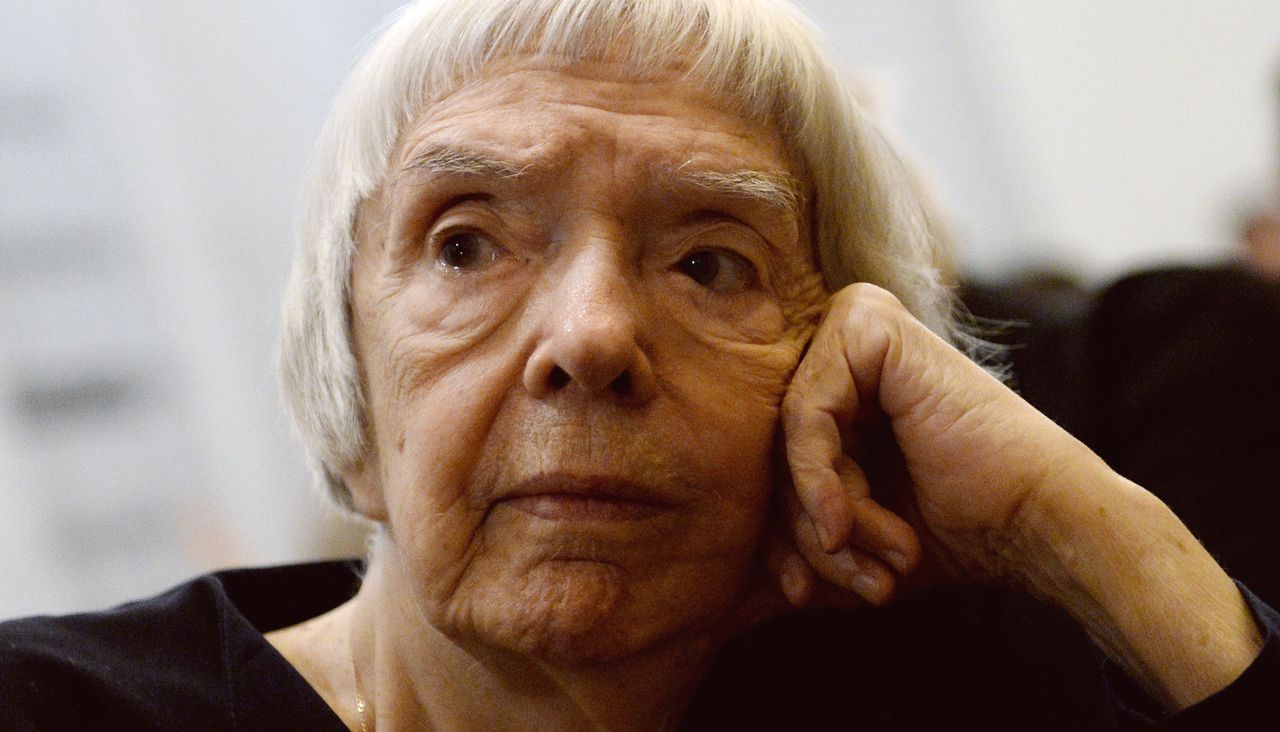
On the evening of December 8, Lyudmila Alekseeva died. Since the mid-1990s, she headed the oldest human rights organization in Russia-the Moscow Helsinsky group; The first persons of the country and the opposition attributed to Alekseeva with the same respect. She equally accepted everyone, fulfilling her main thing: to protect the rights of people in all ways available to her. Lyudmila Alekseeva is recalled by the journalist of Medusa Andrei Kozenko.
***
In the mid-2000s, the Moscow Helsinsky group was a reference human rights organization. She collected expert round tables, prepared reports on human rights violations in the country and in the world. There was, for example, one of the initiators of an appeal to the authorities of Great Britain and the USA demanding to stop the war in Iraq, because it "destroys the foundations of modern world order." Lyudmila Alekseeva, a man with an impeccable reputation, with the experience of Soviet dissidentism and American emigration, headed the Moscow Helsinsky group; Almost every year she received world bonuses for contribution to the development of human rights movement. The internal agenda of those years still allowed Russian human rights activists to be distracted by the Middle East.
In January 2006, the correspondent of the Rossiya TV channel Arkady Mammont told in his documentary about “Plain Stone”, stuffed with spy equipment, about the employees of the British Embassy, regularly visited this stone and about the same employees of Lyudmila Alekseeva and helping it with the receipt of grants and financing as a whole. On the screen showed payments, signatures, copies of documents, including personal ones. This was the beginning of a large attack on the Russian NPOs.
Lyudmila Mikhailovna was always better to call comments on the home phone in the afternoon. She was not very friends with mobile - an assistant took him all the time. She always spoke very calmly, with a little ironic intonation. “I consulted with many experts and decided to file a lawsuit in court to damage my business reputation,” she said then. - I want to emphasize that we intend to talk not only about my particular case. We will protect all non -governmental organizations on which power exerts pressure. ”
Then the authorities seemed to have decided on the image of human rights activists - he confidently holds on all federal channels now. Then the human rights activists decided on the front of work for the coming years: to protect themselves, indeed, had no less than human rights. And then Lyudmila Alekseeva finally became the main person in the Russian human rights movement.
* * *
As a rule, all this happened in the conference rooms of the Izmailovo Hotel-with its unique interiors of the mid-1990s. Conferences, round tables and constituent congresses; In half the names, the word “all -Russian” appeared - the opposition in the second half of the 2000s was looking for ways to unite, the human rights activists walking nearby decided whether they had the right to engage in politics.
Lyudmila Alekseeva was the co -chair of the All -Russian Civil Congress - together with a sociologist George Satarov and chess player Harry Kasparov. I can’t say right away what this congress did: he took some resolutions, it seems, condemned the regime. From the point of view of a journalist, the task of writing the text is faced with, his meetings were a pure nightmare - thousands of words of the speakers disappeared like water in the sand, there were no conclusions.
The intrigue appeared only when a split began in the leadership of the congress, Harry Kasparov was looking for political unions with Mikhail Kasyanov. He headed the organization "Other Russia"; Later, this name will be taken by Eduard Limonov, whose National Bolshevik party is recognized as extremist and banned. Satarov and Alekseev demanded to leave Kasparov, he demanded the same from them ... In short, there was quite a lot of fuss in what was happening.
“Lyudmila Mikhailovna, are you in politics or in human rights? And do not you think that this seems to be the same? " I asked during some next coffee break. “I am against us to be drawn into politics. We defend the highest human values, and not the interests of some party and a separate person, ”she said calmly in response.
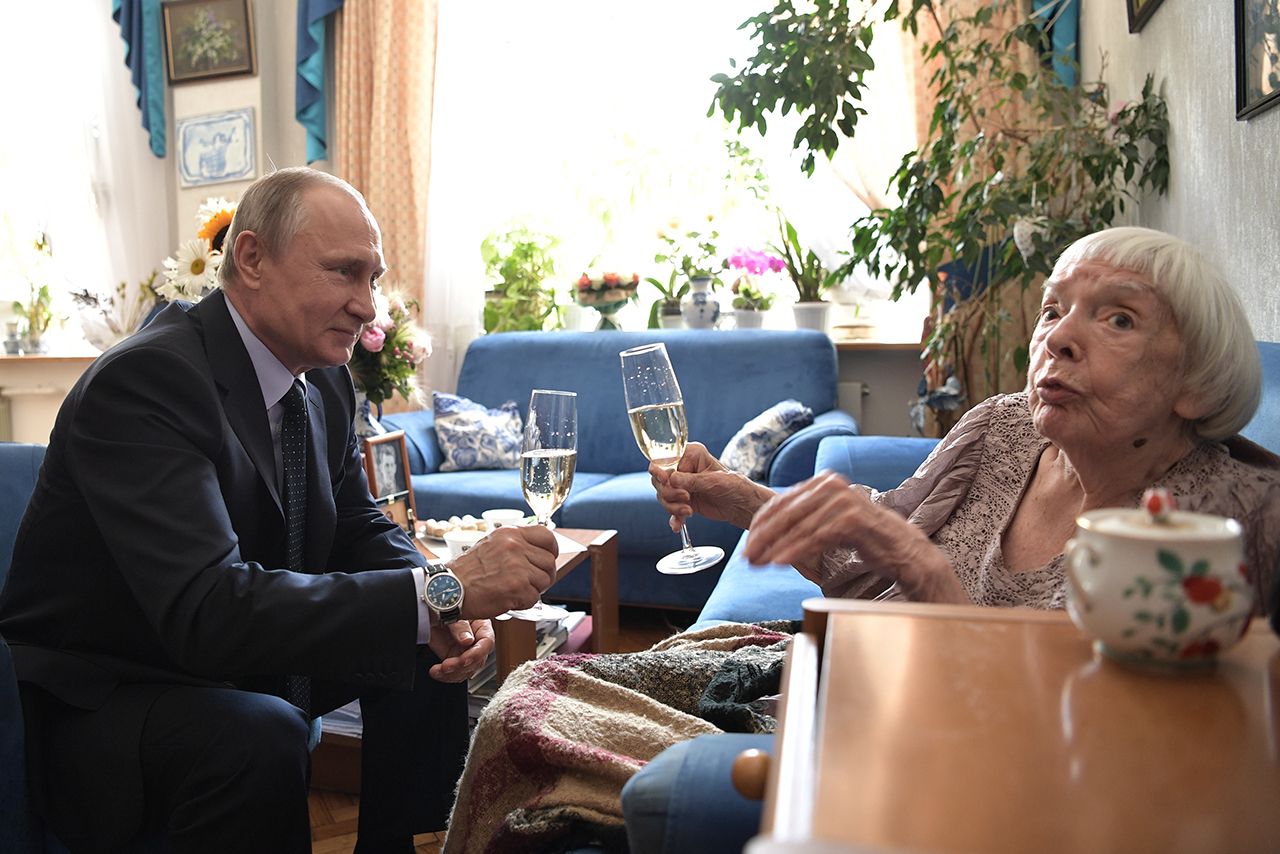
In the same way, Lyudmila Alekseeva met in the committee (then the Council) on human rights under the President. And the former internal policy curator in Russia Vladislav Surkov was respectfully inclined to her. She also participated in all meetings of the Public Council at the Moscow Central Internal Affairs Directorate. Strong human rights defenders and journalists unexpectedly turned this decorative, in principle, the organ into an effective means of helping detained at rallies - they became more and more every year. The advice, of course, was then re-elected, replacing the most uncomfortable people with loyal ones: Lyudmila Alekseev was not included in the next composition formally due to dual citizenship. Immediately after that, she defiantly entered the same Public Council under the Russian Ministry of Internal Affairs - and she was engaged everywhere the same: she spoke in a peaceful voice unpleasant things. It turned out that yes, there are politics - no matter what names behind her stood - but there are unconditional values, and Alekseeva defended them all his life in all the ways she had.
She accepted both Vladimir Putin at home - with her birthday congratulations - and the participants of the “Swamp business” - just talk . It was included in the new composition of the Presidential Council for Human Rights a few days before his death.
* * *
The annual camp of the “ours” movement on Seliger has always been an odious place. In 2010, an installation appeared there: wooden stakes, and the heads of mannequins depicting Lyudmila Alekseev, journalist Nikolai Svanidze, former President of Georgia Mikhail Saakashvili and other “enemies of Russia” in the representation of the Pro -Kremlin activists were planted on them. Before a series of stakes, a large poster with the red letters "We are not happy for you" was stretched.
By this time, we were already on constant telephone communication with Lyudmila Mikhailovna - there were more reasons to talk about human rights than we would like. But that time before the next call I had to gather properly. “Lyudmila Mikhailovna, hello. I don’t even know how to say this, but in the summer camp ... ”She already knew about the installation. “Don’t worry like that,” said Alekseeva in response. “Public figures should not react painfully if they are insulted.”
Around the same years, the series "Downton Abbey" appeared. For the first time, seeing actress Maggie Smith in the image of a restrained and witty countess Violet, I smiled - this similarity was so unexpectedly strong.
* * *
Strategy-31 in 2009 came up with the National Bolsheviks. On the 31 of each month (according to the number of the Constitution of the Constitution that guarantees freedom of assembly), a crowd of journalists left the Mayakovskaya metro station to the Triumphal Square to see the same picture: someone’s wriggling is carried to a car factory, and a policeman with a megaphone calls: “Divide, this action is not authorized.” It was especially interesting to observe apolitical citizens, late in the neighboring theater of satire and did not understand what was happening. Some of the most demanding of them also sat in Avtosak.
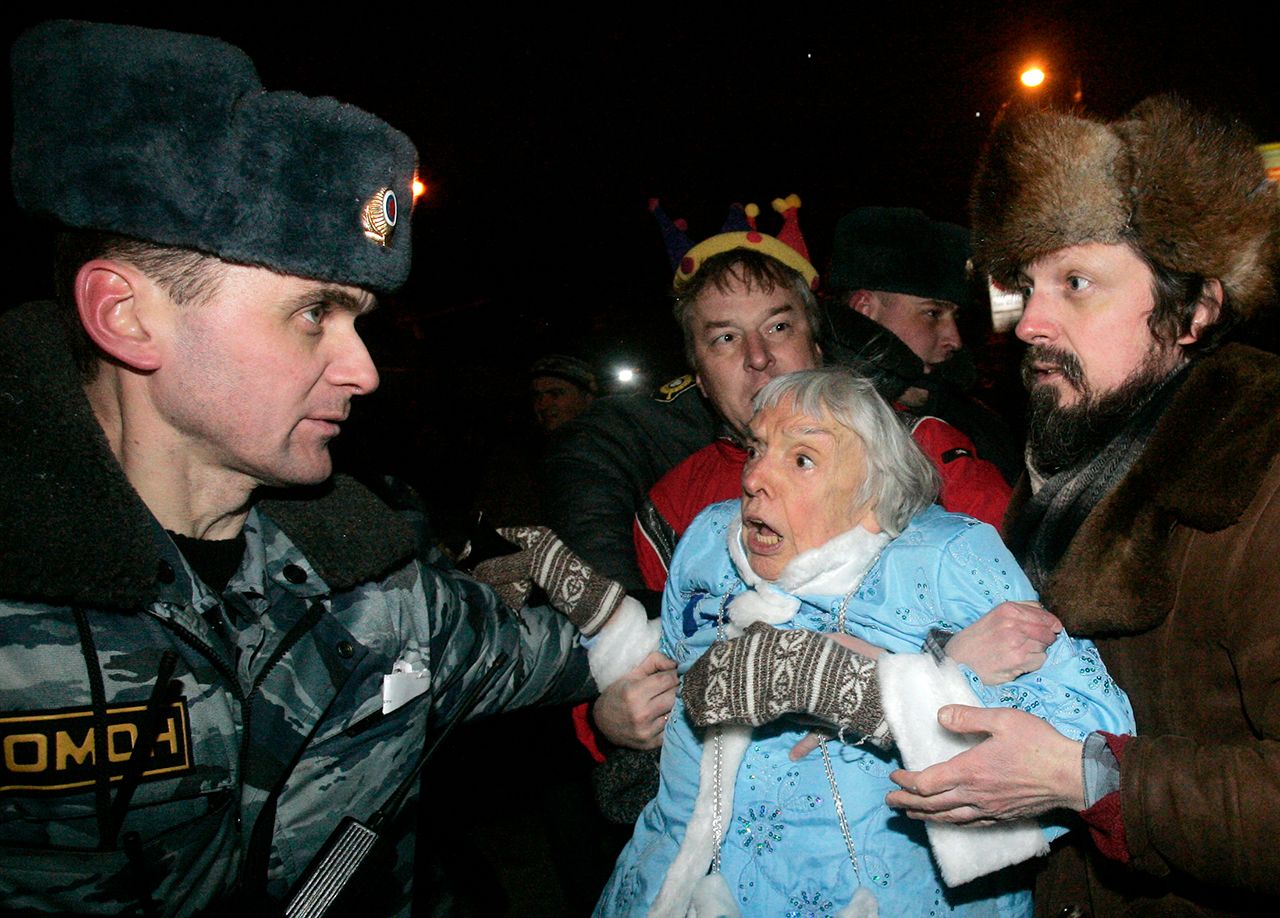
Lyudmila Alekseeva, the head of the “For Human Rights” movement Lev Ponomarev and other human rights activists then entered the temporary and fragile alliance with the leader of “Other Russia” by Eduard Limonov. At first, they simply came to the aid of the detainees, but on December 31, 2009, the self -irony Alekseeva came to the triumphal in the Snow Maiden costume - and was rather rudely detained by herself. “They will probably be accused of swearing obscenities,” Alekseeva mentioned the most frequent basis for the detention of that time in a conversation now (forced) on a mobile phone. She was released incredibly quickly when, despite the eve of the New Year, her liberation began to be demanded at the level of governments of different countries.
The human rights activists soon quarreled with Limonov: they, as always in their work, began to look for compromises and points of contact, found them-and the rallies of the 31st began to coordinate, but such methods did not fit the former chairman of the NBP.
On December 5, 2018, a many -year -old friend and ally Alekseeva Lev Ponomarev was given 25 days of arrest - simply for the call to go to the action. Lyudmila Alekseeva Ponomarev will not be able to get to the funeral.
* * *
In the early 2010s, the former Deputy Prime Minister and Minister of Finance Alexei Kudrin was looking for his use in social activities. In particular, at the end of 2013, he organized the “Civil Forum” - a rally of human rights activists and activists from all over the country. No more Izmailovo hotels: the forum was held at the Center for International Trade on the Krasnopresnenskaya embankment.
This is not to say that this was a very important event: the interests of the state and human rights confidently went in different directions that before him, that after. Whatever they say on the forum, it had no chance to realize in life. Lyudmila Alekseeva - of course, she was here on the presidium - she said that only two “hard generations” will be enough, and an active civil society will appear in the country.
Then we went to the elevator with Alekseeva, and I accidentally said something extremely awkward about her performance: they say, I would have to see what you are talking about in old age. The next few seconds it seemed to me that I was falling into the abyss, despite the fact that the elevator rode up. Lyudmila Mikhailovna pursed her lips ... And then she just laughed. After a lunch break, she again took the word and said all the same simple truths on which she stubbornly insisted all her life.
Andrey Kozenko