
Translated material
Is our house the whole world? Or just a house?
Migration and her growth of nationalism has split Europe
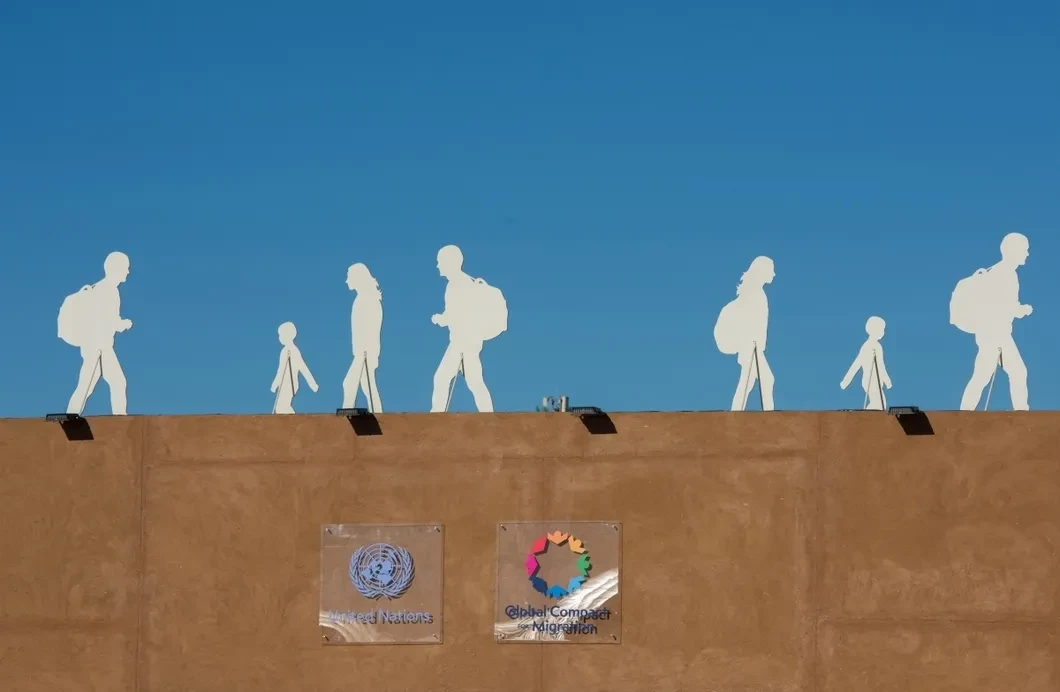
The effect of the post -war vaccination of national, ethnic, racial and religious tolerance has weakened for 70 years. Even such a declarative, legally non -binding UN framework, as adopted on Monday in Marrakesh, “World Pact on Safe, ordered and regulated migration,” caused a passion.
In Belgium, the coalition government of Charles Michel was on the verge of the fall. The ministers are members of the National Flemish Alliance Nationalist Party (N-VA) on Saturday at the Extraordinary meeting of the cabinet slammed the door. They demanded to cancel the planned trip to the Prime Minister to the UN conference in Marrakesh.
Their party is one of the most influential in Belgium. According to the results of the 2014 parliamentary elections, it became the first in Flanders - the northern part of the country and received key posts in the federal government. Among those who left him on Saturday are ministers of defense, internal affairs, finance and Secretary of State on migration issues.
By the end of September, N-va did not object to the UN Pact, and the decision to travel the head of government was made collegial. But then the leaders of some European countries opposed this document. Including the Chancellor, the chairman of the European Union of Austria Sebastian Kurtz.
Among the countries that have refused to sign the document - USA, Austria, Hungary, Czech Republic, Poland, Slovakia, Bulgaria, Italy, Switzerland, Australia, Israel ...
Many, like Russia, adopted the UN project with reservations. The Russian Foreign Ministry criticized the “division of responsibility” as “an attempt to shift part of responsibility to someone else’s shoulders” (the current migration situation is, they say, “a consequence of the irresponsible intervention of the West in the affairs of sovereign states”).
Against this background, Flemish nationalists revised their position (if such a thing, then they certainly do not be holy than the pope). Although the text, they said, have no compulsory power and confirms state sovereignty in migration, in the future, the courts can use it to counteract the government measures to limit migration and maintain law and order.
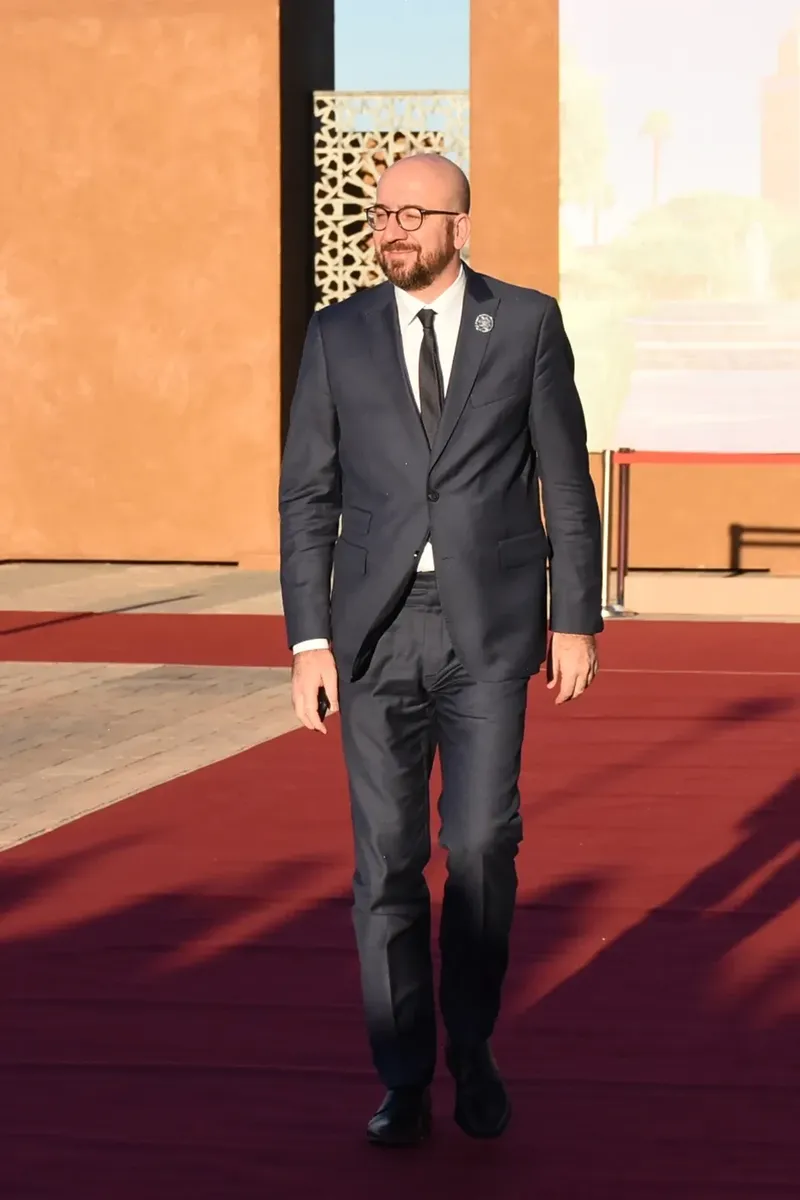
The Belgian incident reflected all the complexity and variety of relations to the problem of migration in Europe. The Prime Minister of Belgium, liberal Charles Michelle, flew to Marrakesh, put on the map the fate of his government and his political fate. His speech at the UN conference was met by applause. But his updated government, in which Flemish Christian democrats took the place of Flemish nationalists, has no majority in parliament and risks getting a vote of no confidence. At the same time, before going to Marrakesh, he enlisted the parting words of the same parliament, two -thirds of which, including the opposition, the socialists, supported the World Pact.
The fatal meeting of the Belgian government last Saturday-in the castle of Val-Duchesis. Because at the residence of the prime minister on Lua Street in the center of Brussels, the Yellow Lines protested against a sharp (almost one and a half times) rise in the price of diesel fuel. (In Belgium, there are much more than half of the cars, not to mention trucks, drives on a diesel engine.) Of course, not the scope that Paris, but before my eyes, one police minivan turned the pogromers.
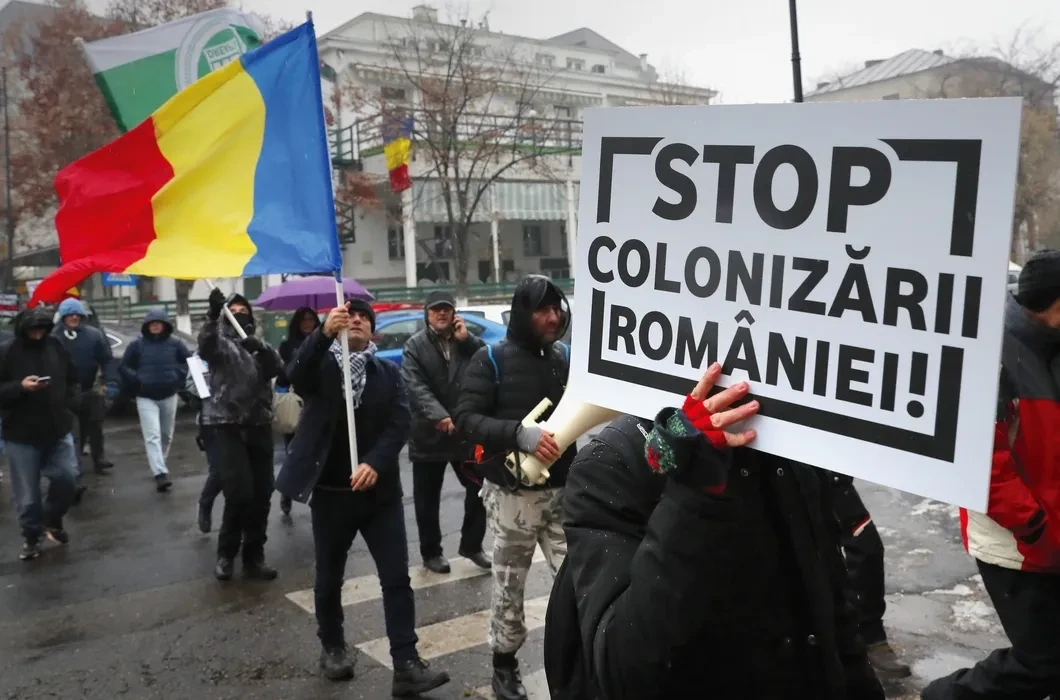
Expected on Sunday, December 16, in Brussels, the action is aimed against the World Covenant and Migration in general. Judging by Facebook, already on Tuesday in the “march against Marrakesh” they wished to participate almost ten thousand. Its initiators are Flemish nationalists and extremely right. But they are joined by apolitical rebels in yellow vests, and not only from Flanders, but also from the southern half of Belgium. They inscribed in their list of claims to the government reproaches to migration policy. Where is migration, and where is the price of diesel? Nationalism and xenophobia mixed with economic and social dissatisfaction in the explosive cocktail.
“This is a bomb,” wrote my Belgian acquaintance on the network, engaged in business with Russia, commenting on the then not yet published Pact project. And then the story about how, having adopted the UN document, the government will open the doors to the rampant stream of migrants from the Arab East and from Africa.
“It is amazing that there is so much misinformation and lies about the pact and its content,” Luiza Arbur, special representative of the UN migration, perplexed at a press conference in Marrakesh Louise. “He does not give a special right to migration, does not impose any obligations to the states.”
The Pact defines only the principles for international cooperation in the field of migration. This is the protection of human rights, children, recognition of state sovereignty. As well as a list of proposals that would help countries cope with migration: exchange of information and experience, the practice of integrating migrants. The pact prohibits the arbitrary detention of migrants, allowing arrests only as an extreme measure.
Human rights activists believe that this is not enough, especially in terms of access to migrants to humanitarian aid and basic services. Critics see in it encouraging uncontrolled migration.
Migration in the life of mankind is the norm, not an emergency. She has always been and will always be. Today, about 258 million people, or 3.4% of the world's population, are on the way to the new homeland. Therefore, general international frames are needed.
Angel Merkel flew to the UN conference to support the pact with all the weight of Germany, which, no matter what anyone said, withstood the migration blow of 2015. The heads of government of Spain, Greece, Denmark, Portugal arrived in Marrakesh. France President Emmanuel Macron was clearly not up to that, but he delegated the Secretary of State for Foreign Affairs Jean-Batist Lemoan.
In old Europe, the tradition of human rights was rooted in the post -war period. But recently, something broke in consciousness and moods. As Charles Michel Michel’s trip to Marrakesh, the Le Soir newspaper, noted bitterly in an editorial commentary, his performance “will have the taste of Belgium, the appearance of Belgium, but will not be Belgium.”
The New Flemish Alliance party, whose ministers left the Belgian government on Saturday evening, had previously held a meeting with the leader of the National Front of France, Marine Le Pen and former Donald Trump, who arrived in Brussels, Steve Bannon. They expectedly condemned the pact, which the United States rejected from the very beginning and which the populists in the EU countries made a scarecrow on the eve of the May elections to the European Parliament. The "extreme" continue to gain strength - not only the right, but also the left.
The political spectrum of the EU is polarized, marginals are squeezing the center, traditional parties, habitually replacing each other in turn, lose weight.
It is difficult to predict what the following composition of the EU representative assembly will be, chosen by democratically on the principles that have ripened for 70 years of denial of nationalism.
If the issue of signing a universal declaration of human rights arose today, and not 70 years ago, Belgium would not sign it, the former judge of the European Court of Human Rights Francois Tulkens fantasizes on the pages of Le Soir. In confirmation of this, the most acute disagreements on the UN migration pact, the current hostility to supranational documents, far from the enthusiasm of twenty years ago. The resistance of the pact does not even depend on how legally it is binding. The very existence of the supranational principles that the states should follow. In Belgium, as in all of Europe, there is an ideological war between supporters of the supranational and sovereign.
Seventy years ago, the completely opposite mood inspired the signatories of the Declaration of Human Rights. After the war and under the impression of the scale of Nazi crimes, they tried to adopt the supranational principles and laws that would protect a person from the criminal behavior of the state. The indestructible sovereignty of Germany allowed Hitler to act without restrictions and without fear of external intervention. We know terrible consequences. Meanwhile, today our house is not so much a country as the world.