
Translated material
Robots against pensioners
Economists argue about the consequences of new labor automation and basic income
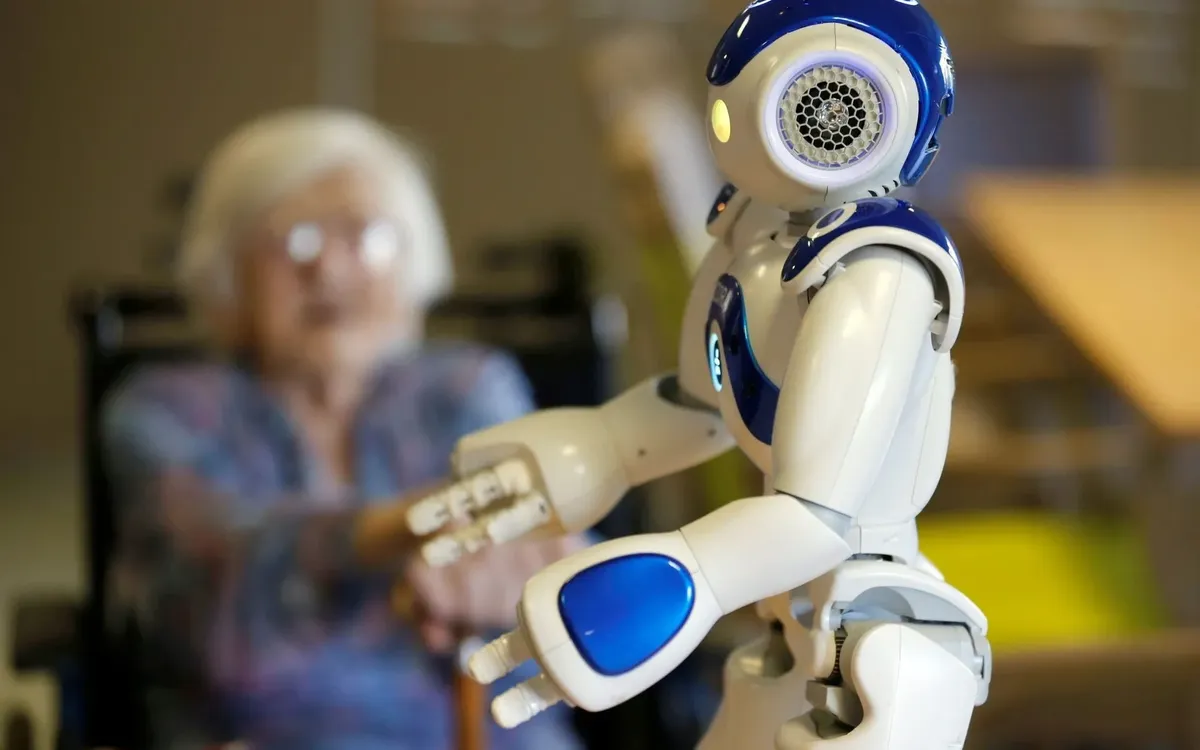
By 2018, optimism in relation to technological progress managed to finally get out of fashion. The public in developed countries with horror monitors how transnational corporations manipulate user behavior, and authoritarian states go to the leaders in the race for creating artificial intelligence. However, it cannot be denied that the development of technology from time to time forces people to invent new social institutions that turn out to be better than the previous ones. One of the most discussed concepts of this kind in recent years is the so -called unconditional basic income (BBD), which is believed to radically transform the traditional approach to social policy.
Society of the unemployed
If you believe futurologists, then in the not so remote future, almost all of the value added in the world economy will produce robots, while work in the usual sense of the word will become the privilege of a small number of chosen Homo sapiens. The era of "rental capitalism" will come, in which the bulk of people will be superfluous. This forecast has certain actual reasons, which means it makes sense to seriously analyze the key problems that follow from it.
The first problem is that, together with the loss of jobs, people will lose the opportunity to extract income from work. For the first time in the history of mankind, the wide segments of the population will need some other source of means for existence than labor.
Secondly, the society without work will have to re-prolong the foundations of the social order. Today, full -fledged employment not only allows us to earn food, but also largely determines our identity and fills human existence with meaning (at least it should be). And what will the political structure of the society look like in which there are no employees?
Supporters of the BBD-regular guaranteed payments to citizens, regardless of any criteria instead of a bulky social security system, argue that this is a revolutionary approach to social protection, which offers answers to labor automation.
Interestingly, the idea of BBD is supported by completely different political forces, from Libertarians to the socialists.
Local experiments in this area conduct both rich and poor countries. And after raising the retirement age, the issue of fundamental restructuring of social policy has become relevant for Russia.
Experts gathered at the scientific and practical conference “Basic income: a prologue to social policy of the 21st century?” To discuss these issues, which took place in November with the participation of the Institute of Social Policy of the Higher School of Economics, the expert group “European Dialogue” and the German Friedrich Ebert Foundation in the Russian Federation.
To each rent
The discussions around the BBD began back in the 1980s, but it was in the last 10 years that this tool began to be perceived as a possible solution to the problem of technological unemployment. The rethinking of the role of BBD is associated with changes in the labor market: economists describe them as erosion of the standard employment model, as a result of which more and more employees find themselves in a “praint” (unprotected) situation.
Automation leads to the fact that human functions are fully replaced by algorithms, says the speaker of the conference, vice -rector of the Academy of Labor and Social Relations, Alexander Safonov. If earlier mechanization left the possibility of moving to horizontal competencies (for example, from production to service), now people are moving into a completely different type of employment, where qualifications are not required, and income is much lower.
Ultimately, artificial intelligence will replace a person entirely, Safonov is sure:
Robots will come even to the sectors of household services and trade, which so far remain refuge for human labor.
There are new forms of employment, which should partially compensate for the automation process - for example, work through platforms like Uber. But they are not associated with any forms of social protection, says expert of the World Bank Ruslan Eemsov. Standard social security systems, which in the last century received mass coverage, are today available only to narrow groups of employees.
Another reason for the popularity of BBD is the global growth of economic inequality in the last 30 years, which has strengthened the request for a more fair social policy.
80% of Russians agree with the assertion that the state must pay a part of the rent from natural resources monthly to citizens,
Says the head of the Center for Stratification Research by the Institute of Social Policy Svetlana Mareeva. Such a policy is implemented, for example, in Alaska, whose residents regularly receive “oil” payments in the envelope, or in Norway, which invests from raw materials in the National Pension Fund.
However, the influence of the BBD on inequality is far from unambiguous, since the mechanical replacement of existing payments with the basic income can lead to losses among the poor.
Finnish pioneers
The famous Finnish experiment on the introduction of partial basic income (replaces only part of social payments) began in 2017 and will last until the end of this year. During the two -year period, two thousand Finns aged 25-50 years receive 560 euros per month without any conditions. The amount of payments is equivalent to the size of the minimum Finnish unemployment benefit.
“Social policy in Finland is generally devoted to the issue of labor market. There is a wide consensus around the fact that social security should stimulate the employment of citizens, ”says Simanainen's bowl, a researcher at the National Institute for Social Insurance in Finland, which was engaged in the introduction of BBD. The main goal of the government, according to Simanainen, to study how the behavior of citizens in the labor market will change.
The results of the experiment will be published at the beginning of next year, but now it is clear that many questions will remain unanswered. There are purely methodological problems: a limited sample of citizens participated in the experiment, so it will be difficult to generalize conclusions to the entire population.
But a more serious flaw is that the basic income requires a comprehensive change in the budget system, which, of course, did not occur in the Finnish case. The real consequences of such reconfigure, if it occurred, could only appear after 2-3 generations. “Experiments do not give an answer to the main question: it is worth doing it or not,” Simanainen admits.
Case Finland is interesting due to the fact that a large-scale reform of the social state begins there, and the BBD is far from its most central part, according to Yuri Kuznetsov, deputy editor-in-chief of the journal Economic Policy.
“There is a global problem that is that the design of the social state is included in a serious existential crisis. And various local problems: complexity, confusion and inefficiency of social assistance in costs and quality. Basic income is only about solving local problems, ”says Kuznetsov.
This point of view is widespread among libertarian economists who consider the BBBD as a way to reduce damage from “bureaucratic traps”, without investing additional redistribution tasks in it. In this sense, BBD can be considered as a radical program to monetize social benefits, which allows you to make a system of social security more flexible and save on administrative costs.
Populism in the Swiss
The referendum on the introduction of basic income took place in Switzerland in 2016. The turnout amounted to 46%, which more or less corresponds to the average values. The referendum allowed the features of the Swiss political system, which in modern form has existed since the middle of the 19th century: any proposal that has gained more than 100 thousand signatures is mandatory for direct folk vote.
“We vote in referenda several times a year. Here, next week, there will be a vote about cutting horns to the cows, ”Sighs Professor of the University of Lausanne Juliano Bonoli. But the referendum on the BBD was a special case - at least in terms of the scale of the campaign and international attention to small Switzerland.
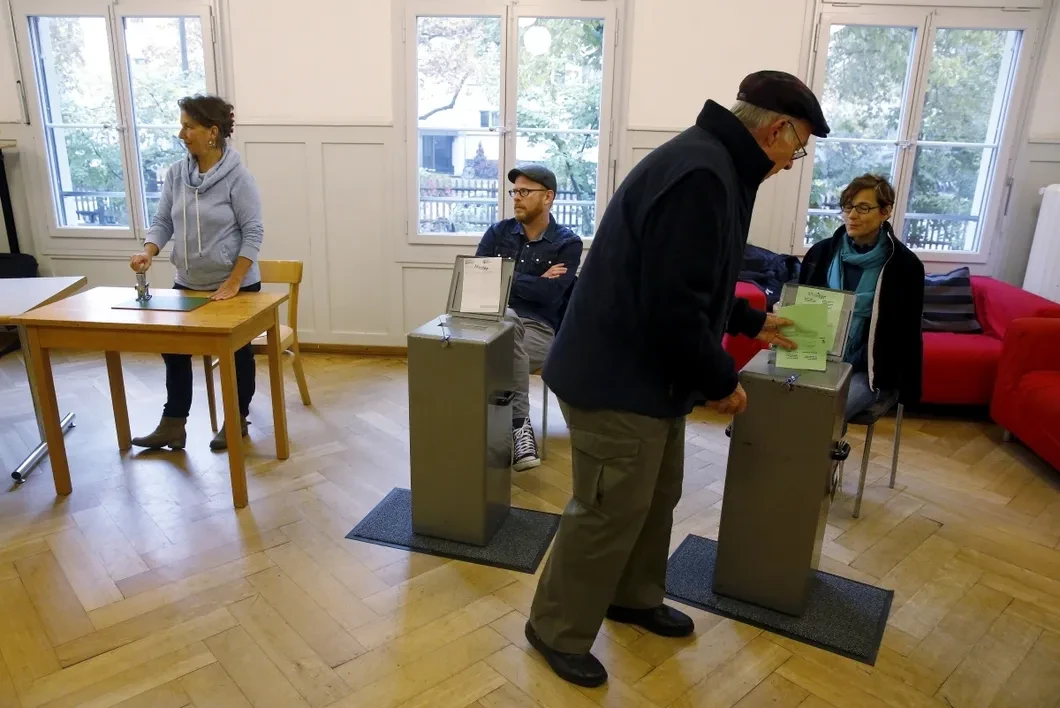
There were no specific numbers in the ballot, the wording sounded like "worthy standards of existence." According to one of the assessments, it could be about 2200 euros for the adult population. The cost of the program was estimated at about a third of the Swiss GDP, and it was proposed to finance it by increasing VAT by 8%.
For some, the result of voting may seem discouraging: 77% of the Swiss opposed the “distribution” of money by the state.
Village residents voted against, in more “progressive” cities (Basel and Geneva), opinions were divided, but in no canton the initiative did not gain more than 50% of the vote.
The income almost did not play a role in determining the position in the referendum, says Bonoli. “This is more about ideology: do you believe that this is a good idea or not. Party identification and values were most important. ” In second place is age: young people who are skeptical of the prospects of the pension system, more willingly voted “for”.
Why is the idea that populists around the world use as a mousetrap for voters in Switzerland failed with a bang? “Because everything was seriously here, and not just some dreams,” Bonoli believes.
Many Swiss agreed with the argument of the opponents of the BBD that excessive social custody would destroy motivation to work and turn their country into the "kingdom of laziness."
“A lesson that can be extracted from Swiss experience is that you should not start socio-economic experiments from such a high bar,” Bonoli believes. If the payments began at a lower level, the Swiss could not see in them a paternalistic threat to labor ethics, but new opportunities for creative self -realization.
Robots for pensioners
As for Russia, here the conditions for the introduction of basic income have not yet matured, experts say. BBD is designed to ensure a decent standard of living, while
In Russia, the guideline of social policy is still a living wage - the boundary of the physiological survival of a person.
According to the World Bank, the introduction of a single manual in developing countries can cost 50% of GDP. “This is an expensive thing for developed countries, while Russia has not yet solved the task of combating poverty,” says professor of the Moscow State Law University. Kutafina Yuri Voronin.
At the current stage of Russia's development, reforms to increase targeted payments are more suitable, which is what the government is doing. However, the general logic of the evolution of social protection systems may be stronger than current budget restrictions. “In the future, the basic income will arise as a new form of organization of pension provision,” said Yevgeny Yakushev, Executive Director of the Safmar NPF.
“Insurance pensions in Russia are already paid by 40% from the budget, and not from insurance premiums to the Pension Fund,” the expert said. “In fact, the pension system in Russia has long ceased to be insurance and partially turned into a allowance at the expense of the budget. Due to automation, the principle of growth of labor productivity, salaries and, accordingly, insurance premiums on which the modern pension model was also ceased to be carried out, ”says Voronin.
As a result, the Russian state was not able to fully fulfill its pension obligations. It is hoped that robots in the future will better cope with this task.
Not time for details
“There are also restrictions on a political nature for the introduction of BBD: without decentralized democracy with developed local self -government and strong legislative branch, this measure cannot be implemented effectively,” said Evgeny Gontmamer, a member of the coordination council of the European Dialog expert group. At the same time, the expert does not agree with financial arguments against the BBD: “This is a completely different social policy that implies a different mechanism for the distribution of resources, including taxes.”
The bet in these discussions - political, not technocratic, agreed by the Finnish expert of the bowl Simanainen. “The dispute today is about the image of society and progress, and not about technical problems. This is approximately as the introduction of democracy or the abolition of slavery in the United States. Now is not the time for details. ”
At the same time, the political principles of the introduction of the BBD remain completely unknown. This is doubly alarming, taking into account the fact that a variety of political groups are trying to appropriate this concept. “There is a risk that the BBD will become an attempt to put a patch on the system, pay off the problematic segments of the population, despite the fact that the problem of inequality will not be resolved,” warns the sociologist and professor Shanka Grigory Yudin.