
Translated material
Santa Claus with gifts from Moscow
How the Kremlin first lost the elections in Primorye - and now he returned his governor there. Reporting Ilya Zheguleva
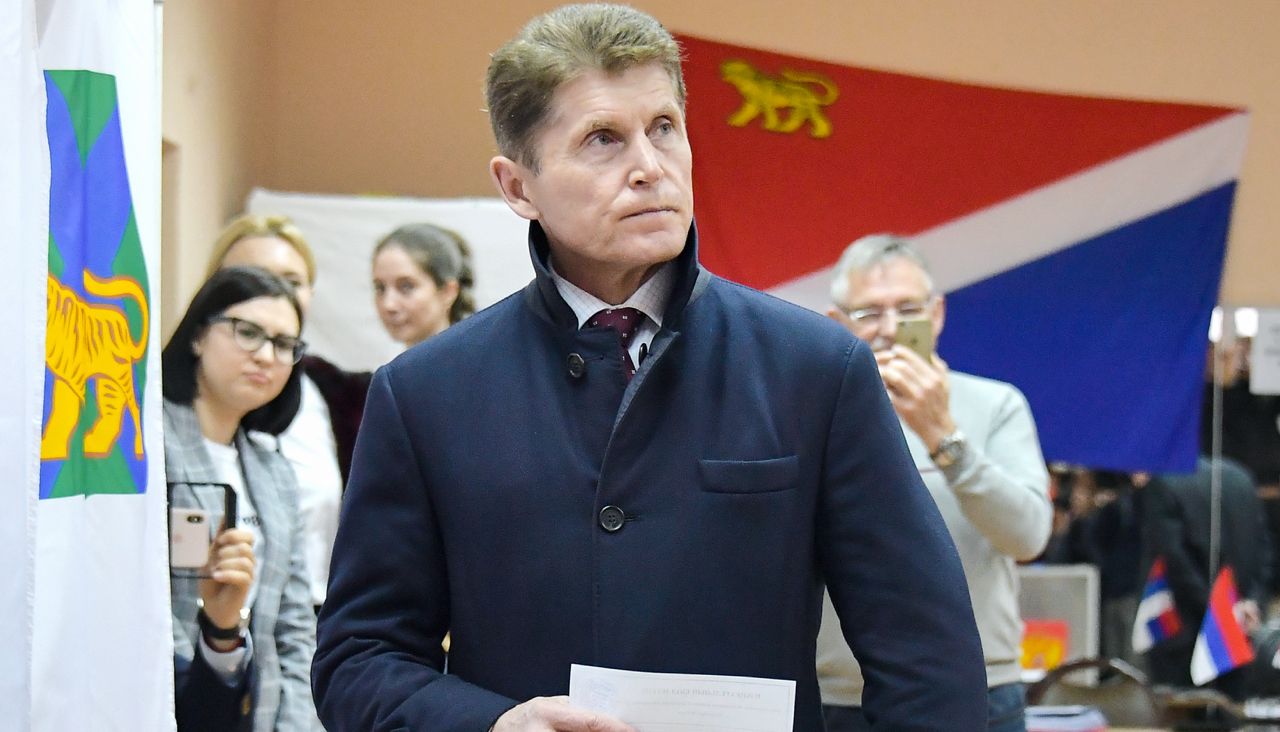
On December 16, governor's elections were held in the Primorsky Territory. These were the third election of the head of the region over the past four months-the results of the previous ones were canceled due to large-scale falsifications in favor of the candidate from United Russia, the current governor Andrei Tarasenko. Tarasenko eventually lost the post of temporary head of the region Oleg Kozhemyako - who won the election in the first round, having received, according to official figures, about 60% of the vote. Communist Andrei Ishchenko - opponent Tarasenko, who almost won him in September - did not take part in these elections. The Special Corps of Medusa Ilya Zhegulev went to Vladivostok and found out how Oleg Kozhemyako, with the help of political technologists and financial injections from the federal center, who came from Moscow, cleaned the political and media space in the region for two months.
"What to say?" - laughing, asked the acting as a coastal governor Oleg Kozhemyako, looking at the crowd of regional journalists. At 11 pm on Sunday, men in costumes, women in office dresses and journalists gathered in his public headquarters - to listen to what the chosen governor will tell about the results of the campaign: by that time they had already processed three quarters of the ballots, and it was clear that Kozhemyako confidently won the first round.
Having shook hands and photographed with everyone, Kozhemyako, who officially became the governor of the fourth region of Russia, still found something to talk about. “We will work together and update the team that knows the true state of affairs,” he said. “We will rely on the help of the federal center, on financial support.” The claim that his competitors in the elections were mainly spoilers - candidates agreed with the authorities and only depicting the struggle - Kozhemyako rejected, saying that they did not interfere with registration, and the problem was that the opposition simply had no constructive proposals. “What platform [could they] go out with? The governor asked rhetorically. - Criticism of power? So I criticized her myself! "
From the moment of the triumphal performance, Kozhemyako has passed three more hours, but his main competitor was Andrei Andreichenko, a member of the LDPR, who took third place in previous elections-was still not going to give up in words. “This is a Primorye, everything can happen,” he told the Medusa correspondent and laughed nervously. “September history has expanded my mind.”
Nothing happened: at the time of publication of this material, the victory of Kozhemyako in the first round was recognized by the federal authorities, and the Central Election Commission said that the elections were held without violations. Apparently, in Moscow they made conclusions from what happened in September - and arranged repeated elections so that excesses did not occur. The opposition had no platform partly because the main opposition candidate, who actually won the elections once, this time simply did not get into the ballot. And financial support from the center, which Kozhemyako spoke about at his headquarters, became one of the main tools of the acting governor.
Far Eastern Grudinin
On September 16, Andrei Ishchenko was supposed to become the governor of the Primorsky Territory. By the time the local election man processed 95% of the ballots, the Candidate from the Communist Party gained more than half of the votes and won the current round of the current head of the region Andrei Tarasenko. After that, however, the oddities began : the voting results on the CEC website ceased to be updated, and when they were still updated, it turned out that Tarasenko abruptly escaped forward.
Both candidates accused each other for violations and falsifications. Ishchenko announced a hunger strike (it lasted less than a day), and dissatisfied with the election results gathered in Vladivostok for a protest rally. The head of the federal CEC Ella Pamfilovasaid she regarding falsifications as a “blow under the breath”. As a result, the election results were simply canceled as a whole - and new ones were appointed in three months. Meanwhile, Vladimir Putin resigned Tarasenko (now he works as deputy head of the Federal Agency of Sea and River transport) - and appointed Oleg Kozhemyako, who had managed to call three neighboring regions by that time.
Pamfilova said that she did not recommend that any of the candidates who fought in the abolished second round, but Ishchenko at first was not going to follow this advice. But he unexpectedly followed the native party of the candidate: in early November, the Communist Party said that they simply were not going to nominate their candidate for new elections, since they consider their appointment illegal. Back in September, the Communists said that it was not necessary to cancel the results of the second round, but only in those areas where falsification were recorded, then Ishchenko would win. Now he was left without party support - but after a while he stated that he would still try to go to the elections as a self -nominant.
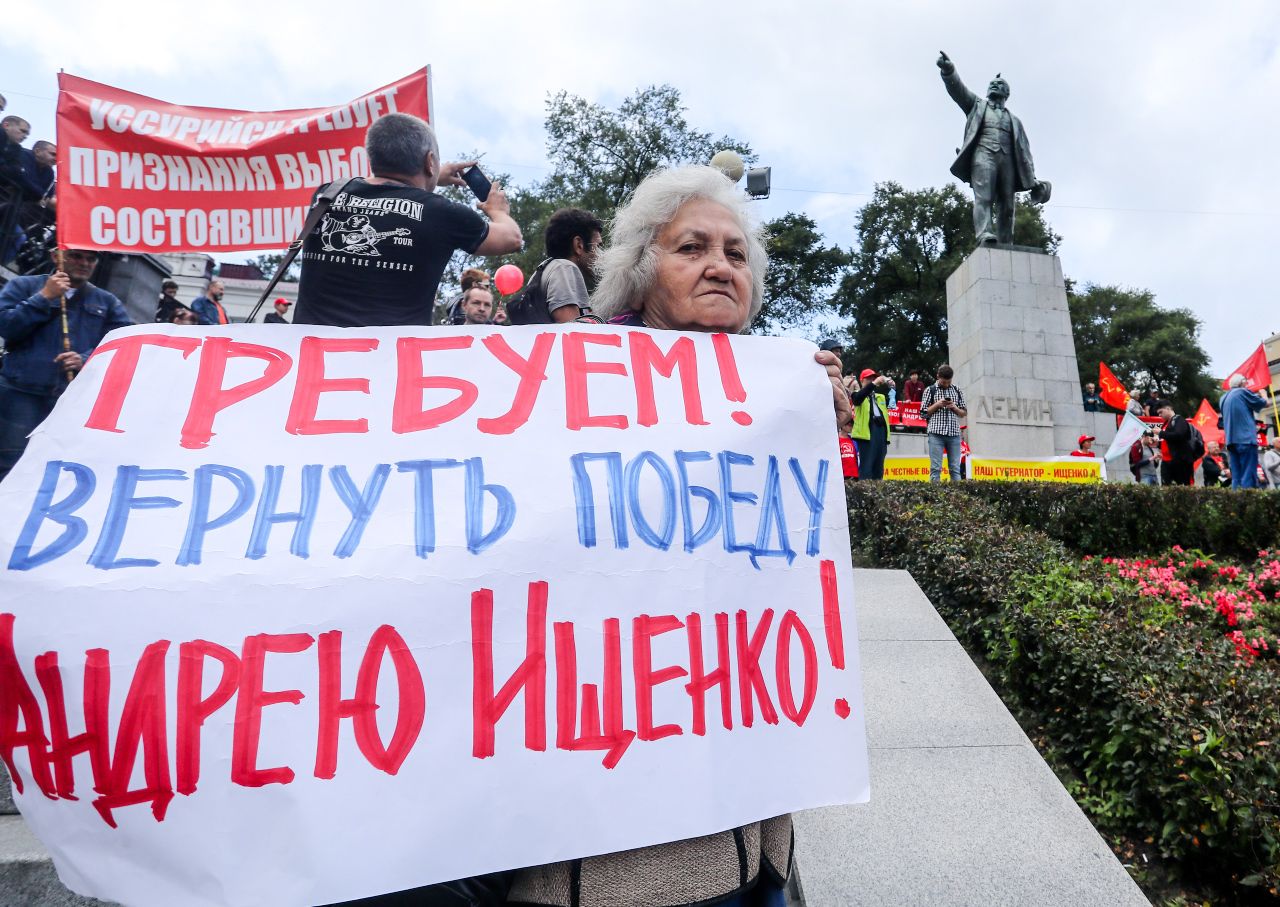
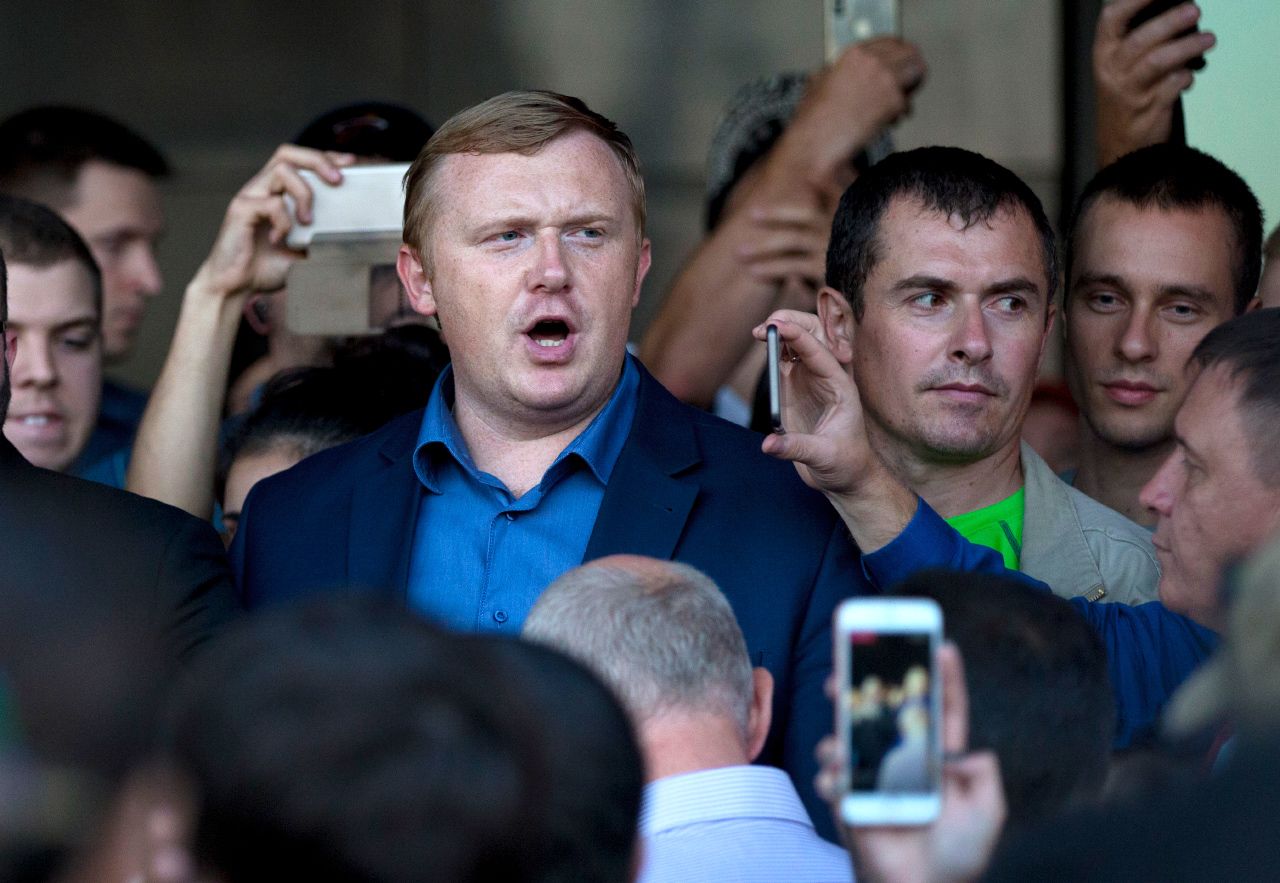
As Meduza tells the headquarters of Oleg Kozhemyako, the new head of the region did not at all seek to knock out the main competitor from the race - on the contrary, he wanted to differ from Tarasenko and conduct a campaign similar to honest. When Ishchenko had problems with the municipal filter , the deputies of the uniforms provided him with 58 signatures- less than the rest of the candidates, but this could be enough to overcome the filter. As a result, it was not enough: at the stage of registration of signatures, it turned out that several deputies who supported Ishchenko had previously supported another candidate - and duplicate signatures were prohibited by law. “All Ishchenko’s nomination activities looked quite strange. He could have passed the filter if he had advanced in normal terms, ”the local political scientist Vyacheslav Belyakov, who helped the Kozhemyako campaign, argues. “But for four days he thought to go to a self -nominated on a beautiful date, November 7th.” After that, only a week remained ( in fact two weeks - approx. Medusa ), and it is very difficult to pass the municipal filter without an administrative resource during this time. Ishchenko probably did everything right - he was able to keep his face without participating in the political struggle. "
After the September defeat of Tarasenko, Moscow political technologists reached out to the Far East - to correct the mistakes made. One of their tasks was the neutralization of protest and Ishchenko as his situational leader. The authorities did not want the communist to leave the race, but his position should be weakened. “The deceived equity holders suddenly appeared on the TV. This is the signal, he understands that everything will not stop there, ”the Kozhemyako headquarters explains, adding that representatives of the authorities did not even have to meet with Ishchenko:“ This [can be regarded as] threats, pressure. The man himself will understand everything. ”
Andrei Ishchenko owns a small construction company - and they tried to accuse him of abuse on the eve of the September tour, when people with the posters “return our money” and “where are our apartments” appeared next to the politician house. Representatives of Ishchenko considered a political action - the communist company owns only two houses; One has already been built, and the other should be commissioned only in 2019. In November, deceived equity holders arose again - now Ishchenko was accused of disrupting the project, to which his company had nothing to do. “He, as a deputy [of the Primorsky Legislative Assembly], came to Pichovaya Street to meet people and at some meeting said that if he had been given this site, he could have completed the house,” the assistant Ishchenko, who asked not to give his surname, explains to Medusa. According to the shareholders themselves, Ishchenko wanted to “take the house to their hands”, becoming the chairman of the housing cooperative, and saved the situation by his intervention Oleg Kozhemyako, giving people “hope for resolving an apartment issue”.
As the interlocutors of Medusa explain, they tried to make the “Primorsky Grudinin” from Ishchenko - presumably an unscrupulous businessman who served as power. The methods, according to the assistant politician, were used about the same: “For example, they run up ******** [abnormal] girl and a boy with a camera and a microphone and ask - why did you abandon your wife? But the deceived equity holders say that you threaten them, is it true? This acquired the scale of Sur. " “Ishchenko went self -arrived,” summarizes Dmitry Gusev, one of the Moscow political strategists who came to Primorye. “He just had to keep his face.”
Another potential competitor Kozhemyako was called Vitaliy Verkeenko, who in December 2017 became the mayor of Vladivostok and in a part-time year managed to accumulate good political capital. “Although he was not elected popular voting, he earned honest respect,” says Yuri Kuchin, an opposition politician known in Primorye. - We went to his receptions. For example, there was a problem lake in the microdistrict, where the sewage system drained, he solved the problem. He really deserved the sympathy of the townspeople. " “The city, of course, was not transformed dramatically, but Verkeenko, perhaps, was the best mayor of all who had controlled Vladivostok before,” adds Vladimir Dubovsky, the current coordinator of the Navalny headquarters in Primorye (all the previous mayors of Vladivostok turned out to be defendants in criminal cases soon or later).
A week after the appointment of Kozhemyako, the head of the region Vitaly Verkeenko resigned, saying that he had lost the motivation to work. At the end of October, he said on Facebook that future governor elections “do not promise anything good”, and for the authorities “pseudo -driving” in the region is more important than the level of corruption and crime. “Political technologists and the“ intra -elite “struggle with your own handed the region,” wrote Verkeenko. “Technology is made from the leaders of fake, cartoon heroes.” The former mayor proposed to postpone the elections for a year in advance, and not called himself as a potentially successful governor, but for some reason the head of the local FSB Igor Struchkov. Medusa interlocutors in the region believe that if Verkeenko declared his own governor's ambitions, he would have even more chances than Ishchenko, but after the resignation, the politician returned to the business: the projects of his car holding “Technocholding Sumotori” were tied to cooperation with the regional authorities and apparently did not want to experience the fate of Verkeenko.
Temniks and blocks
The current campaign cost the Primorsky authorities dearly - the interlocutor of Medusa at the Kozhemyako headquarters blames with the small time for preparing for the elections and problems with the protest electorate. According to him, the main expenses fell on the media-not only official media, but also, for example, telegram channels.
As Meduza says, the owner of several coastal telegram channels, Moscow techno did not grind, offering one telegram channel from half a million rubles. Not everyone agreed, but, for example, the Corrosion of Power Channel criticized the Primorye administration (a little over 5 thousand subscribers) for 1.5 million rubles was taken for “information service” - that is, as the interlocutor of Medusa claims, aware of the negotiations, began to write what the customer was required.
It worked like this: the Deminor was sent to the channels, which indicated how to describe the events taking place in the region. One of these "Temnikov" is at the disposal of "Medusa". For example, it is proposed, talking about the upcoming transfer of the capital of the Far Eastern Federal District to Vladivostok, to refer to the opinion of political scientist Oleg Matveychev that this decision “demonstrates political power” by Kozhemyako. “We reflect that it was the initiative of the head of the region O. Kozhemyako, who, in the operational time, lobbled this topic at the federal level,” Temnik said. “We note that earlier the Governor of the Khabarovsk Territory Sergey Furgal also spoke with confidence, but his confidence was only populism.”
They paid not only for “information support”, but also for other services: for example, as the editor -in -chief of one of the local publications says, for 200 thousand rubles a month it was possible to put a “block” on Verkeenko: in this case, the media pledged not to post any news about the former mayor - neither good nor bad ones. They also paid for the posts on Facebook: for example, that with the advent of Kozhemyako it makes no sense to protest and support Ishchenko.
According to the interlocutor of Medusa, close to the chosen governor, Kozhemyako paid for the costs of the media from his pocket - in the summer his family sold the fishing business in Primorye; The amount of the transaction was estimated at 430 million dollars. However, the main investments in the victory of Kozhemyako entered the region from the federal budget.
Gifts from Moscow
On December 14, two days before the election, the assembly hall of the administration of the Primorsky Territory was filled with young athletes and their parents. Oleg Kozhemyako decided not to speak from the department-instead, he went out into the middle of the stage, sporting legs in his shoulder width width. “We will make every effort so that the sport is accessible to everyone, so that our children are engaged in free in the municipal sports halls, so that they are paid bonuses from the regional budget and the budget of the federation,” said the acting governor then. “We understand how important sport is in the life of every person.”
For two months at the head of the region, Kozhemyako tried to convince its inhabitants that money would come with him in Primorye - and began to give out gifts like Santa Claus before the New Year. These gifts were made mainly due to injections from Moscow. For example, 2.6 billion rubles were received from there “ for the salvation of healthcare ” (purchase of equipment, payment of loans, raising salaries to doctors). The federal center promised to transfer more than 7 billion rubles for the resettlement of people from emergency housing and another 3.7 billion - for the construction of the dam and the fight against floods. News about all this in the local press were accompanied by headlines like "Kozhemyako knocked out money for Primorye."
In addition, the new head of the region introduced the law on benefits and payments to the “children of war” to the local parliament - in fact, intercepting the agenda from the failed opponent: the same Andrei Ishchenko tried to do this. In parallel, Kozhemyako agreed with Moscow that the cars imported into Primorye would not mandatory installing the Era-Glonass system in the next year: on November 16, the acting governor told Dmitry Medvedev about this, who stopped in Vladivostok on the way to Papua-New Guinea-and five days later the prime minister signed a document that provided for the document that provided An exception for the region. Vladimir Putin and Vladimir Putin, shortly before the election day, signed the law on the transfer of the capital of the Far Eastern Federal District to Vladivostok, joined the campaign.
“The victory of Kozhemyako won at such a price has actually became an excellent gift to opposition candidates the next season,” said political scientist Abbas Gallyamov. - One of the main lines of their campaigns, they will certainly now make the theme of “gifts that will show you from Moscow if you vote against its candidate in the first round.” I can’t imagine a voter who, having before my eyes, an example of such an attraction of unheard of generosity, would not want to participate in him. ”
Honesty and purity
Before the day of the election in Primorye, a unique situation developed. As Medusa told the representatives of the Voice movement, no opposition candidates were needed by any of the alleged observers, whom the Voice was ready to provide for free. All candidates decided that they would count on their observers.
December 15, on the day of silence, the candidate from the LDPR Andrei Andreichenko just held a studying meeting with them. The 34-year-old politician found himself on her the youngest-his and his colleagues from the State Duma were mainly listened to by women of retirement age. “We have a party’s members here - 4000 people, we rely on them, we just had a flurry of calls to those who wanted to,” Andreichenko explained his refusal to cooperate with the “voice”. - We are all the positions of [observers], possible by law, closed immediately. We even have a reserve-if suddenly someone gets sick. ”
Talking with Medusa, Andreichenko, a member of the LDPR with 12 years of experience, all adult life engaged in politics, managed not to utter the name Kozhemyako. “I don’t think about rivals,” he reasoned. “People are not interested in my opinion about candidates, they are interested in the fact that there is no firewood, the salary is small - the pressing problems that have been accumulated in the region.” Напоследок политик сообщил, что уверен, что выборы в регионе будут проходить честно.
Владимир Дубовский, координатор местного штаба Навального, занимавшийся в том числе и наблюдением на выборах, видит ситуацию иначе. По его словам, утром в день выборов он лично объехал дюжину избирательных участков — и на десяти из них не обнаружил ни одного наблюдателя. Узнав об этом, корреспондент «Медузы» позвонил Андрейченко, но тот ответил, что такого не может быть — просто кто-то «отошел» или «опоздал». Когда вечером корреспондент «Медузы» вместе с главой местного отделения «Голоса» Андреем Гусевым объехал семь избирательных участков в центре Владивостока, наблюдатели от ЛДПР обнаружились только на двух.
Гусев и «Голос» получили 20 мандатов на право наблюдения от штаба Кожемяко. Выбирать участки, за которыми они будут следить, наблюдатели не могли — но зафиксировали нарушения и на тех, куда их отправили власти. Александр Налимов, работавший на УИК № 551, рассказал, как на участок привезли на автобусе группу молодых людей, которые сами не знали, по какому адресу прописаны. Наблюдатель попытался задержать автобус, но его пассажиры сбежали, а на место происшествия приехал некий мужчина на джипе, который стал угрожать Налимову и уехал, только когда наблюдатель позвонил в полицию. Этого же мужчину Налимов встретил на следующий день — тот раздавал деньги наблюдателям от штаба Кожемяко.
На странности с голосованием после выборов обратили внимание сразу несколько экспертов — математик Сергей Шпилькин предположил , что «приписать» могли не менее 170 тысяч голосов, а автор проекта «Электоральная география» Александр Киреев заметил , что на некоторых участках данные по голосованию повторялись с точностью до десятых долей процента.
В самом Приморье, впрочем, считают, что выборы прошли чисто — член местного ЦИК даже заявил , что результаты подсчитали так быстро из-за того, что в избирком не поступило ни единой жалобы. Занявший на выборах третье место кандидат от Партии роста Алексей Тимченко также признал выборы «честными» и «открытыми». И только Андрейченко, памятуя о сентябрьском расширении сознания, на следующий день после выборов заявил , что подал заявление о нарушениях. К моменту публикации этого материала приморский ЦИК уже его отклонил .
Андрей Ищенко, чуть было не ставший в сентябре главой региона, отказался обсуждать с «Медузой» ситуацию в Приморье. «Я стройкой занялся, — сообщил он в переписке, выслав фотографию недостроенной 12-этажки. — Я дома строю, тут я хозяин. Я год жил выборами, а их отменили. Устал я». Уже в понедельник в ответ на просьбу оценить результаты голосования Ищенко прислал сообщение, состоявшее из одного слова: «Продавили».
Илья Жегулев , Владивосток