
Translated material
The Hague countdown went
OSCE called crimes in Chechnya "clear" and "irrefutable." And indicated to Russia to the prospect of the International Criminal Court

On the year, a report on grave violations of human rights in the Chechen Republic was presented at the permanent council of the OSCE. The report was the result of the investigation conducted within the framework of the so -called “Moscow mechanism”, first initiated against the Russian Federation.
I must say that before that, the “Moscow mechanism” was activated only 7 times and use it in exceptional cases. Namely, when there is significant reasons to believe that one of the member countries violates its voluntarily assumes within the framework of the human measurement of the OSCE and indulges the commission of serious systematic crimes in relation to their own citizens. In this case, in relation to residents of the Chechen Republic.
Officially, a million three hundred Russian citizens live in Chechnya. All of them live in conditions of absolute defeat in their constitutional rights and total impunity of the authorities and republican special services. This situation has developed over the years and was ignored by the federal center.
At the beginning of 2017, these factors led to the campaign that shocked the whole world against the Chechen LGBTi community, as well as to the mass execution of people who are randomly detained under the pretext of combating terrorism, without any evidence of involvement in any real crimes.
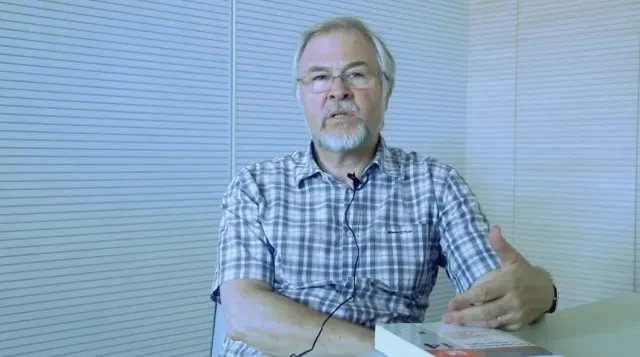
The author of the report-a professor of international law of the University of Graz (Austria) Wolfgan Benedec-was appointed sixteen OSCE member countries. At the stage of initiation of the “Moscow mechanism” of Russia, active cooperation was proposed, in particular, the Russian side could choose the second expert whose competence it would trust. However, the Russian authorities did not go to cooperate with the OSCE, refused to answer all the questions addressed by him as part of the “Vienna mechanism” (preceded the “Moscow”), and did not take advantage of the right to appoint a second expert.
Also, the Russian authorities categorically refused to let the OSCE expert conducting an investigation into Russia.
Press Secretary of the President of Russia Dmitry Peskov in response to the question of the Kremlin’s reaction to initiating the “Moscow mechanism” said: “I, to my shame, are not at all aware of this topic, I did not even hear.”
OSCE statement after the publication of a report on the provision of human rights in Chechnya
The conclusions that Professor Wolfgang Benedek made after a survey of victims, witnesses, experts, human rights activists, journalists, as well as after studying numerous documents, including official materials of the Investigative Committee of Russia,
They confirmed all the accusations expressed publicly against the Chechen authorities and special services in a systematic violation of human rights in Chechnya.
Thus, the investigation of Professor Benedec confirmed the fact of the systematic mass illegal detention of the inhabitants of Chechnya.
Also, the speaker has no doubt the existence of numerous places of illegal imprisonment in Chechnya (the so -called “secret prisons”).
The report states that to all, without exception, the detainees, whether minors, women, adult men or people of advanced years, regardless of the reasons why they were detained, are used without mandatory torture, including electric current torture.
Absolutely all detainees at the time of detention and before the “legalization” (that is, when their arrest is formally formally formalized through the court) are deprived of the possibility of any legal assistance.
The report states the widest application of “collective responsibility” in Chechnya, when relatives are forced to be responsible for their loved ones, whom local authorities are appointed unprovenly (that is, without the investigation and court procedure).
The report states the corruption of the power structures of the Chechen Republic. In fact, the Chechen police, taking advantage of their impunity, monetized their authority with Russian law and ransom, as a fee for freedom (in any form, both in the form of money and in the form of property belonging to the detainee and his family), becomes the main reason for the mass detention and torture of people.
The report states the absence of an independent judicial system, and, not in the sense in which this phenomenon is characteristic of the rest of Russia. Like ordinary citizens, representatives of the judiciary in Chechnya are amazed in their constitutional rights and at any time can be illegally detained, subjected to torture and arbitrarily devoid of the status of a federal judge.
The speaker paid special attention to numerous certificates of the systematic persecution of LGBTI people in Chechnya, which Professor Benedek called “clear” and “irrefutable”. Moreover, he directly connected the campaign against Chechen gays with the position of both Chechen and federal authorities. Mr. Benedek placed on a row of the head of Chechnya, Ramzan Kadyrov , the speaker of the Chechen parliament Magomed Daudov and the Minister of Justice of Russia Alexander Konovalov .
Ramzan Kadyrov repeatedly declared the human inferiority of representatives of the LGBT community (“they are not people”) and unequivocally called for their liquidation.
Magomed Daudov, according to the testimony of numerous victims, directly oversaw the Anti-Geek campaign. Alexander Konovalov, acting in the UN this spring, in response to the demand to investigate these crimes, said that it was not possible to find violations in respect of Chechen gays, since the Russian authorities could not find gays themselves in Chechnya. Mr. Benededec conducted a direct causal relationship between the general situation with the position of LGBTI Ponscription in Russia and the numerous victims of this Anti-Gianian campaign in Chechnya:
“The Federal Russian Law on the so-called propaganda of non-traditional relations among minors was perceived in Chechnya as an encouragement to the direct persecution of representatives of the LGBTi community.”
Mr. Benedek paid special attention to the work of human rights activists and journalists in Chechnya. He analyzed in detail the politically motivated criminal prosecution of the head of the Chechen Memorial Oyub Titiev and ended this analysis with a statement by the head of Chechnya Ramzan Kadyrov that after the sentence to Titiev, the territory of Chechnya will be closed to all human rights activists and journalists who raise issues of violation of human rights. Mr. Benedec noted that Ramzan Kadyrov, who publicly designated Chechnya, as exclusively controlled by him, no one even pulled him.
In the recommendations for the Russia's report, as a member of the OSCE, it is proposed to create a special Federal Investigative Commission to investigate the actions of the authorities and special services of the Chechen Republic. If the Russian Federation does not do this, an independent investigation should be conducted by international experts using all available international mechanisms, including such as the International Criminal Court in the Hague.
The Commissioner for Human Rights of Russia Tatyana Moskalkova is recommended to more effectively use her wide opportunities that the law gives her, for example, to prepare and make a special report on gross violations of human rights in Chechnya in the State Duma of the Russian Federation.
REFERENCE
What is the "Moscow mechanism"
The Moscow Mechanism is one of the OSCE mechanisms for monitoring the fulfillment of obligations taken by the organization parties to the organization in the field of human rights and democracy (human dimension). He was approved at the latest meeting of the OSCE human measurement conference in Moscow in 1991 (hence the name).
It is a special mission formed from among independent experts to investigate serious human rights violations in the OSCE member country. Until now, the Moscow mechanism has been used seven times, against Russia it is used for the first time.
The decision to activate the “Moscow mechanism” is made only in exceptional cases. In this case, in this way, the OSCE responded to reports of crimes in Chechnya against LGBTi community, as well as extrajudicial executions. On August 30, 15 OSCE member countries requested specific information from the authorities of the Russian Federation on the following issues:
1. What measures were taken by the federal authorities to ensure compliance by Chechen officials of obligations within the OSCE?
2. How did the federal authorities of the Russian Federation investigate allegations of violations and abuses committed against representatives of LGBTI in Chechnya? How exactly did they come to the conclusion that there were no such violations or abuse, since there are no representatives of LGBTI in Chechnya?
3. What measures were taken by the federal authorities to ensure safe conditions for human rights organizations and the media to freely document and report without subsequent repressions about human rights violations in Chechnya? In particular, what measures were taken to ensure the activities of the Memorial human rights organization in Chechnya?
4. How did the Russian federal authorities investigate the fate of each of the 27 persons detained, as reported, on suspicion of extremism and subsequently victims of the extrajudicial execution in Grozny in January 2017?
As the OSCE official statement, “the Russian Federation failed to answer,” and this fact “only increased anxiety about the inability or unwillingness of the Russian authorities to take measures to take measures with offenses in the Chechen Republic, which promotes the impunity of the Chechen authorities”. After that, in November, it was decided to activate the “Moscow mechanism” against Russia.