
Translated material
Deripaska for the exit
American sanctions will be removed from Rusal - but not from the oligarch
In April, the US Treasury published a sanctions “Kremlin List”, which also included businessman Oleg Deripaska, and as a result, the companies affected with him - En+, Rusal and Eurosibenergo OJSC. Then the market reacted with a sharp jump in aluminum prices - by almost 40%. However, at the end of the year it became known that the Ministry of Finance notified the Congress of the decision to stop sanctions against these companies: Deripaska reduced its share in the property structure to 45%. Nevertheless, there is no question of lifting personal sanctions from the businessman himself. In addition, this is not interesting to the United States, experts say, in this case the Ministry of Finance was guided by pragmatic considerations, persecuted the interests of the American economy and simply corrected his “tactical mistake”.
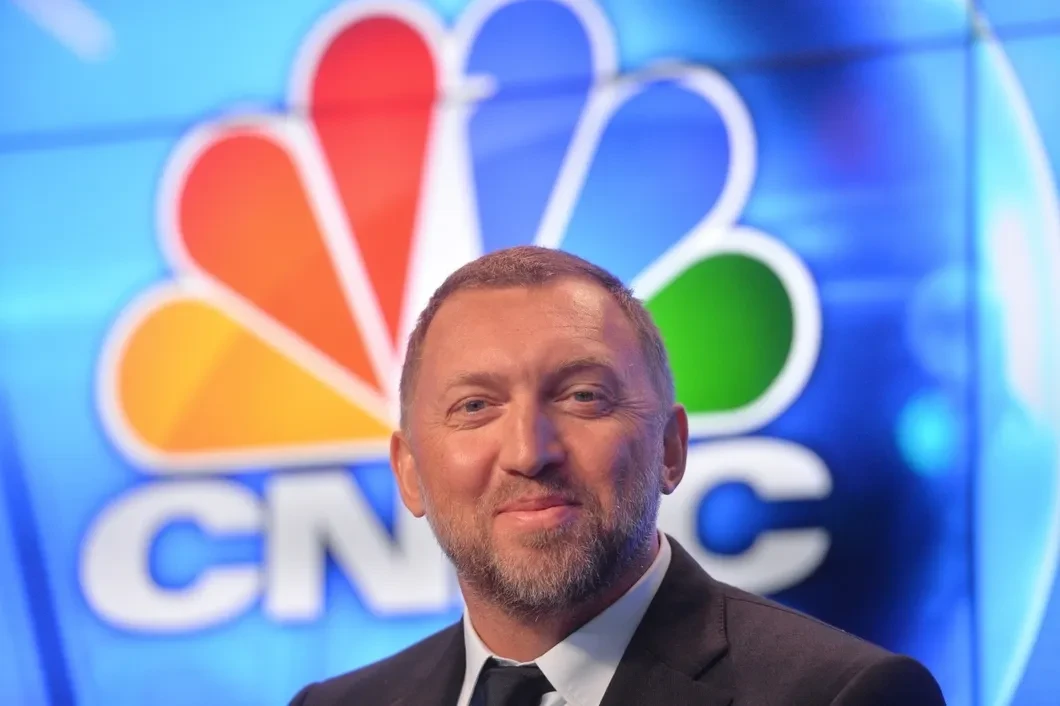
Oleg Deripaska got into the sanctions “Kremlin List” in April of this year - there were senior officials and businessmen, whom the US Treasury considered close to the Kremlin leadership.
The sanctions against EN+, Rusala and Eurosibenergo OJSC were introduced automatically, for the reason that Oleg Deripaska belongs to most of the shares of these companies. Their assets in the United States were blocked, and American citizens were forbidden to conduct any business with companies. At the same time, the Ministry of Finance set the condition: if Deripaska reduces its share to a level below 50%-they will get out of restrictions. According to experts, the United States was completely unprofitable to impose sanctions against the businessman’s assets - Rusal occupies first place in the world for aluminum supply and has about 17% of the market without taking into account Chinese manufacturers oriented to local demand. Therefore, almost immediately the option was proposed on how to return the situation to the previous direction.
On December 19, the Ministry of Finance informed the Congress of the decision to cancel the sanctions imposed on EN+, Rusal and Eurosibenergo OJSC. It is expected that the restrictions will be removed after 30 days. The companies nevertheless agreed to change the property structure-now the share of Oleg Deripaska is less than 50%in them, which was the main condition for removing frost from its assets. For example, in EN+ it was reduced from 70% to 44.95%. Now the shares are transferred to VTB. Deripaska also left the board of directors of EN+ and the Rusal board of directors.
“These sanctions were poorly designed,” said Timur Nigmatullin, analyst at the Otkritie Broker, “except for politicians, they were not needed by anyone.” The political part was played out, and from an economic point of view it was necessary to figure out how to correct a tactical mistake. Here a philosophical question arises: does it make sense to impose sanctions on the company with which an individual is affiliated? Does it make sense to impose sanctions on the company, on which a huge number of jobs depends?
The General Director of the Criminal Code of the Capital Office, Alexander Losev, told Novye that the departure of Rusala from the world market entailed a sharp jump in aluminum prices - almost 40%, which was extremely disadvantageous for the American automobile industry. Now, against the background of reports on the removal of restrictions, prices went down:
- Since Russia is built into the global trade chain at the level of metals, the blow to these industries harms the entire world economy. Aluminum is not only cars (an extremely important industry for America), it is both aircraft industry and shipbuilding. In this case, an error is corrected. The sanctions pressure in general, of course, will not cancel. Just sanctions against aluminum increase metal prices everywhere and, as a result, damage American industry.
Losev also admits that this case does not carry any uniqueness and, moreover, can even become a precedent. He admits such a development of events in relation to other Russian companies that have fallen under sanctions: “The next one will be some of our oligarchs. The same proposals may follow in relation to others - first entry in the sanctions lists, and then the proposal to transfer control. The United States has a pressure method. I have a favorite writer Karl von Clausewitz, he said that among the goals of the war there is a need to deprive the opponent of the opportunity to resist, leaving him in a difficult situation. At the same time, as you know, the lifting of sanctions from Deripaska itself is completely uninteresting. ”
On December 20, after the opening of trading on the Hong Kong Stock Exchange, the Rusal shares took off in price by 25% - to the mark of 2.8 Hong Kong dollars (23.99 rubles). The day before, when closing the trading, the company's shares cost 2.24 Hong Kong dollars. Later, the price of shares stopped in “growth” by 14-17% of the closing level of trading. Obviously, the market reacts so much to the statement of the US Treasury.
At the same time, when opening trading on the Moscow Exchange, the Rusal shares rose by almost 50%. True, by 10 a.m. the growth was 21% of the relative previous day. The quotes of global depository receipts EN+ also jumped sharply - at 36.4% by 10 in the morning (Moscow time).