
Translated material
Prohibitively loud: than the noise is dangerous and how to protect yourself from it
The noise accompanies the inhabitants of the cities around the clock. Was it always it was or has become recently? What noise level is harmful to health and how does it affect a person? We understand the pressing issues about the noise with Sony , which released wireless headphones with noise reduction. They allow you to listen to music without being distracted by extraneous sounds, we will tell you more about them at the end of the article.
Became more noisy in the world?

The volume of sound was accurately learned to measure only in the 20th century, but it bothered people from antiquity. Back in 50 BC. e. Julius Caesar forbade the movement of night crews in Rome due to the roar. But radically, the noise level increased in Western Europe after the industrial revolution - in the XVIII -XIX centuries. Then loud production, mechanical machines, engines, new rumbling materials (cast iron and steel) and more noisy energy sources (coal and steam) began to appear. In the 19th century, construction sites also unfolded everywhere, trains appeared, and later cars, motorcycles.
A description of the disturbing inhabitants and noise workers can be found in the literature . For example, Stendhal in “Red and Black” (1830) described new sounds in the French provincial town: “As soon as you enter the city, as you are stunned by some kind of heavier and terrible type of car. Twenty heavy hammers collapse with a roar shaking the pavement; They are raised by a wheel, which is driven in a mountain stream. Each of these hammers makes every day I will not say how many thousands of nails. ”
How to measure the volume of noise?
With the help of a special device - a noise meter. To understand how it works, you need to figure out that such a sound is generally.
In fact, any sound is the result of a change in air pressure. For example, when the engine works, air molecules around it move sharply. This displacement is transmitted from particles to the particle, and they are “knocked down” into the area of high pressure - the area of reduced pressure follows this area. A series of such areas is a sound wave with its frequency. When she reaches a person’s ear, she forces it to vibrate his eardrum.
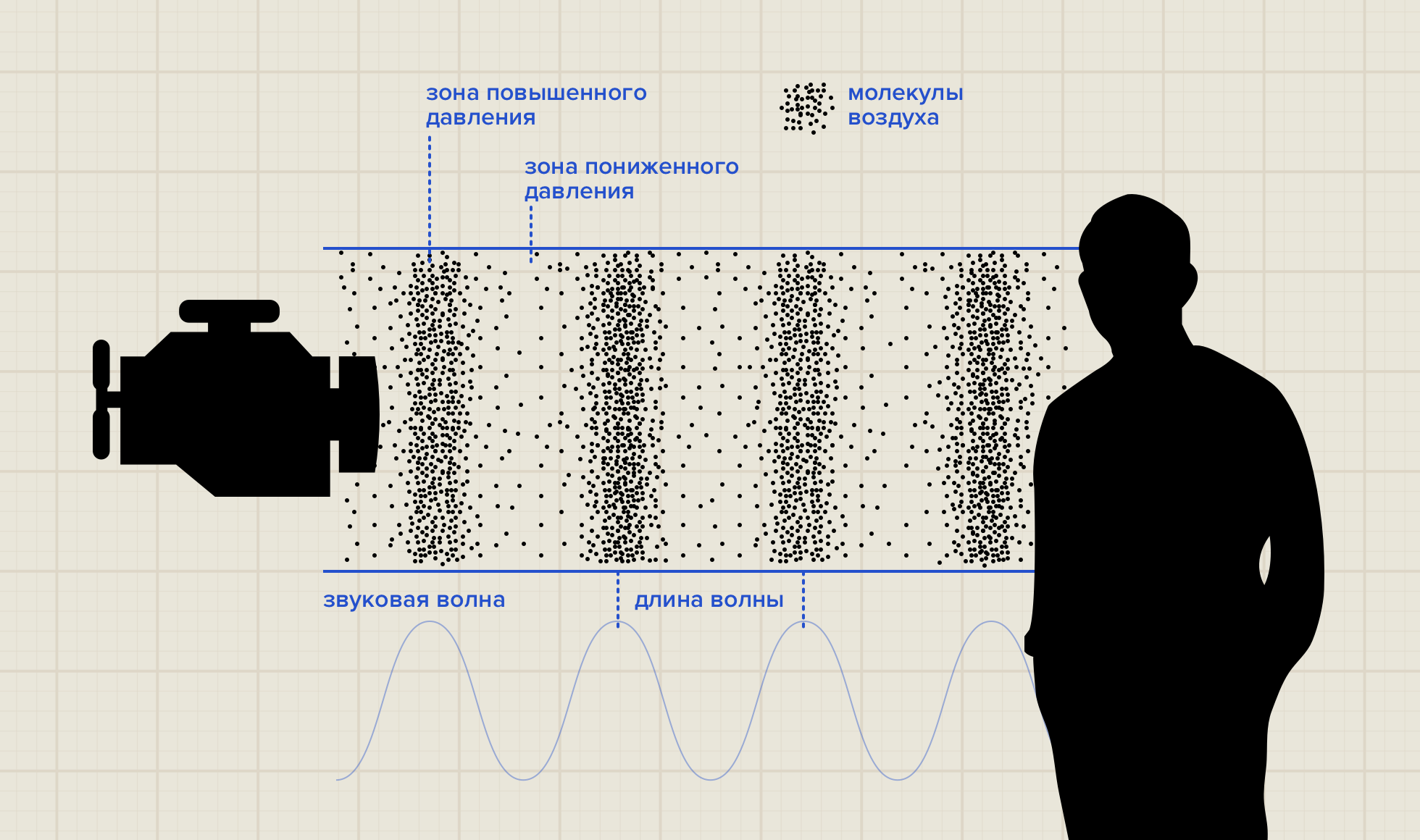
The Summer in the device is similar to the human ear. He has a microphone with a voltmeter connected to him. The higher the air pressure on the microphone membrane, the higher the electric current voltage at the entrance to the voltmeter. This level is displayed in decibels: the larger this meaning, the louder the sound. From 0 to 3 dB is silence, such a value corresponds to the threshold of susceptibility to the sound of the human ear. The maximum volume level that causes pain is 130 dB - this is the noise of a reactive aircraft at a distance of 50 m.
Today, noise levels can be measured using special computer programs and mobile applications. You can also rent a professional noise meter - it is more accurate.
What does the Summer shows in Russian cities?

The noise level varies greatly inside the city, depending on the proximity to the sources of noise - production, construction and transport (cars, trains and aircraft). In Russia, about a third of the townspeople suffers from excessive noise, and every tenth Russian complains about the noise from the railway.
But the highest noise level occurs near the roads with the average intensity of traffic (90–95 decibels). At a speed of more than 60 km/h, the sound from the contact of the wheels of cars with roads begins to exceed even the volume of the engine. Residents of quarters adjacent to large roads suffer from this - there the noise level can be 67–77 dB, especially if there are no noise -absorbing screens and trees. Although the officially permissible noise of street movement near the walls of houses should not exceed 55 dB and at night 40 dB.
What is the noise level for a person is generally acceptable?
Usually people do not interfere with the noise of about 40–45 decibels during the day and 35 decibels at night - the threshold of auditory perception in the sleeping one 10-14 dB lower than in a wakeful person.
According to Russian sanitary standards , the total level of noise in residential premises is 40 dB day and 30 dB at night (maximum and short -term - not more than 55 and 45 dB). Most of the constant noise around us are laid in these boundaries (for example, the ticking of the wall clock occurs with a volume of about 30 dB, like the noise of the cooler, the work of the video card, human speech - 40 dB).
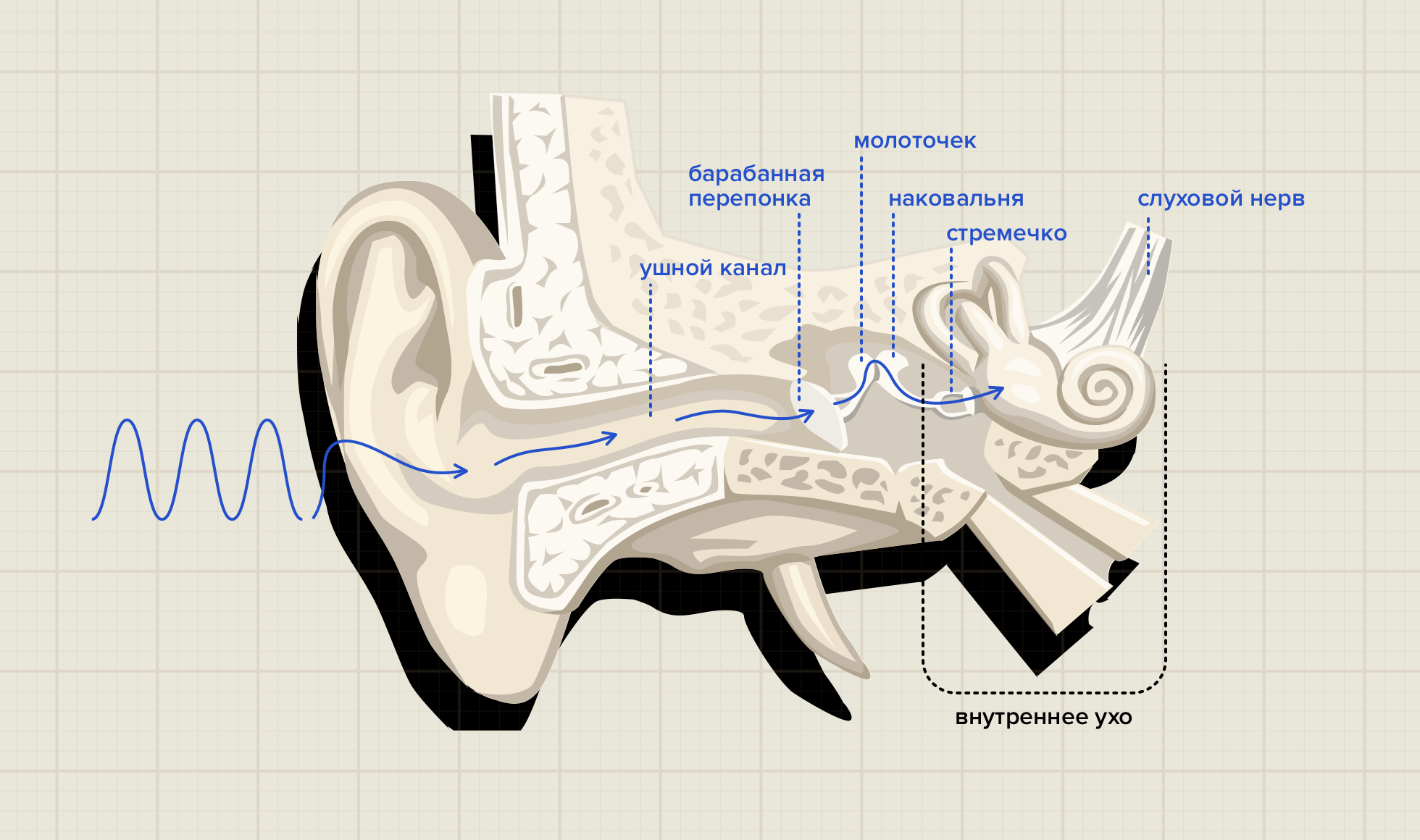
The sound that exceeds 100 decibels, if it occurs regularly and for a long time, can seriously harm a person and even cause damage to sensory cells, which leads to an irreversible hearing loss. Therefore, on the recommendation of WHO , the maximum permissible noise level is 85 dB. Moreover, in such a noisy environment you can be no more than eight hours. If you are surrounded by noise louder than 100 dB, it is recommended to listen to no more than 15 minutes . With such sounds you can often encounter concerts, stadiums or in nightclubs with powerful acoustic systems. There is a simple rule for this: when you need to scream so that you are heard, such a volume level can harm.
How does a loud noise affect a person?

When exposed to loud noise, human hearing adapts - the threshold of audibility increases. Therefore, after being in a noisy place for some time, quiet sounds may not be heard, then hearing acuity is restored. The longer you were in a loud environment, the greater the chance to lose the ability to hear quiet sounds - neurosenory hearing loss or hearing loss can come.
Noise can cause long -term health problems. The background noise penetrating through the windows, especially at night, leads toproblems with sleep, and therefore, and, possibly, to a decrease in productivity, cognitive activity (in this sense,children are especially sensitive ).
And more and more data indicates that noise contributes to the development of cardiovascular diseases (arterial hypertension, myocardial infarction, heart failure and stroke). With regular and prolonged exposure to special loud sounds, there may be constant damage to sensory cells, which will lead to irreversible hearing loss.
If you felt that your hearing has worsened, you need to contact an otorhinolaryngologist. He will be able to assess the condition of hearing and offer treatment.
How to fight a noise?
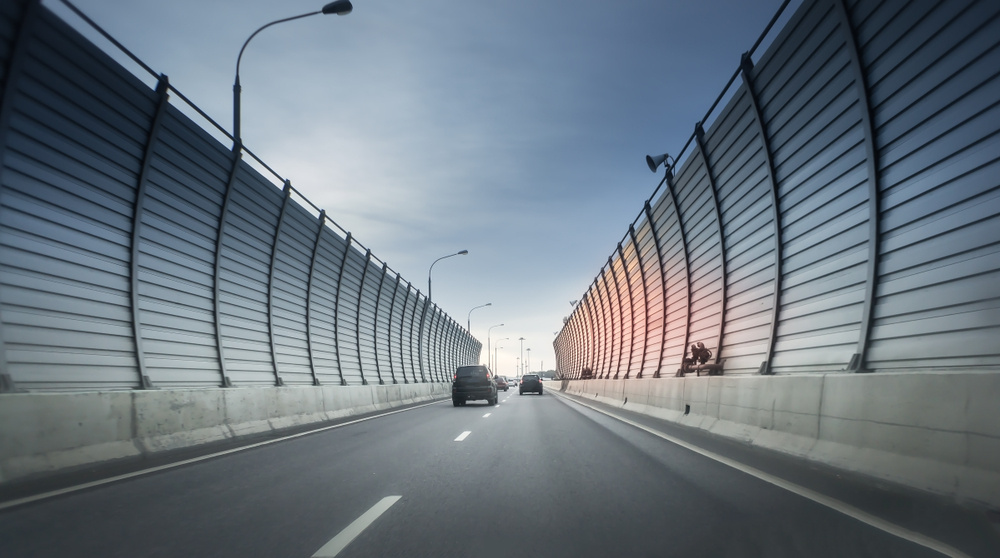
- They fight with a noise at the state level - legislative prohibitions operate in many countries. So, in Russia, construction and repair work is prohibited at night (from 23 to 7 hours). In some American cities, for example, there is a ban on garbage collection at night or a battle of bells. In Germany, there is a fine for driving around the city with open windows and included music. The noise level can also be reduced by high -quality urban planning (reflecting screens, green areas between houses and tracks).
- The main sources of noise are on the street, and in order to hear them less in the apartment, you should pay attention to the sound insulation of windows. The soundproofing indicators are affected by the type of windows, the thickness of the glass, their number and the distance between them. For example, it is better to put windows with three glasses of different thicknesses and different distance between them. They advise you to choose the thickness of the glasses of 4 and 6 mm, and the width of the gaps is 10 and 16 mm (the soundproofing of the window will be 34 dB). The high -quality installation of windows and the fitness of the fits to the frame are also important so that the sound does not pass through the gaps.
- The thickness of the walls is difficult to adjust, so it is worth taking a closer look at the materials that are covered with the ceiling and walls. The ceiling can be lined with a sound -absorbing coating, and the walls are covered with panels with small holes or a fibrous surface. But the sound passes not only through the walls and partitions, but also through the cracks, so if you constantly hear your neighbors, the point may be that there are gaps between the walls and the floor - they can be covered with cement mortar, gypsum or putty.
- There are personal means of noise protection - Berushi. Ordinary cotton wool is not suitable, because it has a slight density and is too porous - the sound insulation effect will be small. Therefore, it is worthwhile to use foamopylene (or polyurethane) Berushi - they have the largest level of noise reduction (from 32 to 36 dB).
- There are also technological devices that help protect from extraneous noise. For example, Sony WH-1000xm3 wireless headphones with active noise reduction technology. External noises are deprived not only due to soft, tight-fitting pillows (outfields), but also due to the smart system and the noise-disposal of the QN1 HD processor. The principle of operation of the system is simple. Since any noise is a wave, then if you generate its mirror reflection (inverted wave), then it will smooth out the original noise. Sony headphones are built -in microphones that receive a sound signal from the outside, and the processor that converts it into an inverted wave and transmits it to the speaker. As a result, the listener perceives only music without extraneous noise. This function is especially useful for those who spend a lot of time in transport, in an airplane, office or other public spaces. The function of adaptive sound control automatically determines what you are doing and adjusts the volume of the surrounding sound.
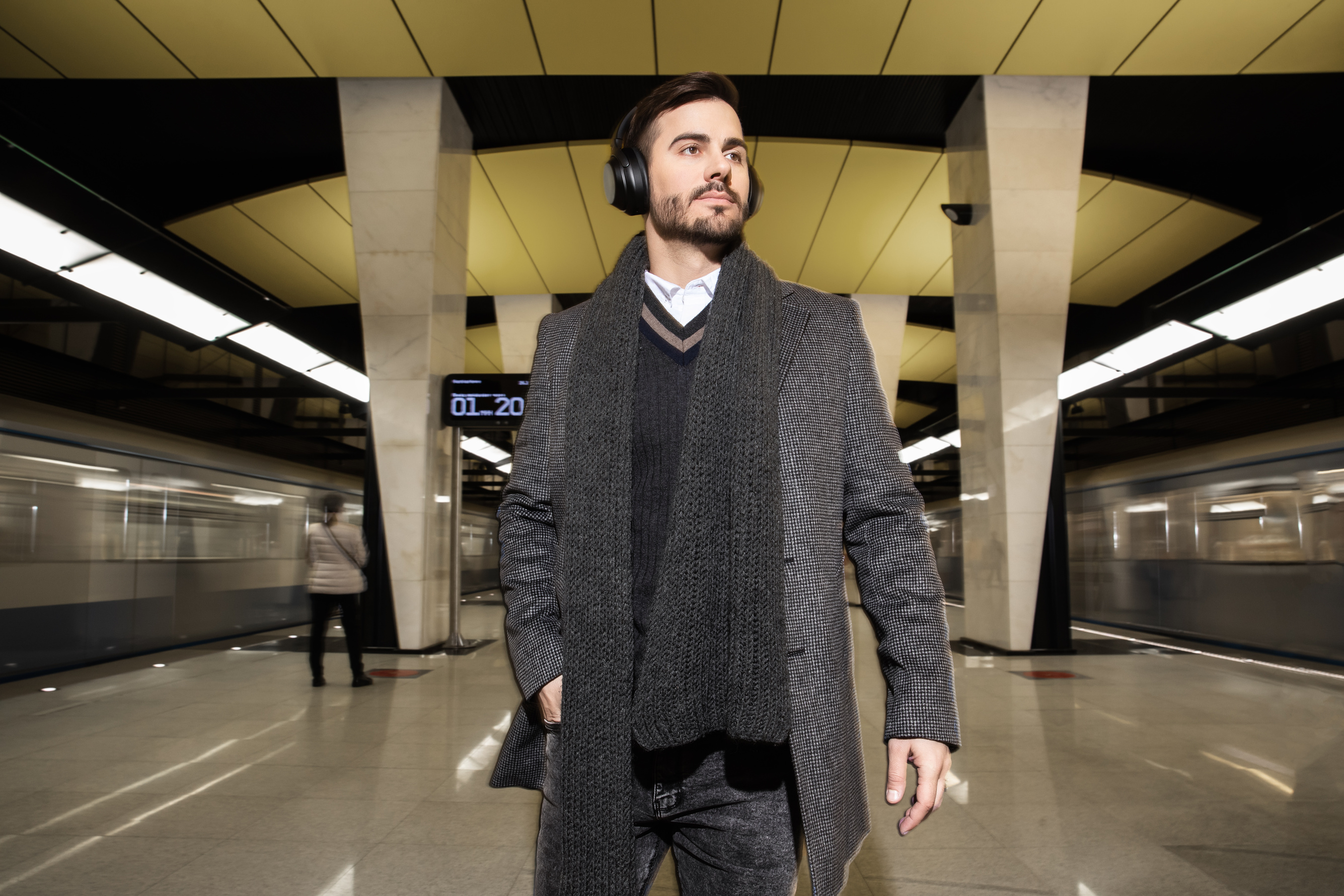
Photo in the announcement: Charulfajar / Unsplash