
Translated material
The head of the Pentagon announced a resignation. In a letter to Trump, he did not thank him for his joint work - but he spoke in detail about the disagreements with him
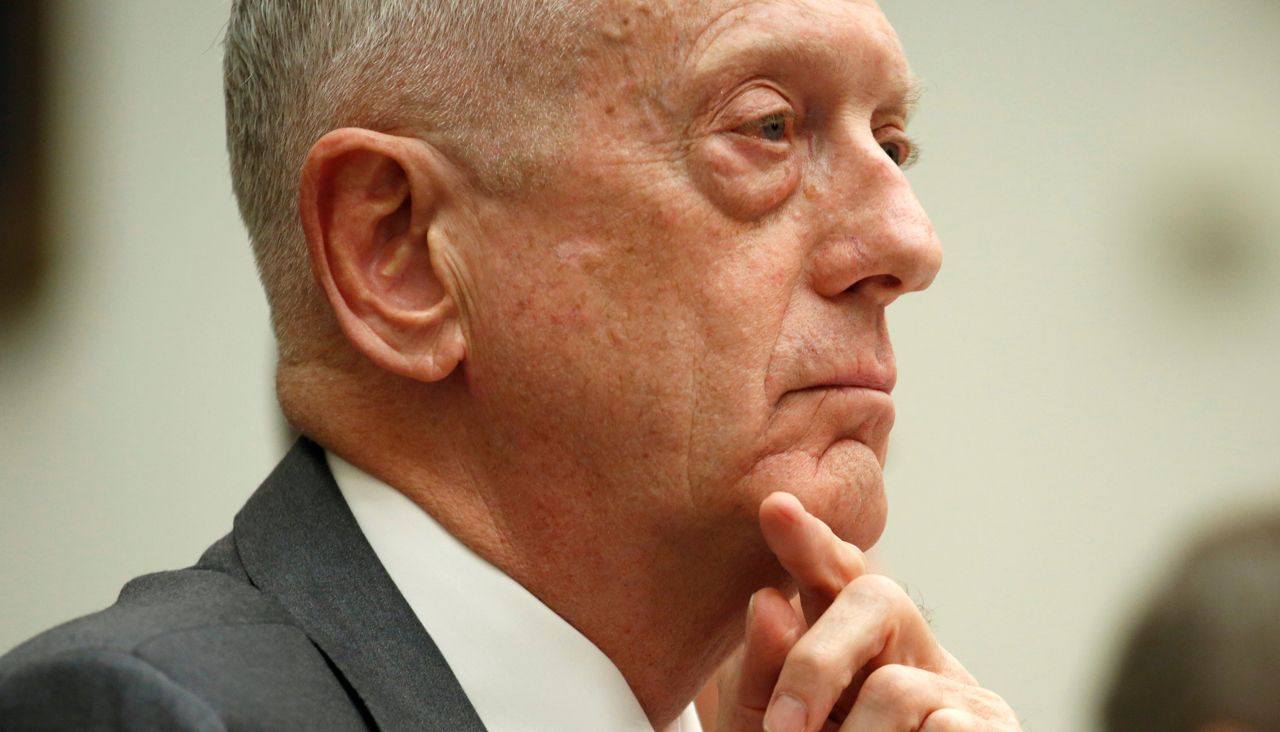
The head of the Pentagon James Mattis on December 21 announced the upcoming resignation . He made such a decision after US President Donald Trump decided to withdraw troops from Syria. The head of the defense department did not agree with this and, according to The New York Times, tried to convince the president to change his mind, but to no avail. Immediately after that, he announced the departure from the Pentagon since March 1 next year.
Ina letter that Mattis sent to Trump, he stated that he “has the right to have the Minister of Defense, whose views correspond to the views of the president himself. Observers noticed that, contrary to tradition, the minister never thanked the president for trust and joint work. But he listed in detail their disagreements:
- Different approaches to relations with allies. “Although the United States remain an indispensable part of the free world,” Mattis believes, “we cannot defend our interests or play this role qualitatively without creating strong unions and demonstrating respect for the allies.” Obviously, the minister has in mind not only the decision to withdraw troops from Syria contrary to earlier obligations to the Kurdish population in the east of this country, but, for example, the numerous attacks of Trump on other NATO members. Although it was Mattis, on behalf of Trump, who negotiated that European countries increase their expenses to support the alliance.
- The idea of the role of the United States in the world. “Like you,” the minister writes, “from the very beginning, I said that the United States Armed Forces should not turn into a global policeman.” But for Trump and Mattis, this means different things. The current US President has a reputation of isolationist, for whom America in the first place (American First): So, the United States should not solve other people's problems, and the planned withdrawal of troops from Syria is an extra confirmation of this. Matiss was never a big apologet of this doctrine. On the contrary, he believed that the United States should strengthen its role as the leader of the democratic world - again, in alliance with traditional partners.
- The fight against "potential opponents." Mattis was a co -author of the defense doctrine, which is not the fight against terrorism, but the confrontation between the “revisionist powers”, such as China and Russia, should be the main goal of American foreign policy. Trump signed her, but, according to experts, he never sought to realize. The head of the Pentagon recalls Moscow and Beijing in a farewell letter, saying that “they want to create a world corresponding to their authoritarian model - having received the right to veto the right of other nations to make decisions in the field of economics, diplomacy and security - to promote their own interests at the expense of neighbors, America and our allies.” Mattis could be pleased with Trump’s trading war against China, but he hardly liked the president’s attempts to establish relations with Vladimir Putin. Trump himself wrote on Twitter on December 21 that "there was no president more tough (but also honest) in relation to China and Russia"). According to The Washington Post, Mattis was also against negotiations with North Korea and especially against the withdrawal of part of the American forces from South Korea as a gesture of goodwill. According to some reports , he also did not like the decision to withdraw the United States from the “nuclear deal” with Iran.
The fourth resignation in two months, the third - in two weeks
Most American commentators met the news about Mattis's imminent departure with regret and again expressed dissatisfaction with the president. Moreover, even some Republicans who expressed the hope that Mattis’s successor would share his views would be critical comments. The minister had a reputation as the last member of the Trump administration, who divided the "traditional views" into the role of the United States in the world. Now many are waiting for the decision -making style in the White House will become even more spontaneous.
Trump’s opponents also call Mattis “the only adult in the room”, bearing in mind that he tried to slow down the most radical initiatives of the president. Perhaps this was the most annoyed by Trump, who in October called Mattis “in some way a democrat,” which clearly showed his distrust of the official. Nevertheless, immediately after the announcement of the resignation of Minister Trump, he thanked him on Twitter and stated that during his work “incredible progress was reached, especially in the field of orders of new weapons”. In turn, the Fox News law channel noted that the Americans “do not elect the presidents for that so that their subordinates prevent their policies”, so Mattis's resignation is quite logical.
The resignation of Mattis is already the fourth dismissal from the Trump administration in two months: before that, Prosecutor General Jeff Sehnes left , the head of the White House apparatus John Kelly and the Minister of the Interior Ryan Zinka followed him - the last two were resigned in December.
John Bolton will be responsible for the foreign policy of the United States. He is an adversary of Iran and Russia
Mattis was the last representative of the first set of Trump’s presidential team, who initially relied on experienced politicians of an extremely conservative sense, often with ties in business and the army. The first adviser to the president of national security, Michael Flynn worked for less than a month and left due to suspicions of relations with Russia. Steve Bannon, an adviser on strategic issues, left for an interview in which he sharply contradicted Trump. Secretary of State Rex Tillerson was fired after a long conflict with the president.
According to many American analysts, Mattis’s departure, whose opinion on personnel issues in the army, also defiantly ignored, means that the president was finally disappointed in the military, on which he initially relied. Mike Mike Pompeo, who was preparing Trump with Kim Jong -un, and national security adviser John Bolton, will most likely be responsible for foreign policy. As Foreign Policy wrote , the latter has long been conflicting with Mattis and distributed rumors about his upcoming resignation.
At the same time, Bolton has a reputation as the most tough enemy of Iran in the Trump administration, and the same Foreign Policy the day before the resignation of Mattis called Trump’s decision to withdraw troops from Syria “a kind of victory over Bolton”. A national security adviser is also considered a supporter of a tough line in relation to Russia, although it was he who prepared the meeting of Trump and Putin in Helsinki.
Reuters considers Trump’s conflict with Mattis and his resignation of a prelude to the events of 2019, when the US President will have to work with the more opposition composition of the Congress and his discontent will be increasingly tough. The head of the Pentagon leaves against the background of the conflict that has already begun due to the reluctance of congressmen to allocate additional funds to protect the border with Mexico.
Dmitry Kartsev