Date
Author
Вячеслав Половинко, Лилит Саркисян
Source

Preserved copy
Translated material
In full adoption mode
What new laws the State Duma made Russians happy for the New Year: a review of the "new" and experts
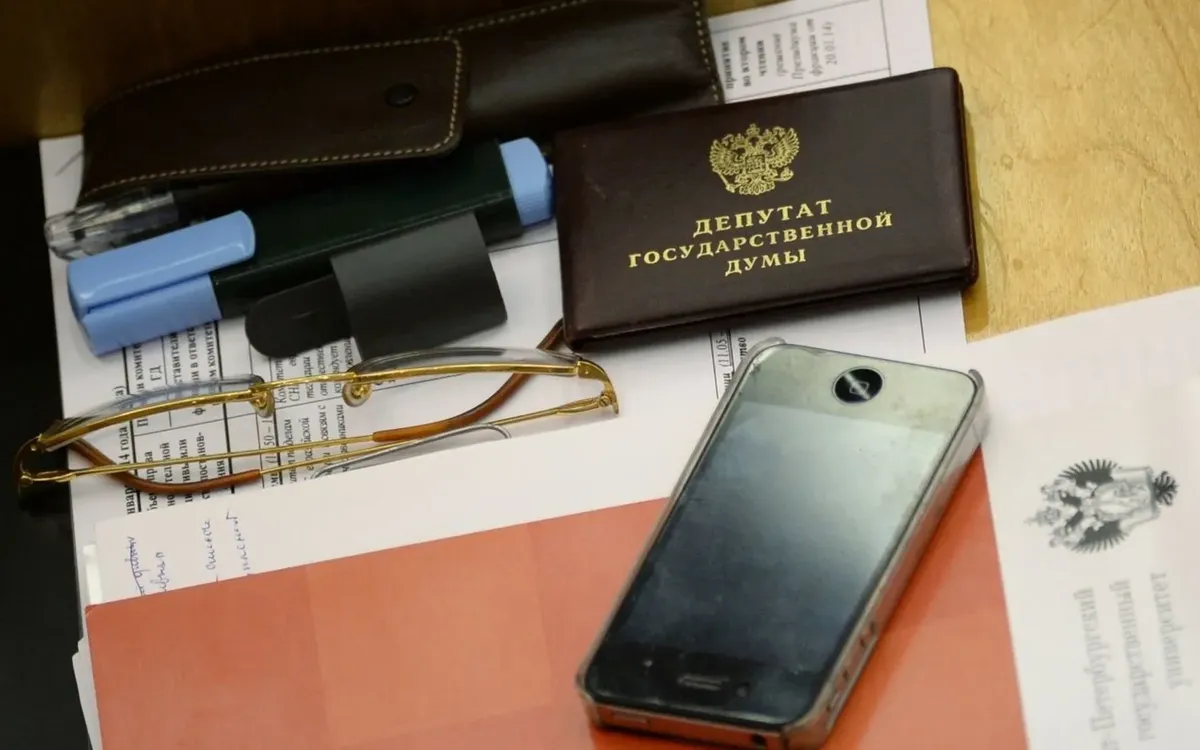
This week, the lower house of parliament officially closed the autumn session. The last two days of work - December 18 and 19 - State Duma deputies worked actually without stopping, which is a kind of New Year's tradition: all the bills that are most important from the point of view of parliamentarians are trying to approve right now. Some of them will have time to sign Vladimir Putin before the end of the year, part will be moved to the beginning of the spring session, but with a back of the first or second reading. "New" has prepared a brief overview of key bills that the State Duma was concerned in December.
It became tougher
The entire working agenda of the State Duma can be divided into two conditional parts: tightening and liberalization. Parliamentarians have recently been working on the approval of prohibitive laws, so they did not have a lack of adopted projects in December.
So, on December 18, the State Duma approved in third reading a law that expands the grounds for recognizing the work of some non -profit public organizations in Russia unwanted in Russia . Now you can calculate NPOs with such “interference in the elections” - that is, if the organization tries to impose a nomination of the candidate or prevent such a nomination, and also wants to influence the results of referenda. The amendments are planned to be made to the infamous “Dima Yakovlev Law”, although at the beginning of 2017 it seemed that it would be more about its liberalization. The evil irony of the moment lies in the fact that in the last two years, Russia itself, including the United States, is just accused of "interfering in the elections."
In addition, “undesirable”, in fact, will be the participation of foreigners in the authorized capital of news aggregators - unless, of course, this share exceeds 20%. De facto is the distribution to the Internet aggregators of the already existing clause of the media law (there, too, the share of foreign capital is limited to the fifth part of the whole), the experts argued that the law was adopted specifically for possible absorption by the state and close to it by the Yandex search engine. Owners of Internet resources are already gloomily warned that
New norms generally put the operation of aggregators into question.
So far, the bill is adopted in the first reading.
Another ban related to aggregation is not just news, but numbers, is also related to information. In early December, the deputies of both chambers of the parliament voted for the widespread seizure of street scorelies with currency courses : they joke on the Internet that they “banned the last objective federal media forbidden”.
The law was already signed by the president, and the developers of the document represented by the Central Bank explained such a need to fight illegal metabolic points, since they, according to the regulator, place the scoreboard on the street, and not in the room. A difficult explanation: you could just get rid of the phrase "You know less - you sleep stronger."
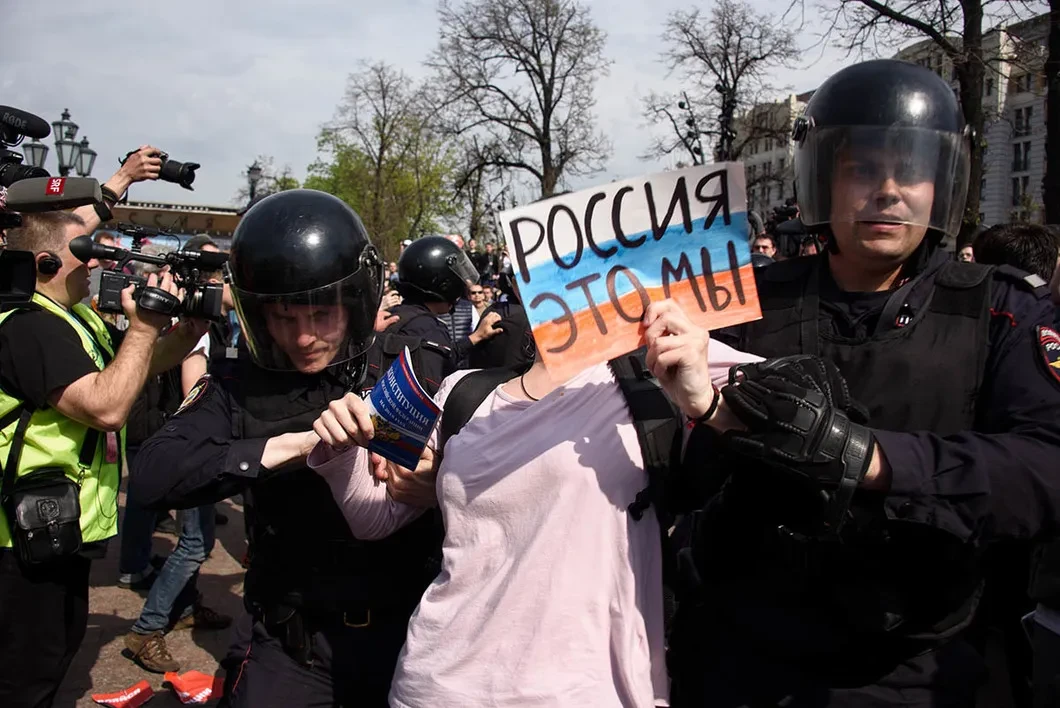
Another nut that can be twisted, the deputies diverted in the field of protest activity. For the involvement of minors in rallies, from now on, you can get an arrest up to 30 days, as well as a fine - up to 500 thousand rubles. The bill, adopted in the third reading (it would obviously be signed by Putin in the near future), was clearly developed with the expectation to calm down the daring in the last one and a half to two years of young people-and at the same time prepare an extra club for Alexei Navalny and the similar “troublemakers” to him. It is possible that after the law entered into force at rallies, minor provocateurs will appear, whom the demon has "bewitched" in the protest of opponents of the authorities.
Caring for children with the principle of “do not go to rallies, do not make a mistake” is not limited. Vladimir Putin signed the law on the ban on columbine communities on the Internet. Here, Irina Yarovaya, whose star was somewhat faded against the backdrop of the activated Andrei Klisas, put all the forces to adopt the law. The law provides for instant blocking of the Internet communities that pushes children to illegal actions, and the trigger to accept the norm was the tragedy at the Kerch Polytechnic College, when student Vladislav Roslyakov shot his classmates. There is a fear that this law will work badly, since, if you wish, you can sign a conditional forum of amateurs of the anime series “Death Note”, and any more or less experienced computer user, regardless of age, can bypass the conditional forum of the anime series.
In parallel, Russia continues to legally protect itself from manifestations of terrorism and extremism. With already caught and convicted criminals, they decided not to ceremony on these articles: in the third reading, a bill was adopted, allowing the transfer of terrorists not in the colony, but to prison with a special regime for serving the sentence. As it is fashionable to say now, such prisoners are too “toxic” and, according to deputies, affect other convicts, involving them in their ideology.
In addition, control over financial transactions is intensified: banks have previously informed Rosfinmonitoring of cash transactions in the amount of over 600 thousand rubles, and now it will still be necessary to notify regulatory authorities about operations with cards issued in suspicious countries (so far it is precisely Iraq and Afghanistan, but there is no limit to the expansion of the lists).
Deputies also extended prohibitive rage to foreigners: they cannot be obtained by housing permission outside the region where their husband or spouse lives - this is like the fight against fictitious marriages. Taxi aggregators will not be able to transfer orders to drivers without a license, it will become more difficult for citizens to receive award weapons from foreign states (and what, it was possible?), And deputies, if they lobby for some law in personal interests, deprive their posts.
Even fishermen got:
The new law on amateur fishing, on the one hand, guarantees free access of citizens to this type of leisure, but immediately limits the list of technical devices for fishing, as well as the number of places and time when you can catch fish. Thank you for at least excluding nominal fishing permits - the deputies considered that such a document could provoke additional requisitions from the population.
However, not all rigidity looks unnecessary. Seven years later, in the second and third reading in December , a law on responsible attitude towards animals was adopted. The law prohibits the shooting of homeless animals (and in general any murder of them under any pretext), as well as contact zoos in shopping centers and zoos.
Unbearable softness
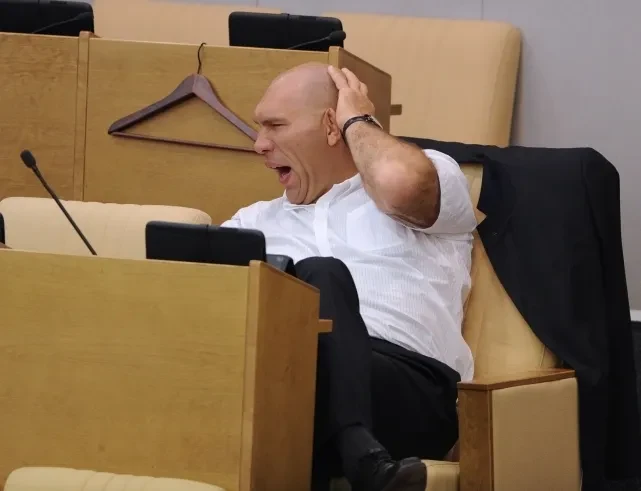
It will not be entirely fair to say that the Duma worked in December only to strengthen the repressive apparatus. One of the examples of obvious liberalization of the legislation by the authorities call partial decriminalization of the 282nd article of the Criminal Code, according to which they attracted Internet users for memes and reposts. The discussion about the need for a complete withdrawal from the Criminal Code of this article almost did not leak into the walls of the Duma, so the parliamentarians adopted the amendments proposed by Vladimir Putin that criminal liability occurs only if this is a second violation for a year. That is, they will still plant, but not immediately.
This is not the only example of humanization from the authorities. The Duma adopted a number of laws that should significantly facilitate the life of suspects, accused and convicted-in general, everyone who has encountered criminal executive law. In particular, a personal application for release will not ask for deaths from deaths : now the heads of the colonies can do this for them. In addition, the bills provide for the exclusion of delays when familiarizing themselves with the criminal case and extend the terms of arrest - it will not be possible to keep a person in jail only because it takes a lot of time to study the volumes of the case.
Businessmen should breathe a little more freely.
Now criminal cases against entrepreneurs who have compensated for the damage to the state, other businessmen or citizens should automatically stop.
All this thanks to Putin’s amendments to protect business from illegal criminal prosecution. Of other mitigations related to finances, it is possible to note the increase in the threshold of debt, it will be deducted from salaries or scholarships - from 25 thousand to 100 thousand rubles. It is interesting that the main motive of this norm is the unjustified labor of the bailiffs: if the debt is less, there is no practical meaning to disturb the FSSP once again, the parliamentarians who have adopted the law in the third reading.
Economic bonuses from the work of the State Duma in December are accepting a new minimum wage, it is increased by 117 rubles, to 11,280 rubles. In addition, the State Duma adopted a bill on the complete abolition of national roaming: the large four mobile operators have long abolished the fee for connecting subscribers in different regions of the country, now this will have to be done to small regional operators. In connection with the widespread introduction of digital television, citizens of the country's remote regions will provide the opportunity to watch the “satellite” for free : the “figure” simply does not reach them, and “Russia 1”, according to deputies, should be able to watch every conscious citizen of the country.
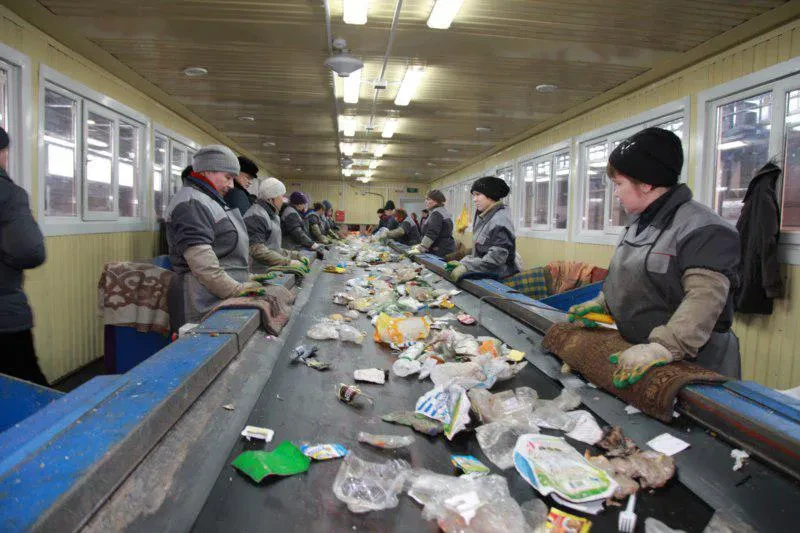
Another portion of laws is aimed at mitigating two resonant problems, which this year was mentioned at the level of both local and federal authorities. Firstly, a phased transition to garbage reform has been introduced: over the next four years, it will be possible to use old garbage training grounds, which is not very environmentally friendly, but however, it will avoid a sharp jump in tariffs for garbage collection. Secondly, a simple person can now become bankrupt, even if he does not have property that could be sold to pay off debt to creditors.
At the end of the year, the State Duma was also adopted in the third reading a bill on a simplified manner of obtaining citizenship for residents of countries in which armed conflicts are undergoing - obviously, Ukraine is implied. To determine the list of such countries and the procedure for obtaining citizenship will be the president.
Accept, but not now

It should be noted that key initiatives related to the exacerbation of isolationism will be considered by parliamentarians next year. In particular, the key question will be the question of “sovereign Runet” that de facto is offered by Senator Andrei Klishas with like-minded people. Obviously, his background (both political and economic) will determine the agenda of the whole next year. Against this background, the initiative to ban Fake News in the media under the threat of millions of fines looks like an attempt to distract attention, as well as the idea of punishing - up to criminal liability - for the manifestation of disrespect for power.
Next year, the State Duma should consider the bills on the regulation of the work of electronic wallets and payment applications not from Russia. Then the teachers will wait for the decisions to prohibit them something except flowers and notebooks, and Internet resources-the norms about their pre-trial blocking in case the advertisement of the financial pyramid suddenly slipped on the site.
Against this background, it is important that a really necessary bill is not lost, which will allow people with HIV and hepatitis C to adopt/adopt children. True, as practice shows, such laws can lie in the State Duma for years, while parliamentarians are engaged in others - no less important in their understanding - things in their understanding: for example, the law on protecting fashion designers in the conditions of sanctions - this norm has passed all three readings a little less than nine months.
Comments
What is the adopted/introduced bill in 2018 that would you call the most important?
Sergey Hestanov
Macroeconomics Advisor CEO of Otkritie Broker company
- For me, as for an economist, the most significant was an increase in VAT. This is the most noticeable law, since we will really see the effect of its increase soon. From the point of view of long -term consequences, this, of course, is an increase in the retirement age. For many people who are close to the retirement age, this will create very serious obstacles, because it is no secret to anyone that people of this age group are already in the labor market, it is not so simple. And this law of their situation noticeably worsens. The meanness is that it acts gradually and affects every year a small number of people. Accordingly, visually it is not very visible. People who are not directly affected by this law simply do not notice it.
There is also a tax for self -employed, but I am sure that he will not work. The problem is that in Russia a traditionally very large distance between law and law enforcement is traditionally. If you terribly build a repressive apparatus, then theoretically it is possible to achieve the implementation of the law. But at the cost of reasonable resources, the law on self -employed is most likely to make the law of self -employed work. People will do everything in their power in order to refuse to register. Without severe and demonstrative repression, it is impossible to make them do this.
Ekaterina Shulman
political scientist, associate professor of the Institute of Social Sciences of the RANEPA, member of the HRC
- [The most significant law adopted in 2018] is a “day for one and a half”, no doubt. We are talking about amendments to the Code of Criminal Procedure, initiated by Pavel Krasheninnikov, which have been held in the Duma for 10 years. From 2008 to 2018, this law was adopted and, finally, this year was adopted. This is an extremely large-scale criminal procedure reform: its direct practical effect is equal to a large amnesty. Many people simply have been released, many will serve less than they could. This law limits the investigating organs in their love to keep people in a pre -trial detention center extremely long.
This measure has its own working parties: it leads in paradoxically to the extension of the deadlines in order, as we love, to be released by the sewn, but the actual time spent in conclusion is reduced. This is a tangible factor in the record decrease in our prison population, which the FSIN reports at the end of the year (the historical minimum of people sitting in prison in Russia).
Alexander Verkhovsky
Head of the Human Rights Office "Owl", member of the HRC
- For me, partial decriminalization of the 282 articles is an important event. Well, for other hundreds of people who were threatened with the prospect of a criminal term on it. The story with partial decriminalization is about the transition from more stringent methods of regulation to the methods of softer. This does not mean that the ban disappears - on the contrary, their number only increases. But for them there will be sanctions in the order of the Administrative Code, not a criminal.
Last week, bills were submitted about the statement of disrespect for power in indecent form and about false news, which can provoke anything. Both that and another implies administrative responsibility. This, of course, is not a criminal, but the possibilities for use are very wide here.
Probably, not all this will be accepted, but nevertheless we see that if the number of criminal sentences decreased in all extremist articles (and not only 282), then the number of administrative even in this area increased - and much more has grown than the criminal ones decreased. In general, this is rather good than bad. But this relief looks just like a change of method.
Artem Kozlyuk
Head of the organization "Roskomsvoboda"
- The year was remembered by the trend to restrict the interaction of citizens, to violate their rights to freedom of speech and the secret of communication. The fracture of this trend is not visible: the restriction of content is introduced, new measures of influence on information intermediaries, news aggregators, and telecom operators are introduced. The criminal and administrative persecution of users themselves for attempts to publish their opinions and positions that the state finds extremist is not stopped.
This year, the notorious “Spring Pack” in terms of conducting total surveillance in the Internet space with the obligation to store and provide press services on the actions and interactions of users from both providers and Internet services entered in the register of information organizers to be carried out. Of course, while not everyone is doing this simply because there is no such equipment - it is too expensive.
From other high -profile events: fresh bills of December. This is a bill on the isolation of Runet, which implies control by Roskomnadzor over traffic exchange points, filtering at the level of the highway. Also, Roskomnadzor is given permission to intervene in the routing of Internet traffic. There are already concerns about the violation of the created Internet infrastructure in the country and violation of our rights and freedoms for access to information. Many claims on the economic part: the formulation of the bill states that it will not require costs from the budget, in fact, the state will have to allocate many billions of rubles in order to create a model laid down in the draft law.
This will seriously hit the economy of Russia.
А если новая норма будет перекладываться на бизнес (например, на операторов связи), то это, конечно, приведет к монополизации рынка операторских услуг и, по сути дела, к убийству независимого бизнеса.
В этом году расширилось количество госведомств, которые имеют право выносить решение по ограничению доступа к той или иной информации. Теперь это еще и Федеральное агентство по делам молодежи (оно будет выносить решения по «колумбайн»-блокировкам), Федеральная служба судебных приставов (она займется блокировкой информации, порочащей честь, достоинство и деловую репутацию), Центробанк (его предполагается наделить полномочиями по блокировке сайтов, нарушающих законодательство на финансовом рынке). То есть у нас уже почти каждое второе ведомство имеет полномочия выносить решение по блокировкам информации в интернете. Растет и число самих категорий цензуры.