
Translated material
Is the metropolitan open? With Deputy Prime Minister?
After opening the archives, Latvia publishes the names of those who collaborated with the KGB: in the country scandal
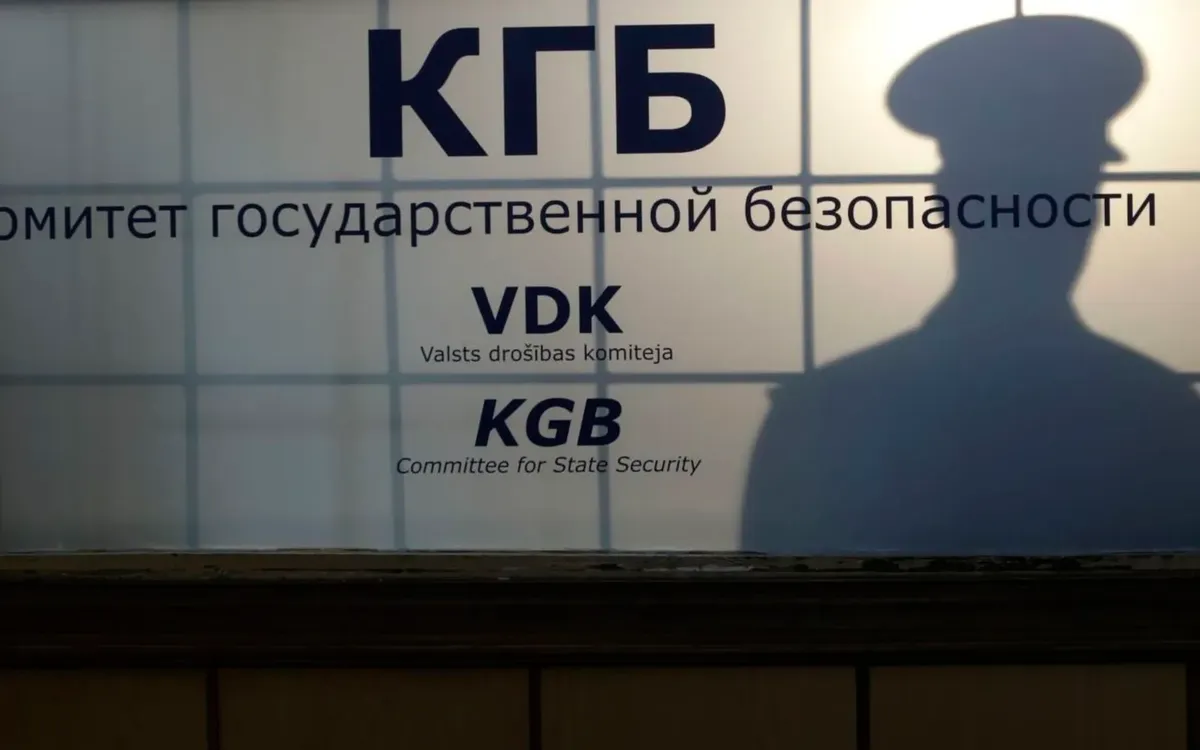
In Latvia, the so -called “CH bags” began to publish - documents of the KGB of the Latvian SSR. The first portion was published on December 20, another part of the documents will appear in the public domain in May next year. Among the published documents are a telephone book, meetings of meetings, orders, as well as three file cabinets of agents and freelance employees of the Latvian branch of the KGB.
Of course, file cabinets with the names of former agents and employees are of greatest interest - it was around them that there was the most disputes: to publish or not. Now the open -domestic access is laid out cards of more than 10 thousand former agents and 75 freelance employees. The documents are compiled in Russian and for the most part are written by hand.
What to do with the KGB archive remaining after the collapse of the Soviet Union could not solve 25 years. So far, in 2015, they have not created a special commission to study these same “Meshoks of the Cheka” and prepare them for publication. Many then opposed the publication.
Firstly, according to the opponents of the publication, the “declassification” of former agents is still incomplete. A significant part of the archives after the collapse of the USSR left for Moscow, so Latvian historians are dealing with what was left. It turns out unfairly:
Someone was lucky, and his card is dusting in archives in Moscow, but someone is not very good-and his name from today is published on the website of the National Archive.
Secondly, this is how the publication of personal data. Some, having familiarized themselves with the cards, have already noticed: next to the name, for example, a home address is indicated. It is clear that thirty years ago, or even more, but some have not moved since then and are unlikely to be delighted.
Thirdly, in Latvia, lustration, although not carried out, there are legislative restrictions for former “agents”: they can not occupy most of the elected political posts, follow this-the task of the Bureau for the Protection of the Constitution. That is, of course, it can be lucky (at least for the already mentioned reason for partially lost archives), but the risk of exposing the “agent” who has become a politician will always hang. And exposure in this case means resignation with shame. It is clear why in Latvia, where the period of Soviet power is perceived as occupation, former KGB officers are not allowed into power. Well, if the former agent has become a seller in the store, a taxi driver, or does it live in retirement for a long time? Opponents of declassification called not to put pressure on the sick and not to turn the things of past days.
And most importantly, the opponents of the publication say, the cards themselves do not talk about anything:
KGB officers could firm some information. Another problem is that the names of candidates for recruitment are also found in the file cabinet, and they were subsequently recruited or not - it is unknown.
The main argument of the supporters of the publication - the country must know its "heroes". In addition, data on the work of the KGB are of scientific interest - for example, for historians.
When it became clear that the publication of “bags” is an inevitable thing, a wave of camming outs went. So, last year, in cooperation with the KGB, the Latvian poet, the son of the author of the anthem of the Latvian SSR, Yanis Rocpelnis, admitted. In an interview with Latvian radio, he said that he worked as an informant: until the mid-80s, he met with his curator from the KGB in a special apartment, then the meetings stopped. The task of Rockpelnis, according to him, was to report the mood of the creative intelligentsia. To make the information as little as possible, Rockpelnis cut off relations with many close friends, anti-Soviet.
According to Rocpelnis, he was forced to confess to the "unbearable feeling of guilt." “All kinds of professions can be justified, but it is impossible to justify the informer, no, including me. This is a terrible profession, ”he said in an interview with Radio journalist.
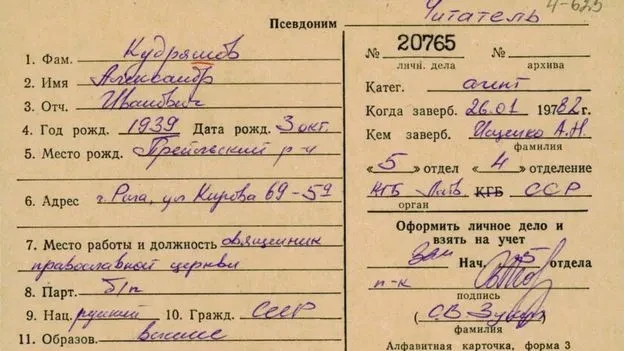
In the open “CC bags”, the names of many politicians, public figures and cultural figures have already found. An important remark: according to the law, they, unlike Rockpelnis, cannot be automatically credited to the KGB agents - the presence of this connection should be proved by the court. This is especially important in the case of people who hold elected positions. So, in the published file cabinet was the name of the deputy of the Sejm Igor Pimenov from the opposition party “Consent”. According to the card, he worked since 1978 under the pseudonym Krivichev. Pimenov said that earlier in court he had already proved that he was not an informant of the special services. The ex-deputy of the Sejm Romuald Razhux, finding himself in a file cabinet in the category of “recruitment candidate”, according to him, was surprised: none of the KGB never got in touch with him. There is also the name of the former mayor of Daugavpils (the second largest city in Latvia) by Richard Eigims, who allegedly worked under the pseudonym Edgers. Such suspicions of Eihims’s relations surfaced before: but then he was able to prove in court that he did not collaborate with the KGB, and remained in the mayor’s chair. However, now Aygims is still shifted in the post on suspicion of receiving a bribe.
Also in the file cabinet they found the name of the former Prime Minister of Latvia Ivar Godmanis, former president of Valdis Zatlers, Metropolitan of All Latvia, film director Dzintra Geku.
However, the data is more interested in the publication of which is planned for May: these are personal affairs of agents, operational cases and a number of documents that give a more complete picture of the work of the KGB in Latvia. True, they will not be posted into open access. It will be possible to get acquainted with them only to historians, lawyers and journalists, submitting a special application.
Latvia is not the only country that published the names of former KGB officers. For five years, Lithuania revealed its “bags of the Cheka”. The names of more than one and a half thousand former KGB officers were published. The last batch of names, published at the beginning of this year, was the famous Lithuanian actor Donatas Banionis and conductor Saulus Sondetkis