
Translated material
Secret business trip Joseph Stalin

Very quietly, almost imperceptibly passed the anniversary of the "leader of the peoples" in Siberia. Neither supporters nor opponents remembered him about this birthday. Only historians, by virtue of their love for the dates, drew attention to a round figure.
December 6 (18th according to the new style) of 1878, Joseph Stalin was born in Gori. The record of this was recorded in the main "maternity" document of those times - the metric book of the Gori Assumption Cathedral Church. On December 6, 1878, the Orthodox peasants of Vissarion Ivanovich and Ekaterina Gavrilovna Dzhugashvili was born a son called Joseph. On December 17, he was baptized in the same church, on the 24th, the corresponding entry was made about.
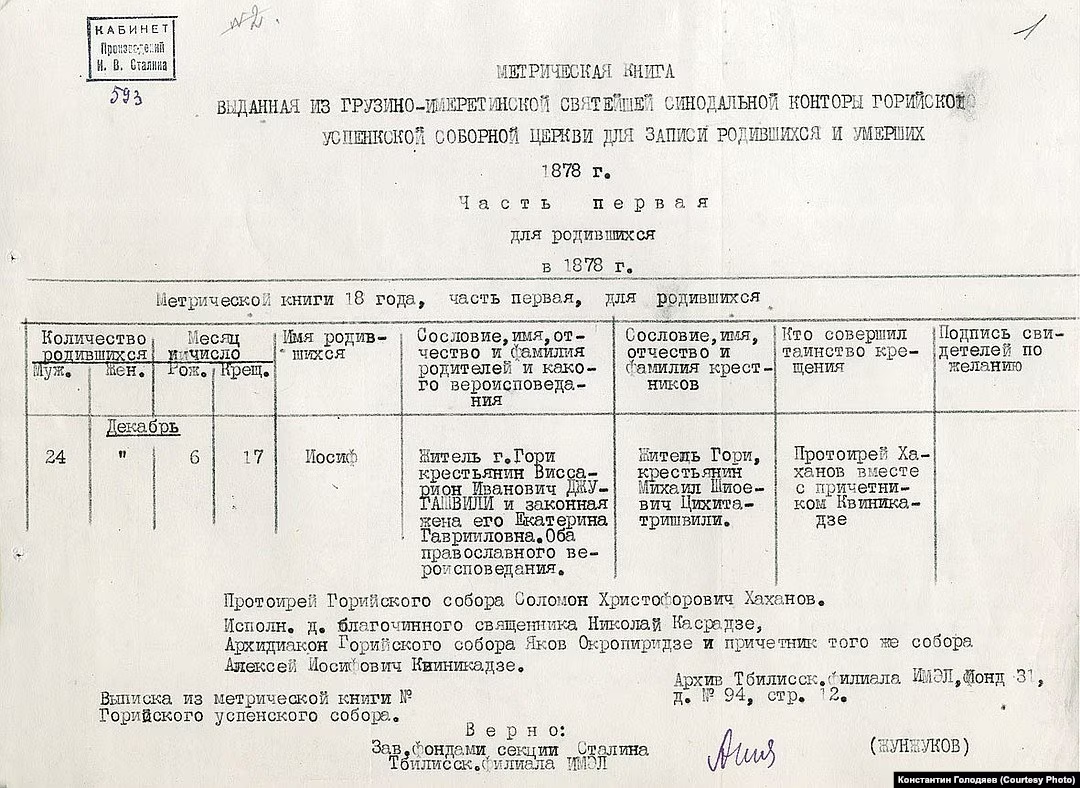
This date is also confirmed by other early documents: certificate of the theological school, the materials of the police department and even the General Secretary of the Central Committee of the All -Union Communist Party of Bolsheviks in 1922 for the Swedish newspaper Folkets Dagblad Politiken.
After that, the date changes. What pronounced Stalin to become a year younger: calculation, uncertainty, esotericism-let biographers study, but we will turn to the events of 90 years ago, when the leader of the Country of Soviets for the only time (except for the link) came to our Siberia.
The reason was unsatisfactory bakery and, as a result, the threat of hunger in Moscow and the breakdown of wheat export plans. On December 14, the secret directive of the Central Committee of the All -Union Communist Party of Bolsheviks (b), signed by Stalin, is sent to the bread areas (including Novosibirsk - Zagadov, Syrtsov): “Many of the Communists think that you can’t touch the buyer and fist, as this can scare away from us the middle peasant. This is the most rotten thoughts that are in the heads of some communists. On the contrary, to restore our prices and achieve a serious fracture, you must immediately hit the buyer and fist, it is necessary to arrest speculators, fists and other market disorganizers and prices ... Urals and Siberia. - S.R. ) is desperate, since this is the last reserve. "
Secret telegrams to regional managers with the requirements of "apply immediately hard punishment" go one after one: "Special repressive measures are necessary in relation to fists and speculators that break off agricultural prices." Absolutely exceptional both in its tone and in its requirements of the Directive of January 6, 1928 "ends with a threat to the address of the heads of party organizations if they do not achieve in the shortest period of decisive fracture in bakery."
We went to the east for bread. To the Urals - Molotov, and to Kulak Siberia - Stalin
We went to the east for bread. In the Urals - Molotov, and in Kulak Siberia - Stalin. The official version states that the People’s Commissioner of the Workers 'and Peasants' Inspectorate of the USSR Sergo Ordzhonikidze should come to us, but he suddenly fell ill, and suddenly the Secretary General went. Either I wanted to unwind, or I decided to work on the ground, or to correct the party in the village.
In one of his telegrams from Siberia, Stalin wrote: “Nowhere was lagging behind in the workpieces as [in] Siberia. For the first half of the year, that is, for July - December, less than a third of the annual plan has been prepared, for the second half of the year, that is, for January - June, you need to prepare more than two -thirds of the plan, for which it is necessary to raise the pace of the workpieces at least by the workpiece, while the workpieces have risen for the workpieces. January is only 10-15%. "
Stalin’s special train arrived in Novosibirsk in the evening of January 17, 1928. The next day, the Secretary General spoke at an expanded meeting of the Sibrucoma of the CPSU (b), which was attended by "forty people of the party-Soviet-cooperative elite." Stalin telegraphed to Moscow, in the Central Committee: "Employees are ready to break into a cake in order to straighten their position." The Sibroachian leadership itself proposed for use in bakeries Art. 107 of the Criminal Code ("malicious increase in prices for goods by buying, concealing or non -nonsense to the market - imprisonment for up to one year with confiscation of the total or part of the property or without it. The same actions when establishing the availability of merchants - imprisonment of up to three years with confiscation of all property").
A criminal article directed against speculators and resellers was applied to ordinary manufacturers, owners of bread, as "violators of revolutionary legality." That Stalin willingly supported only translating repressive measures from the OGPU to the people's courts and the prosecutor's office, which was supposed to give them the necessary surroundings of the rule of law in the eyes of the peasantry.
It was decided to consider it absolutely mandatory to ensure the implementation of the workpiece plan for the center of 60 million poods, "which significantly reduced the volume of domestic consumption. The decision of the Bureau decided: "To ensure the energetic collection of arrears on agricultural cups so that a number of kulaks are necessarily subjected to repressive measures for the untimely delivery of the agricultural bank (arrest, trials, etc.) ... It is necessary to take this measure (in accordance with Article 107 of the Criminal Code) to conduct" part of these cases through the Narsuds in the special. urgent, and not related to formalities, the order, choosing the most malicious fists-provocals, with a wide publication of sentences and decisions in the press, through village councils and so on. "
Not everyone liked this decision. Chairman of the Board of Sibruiselbank S.I. The flexible even dared to express his fears in writing in writing of Article 107 of the Criminal Code in its full volume: “I am deeply convinced that the effect of such events we get the opposite that we expect ... The bulk of the middle peasant and the poor will regard the fist to trial only for the non -use of bread, in one form or another, to the time of military communism, the period of military communism, the period of military communism, the period of military communism, the period of military communism, the period of the military The condemnation of the fist only for the "failure" will lead the middle peasant to the conviction that sooner or later the turn will reach him, as the holder of the well -known part of the bread excess. a prophet, but I know the village well ... It seems to me that we are too cool. ”
In the next speech, Stalin replied: “You say that the application of the 107th article is an extraordinary measure, that it will not give good results, that it will worsen the situation in the village. It is especially insisted on this. Suppose that it will be an extraordinary measure. What follows from this? Why the application of the 107th article in other parts and areas gave excellent results, the labor baptism united. Around the Soviet regime and improved the situation in the village, and you, in Siberia, should give supposedly bad results and worsen the situation? "
The wise thoughts of the Prophet, naively, "with the communist greetings" who objected to the leader of the working people, was not in vain. Soon, the 31-year-old business executive was recognized as disabled, retired, and in 1938 he was shot.
But others were ahead of the lead. Even before the arrival of Stalin, already on January 10, a completely non -institutional organ was created at the Sibroikom - an Extraordinary Bread Troika with huge powers as part of the Secretary of the Sibrukoma S.I. Syrtsova, Chairman of the Executive Committee of the Sibruce Council R.I. Aehe and the head of the Sibruitergeald A.N. Zlobin. On January 13, 1928, the Directive of the Prosecutor's Office and the OGPU on the criminal prosecution of small buyers of grain and the owners of mills was sent to the Siberian Territory. On January 17, the Bureau of the Sibrukoma makes a decree signed by the plenipotentiary of the GPU for Siberia L.M. Zakovsky, acting regional prosecutor L.G. Leonidov and chairman of the Kraisud M.V. Kozhevnikov about "the allocation in the main bakery areas of several (4–10) obviously obviously kulak farms, malicious, hostile modernity, which have large reserves of bread, compiled to a certain extent by buying, operating machines, sheltering objects of taxation, etc., bring accountable as malicious speculators with meat, bread and testing. items [C] Bread confiscation. "
The bread three immediately began to embody the words of the leader. On January 19, the circular was sent to the places, which determined the procedure for initiating criminal prosecution under the 107th article and the consideration of cases against the "kulak elements of the village" in the courts. They were prescribed: to investigate the GPU for the daily time; hold on -site sessions of district courts for speedy consideration of cases; Listen to cases without the participation of the prosecution and protection, allowing exceptions only in the case of the organization of demonstration processes and "in no case to allow acquittal or conditional sentences," as well as the satisfaction of cassation complaints.
On January 19, Stalin sends another telegram to the Central Committee: "I consider it a duty to note that the local part -time workers took up a job with great zeal and work according to conscience, like other Bolsheviks, which gives reason to count on success."
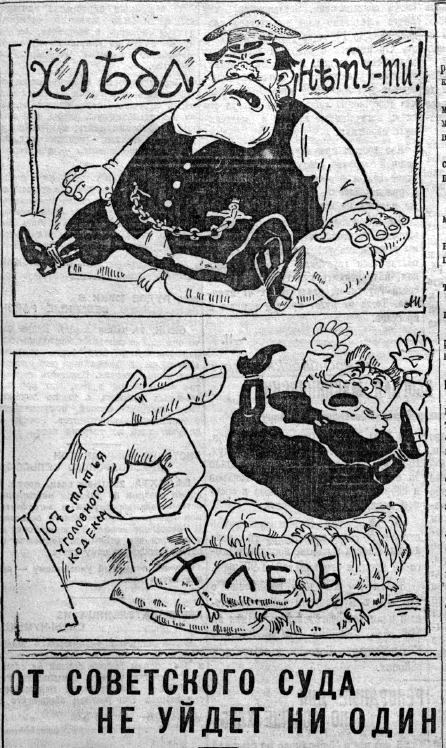
On January 20, the Secretary General spoke at the Bureau of the Sibrucom, where he once again emphasized the need for kulaki repression and spoke about the close creation of collective agricultures. The leader’s business trip was secret. They did not write about her in the newspapers, but her consequences in them appeared immediately. Already on January 20, the Soviet Siberia regional newspaper more than a dozen messages from the places notified that "from Biysk, Omsk and Tomsk they report the arrests of fists that violate the law on the fight against speculation," and "in Krasnoyarsk have not yet been swayed." Further, not a single number was held without a report on the arrests and punishments of the "presumptuous kulaks."
On the evening of January 21, Stalin went to introduce the "brutal pressure" in other cities of the Siberian Territory. The trip to Siberia lasted until the sixth of February. Accompanied by the secretary Syrtsov and Eikhe Stalin, Barnaul, Rubtsovsk, Omsk and Krasnoyarsk visited, where he also performed at expanded meetings and meetings of representatives of local, district party organizations and Soviet organizations, where, in his words, he "wound everyone properly."
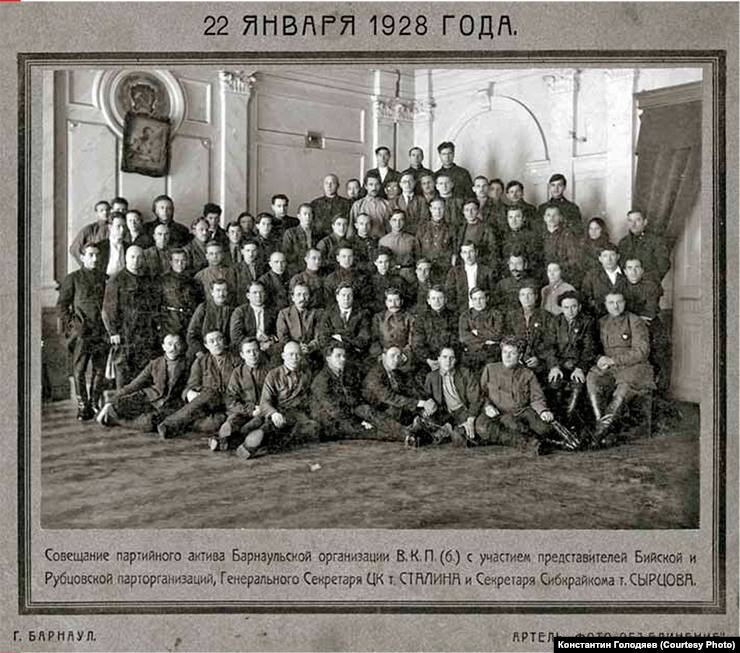
On January 26, on the way to Omsk, Stalin stopped a second time in Novosibirsk and participated in a meeting of the "Bread Troika", at which it was decided "on the termination of all sorts of intra -Siberian transportation of bread". All sending only to the west. Everything was done immediately. Three days later, the Taiga station Stalin telegraphed intermediate results to the Central Committee: “The first. The measures of repression of the shipment, taken the other day, took the action. On January 26, 367 wagons were shipped to the west, the 27th-423, 28th-433. In addition, 150 extra-Siberian supplies were caught over these days and re-framed to the west. Today, the West Shipment of 12 million 400 thousand, that is, 424 wagons per day, I think that in view of the strengthening of the blanks and the disposal to the deposit points, this plan will have to be increased by 14 or even 15 million Transferring plans to all the procurement has already begun.
The repressive, anti-kulak policy also carried political-class significance, and the peasantry was split from the inside. The widely published resolution of the Presidium of the Siberian Regional Executive Committee of January 26, 1928 economically motivated the search for the enemy, openly laying the mechanism of suspicion and reporting decades for decades: "25% of the bread confiscated from the fists was transmitted to the poor in the form of a long -term loan."
Results of repression: on February 20, 1054 people were arrested.
After the Siberian Voyage of the leader, open trials over fists, sabotage and speculators began everywhere. The reporting telegrams of Stalin from Novosibirsk are full of enthusiasm: "The fourth five -day gave 3767 thousand pounds. (...) The results of repression: on February 20, 1054 people were arrested, of which 107 article - 920." Soon even: "About 1,400 people were arrested. The processes of the 107th continue, we attract holders and kulaks, without adhering to the norms of the letter of the Central Committee ...".
According to incomplete data from the regional prosecutor’s office, by early April, according to the 107th article, 1617 people were convicted, whose more than 700 thousand pounds of bread, 50 houses, 80 mills, etc. were confiscated. The 1928 bakery plan was 96%.
The actual return of the extensions forced the peasants to hide bread. He was “distributed to relatives and neighbors, grain was grinded for flour, transferred to the poor and families of the Red Army, using guarantees of their relative inviolability. One of the consequences of the seizure of bread reserves was also a noticeable increase in grain costs for the production of alcohol surrogates.”
All this forced the authorities to introduce new repressive measures. At the end of the year, at the Sibralu PP OGPU, another notorious three was created for absentee consideration of espionage, sabotage, sabotage and banditry. The “trial ball” of criminal prosecution of kulaks worked out in Siberia was immediately distributed to other regions of the country.
The Siberian business trip of Stalin was the breakdown of his strength, as a result of which he himself and his opponents were convinced that the general secretary of the CPSU (b) could not be just a formal leader of the party. This is a person who has already become the strongest authority for the basic bodies of the party, a person who can go against the line of his own party can single -handedly make decisions that are most important for his country, even a cut with the desires of their people. In 1928, the Soviet Union resolutely turned over the next page of its history, laid the foundation for the personality cult and mass repressions.
Contantine Golodyev - historian, employee of the Museum of Novosibirsk
Opinions expressed under the section may not reflect the point of view of the editorial office