
Translated material
Cylinder
State companies will be transferred from gasoline to natural gas: how much does it cost and who benefits?
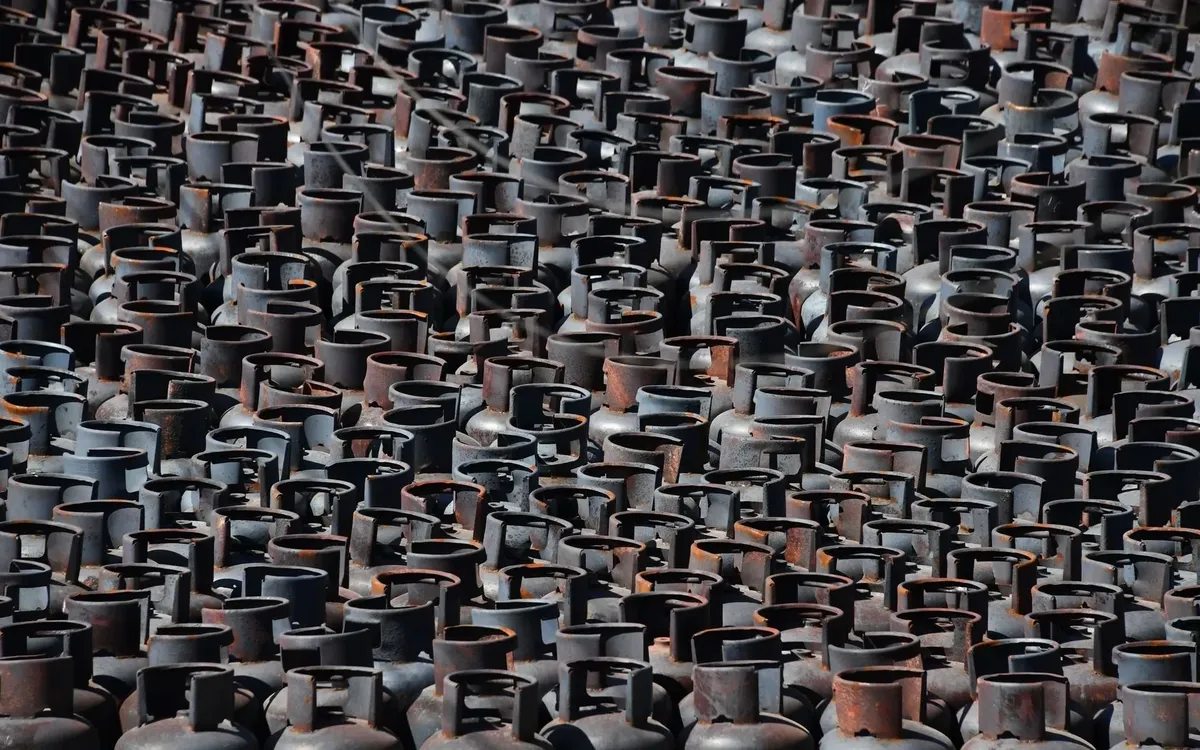
Deputy Prime Minister Dmitry Kozak instructed the relevant ministries to prepare a plan of the phased transfer of state-owned companies to equipment using gas engine fuel. In parallel with the renewal of the fleet, it is planned to build a new gas station on gas in the regions. Up to 40% of the costs will be covered from the budget.
The government wants to transfer state transport to gas to save: with an equivalent consumption, a gas cubic meter costs 2-3 times cheaper than a liter of gasoline. Gas is also considered environmentally friendly fuel, since it can significantly reduce harmful emissions from vehicles. In June, Vladimir Putin called gas engine fuel a priority for Russia against the backdrop of environmental problems. Finally, gas reserves in Russia are significantly larger than oil, the extraction of which in the coming years will begin to decline due to depletion deposits.
According to RBC, the order of the Kozak
It should be implemented from 2019 to 2024 as part of the program of the Ministry of Energy for the development of the gas -engine fuel market, the budget of which will be 175 billion rubles.
There are three types of gas engine fuel, explains Mikhail Krutikhin, partner of Rusenergy. “Firstly, the butane-propeller mixture-it is refuel into cylinders and is used for heating and gas plates. Secondly, compressed natural gas compressed under high pressure-it is used in public transport. And liquefied natural gas, which is profitable to put on huge tractors, railway locomotives and on sunset trucks. ”
In the directive for state -owned companies, we are most likely about the transition of special equipment to compressed fuel. “I immediately come to my mind a large -fledged technique for the extraction of diamonds ( *state -owned companies“ Alrosa ”. - *a. Kh. ), Large dump trucks that use diesel instead of gas in coal deposits, or rolling forms of Russian Railways. In these cases, some kind of savings are possible, ”says Alexander Pasechnik, expert of the National Energy Security Fund.
The mass interest in gas engine fuel appeared in the USSR in the USSR 1970s: many installed gas cylinders and special equipment to save on fuel. In a number of post -Soviet countries, including Armenia and Kazakhstan, the share of personal transport on gas is still very high. However, economic feasibility of refusing gasoline appears either at very low gas prices, or at high daily run (more than 200 km). Gas equipment for a regular car will cost about 40-50 thousand rubles.
“In Russia, such serious incentives for car owners have already disappeared to switch to gas ( *However, after the abrupt rise in price of oil products, this topic can again become popular. - *A. Kh .). Now it is necessary that the state be done by this: to transfer public transport, trucks, state -owned companies and so on to gas, ”says Krutikhin. For example, the Katar authorities to the World Cup in 2022 want to transfer all public transport in the country to gas. According to the Minister of Transport, Maxim Sokolov, in Russia gas is used by 8% of buses.
Experts doubt that in the Russian case there is a sheepskin.
Although gas itself is much cheaper than oil products, significant investments in the infrastructure are required to develop this area.
There are very few gas gas stations in the country (less than 350 throughout the country, almost all of them belong to Gazprom’s daughter), the equipment for the transition to gas is expensive, and the benefit is not obvious. Some large cities try to jump over the gas stage and immediately transfer public transport from internal combustion engines to electricity.
“Such directive stories with gas transfer will hardly be welcomed by someone except Gazprom itself. This is such an option that supports the gas producer, ”the beekeeper believes. According to the plans of the Ministry of Energy, the gas sales market by transport by 2024 should increase by five times. Another beneficiary of the Government program can be automakers, including GAZ group under the sanctions of Oleg Deripaska. The volume of state support of the automotive industry can amount to 67 billion rubles.
It should be launched a full -fledged pilot project: to transfer the entire city municipal transport to the gas, cover the region with gas stations, and then, if successful, scaling this experiment, Krutikhin believes. “Instead, the efforts are smeared with a thin layer throughout the country,” he concludes.
The leader in the development of the Blue Fuel market is Tatarstan. The authorities of the republic have been pursuing a policy of stimulating the gasification of public and private transport since the beginning of the 2010s. The number of vehicles operating on gas engine fuel in Tatarstan exceeds 4 thousand units.
Gazprom itself has implemented similar programs for the promotion of gas engine transport, but many of them were rolled up due to low profitability. Progress in this segment of a gas giant is hardly larger than in the task of gasification of regions. “As experience shows, all government programs remain just pieces of paper, since the companies that must fulfill them act according to their own plans,” Krutikhin summarizes.