
Translated material
The front through the church
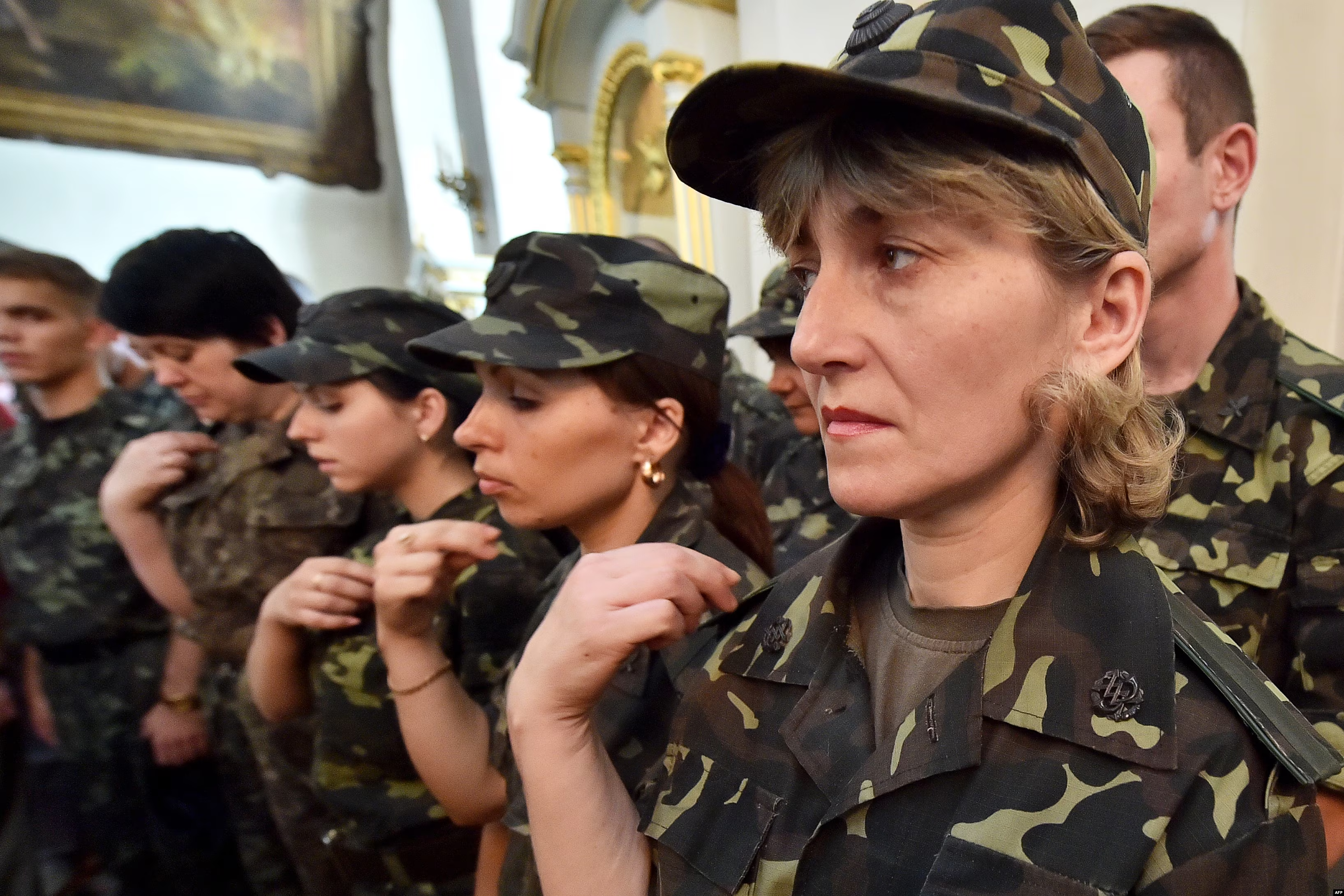
Will the association of Ukrainian Orthodox help the world?
Yakov Krotov: This release of the program is devoted to the results of the cathedral in Kiev, on which the combination of part of Orthodox Ukraine was announced. The cathedral was attended by two bishops from the Ukrainian Church of the Moscow Patriarchate , bishops of the Kiev Patriarchate , the Ukrainian Autocephalous Orthodox Church . And a decision was made, as a result of which, apparently, in early January 2019, a document on autocephaly of this new united Ukrainian church will be given.
Today, our program is participating from Ukraine (from Odessa) according to Skype - Orthodox, poet and psychiatrist Boris Kherson . And in our Moscow studio - a biblicalist, doctor of philological sciences, publicist, Orthodox Andrei Desnitsky .
Let's start with a small interview with the famous Orthodox publicist Viktor Aksyuchits about how he considers what happened in Kiev on December 15-16.
Victor Aksyuchits: What you call the cathedral is an absurd event in all respects. First of all, there was never such a thing in history that some church shared part of another church, giving autocephaly, that is, independence. Well, this is the same as if Ukraine now stated: "Let us give Catalonia independence, let them take sovereignty, how much they swallow." It's absurd! And, understanding this absurdity, in order to somehow get out of this situation, Constantinople canceled another, namely, the talent of autocephaly of the Russian Church in the 16th century. It is like approximately if someone suddenly stated that we did not recognize the Belovezhsky contract, so the Soviet Union exists until today, and would act based on this. That's all the same in the actions of the so -called President Poroshenko and the Patriarch of Constantinople.
It is clear that such actions, utopian in all respects, forcibly imposed, always lead to destructive consequences. And imagine what will happen in Ukraine now. Sincerely believers, understanding the absolute non -canonicity of what happened, realizing that the hierarchs who enter there, and the priests set by these hierarchs are non -canonical, that is, this is not a church, but a false church, of course, will with all their strength to defend their faith and their temples. And if the same dynamics continue to continue, sooner or later it will begin to lead to bloodshed.
The situal itself would not have formed if there were no events in the Crimea and in the east of Ukraine
Yakov Krotov: So many representatives of the Moscow Patriarchate are scared today, and on the Internet, in the newspapers this constant note was before the cathedral: that such a process will cause a civil war among the Orthodox in Ukraine. But it is important to remember that the situation itself would not have formed if there were no events in the Crimea and in the east of Ukraine.
Andrei Desnitsky: In general, it’s a little funny to hear that there will be a war when it has been going on for five years soon.
Yakov Krotov: Well, the war between the military ...
Andrei Desnitsky: One of the parties is the Orthodox Army, as she called herself and wrote on her banners. I am absolutely sure: if it were not for this exacerbation that began in 2014 and very far from the end, then the story would, of course, be completely different. It is clear that in any case, the Kiev Patriarch exists and existed before this cathedral, and it is clear that he wanted legalization, there were different negotiations, but, most likely, there would be no such great desire to separate from Moscow, if not for these events of 2014 and subsequent years. Probably, the situation would be mothballed for a long time, and so it rushed.
Yakov Krotov: But in fairness - is a separate Ukrainian Orthodox Church needed?
Andrei Desnitsky: I can only say that there was a very good scenario, which, unfortunately, is now impossible: the Moscow Patriarchate gives autocephaly of the Kiev Metropolis, the Department of Vladyka Onufry, which is very respected, and he becomes the unifying, the center for everyone who wants to create a local Ukrainian church. Here, Cyprus has, for example, its local church is a very small country with the Greek population, except for the northern Cyprus, which is separated.
To say that Ukraine, as a fairly large country with the Orthodox majority, clearly deserves the local church, is ridiculous, because it is impossible to earn or not to earn, but it clearly wants to have it. The question was how and when it would begin to be created. I believe that a chance of a relatively peaceful divorce was missed, at which the Kiev Metropolis of the Moscow Patriarchate would become the center of gathering this church.
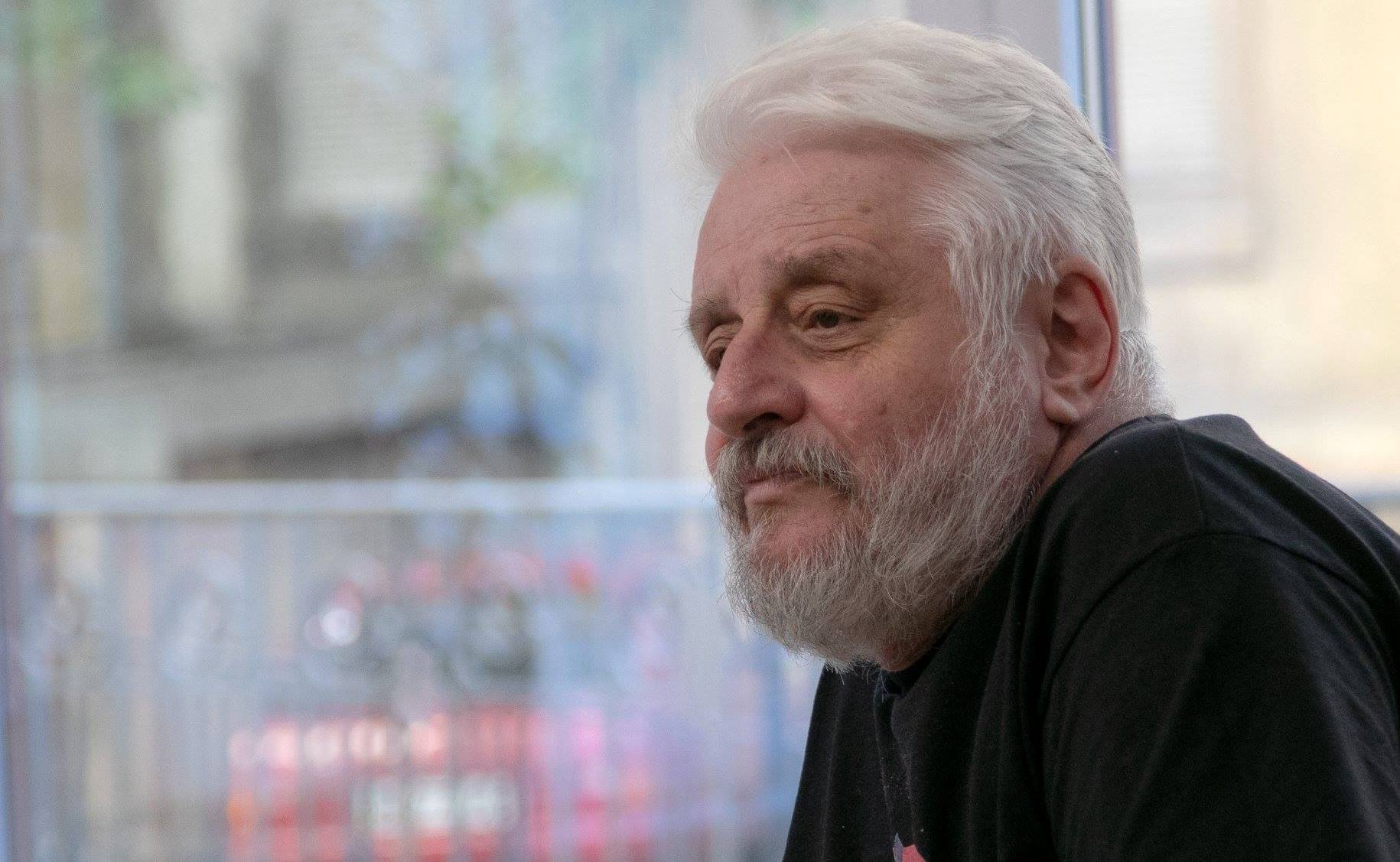
Boris Kherson: I think that nevertheless until 2014, impatience and the desire to get autocephaly now played a role, and this role was complicated. After all, the Ukrainian autocephalous church existed abroad, there were its parishes, there was a patriarch of this church-the Patriarch Mstislav, the nephew, in my opinion, Petlyura, a rather authoritative person. In fact, after the independence of Ukraine, a natural expansion of the foreign church into the territory of Ukraine took place, and it received support. I remember a huge rally under the slogan: "Get the Moscow priest!" The Moscow priest at that time was the late Patriarch Alexy II, who served the Liturgy in Sofia. I remember the radical people who filled the entire area. So the process of acquiring independence by the Ukrainian church, of course, began earlier.
But I completely agree that if the Moscow Patriarchate reacted in time to this desire for autocephaly, if it had not replaced the word "autocephalous" with the "autocephalous" (although the Russian church itself seemed to be autocephalous, like all others), I think everything would be easier. The beginning of the Russian-Ukrainian undeclared hybrid war, on which people die, accelerated this process, just like the election campaign of the current president of Ukraine also accelerated it. I would only say that the war between the Orthodox of a particular diocese is impossible, unless it is provoked by radicals from two sides. And it will be a very local war. There are not so many truly church people in Ukraine who would understand something in these problems.
Yakov Krotov: In recent days, the word "heresy" very often arises in the comments: there is some kind of heresy of Caesaropapism , something else, and this is not by chance. The idea is that everything can be endured, except for heresy. And here is the Ukrainian part of the church, which came to autonomy, and the Patriarch of Constantinople is accused of heresy. In your opinion, is this a real accusation?
Andrei Desnitsky: I, honestly, did not see such accusations and do not understand where they come from, but I see another, no less serious. Before our eyes, the concept to which we resorted to: "World Orthodoxy" ceases to exist before our eyes. It was still clear that there are marginal groups that are very small, which are in themselves, but there is such a world confederation of local churches that may disperse on private issues (like two old patriarchs have not divided one parish in Qatar and still cannot agree), but the totality of all these churches is world Orthodoxy.
Sometimes we have world Orthodoxy of the Moscow model, world Orthodoxy of the Constantinople model and all the rest of the world Orthodoxy
It is quite obvious that now, in December 2018, we have world Orthodoxy of the Moscow model, world Orthodoxy of the Constantinople model and all the rest of the world Orthodoxy, which will somehow share: the Greeks, most likely, to Constantinople, Serbs and Bulgarians, maybe to Moscow, and someone will remain in a neutral position. But as once in 1054 there was a discord between the Roman pope and the Patriarch of Constantinople, and as a result - two completely different churches that can no longer connect - it seems to me that we are present when the same is born. And then the prosecutions of heresy will retroactively legalized, that is, it will be said: we then accused them of such heresy, and everything immediately became clear.
Yakov Krotov: Those texts that I saw reproduce the rhetoric of Metropolitan Sergius of Starodorodsky , accusations of ecclesiological heresy , that is, in confidence that the Church was saved not by the Lord Jesus Christ, but by a compromise with worldly power. The President of Ukraine met in the Presidium, he does not hide, and no one hides that he served as an intermediary, begged the Patriarch of Constantinople. So, this is the heresy of Caesaropapism: the secular ruler decides the fate of the church.
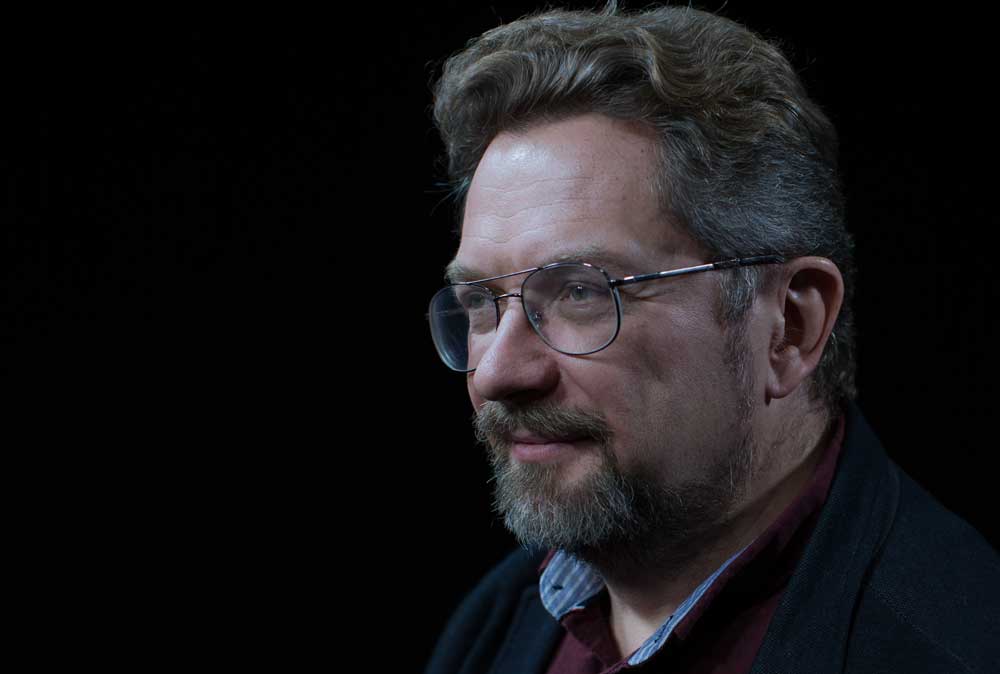
Andrei Desnitsky: I do not see heresy in the fact that a layman is sitting on the presidium. But what we saw and will continue to see ... For a very long time simple believers and slightly believers in our two countries saw the picture something like that: there is Orthodoxy - such a large crystal ball, and it has answers to all questions, everything is completed in it, you need to enter it - and everything will be in order. And suddenly it turns out that this crystal ball is not, that there is his Constantinople-Kiev and Moscow versions, and that the correctness of the versions is determined by those who are in power. Here is President Poroshenko - and in Kyiv its own version reigns, in Russia a different power - there is its own version. And the only way to resolve this dispute is to call the head of the country, a secular ruler who, if necessary, will call the police and apply other power measures. Who is familiar with church history, they know that it was always the way, but before our eyes it was the first time, and, I think, this is a shock that is still a little aware of anyone.
Yakov Krotov: There was already a split in the same type in 1996 - because of Estonia, where today there are two churches, one under the Patriarchate of Constantinople, the second - Moscow. Moreover, they are very miniature, there are several dozen parishes. And there it is clearly visible that people did not part on a national basis. There are Estonian Orthodox in the Moscow Church (conditionally say), there are Russians in the Estonian church. It is often said that Ukraine is Lviv, these are Greek Catholics, and everything else is the Russian part. How valid is this division into the pro -Moscow, Russian and Antimosian Ukrainians now? And you yourself, Boris Grigoryevich, in which camp?
Boris Kherson: After 2014, I naturally moved to the schismatics, that is, to the Kiev Patriarchate, despite the fact that I remembered the past, Patriarch Filaret, and this, of course, was very disturbed by me. But I came out of what. You said that President Poroshenko somehow influenced church policy in Ukraine. Maybe he influenced. But the President of the Russian Federation did not affect church policy, in particular, on the use of the parishes of the Moscow Patriarchate for propaganda purposes?
Not so long ago I talked with a simple woman who was very outraged and expressed her readiness to die for Christ - it was meant to take martyrdom for the Moscow Patriarchate. And, of course, she did not come up with it herself.
Unfortunately, we understand that if it were not for military operations, if it were not for the propaganda from Russia, which very actively using church vocabulary ... I well remember an interview with the militant from the Donbass, who said that Donetsk for him is Jerusalem, the holy city that he protects. And this impression is that, in addition to Moscow and Kyiv Orthodoxy, there is also Donetsk Orthodoxy, and it is it that needs to be defended from Bandera, who arranged the Russian -speaking genocide and will now arrange, of course, the genocide of the Orthodox of the Moscow Patriarchate ...
Of course, there will be none of this, but in Ukraine there will be two churches - the Moscow Patriarchate and the Kiev Patriarchate or Metropolis (I don’t know how it will ultimately be called, what the status of Filaret will be, and whether Epiphanius will be erected to the sanctuary of the Patriarch, or he will simply receive Tomos as a church led by a metropolitan).
I understand well that the recognition of the newly formed church depends not only on the universal tomos: it is necessary that it recognizes it independent of the entire orthodox churches. This is a long process. And we know that the American Orthodox Church, which received its Tomos from Moscow, still exists, although it is not recognized as the Ecumenical Patriarch. I know several priests of this church, I have been there in services, and, in general, I think that parishioners create the impression that this diplomatic recognition has the same meaning as, for example, the recognition or non -recognition of the northern Cyprus by the world community. It is not recognized and will not be recognized, but it exists. And the new Ukrainian church will also exist for some time.
But what they are not talking about, and what I want to say about. After all, these churches are not only these Orthodox churches, but also catacombs of two types. There are several more small, but also positioning themselves as Orthodox churches that remained outside the unification process.
Andrei Desnitsky: I would only object that the situation is not like the situation with the Orthodox Church in America: I am friends with some people from there. Arriving in Constantinople, to Athens, to Bucharest, to Moscow, they completely calmly go to temples, serve, communion. There is no longer a mutual service between Moscow and Constantinople. There is simply a question: does Constantinople recognize this church of autocephalous or still considers it part of the Moscow Patriarchate? Here it has already gone through a completely different scenario.
I would have paid more attention to. It is clear that politics always intervenes, and, unfortunately, church rhetoric was very abundantly used to incite a war in Ukraine. I was very bitter from this, and I was one of those who constantly talked about it. Here is Christmas soon. We have two ways to talk about Christmas. We can say: the Savior of the world was born (this is the truth, so we talk about it). And we can say differently, as scientists, atheists or agnostics say: so that large masses of people can interact, they need some common myths, and they develop various kinds of narratives, for example, the story of the born Christ. The narrative helps us build a strong Russian Federation or join NATO, so it is useful. But the question is - is it true or not? - Not at all. It seems to me that now this dialogue of enmity on both sides forgets that there is truth in this. Maybe we are faced with the fact that a huge number of people on that and on the other hand do not ask at all whether this is the truth or not, but ask the question: does it help us to show the cuckoo to the West or, conversely, join NATO? If so, then we will promote it in every way. My question arises: where is the baby Christ? We see him in this situation from both side? It seems that for the most part there is no.
Still, the main weapon of Orthodoxy is weakness and truth, not war
Yakov Krotov: Christmas, apparently, is not by chance coincides with all this Ukrainian history. I think that President Poroshenko probably wanted to guess for the holiday, make a gift to the Ukrainian people. But still, the main holiday is the consciousness of the fragility of truth, truth in the world. And the goddess lies on straw, he is defenseless, and now there will be a massacre, and God forbid to be saved. Still, the main weapon of Orthodoxy is weakness and truth, not war.
Boris Grigoryevich - poet, Andrei Sergeevich - publicist, doctor of philological sciences. After all, the language is changing, and, as far as I know, Boris Grigoryevich simply began to write poetry simultaneously in Russian and Ukrainian. It seems to me that it was a certain act of conscience: the Russian living in Ukraine begins to master the Ukrainian language.
Was there conscience from the Moscow Patriarchate? After all, why wasn’t the option in which the Moscow Patriarchate would become the center of the association? They demanded complete repentance, complete surrender of positions, renunciation of all titles: "You admit that you are the dust of the earth, that all your sacraments were invalid, and I will forgive everything." The script did not work, people were driven into a corner, they did not leave them the opportunity to surrender on some honorary conditions. What honorary conditions for the world would you in the future offer the parties that are now taking the next step towards discord?
Boris Kherson: I think, because the next step has been taken, it is very, very difficult to talk about some conditions. Of course, Moscow will remain in its positions: we are the main Orthodox Church in the world. And this did not start with the Ukrainian question. Did the Ukrainian question determine that the Patriarch of Moscow and All Rus' did not arrive at the All -Orthodox Council? Almost everything arrived there. This moment reminds me of the moment after the Florentine Union, when the Russian church did not accept it. And the Russian Church now has a huge temptation to declare itself the last Orthodox Church.
Yakov Krotov: It turns out that Pan, presidents are fighting, and the slaves are cracking in the slaves?
Andrey Desnitsky: And when did it come out otherwise?
Yakov Krotov: Well, well, we are completely plankton, and where will the whale swallow us, we are sailing there? Can a simple person do something in this situation?
Andrei Desnitsky: At least not react to triggers, when we begin to swear because of prepositions and do not notice the essence. И есть огромная опасность для русских православных – сказать: мы – единственная православная Церковь, мы – Церковь Российской империи (некой ментальной, воображаемой Российской империи), и мы будем это строить. Мне кажется, с украинской стороны есть свои аналогичные опасности, но об этом, наверное, не мне судить.
Яков Кротов: Наша программа выходит под Рождество, и я могу только предложить свое сугубо рождественское видение единства Церкви. Вот лежит на охапке сена младенец Господь Иисус, а вокруг него всякие скоты. Вот это и есть единство Церкви – склониться над Христом и сказать: боже мой, какие же мы все-таки скоты, что не можем перед лицом погибших людей сказать: вот Бог, он меня спас. А мы все время говорим о том, что нас чем-то обделили, нас кто-то обидел, куда-то загнал, вместо того, чтобы говорить, что наша вера освобождает нас от власти тьмы, ненависти и зла. И нет другого пути к восстановлению единства Церкви и мира, кроме как каждому, не дожидаясь патриарха или президента, наклониться ко Христу. Тогда мы подымемся.
-
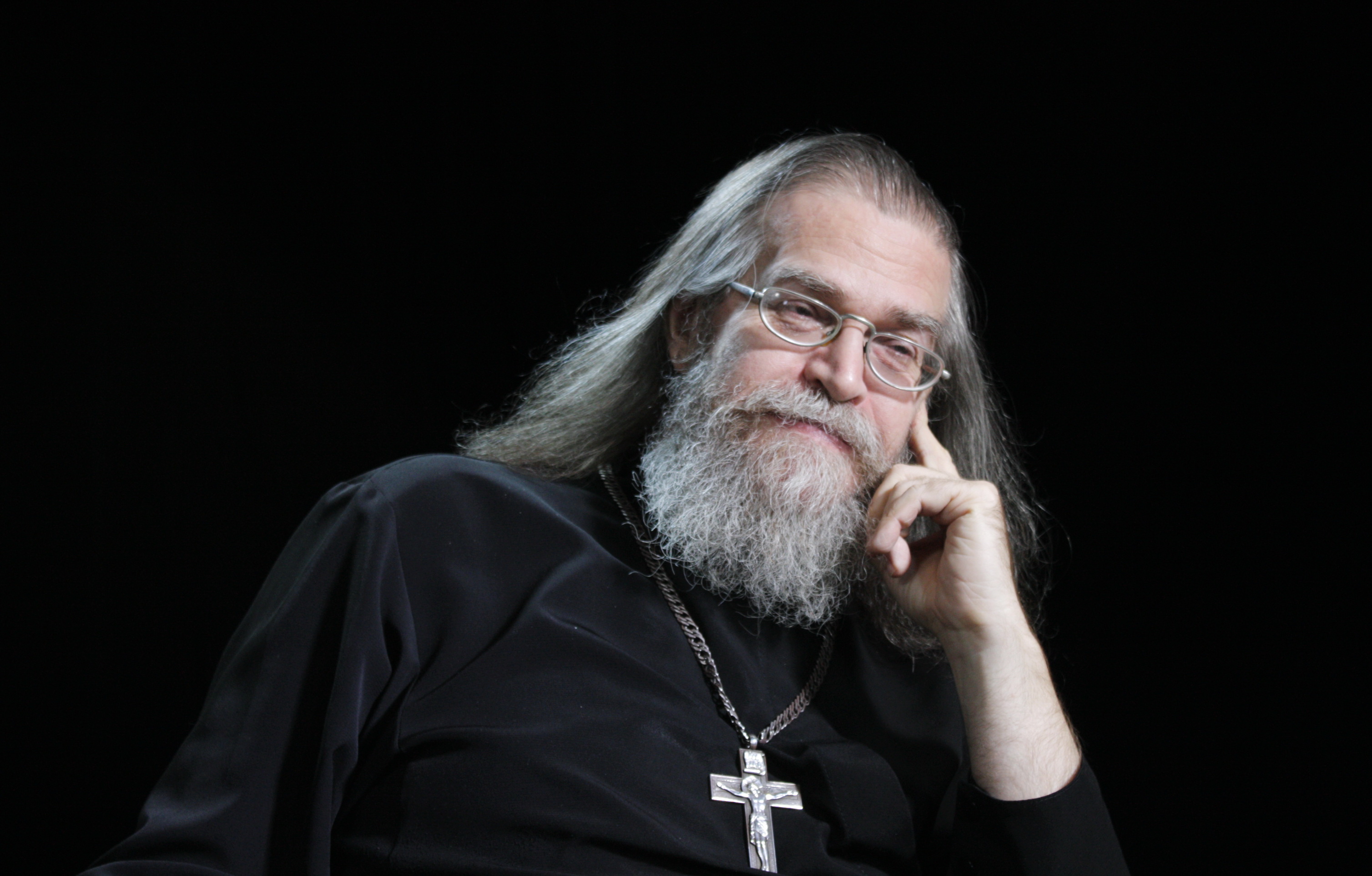

Yakov Krotov
Historian and priest, leading Radio Freedom Radio "Between Vera and Belief"
ykrotov@yahoo.com