
Translated material
"I don't want to be anyone"
Syrian children in Noginsk: Russian officials and their own parents interfere with education
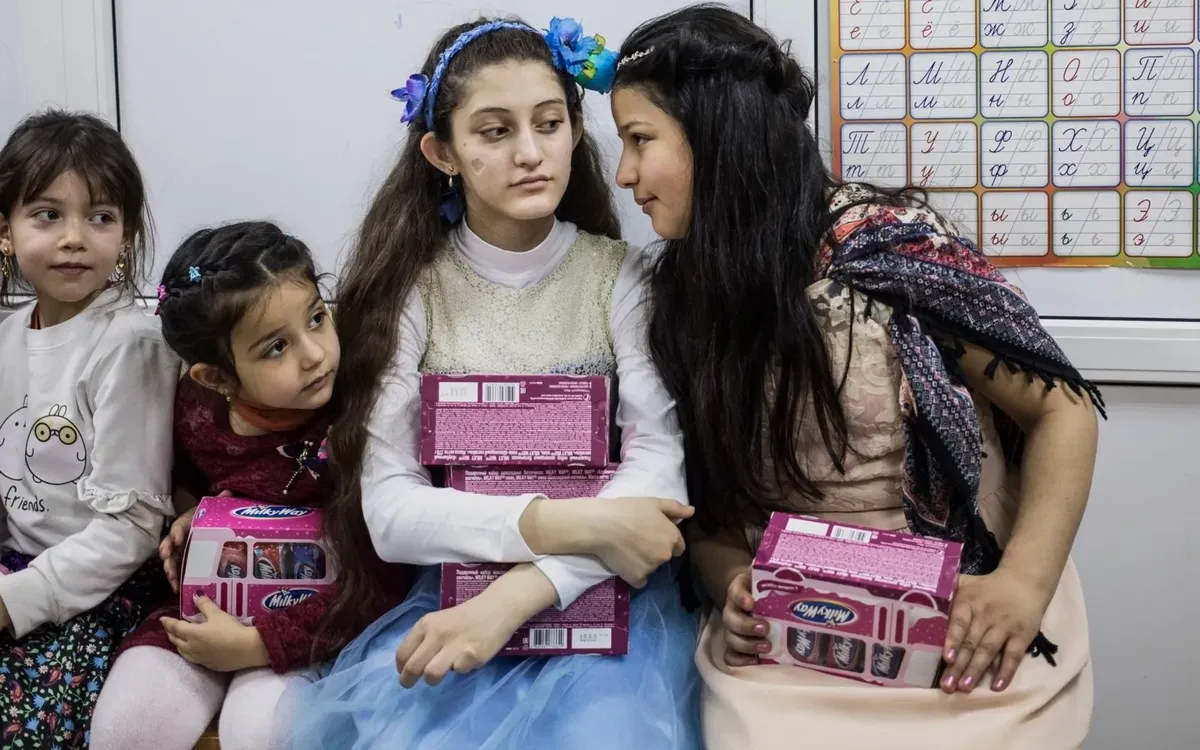
Several dozen families of Syrian refugees with children live in Noginsk near Moscow. Many of them are fluently in Russian and Arabic, but are hardly able to read and write. They don’t take them to Russian schools, so boys from an early age are forced to go to work, and girls sit at home before marriage. The only place where they can receive, albeit inferior, education, is an integration center with the support of the Civil Assistance Committee.
New Year in Arabic
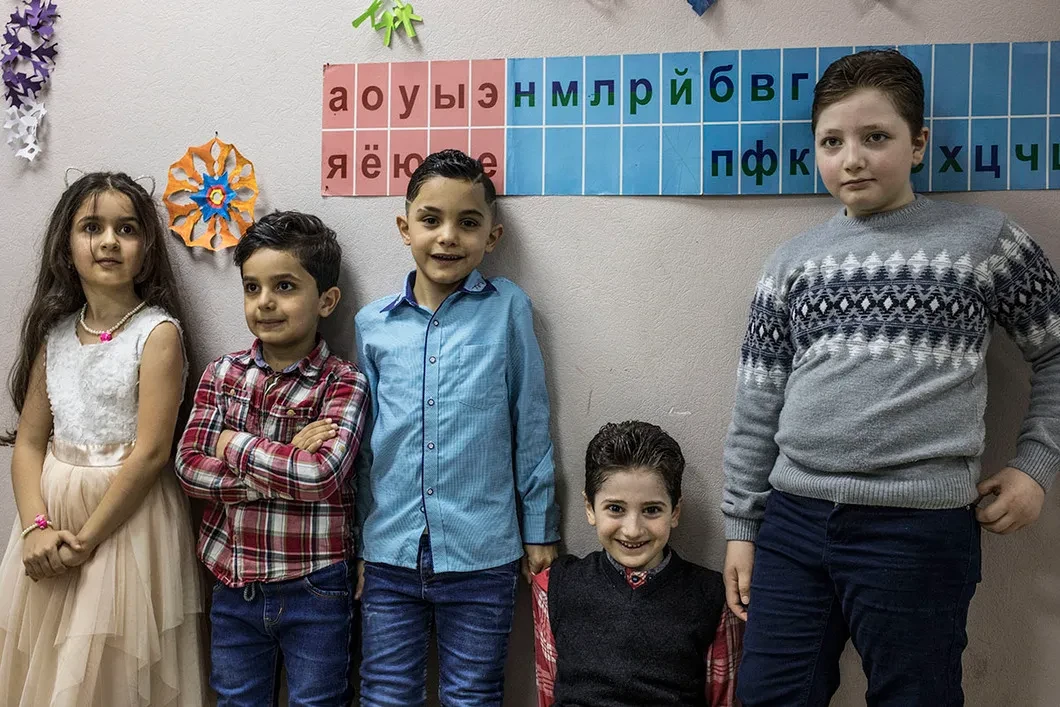
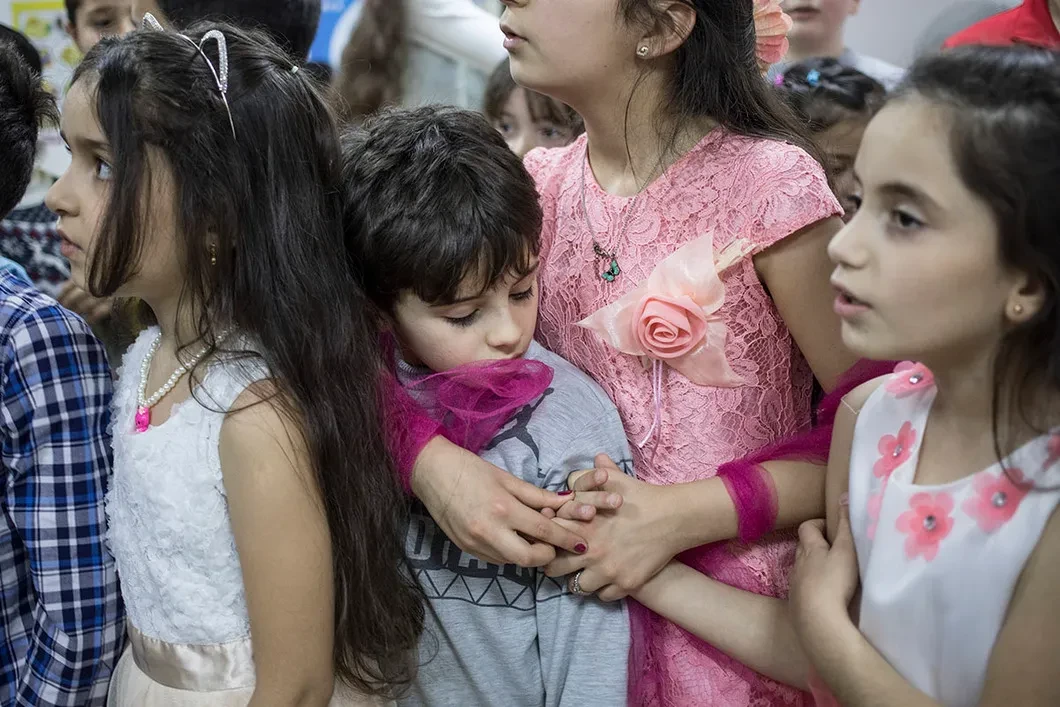
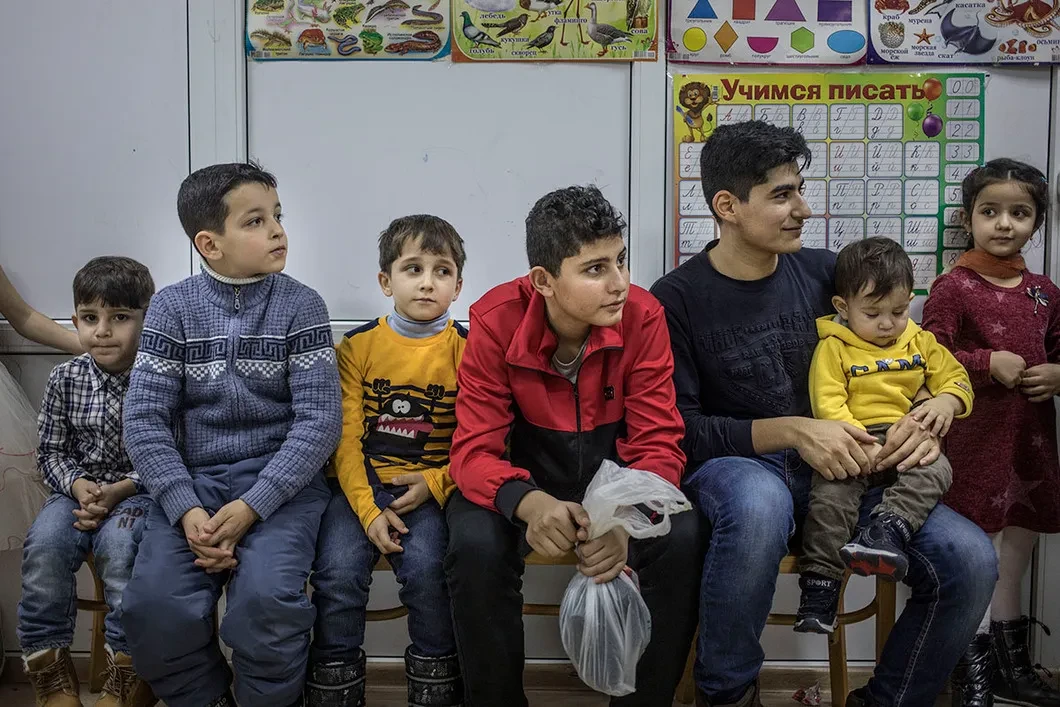
A small office room in Noginsk near Moscow is torn from visitors. In the integration center for children of Syrian refugees, the New Year is celebrated. Girls are dressed in holiday dresses. Each has a large flower in the hair, those who are older, on a scarf. Boys with their heads proudly raised walk around the cabinet in ironed shirts, their hair is adultly removed back with a gel. Their mothers stand nearby: despite the stuffiness, they do not remove their down jackets - outsiders are in the room - and hide from the cameras. Around the fussing, trying to gather scattering children, a teacher in the Arabic language of Safa al-Kudri-a Syrian with good brown eyes and a long scythe.
Half an hour after our arrival, the performance begins. The first to dance to national music are three older girls. Behind them, the younger ones go to the impromptu scene and arrange a round dance. Children move a little ineptly, but with great diligence - so that posters with the Russian alphabet and the multiplication table fly off the walls.
Dancing alternated with songs in Arabic from children's cartoons.
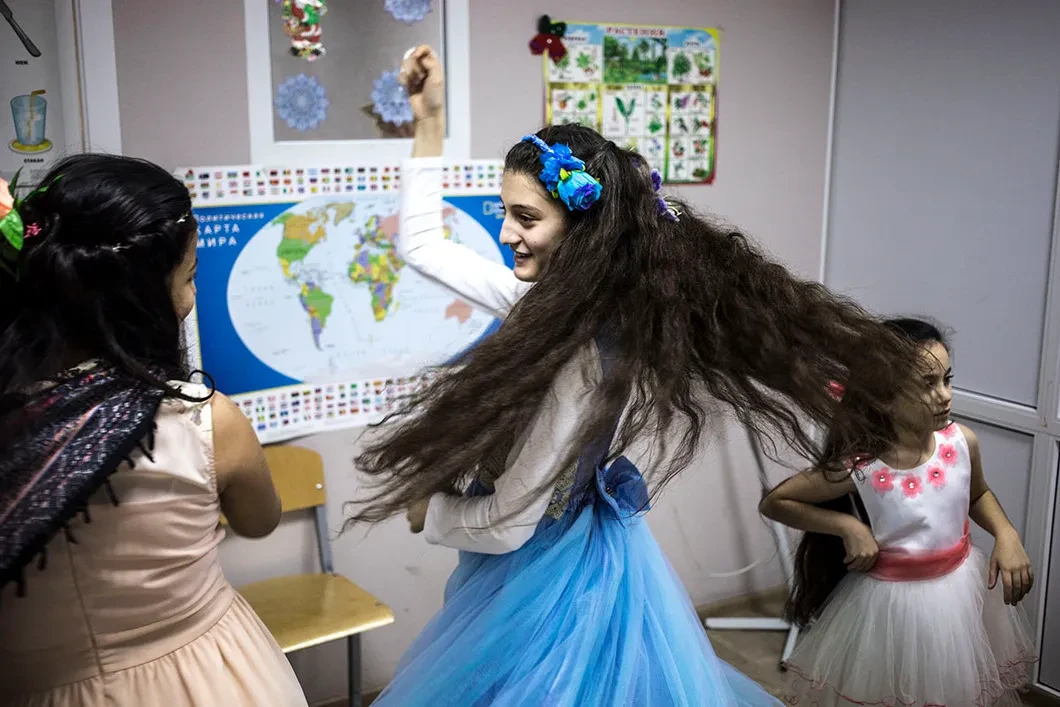
The song of Tarzan said that animals are better than people because they do not kill each other.
And in the song about two brothers, who had a mother, about how important it is to take care of relatives and friends. The teacher Elena Lebedeva planned to sing several songs in Russian. But in the end, they managed to fulfill only the "Christmas tree".
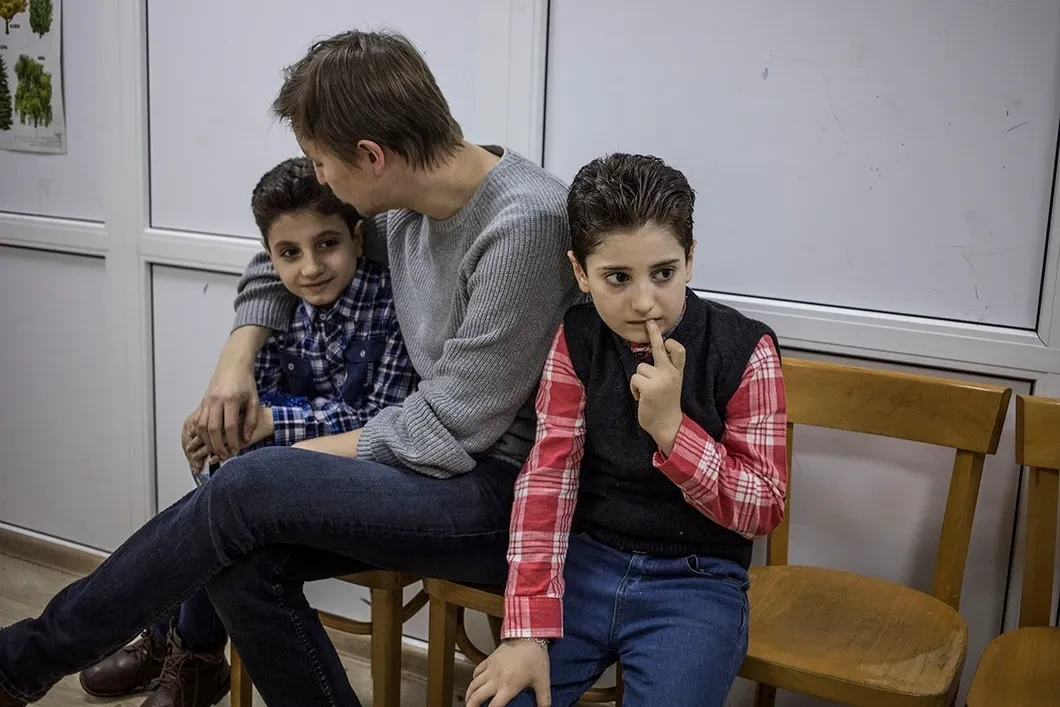
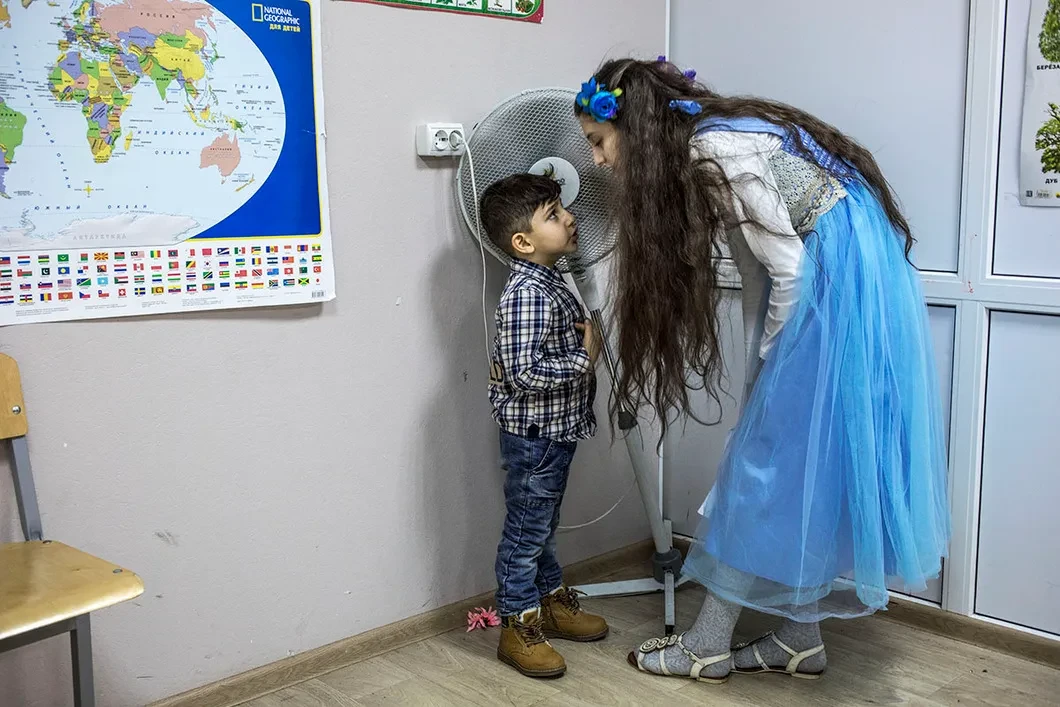
After the performance, Santa Claus without a suit - they are the project coordinator Yevgeny Yastrebov - gives the guys sweet gifts. One of the boys is upset that he got a box of “girlish” pink color instead of blue, the rest smile broadly and lively telling something to their mothers in Arabic.
It is not possible to collect children for a joint photograph: everyone scattered on different corners. An eight -year -old boy Hassan remains in the large office. He agreed to speak with me reluctantly, apparently frightened by a stranger. Eugene approached him, squatted down so that their faces were on the same level with each other, and said: “Hassan, look. This girl wants to write a story. She needs a Syrian boy who speaks Russian well. She is my friend. "
I decided to ask what he likes to study at home most of all. “I play football. I have a platform at home. Big, there is a lot of space. I play one, with myself. Dad at work, mom is always with my sister, and my sister is always in the lessons. I just take a briefcase, I go out and that's it, ”the boy says sadly. Elena notes with anxiety that today Hassan has an unusual “pessimistic mood”
- I'm over. It all went away ...
- How so? After all, the New Year is coming soon! - exclaims the teacher.
“When there will be a New Year, I will fall with joy,” the boy says in a tragic voice.
When Hassan leaves the office, Elena recalls with a smile: when the boy was four years old, he instantly grabbed new words and expressions and translated them into Arabic to other guys who understood worse. After that, in the integration center, he was proudly called the future president.
Damascus - Moscow - Noginsk
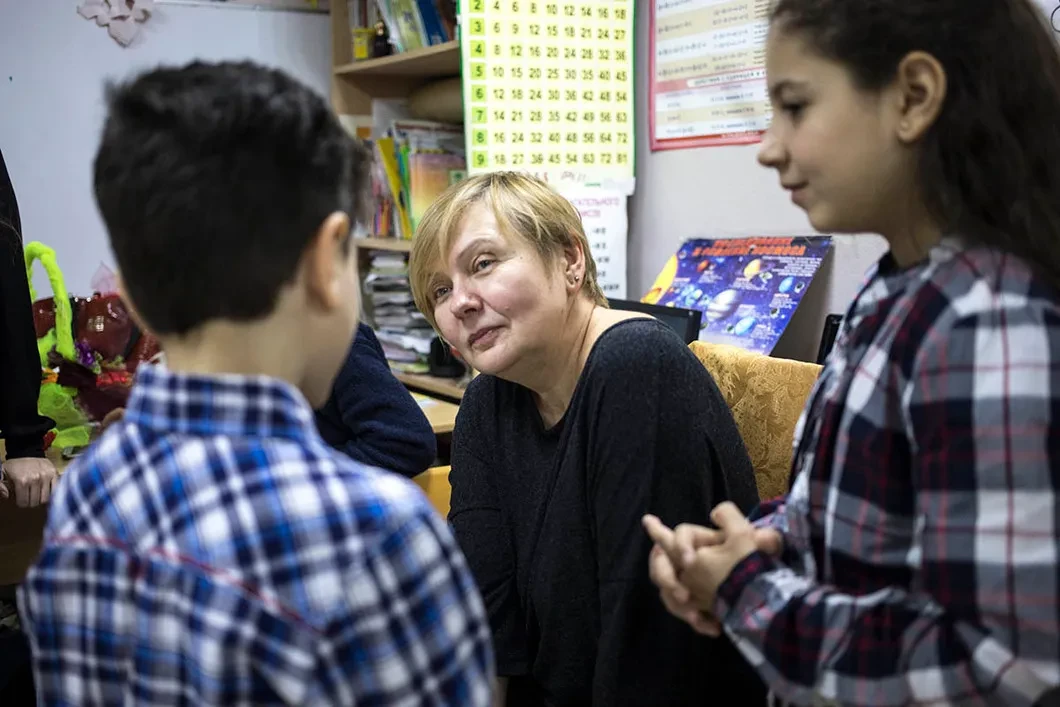
“Previously, a boy Samir came to us. Then he was 12 years old, but he was taller than me. He spoke Russian well, but wanted to learn to read. He had a problem: “Like it, I will have a girlfriend, I will lead her somewhere, but I can’t read it!” I told him, come, we will study, ”recalls Elena.
Now the teacher in the Russian language has 28 students: “Children are very good, household. They can remove everything and wash the floors. Older girls bake pies, bring them to the center and treat them to everyone. But they are different in their mentality. They have a very developed self -esteem. This comes from the respect of the elders to them. They told me if the children do not want to do something, then they do not need it. ”
All of them are of different ages (from 4 to 14 years) and with different levels of knowledge of the Russian language. “We do not have a strict system, like at school. Lesson, change, you will not even understand. Smoothly one into another flows, ”says Elena. She tries to give students general knowledge in mathematics, geography and biology: “They do not even have this at the Arabic level. Once I asked one mother, what countries she knows? Russia, Syria and is silent. And in Arabic? Silent. What cities do you know? Damascus, Moscow, Noginsk. And this is an adult woman! ”
Elena collaborates with the Syrian project for refugee children almost from the date of its appearance - in 2015. After graduating from the course “Russian as a foreign language”, she saw an announcement on the Internet about the search for a teacher in the summer and decided to try. The courses were organized by Olga Nikolayenko and the Syrian journalist Muja Abu Alejail. Children taught the Russian language, but as Elena says, they had no textbooks or notebooks.
The school for refugee children lasted two months, and then the residents of the house in which the project managers rented a premises complained to the police.
And the project temporarily closed. A year later, the Civil Assistance Committee opened a non -state school in Noginsk, but with the material support of the UN UN (refugee agency).
In September 2018, Safa al-Kudri joined the project. By education, the Safa is a pharmacist, but “when it got worse in Syria,” had to work both in a designer company and a teacher at school. In 2015, because of the war, she, like many, left Syria. “I loved Russia very much. I thought that now everything is here, as in the Soviet Union, especially with work. But I was mistaken. Here a person cannot live normally and work if he does not have a large amount of money, ”she notes.
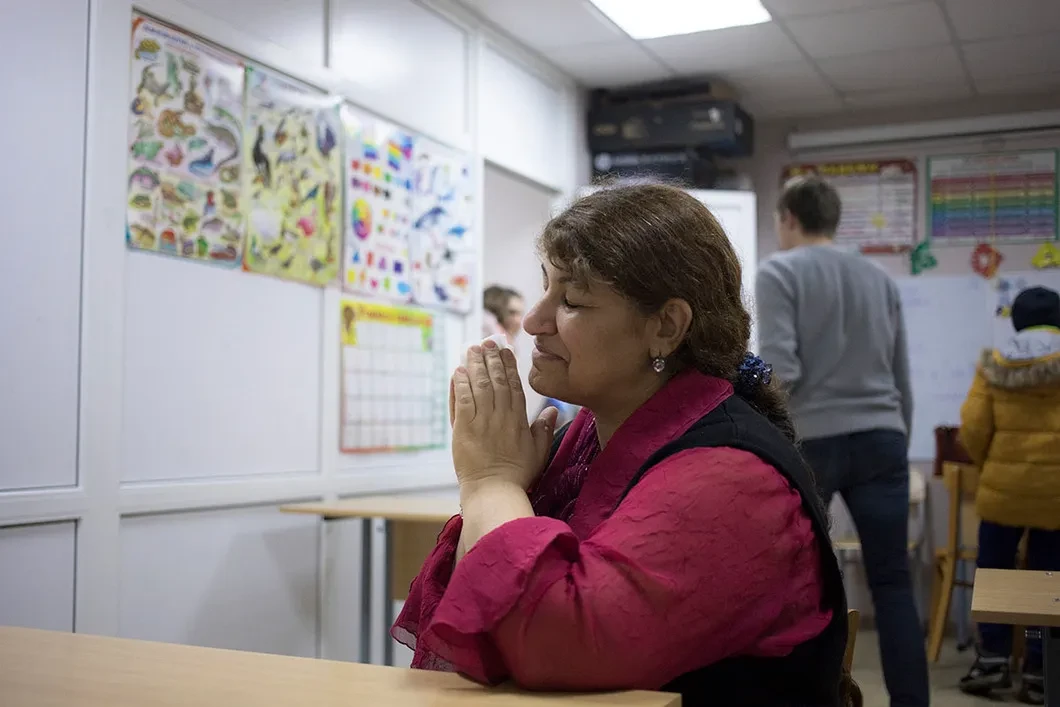
The Syrian teacher teaches children how to behave correctly and how to relate to other people: “It is very annoying when parents speak poorly, for example, about Russian girls who easily dress. I try to explain to them that we are not in Syria, but in Russia. What they should either learn to accept another life, or become the same as Russians. ”
Safa does not wear a scarf. When she began to work in the center, many parents were frightened by her manner of behavior and views progressive for a Syrian woman. For example,
Safa boldly stated that boys and girls are equal and that a girl should not sit with her husband from an early age and live like a slave.
Once she asked one of the students who she wants to become when she would be an adult. She replied: “No one. I don't want anything. " After that, the girl did not appear in the center, the father forbade.
Elena, unlike the Safa, does not interfere in the family life of the Syrians and their religion: “Maximum we can discuss what color the scarf is, and it’s hot in it or cold.” But both teachers converge in one thing: if they are not, then the children will remain completely without education.
REFERENCE
"Where did the Syrians come from in Noginsk?"
Since the 19th century, several enterprises in textile production have been working in Noginsk. After the collapse of the Soviet Union, they began to close one after another. It was then, in the mid-90s, a group of businessmen who rented empty premises and opened their sewing production came to Noginsk from Syrian Aleppo. With the beginning of hostilities in Syria in 2011, workers transported their families to Russia, and the Syrian diaspora has grown. According to human rights activists, now about 200 Syrians live in the city near Moscow, but these are only those who turned to “civil assistance” for help. How many unregistered - no one knows for sure.
The constitution is not for everyone
According to Art. 43 of the Constitution of Russia, all the children who are located in Russia are entitled to receive Russian education. Nevertheless, access to the Russian school is practically closed to children of Syrian refugees. “Once, one official in a conversation with our chairman Svetlana Gannushkina said that the constitution was written exclusively for Russian citizens. This is wrong. It applies to each child, regardless of his citizenship! " -exclaims the press secretary of the Committee "Civil assistance" Daria Manina.
The first reason is the lack of documents confirming the legality of living in Russia. In schools, in addition to a passport, they additionally require registration and visa, referring to clause 9 of Order No. 32 of the Ministry of Education and Science of 2014 (on admission to training under primary and secondary education programs).
The second difficulty is associated with the public services portal through which the inhabitants of Moscow and partially the Moscow region should now register children in schools. When filling out the questionnaire, parents must indicate the registration address, but most Syrian refugees do not have it (the owners of the apartments refuse to meet them and issue temporary registration), and here the system itself does not make it possible to apply for a child to admit to school.
“We wrote complaints to the prosecutor’s office, because the register of registration is illegal. According to what documents the child’s parents are in Russia is absolutely unimportant. Registration plays a role in only one case: until July 1, the first grade is taken as a priority by children who are registered in a particular area. After July 1, if there are free places, schools are required to provide them with children, regardless of whether there is registration and where exactly, ”says Daria.
The committee’s lawyers appealed to the Supreme Court with a request to change the wording of the order, because it implies a double interpretation: “Additionally” in the sense of plus a standard package of documents, or “Additionally” at will. In 2016, the court did not consider the complaint of human rights defenders. However, the decision on the refusal was said: there can be no double interpretations - “additionally” means “optional”.
After that, the children began to take refugees to schools, but after several trials, the director began to actively use another reason for refusing, the only legal one, there were no places.
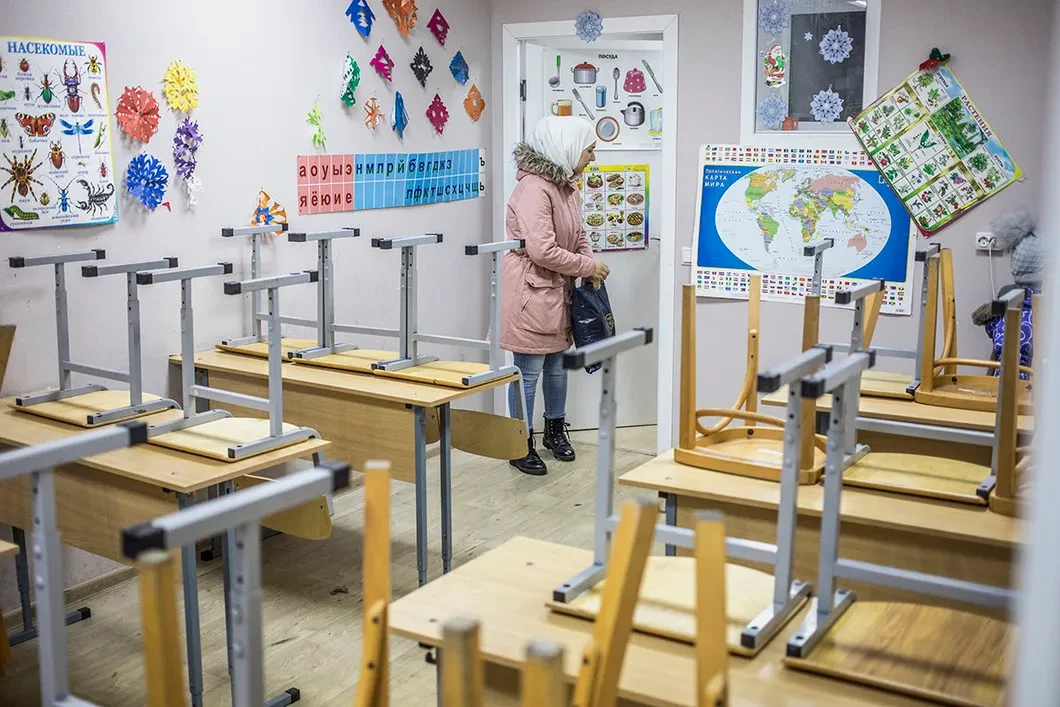
Evgeny Yastrebov confirms that in Noginsk with places in schools the situation is really deplorable. In this case, the Ministry of Education is obliged to provide alternative options. But even if this happens, the problem is still not solved. “The department gives a list of schools to which refugees can go. They score their address in the cards, the address of schools and see that they are at least half an hour on a minibus. Parents have no such financial capabilities. Therefore, children go to school for four months, and then throw it, ”Eugene sighs.
Often, school directors say that children do not know Russian.
Then human rights activists offer to open an optional class, as is done in other countries, for example in Germany or France. To this in Russian schools they answer that there is no money.
Daria Manina is convinced that the refusal is often associated with hidden racism. “If the war ends in Syria and parents decide to leave, then in any case, children will become the bearers of our culture. They will know Russia, speak Russian. What is bad about that? Unfortunately, they actively resist in Noginsk, ”Daria sighs.
A refusal to admit to school leads to the fact that boys from 10-12 years old go to the sewing factory where their fathers work. There is another problem with girls: while parents have been trying to arrange them in school for several years, they reach a puberty and put on a scarf.
Here, the fathers themselves forbid them to study with the boys.
There are no separate classes in Russia, so the girls are forced to sit at home with mothers. “A difficult situation is developing. On the one hand, the law obliges you as a parent to send a child to study at school. If the child does not study, then you are responsible for him. But at the same time they do not take to school. Over the past two years, no one has taken from our center. And what to do? " - ask human rights activists.