
Translated material
The ancient Aramaic inscription contains a spell against the "Eater"
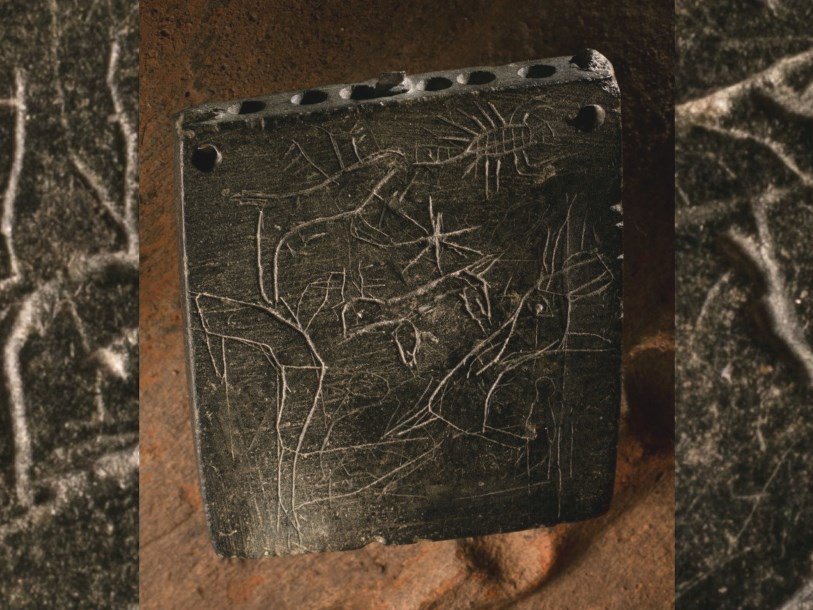
At the annual conference of the Society of Biblical Literature, which ended in Denver, scientists talked about the Aramaic inscription on the vessel of the 9th century BC. It is the oldest famous spell in Aramaic.
The inscription was found during the excavations of the ancient city of Samal , near the modern village of Zinjirli in the south of Turkey. The city arose no later than the middle of the 2nd millennium BC. e. And he was inhabited by the Hittites. About 720 BC. e. Samal fell under the rule of the Assyrian Empire.
The first archaeologists who worked in this city were the Austrian Felix von Lushan and the German Robert Coldevei in the 1890s. Since 2006, an expedition of the Eastern Institute of Chicago University and Tubingen University has been working in Samal.
The find was made in a small building, possibly a temple. The stone vessel on which the inscription is applied was originally intended for storing cosmetics. Scientists believe that the inscription was made much later than the time of manufacturing the vessel. Madadh Richey ( Madadh Richey ) and Dennis Pardee, who examined her, report that the inscription was applied by a man named Rahim, the son of Shadadan, and it is intended to protect against the creature called the "Eater". It is reported that for the healing of a person suffering from the "fire of the Eater", you need to use the blood of the "Eater" itself. It is unclear how this tool should be used: to take orally or use it as an ointment.
Judging by the illustrations available on the vessel, the “devourer” was called Scorpio or the poisonous millipede, and the “fire”, apparently, is a figurative designation of pain from the bite of this creature. The head of the expedition of Virginia Hermann (Virginia Herrmann) says that scorpions are still disturbing the inhabitants of these places. “We must always check our shoes and bags for the presence of scorpions in excavations, although the poison of most local scorpions is not very dangerous,” she says.
Features of the Aramaic text indicate that the inscription was made between 850 and 800 years BC. e., which makes it the most ancient Aramaic spell from ever found. The building in which the spell was found is younger than the century. This means that the spell was considered quite important, and it was preserved for a very long time after Rahim wrote it down.