
Translated material
Simon Zhavoronkov: Constitution Amendment
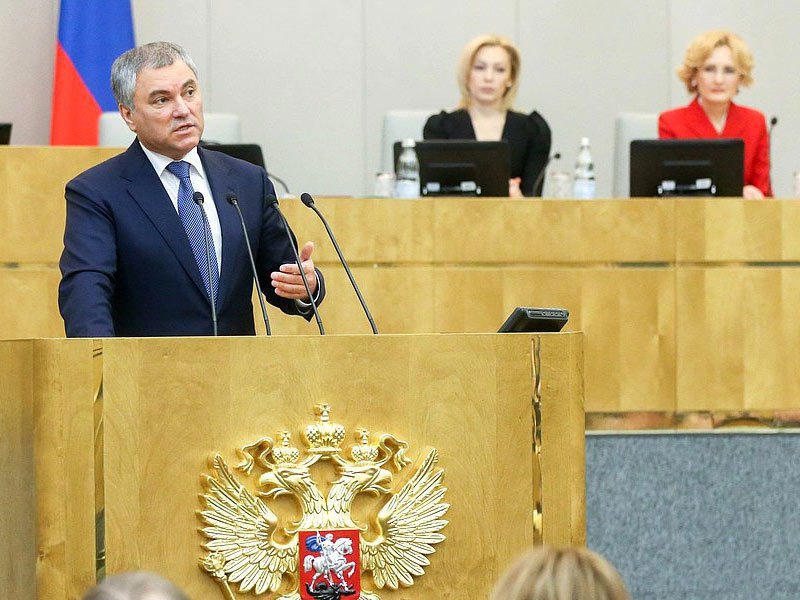
During the meeting of the head of state with the leadership of the Federal Assembly, the State Duma speaker Vyacheslav Volodin suggested, together with the judges of the Constitutional Court, scientists and experts "see how the constitution and the norms laid down in it work today, how much they meet the provisions that were adopted." It is reported by Interfax.
Volodin explained his proposal by the fact that in Russian society, on the eve of the Constitution Day, they discuss the topic every time, "how effective are the issues related to norms and provisions and how much they have not lost their essence." Volodin, however, did not specify which provisions of the Constitution need a modern assessment.
 Kremlin view / duma.gov.ru
Recall, on December 12, when the 25th anniversary of the adoption of the current constitution in a referendum was celebrated, Vladimir Putin said that the country's basic law is the “peak of Russian legislation”. According to him, all the provisions of the Constitution are working. The president also emphasized that the Constitution is “not a ossified legal structure, but a living developing organism, where direct requirements are in harmony with significant freedom for legislative initiatives.”
Recall that in early October, Valery Zorkin, the head of the Constitutional Court, spoke in the Constitution for “point changes” in the Constitution. Among the shortcomings that the head of the KS called the distinction between the subjects of the conduct and the powers between the federal and regional levels, the “roll” towards the executive branch of the authorities, the fuzzy distribution of powers between the president and the government. In addition, the shortcomings are associated with determining the status of the presidential administration, as well as the authority of the prosecutor's office, he said.
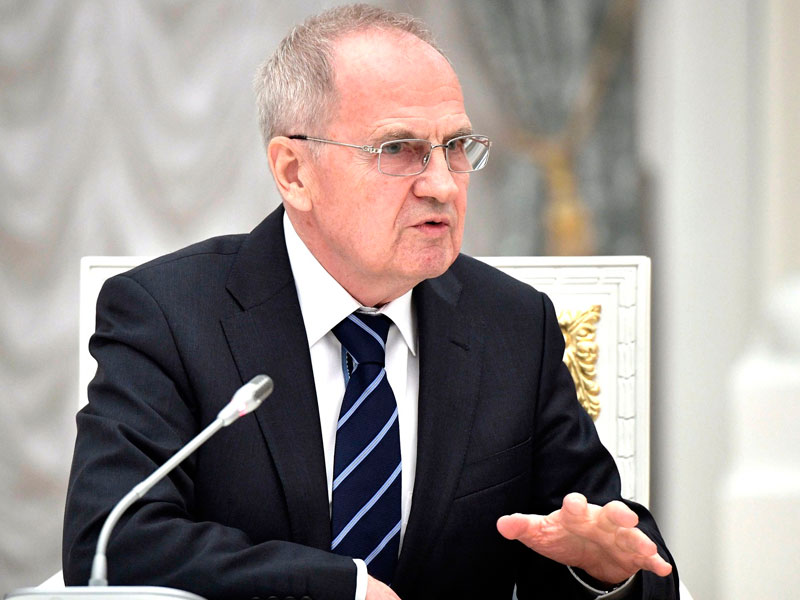 Valery Zorkin / Kremlin.ru
Separately, Zorkin then mentioned Article 12 of the Constitution: “Local government is recognized and guaranteed in the Russian Federation. Local government within their powers on their own. Local self -government bodies are not included in the system of state authorities. ” According to the head of the Constitutional Court, this “gives an occasion to the contrast” of local and federal authorities, but the former are the lower level of public power in Russia.
Presidential spokesman Dmitry Peskov then said that Valery Zorkin expressed his “personal opinion” and added that work on a change in the Constitution was not conducted.
True, over the past decade, several significant amendments have already been introduced into the Constitution (changing the names and numbers of the regions occurs according to a simplified procedure).
In 2008, two edits were made at once: the term of powers of the president (from four to six years) and the State Duma (from four to five years) was increased, and the government’s obligation to provide the annual report to the Duma was also prescribed.
 State Duma building / duma.gov.ru
In 2014, the text of the Constitution changed twice (and if you count the accession of Crimea, then three times). In winter, the references of the Supreme Arbitration Court were excluded from the text, as well as the powers of the president on the appointment of prosecutors. In the summer, the procedure for the formation of the Federation Council was changed: now in the upper house of parliament there are not only two representatives from each region, but also representatives of the Russian Federation. The President received the right to independently appoint senators so that the number of representatives of the Federation was no more than 10% of the rest of the Federation Council. True, this is a “sleeping norm”, the president has not yet appointed anyone to the Federation Council.
The issue of changing the constitution is also relevant because in 2024 the second time of Vladimir Putin expires - according to the current basic law, he no longer has the right to exhibit his candidacy in the next elections.