
Translated material
Memory. Euphrosyne Kersnovskaya
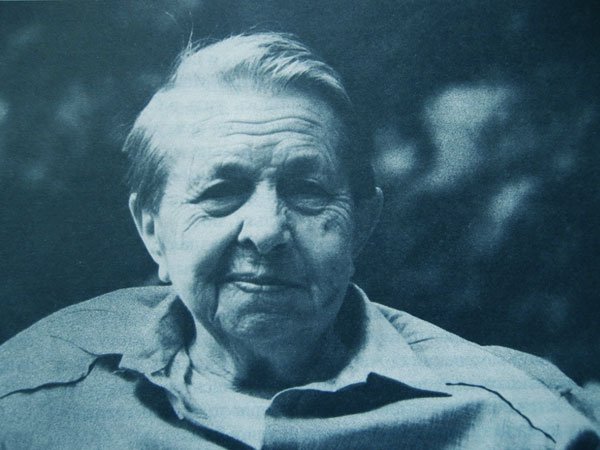
On December 26, 1908, Euphrosyne Kersnovskaya, a prisoner of the Gulag, a memoirist was born.
Personal business
Euphrosynia Antonovna Kersnovskaya (1908-1994) was born in Odessa in an intelligent family. Father - Criminologist Anton Kersnovsky worked in the Odessa Judicial Chamber, his mother - Alexander Caravasili was a teacher of foreign languages. In 1919, during the civil war, after the Father as a former tsarist lawyer arrested the Cheka and only miraculously shot, the family fled to neighboring Bessarabia (at that time part of Romania). There they settled on the Kersnovsky family estate in the village of Tsepilovo, where their relatives lived.
Frosya graduated from a gymnasium, and then - veterinary courses. Since the father was not at all engaged in economy, the 20-year-old Euphrosyne had to engage in them. On their 40 hectares, she grew grapes and grain. After the death of her father, she had to engage in the cultivation of high condition grain for export in order to pay for his loans. In her free time, the girl was fond of horse and walking, she loved to ride bicycles to the Black Sea with cousins and sisters.
On June 28, 1940, the USSR annexed Bessarabia, which was transformed into the Moldavian SSR). Mass repressions immediately began there. Already in July, Euphrosyne and his mother were evicted from their house with complete confiscation of property. The uncle of Euphrosyne in his father Boris Kersnovsky, also devoid of property, went to the Kingdom of Romania with a large family. In August, Euphrosyne, wanting to protect her mother from deprivation, sent her after him to Bucharest. She refused to leave, because she negatively referred to the Romanian occupation.
Euphrosyne began to look for work, but, as a “former landowner”, she was infringed on all rights and only as a seasonal worker was able to get to the farm of the Sokor Technical-Agronomical School. Then she worked on private hiring: on the uprooting of trees, the harvesting of firewood in the forest and sawing firewood. She worked alone, as the NKVD forbade people to work with her, threatening them with an exception to the trade union.
Since September 1940, Euphrosyne spent the night on the street, having neither housing nor even Soviet citizenship. For the winter, she was sheltered by her mother. On the eve of the election on January 1, 1941, she was given a Soviet passport, but with paragraph No. 39. In the elections of the Euphrosyne, the only one who put one continuous cross on the ballot, since among the candidates she saw the name of a woman who was a prostitute before the establishment of Soviet power.
On the night of June 13, 1941, the NKVD officers came for Euphrosyia in its absence. Having learned about this, she refused to hide and voluntarily followed the exile with other Bessarabans on June 14.
On June 14, Euphrosyne and other Bessarabians were placed in commodity wagons of the composition, which went to Siberia. In her memoirs, she writes that she was the only nobleman in the car, the rest were mostly peasants. When the train drove through Omsk, Euphrosyne, despite the prohibitions of the convoys, managed to get out of the car and dial a bucket of water for one woman (who had a birth on the train and had to wash the child), for which she was put in a punishment cell with a crankshaft with a crankshaft with a ventilation pipe, which was in the latter, but soon released (however, in her personal business Because of this incident, there was a corresponding mark, which is why Euphrosyia was monitored much more carefully than others).
Only a month later, the composition arrived in the Narymsky district (today the Tomsk region).
Euphrosyne entered the most remote village on the Anga River, where the forest was falling for laying a narrow gauge road and a winter road. Despite the hard, as in the other camps of the Gulag, the working conditions and climate, she nevertheless easily tolerated them than other exiles, because, together with the cousin, Ira prepared herself in advance for a hard life. With the onset of winter, Euphrosyne and other exiles were moved to Ust-Tyark.
Development standards (in cubic meters of forest) were overstated, and only a high -quality forest took into account for payment. However, the forest in the marshy taiga was of poor quality, which did not always allow you to fulfill the norm. In early December, the head of the Suiginsky timber industry farm Dmitry Khokhrin transferred the Euphrosyne to work in Suiga to the most difficult section - the Euphrosyne was the only one of the exiles who, at the collections of lumberjacks in the local club, dared to criticize Hokhrin for the overestimated standards of development, for the ban on the brigade members for the ban on his conscience lies the starvation of children and other dependents (in Suig then the dependents received only 150 grams of bread per day). Khokhrin, in turn, wrote to her denunciations in the NKVD. In total, as it turned out later, he wrote them on it 111 pieces
In February 1942, Euphrosyne fell ill and could not go to work. Khokhrin ordered the Feldsheritsa he appointed not to write out her liberation from work and deprived her of soldering. This was the last straw and on February 26, 1942 she escaped from the village, since it was not guarded at all.
The escape path ran through all of Western Siberia. Euphrosyne for several days walked along the rivers to the west and switched from the right bank of the Ob to the left. In the first village she met, she found out that the NKVD ordered the indigenous residents of Siberia to take fugitive exiles. Without the first time a clear goal, she most often spent the night in the forest and less often - in rooms. For food, I earned firewood for local residents.
On the way in one of the forest villages, she found exiled Poles, whose conditions were better, since England and the USA paid for their content. From them, she learned that in Tomsk a Polish army was being formed, which would fight with the Nazis. Euphrosyne decided to go there to the Polish consul and, referring to her origin along the father’s line, sign up for the Polish army as a nurse. But this plan failed, because Tomsk was on the right bank of the Ob, and Euphrosyne on the left. She did not have time to move across the river to the ice drift, and for crossing the ferry it was necessary to show the documents that Euphrosyne did not have. Then she decided to go further south.
In total, Euphrosyne was on the run for 6 months, and during this time it passed 1,500 kilometers. She was detained three times due to the lack of documents and suspicions of espionage, but by a happy chance they later released. On August 24, 1942, she was finally detained, again due to the lack of documents, and delivered to the KPZ of the district center of the Krasnozerskoye Novosibirsk Region.
In interrogations, the extraordinary and knowledge of foreign languages brought the district investigator to distinguish between the service and he accused the Euphrosyne of the espionage, referring to the parachute allegedly found near the steppe, which was dropped, after which the Euphrosyne was sent to prison No. 1 in Barnaul.
There she was kept in a single chamber for a week. In her memoirs, the Euphrosyne recalled that this week “turned out to be the brightest period over the course of the next years”, although the light was almost never burning in the cell (in those rare minutes when he was lit, she saw that all the walls were scratched with “I am not guilty!”, Repeating many times). Then she was transferred to the general camera of the NKVD internal prison and night interrogations began, while they did not allow her to sleep in the afternoon. The case led three investigators who used different tactics of interrogations and psychological processing. When the Euphrosyne refused once again to plead “guilt”, the version of the espionage fell apart and she was sent back to exile, from where she fled.
In the fall of 1942, she was delivered under the escort to the Narymsky district. All winter of 1942, Euphrosynia spent a preliminary imprisonment in the Silenovo village in an unheated chamber. During interrogations, she was accused of “anti -Soviet propaganda” and “criticizing the orders of the authorities”. With the prosecutor, she got acquainted with the material of the investigation built on the denunciations of Khokhrin, and refused to subscribe to the fabrications of investigators. The Euphrosyne was charged under Article 58-10, parts of the 2nd (“slandered the life of workers in the USSR”) and under Article 82, part 2 (“Enhanced from the place of a compulsory settlement”). The visiting session of the Judicial Collegium of the Narymsky District Court of the Novosibirsk Region pronounced her - execution. She was invited to write a petition for pardon - this was a means of knocking her a confession of her “guilt” - but she refused to ask for a pardon, and on a piece of paper that she was given out for the petition, she wrote: “I can’t demand justice, I don’t want to ask for mercy. Don Quixote. "
On February 24, 1943, the execution of the forced labor camps and civil rights for 5 years was replaced by 10 years, after which the Euphrosyne, along with other prisoners, was sent to Tomsk.
In the Tomsk region, Euphrosyne, I got to the camp No. 3 Mezhaninovka, where she worked as a bondar for some time, then engaged in burning in a local art workshop. Only thanks to her foreman she managed to meet normal. During this period, in the correctional camps there was a massive death of people from hunger and Pellagra, and only thanks to the help of the camp doctor Sarah Gordon Euphrosinia got into the camp hospital, where she managed not to get sick. Then, in June 1943, the Euphrosyne was transported to camp, No. 4 at Yeltsovka station near Novosibirsk, where she worked at a hat at night in a hatching brigade brought from the front, and in the afternoon in the subsidiary farm, where there were raw vegetables from time to time.
But in September, Euphrosyne lost this work, because half of her soldering and those vegetables that she could secretly bring from the field, she gave the pregnant woman to a colaiger, and not her foreman, as required by an unspoken set of rules among the prisoners. She was transferred to the camp for the construction of a military plant near Novosibirsk.
Once Euphrosyne as a veterinarian was called to a camp pig farm, in which an epidemic of an unknown disease erupted. She volunteered to save the dying pigs, determining with the help of analyzes how to treat them, and making them the necessary vaccinations. Euphrosyne was very risks, because if vaccinations were not helped, she could be accused of sabotage and shot. But the pigs managed to save and Euphrosyne began to establish the work of the pig farm.
However, as a veterinarian, the Euphrosyne did not suit the camp authorities, because she refused to sign fictitious acts about the death of pigs, according to which the guards could receive paired meat in excess. The result was new denunciations of it. On April 18, 1944, the Euphrosyne was again arrested. She was sentenced for "counter -revolutionary agitation." The Euphrosyne, by another 10 years in prison and 5 years of defeat in civil rights, she served in Norillag this period.
After liberation in 1952, she lived first in Norilsk, and after retirement she bought a dilapidated house with a garden in Essentuki and after 20 years of separation brought her mother from Romania there.
Only after the death of her mother, Kersnovskaya began to record her memories of the camps, but in an unusual form - signatures for her own drawings, which ultimately gained more than 700 pieces.
In 1982, her memoirs began to spread in Samizdat, and in 1990 - were published in the magazines "Spark", "Banner" and the British The Observer.
Euphrosynia Kersnovskaya survived to a very old age and waited not only for the publication of her books, but also to complete rehabilitation.
She died on March 8, 1994 in Essentuki at the age of 86.
 Euphrosyne Kersnovskaya
What is famous
The Bessarabian landowner, the Russian writer-memoirist and artist, Euphrosyne Kersnovskaya spent many years in the Gulag. After the liberation, she wrote memories and created hundreds of drawings that recreate the life and little -known aspects of the Soviet “behind the watch” - a kind of “gulag archipelago” in pictures.
The full text of the memoirs of Euphrosyne Kersnovskaya is 12 notebooks containing 2039 manuscript pages accompanied by 703 drawings, about children's years in Odessa and Bessarabia, expulsion and stay in the Gulag was published in 6 volumes only in 2001-2002.
What you need to know about
Euphrosynia Kersnovskaya became the first woman - a miner in Norilsk. In Norillag, she first worked for two years with a nurse in the hospital, and a year in the morgue. And after that I demanded to transfer it to work in the mine. There she felt inwardly free - "scoundrels do not go down underground."
Even after the final release in 1957, Euphrosyne remained to work there.
Direct speech:
About people: "A person costs as much as his word costs."
About patriotism: “I had all the possibilities in the first months of occupation to leave. But I am Russian, although Polish from my father and Greek from my mother flow in me. And I had to share his fate with my people ... ".
About the arrest: “How far I was from the fact that there is article 58-10; That not only can not be said, what do you think, but you can’t listen to what they say, and even breathe one air with the speaker! ”
About the camp life: “In order to get 400 grams of bread, it was necessary to wash 300 bloody pairs of bloody, drying in a lump to the hardness of iron, or two thousand - yes, two thousand! —Pilotok, or one hundred camouflage robes. All this was given a pilot of liquid soap. These dressing gowns were especially nightmares. The soaked, they became hard as leaf iron, and cut down the dried blood at least with an ax (...) to stand in the water on a stone floor barefoot, almost naked, in some underpants, because there was nowhere to dry the clothes, and to throw it to dry, it is impossible: in the hut there are such a shalman that the last footcloth are able to steal. ”
About the memoirs: “And you asked me about one more thing: to record, at least in general terms, the history of those years - the terrible, sad years of my“ universities ”... although some kind of Dante was ahead of me, describing nine circles of hell.”
5 facts about Euphrosyne Kersnovskaya
- Euphrosyne perfectly mastered the French language, knew Romanian and German well, spoke good in English, Spanish and Italian.
- Euphrosyne had an older brother Anton. In the mid-1920s, he went to Europe to get an education, eventually settled in Paris and became a military historian. When the Second World War began in 1940, he was drafted into the ranks of the French army. In May of that year, the Euphrosyne and Alexandra received a notice of his death, although in fact Anton Kersnovsky was only seriously wounded. He died only in 1944 from tuberculosis. His articles and labors on the history of the Russian Army received worldwide recognition, but in Russia were published only after the collapse of the USSR.
- Going into exile, the Euphrosyne did not take winter clothes with her, as she thought that she could buy everything necessary on the spot, but in these areas there were almost nothing in stores in stores, and the exiles could buy goods only with the special resolution of the authorities. Only with the onset of the 40-degree frosts, the Euphrosyne gave permission to buy felt boots and quilted jackets.
- On December 3, 1941, Euphrosyne, already in exile, was present at a meeting in a club where the lecturer talked about US support to the Soviet Union. The Euphrosyne had the imprudence of asking if this does not mean that the United States for the help of the USSR can run into war with the Japanese empire, referring to the Anti -Comintern Pact? After a lot of time, she learned that Khokhrin after that wrote a denunciation on her, in which her question described her question as a “vile slander for peaceful Japan.” 5 days after this incident, there was an attack on Pearl Harbor.
- Two full -length documentary films were shot by Kersnovskaya’s diaries: “Euphrosyne album” (director Grigory Ilugdin) and Euphrosyne Kersnovskaya. Life ”(director Vladimir Meletin).
Materials about Euphrosyne Kersnovskaya
A site dedicated to Euphrosyne Kersnovskaya. The site presents the most complete version of her work.
Kersnovskaya defeated Stalin . Article Igor Chapkovsky. New Gazeta, 03/13/2009.
Article about Euphrosyne Kersnovskaya in Wikipedia