
Translated material
Due to sanctions in the DPRK, the flu is rampant, worried about the red cross
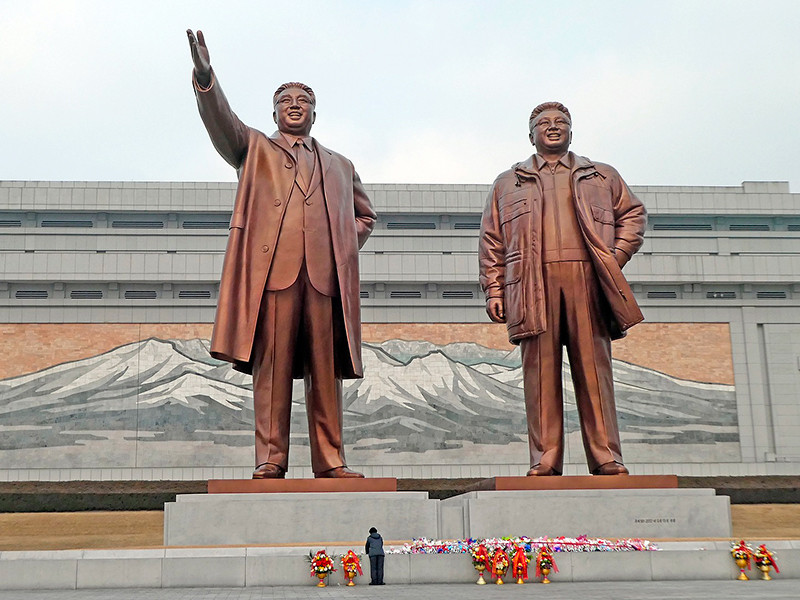
Global sanctions against the North Korean regime are damaged by supplying medicines to the DPRK, which negatively affects the situation with healthcare in the country. This was announced by the general secretary of the local Society of the Red Cross RIM on the official website of the International Federation of the Red Cross and Red Crescent Society (IFCK).
According to Rim, in the country there is acutely lacking vaccines, antiviral drugs, sets for quick testing, personal protective equipment for medical workers and disinfectants for hand for hand. All this was the main reason for the outbreak of influenza at the beginning of this year. As the RIM emphasizes, sanctions against the DPRK are not aimed at “limiting humanitarian activities” or to have a “negative” influence on the country's civilian population. However, banks, suppliers and officials delay the supply of medicines, as they are afraid to violate the sanctions regime.
In addition, according to the IFCC estimates, about 10.3 million people in the DPRK suffer from a lack of food, malnutrition and lack of access to basic services. In 2018, these problems were aggravated by natural disasters, such as heat, typhoons, floods and landslides. Despite the warming of inter -Korean relations, marked by three summits of the leaders of the two Kores this year, the humanitarian aid sent to North Korea was not resumed.
Last year, the Seoul government announced a plan to assist North Korea for $ 8 million through international humanitarian institutions. However, this assistance was not provided against the backdrop of minor progress in negotiations on denuclearization of the DPRK and existing global sanctions against the communist regime.
In September of this year, according to the results of the summit in Pyongyang, President of South Korea Moon Jae Jae and the leader of the DPRK Kim Jong -un signed a joint declaration in which they agreed on specific steps for denuclearization of the Korean peninsula and agreed on cooperation in other areas. Seoul noted that the signed military agreement de facto is an agreement on the official end of the Korean War.
At a press conference, Kim Jong-un said that the signed document would open a "new era of prosperity and peace" on the Korean peninsula. He noted that he held “very meaningful” negotiations with his colleague, and also emphasized that the military agreement signed by the defense ministers of the two countries will contribute to the process of denuclearization.
In addition, the parties agreed that the two Korea will apply for the joint holding of the Summer Olympic Games in 2032, and also send unified teams for the 2020 games in Tokyo. The two countries also pledged to open the permanent meeting center for members of the families separated by the Korean War. As it became known, Kim Jong -un is going to visit Seoul by the end of 2018, which will marked the "turning point in inter -Korean relations."
In addition, the leaders of the DPRK and the Republic of Korea Kim Jong -un and Moon Zhe in agreed in 2018 to start working on the combination of railways and roads in the east and west: the other day, a symbolic ceremony was held on the border of the two states in honor of the planned start of work. Earlier it was reported that this project aims to access the Russian Trans -Siberian Railway to accelerate the delivery of South Korean goods to Europe.
The DPRK and the Republic of Korea will also open the permanent meeting center for members of the family divided by the Korean war, according to the text of the joint declaration. Since the mid-1980s, the Republic of Korea and DPRK held more than a dozen events at which about 21 thousand Koreans were able to see their relatives and friends, with whom they lost contact after the Korean war. The first of them took place in 1985. Then a big break followed - only in 2000 such meetings continued. In total, about 50 thousand relatives from divided families live in Korea.
The two countries agreed on the resumption of the work of the Keson industrial complex and a tourist project in the Kymansan Mountains. The technopark in C whileon, where more than 54 thousand North Koreans worked at 124 South Korean enterprises in 2004. In 2015, the profit from its activities exceeded $ 500 million. The complex was closed after the DPRK in 2016 of a nuclear test and launching a launch vehicle with a satellite.