
Translated material
The OneWeb satellite operator does not negotiate with the Russian authorities to sell a share in exchange for frequency release
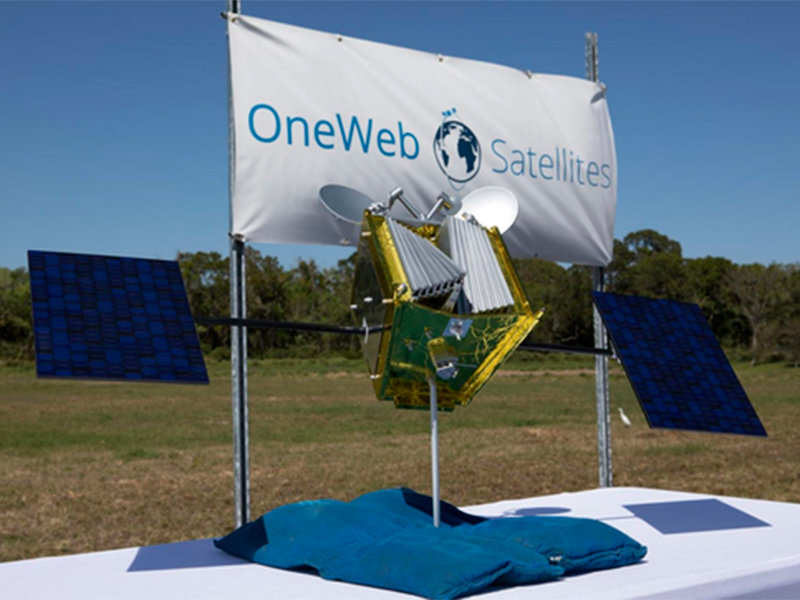
The American satellite operator OneWeb, faced with obstacles in work in Russia, did not offer the Russian government to buy a share in the project, Reuters reports.
The company noted that Oneweb receives many offers from potential investors, but "the Russian government is not one of them."
Previously, Reuters reported that OneWeb representatives at a meeting in Moscow with Prime Minister Dmitry Medvedev, which took place several months ago, invited the Russian authorities to sign an option agreement with the possibility of redeeming 12.5% of the project if the companies allocate frequencies for working in Russia. After that, the head of the Ministry of Communications, Konstantin Noskov, said that such a proposal at the government level is not discussed.
Recall that ONEWB has not been able to obtain permission to use the necessary frequencies in Russia for more than a year. Last year, the ONEWB joint venture and the structures of Roscosmos sent several applications to the State Commission on Radio Frequencies (GKRC), but they never received approval.
At the end of October, the FSB representative Vladimir Sadovnikov said that the implementation of such foreign projects will put a number of Russian regions in full depending on foreign communication systems. In his opinion, the only effective way to withstand threats arising from the deployment of foreign global satellite communication systems to ensure broadband Internet access, especially in the areas of the Arctic and the Far North, is a restriction of their use in the Russian Federation.
"The guarantees that the satellite communication system is not a reconnaissance nature and will not be able to damage the interests of the personality and the company of the Russian Federation, are more declarative in nature and cannot be reliably checked by the Russian side," Sadovnikov said.
ONEWB telecommunications was founded in the UK former Google manager Greg Wahler. Initially, the company planned to launch 648 low -organ satellites that would provide Internet access throughout the planet, including places where it has not yet been. Later, the estimated number of satellites was adjusted several times. To date, investors, which include Airbus Group, Coca-Cola, Virgin Group and Qualcomm, invested more than $ 1.7 billion in the project.
In 2015, Oneweb signed an agreement with the French ArianSpace and the structures of Roscosmos to launch several hundred communications satellites. They must be brought to near-Earth orbit using 21 Soyuz launch vehicles from Kuru and Baikonur cosmodrome. The first launch was planned at the end of 2017, but since then it has been shifted several times. According to the latest information, it should take place in February 2019. The total cost of the OneWeb satellite contract is more than $ 1 billion - this is the largest commercial order for Russia.
According to unnamed federal officials, the position of security forces puts Roscosmos in an extremely difficult position . Firstly, the question arises of how to launch satellites recognized by the threat of national security from Baikonur and Eastern. Secondly, the Soyuz-ST missiles, which are planned to be used to launch Oneweb satellites from the Kuru cosmodrome, are constructively different from the Union-2.1a and simply can not be replaced.
Refusal of agreements with Oneweb promises losses not only to Roscosmos, since the contract gave hopes for the second commercial order providing for the launch of satellites using the Proton missile according to the 5+8 scheme (five hard and eight in the option). This contract could bring the Khrunichev Center, whose debts exceed 100 billion rubles, not only by loading by 2.5 years, but also from 300 to 800 million dollars of profit.
Finally, the rejection of a full -format partnership with Oneweb will deprive the luxury of access to the technologies for creating small spacecraft that could be localized, and by reputation of Russia as a reliable partner in the space sphere, a blow will be struck.