
Translated material
How did you save The New Times
Report of editor -in -chief Evgenia Albats with numbers and graphs
Back in early November, this New Year's column - and I have been writing them for the twelfth year - it would be fundamentally different: with great regret, I would have to say that The New Times is finally closing. And on January 15, 2019 I would land at Harvard University, where I once received the title of Doctor of Philosophy and where I always wanted to return. Harvard gave me the opportunity to calmly write a book that I have for a long time, for which I have already taken several dozen interviews, but for which I can’t take on, because I am entering other people's texts, I also work as well as the site layout, and endlessly walk with an outstretched hand. In short, a visa marvard university is in my foreign passport .
But Harvard had to be canceled. Because a miracle happened.
On October 26, the peace judge of the judicial section No. 367 of the Tver district of Moscow M.E.Shvedova awarded to recover from the publisher The New Times LLC New times 22 million 250 thousand rubles - the largest fine in the history of the Russian media, plus 30 thousand with the chief editor of the publication. On November 9, in the evening, on the air of the Rain television channel, we announced that we would try to raise money for a fine. And after a little less than four days, November 13, the necessary amount, and even more than that, was collected. And the low to you all for this!
Brief history of the previous series
In early April 2018, the FSB veteran and deputy of the State Duma N.I. Ryzhak turned to the Prosecutor General Yuri Chaika with a request to check the publisher of The New Times , LLC New Times, which, according to the source of the FSB veteran, received 5 million 400 thousand rubles from a foreign agent.
Two months later, on June 8, the deputy of the Tver interdistrict prosecutor of Moscow D.S. Lutov sent a new time LLC with a request to eliminate violations of federal legislation - in his letter the amount of claims for 24 million 500 thousand rubles was already indicated. Violations are immediately eliminated by transferring one table and three short files to Roskomnadzor, and on July 31, at a meeting of the journal’s lawyer with the deputy district prosecutor, the issue was exhausted - the statute of limitations for the incriminated article in accordance with the explanations of the Plenum of the Supreme Court of the Russian Federation on July 11. But two months later, on September 25 , the inter -district prosecutor’s office sharply changes its point of view to the exact opposite and sends a decision to the court on the initiation of an administrative offense under Article 13.15.1, part 1 - this article was never applied before. The amount of claims is 22 million 250 thousand rubles. On September 26, 2018, the peace judge of the judicial section No. 367 of the Tver district of Moscow M.E.Shvedova makes a ruling on the return of the prosecutor's decision in connection with the expiration of the terms of bringing to administrative responsibility. And on October 25, the same world judge M.E.Shvedova makes the exact opposite decision - a fine of 22 million 250 thousand plus 30 thousand rubles. Who is interested in the details - here .
Median donor
With the help of a specialist in the field of political research statistics, associate professor of the NIU-owl Alexei Zakharov, we analyzed data for 15 thousand donations in the amount of 26 million 100 thousand rubles, which were made under their last name, name and patronymic (SIC!) For two specially open card accounts: more than four days, more than four days were made more than the most sorties-more than four days. 15 million 200 thousand rubles) and in Alfa Bank, as well as to the accounts of our Freedom Freedom Freedom Fund . Donations were actively going on for several more days, they go now, the total amount was 27 million 496 thousand 752, in salvation
The New Times was attended by a plus minus 18 thousand people, but some of them transferred their money anonymously.
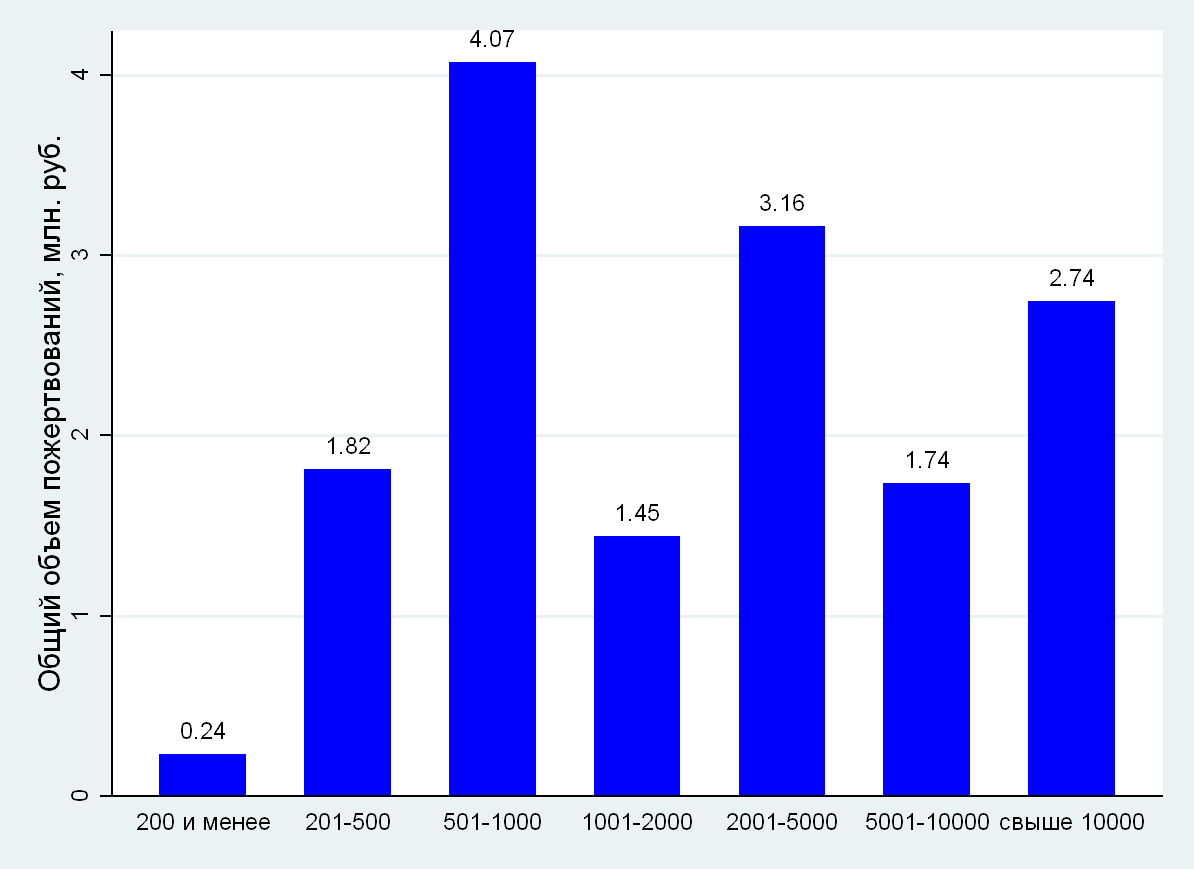
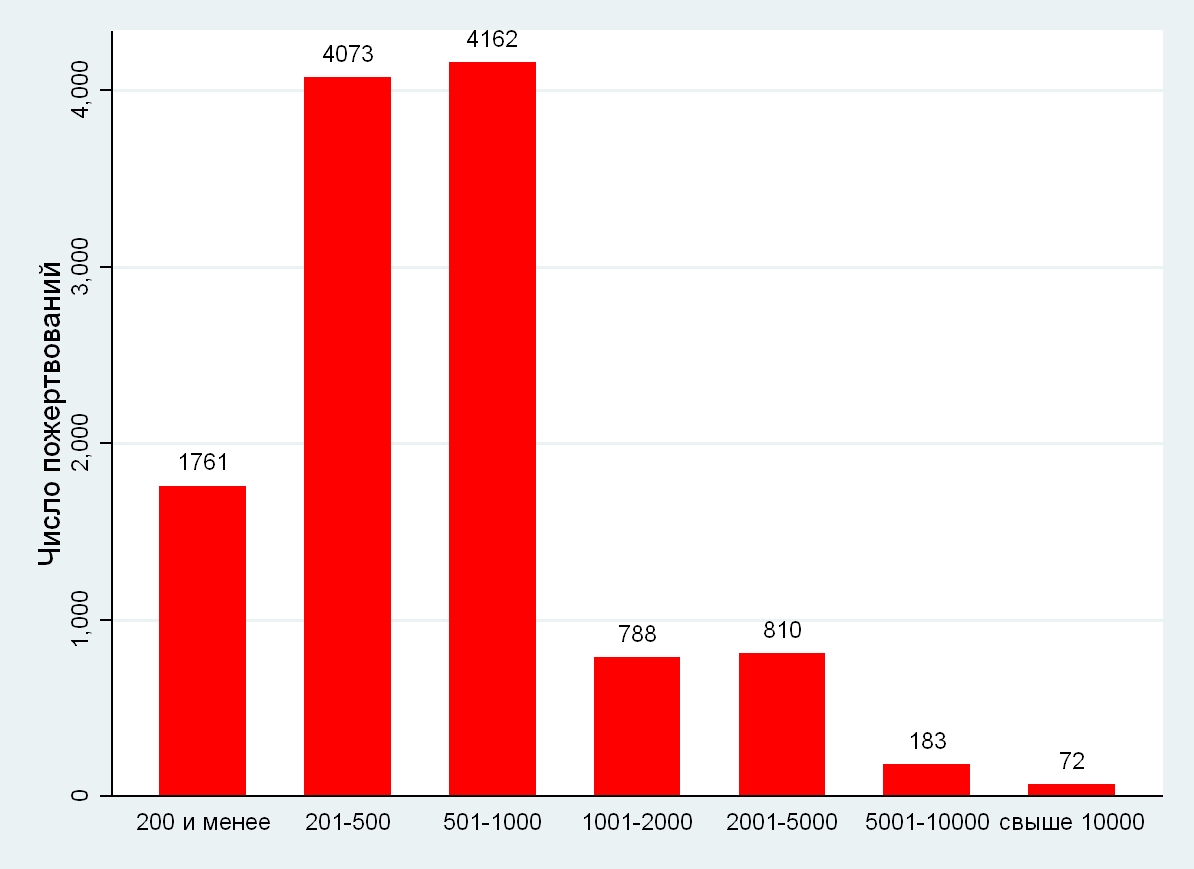
So, a median donation to the Sberbank card , that is, the amount that was transferred by the average donor (not to be confused with the average translation, when the average adarithmetic from all transactions is calculated), amounted to 600 rubles . (average - 1284 rubles). 184 people (1.55%) made their donations more than once, of which 173 - twice, 11 - three or more times, including one person - four translations and one - five transfers, all in small amounts.
1761 people (14.8%) transferred 200 rubles or less to Sberbank’s card; The most common amount of donation is 1,000 rubles (a third about the total number of translations to the Sberbank card), the largest donation is 130 thousand, ten people (from the analyzed 11,849 translations) transferred 100 thousand rubles. Thus, relatively large translations amounted to 7.43% of the total amount of transfers to the Sberbank card (see schedule 1 and 2). 

Median translation
on the map of Alfa-Bank compiled
1000 rub . Two -thirds (74.9%) of all donations were stacked in amounts from 500 to 1000 rubles, 23% - from 1001 to 10 thousand rubles. Three transfers were 500 thousand rubles or more, including the largest transfer - 1 million 300 thousand rubles. From a person whom I do not know. Frankly, I thought that one of my wealthy friends was hiding behind this name, asked, heard: “Unfortunately, this is not me,” followed the answer one, the second and third.
Finally, another 5.5 million rubles were transferred to the account of the Freedom Support Freedom Fibrait : 67% donations in the amount of 500 to 1000 rubles.; 24% - from 1001 to 5,000 rubles.; 7.6% - from 5001 to 100 thousand rubles. Six people transferred more than 100 thousand rubles, of which two transfers - 1 million rubles. and 1 million 625 thousand. The last translation did not comply with the rules of foreign exchange control and was returned. We also returned - and also with great gratitude, 330 thousand rubles, which were transferred to us by colleagues from Novaya Gazeta.
<figure> <img SRC = "https://archivarius-public.s3.us-west-2.amazonaws.com/rima/web/Media/img/07c3dc54706D888C063137CCBD5C2D2.jpg"/> </figure> [Click to increase] (http://newtimes.ru/upload/2018/final-total_volume [5] .jpg) ## who and from whereThus, contrary to what they said, including publicly, our ill -wishers, The New Times saved - and saved - by no means millionaires and billionaires, but the most ordinary fellow citizens. Mikhail Borisovich Khodorkovsky, once, when he was his prisoners of the colony in Segezh (Karelia), the Columnist The New Times , has actively supported us for the past two years, for which he has not taken our best, but he did not take part in this crowdfunding. Famous philanthropists Dmitry Borisovich and Boris Zimina were the most important sponsors of The New Times in 2014 - 2017, and our bow to them, but this story did not cause enthusiasm, like a number of other people living outside the country. However, there are no patterns: the same Evgeny Chichvarkin, who fled from the country, when his people in uniform tried to take away the business (yes, we wrote about him-eight years ago, in 2010), and now a successful London hedanist and restaurateur, transferred us 1 million rubles.
What do we know about 99% of our saviors unknown to the Wide World? Unfortunately, a little. We know that of those who transferred their donations to the Sberbank card, women amounted to 39.4 %, but the median translation from women and men is approximately the same: 700 rubles - men, 800 rubles are women.
Geography: Unfortunately, cards of both banks do not allow you to find out where our donors live. But judging by the 1400 SMS, in which the donors proudly indicated their cities, the whole country literally saved us. “Eburg is with you!”, “Zeya, the Amur Region with you”, “Ragger with you!” - It was written next to the word "donation." The city of Zapolyarny Murmansk region, and Cheboksary, and Voronezh, and Tomsk, and Bryansk, Novosibirsk, Togliatti, Samara, Nizhny Novgorod, Orenburg, Chelyabinsk, Tula, Kamchatka and Khabarovsk and, of course, Moscow and St. Petersburg and many other cities were with us.
Among those who held out the hand of help to us, there were famous people - such as the widow of Yegor Timurovich Gaidar Maria Strugatskaya, TV presenter Ksenia Sobchak and her ardent opponent Alexei Navalny, the famous philanthropist, editor -in -chief of the New Literary Review Irina Prokhorova and unknown to me Levon Emzarovich Gorosia - he is also the famous rapper L'ONE. There were many journalists, there were my friends and acquaintances. But the absolute majority is just the readers of The New Times , including those who wrote: “I rarely read you (“ I never read ”), but I think that such a magazine as the New Times should be.”
By the way, during the discussion that unfolded on social networks around this story, the question sounded, most clearly formulated by the philanthropist Boris Zimin: why, when in June 2017 the paper version of The New Times was closed, readers did not support us with their subscriptions?
The analysis also gave the answer to this question: the subscription for a year cost 6,000 rubles, that is, 6-10 times more than a mediate translation (I recall, from 600 to 1000 rubles). In conditions when the incomes of the population are declining for the fifth year in a row, people are forced to rank their consumer priorities: a magazine in a box every week? - It would be good, but there are more important expenses, but - the authorities are trying to completely strangle the magazine? - No, I won’t allow me to read it from time to time. Obviously, over the 12 years of its existence , The New Times has become the institute, which the fellow citizens are not ready to abandon and insist on their right to have alternatives not only with a protest scream - action, ruble, and, which in our time is no less important, under their own name, middle name and surname.
## inexplicable
Which was not able to understand with the help of statistical analysis is the reasons for the enchanting speed of collecting this huge amount. Both the Fund for the Corruption of Alexei Navalny, and the rain TV channel with crowdfunding also raised large amounts, but no one - in such a short period of time, in 96 hours - more than 25 million rubles.
If by the end of the first day, 4 million 27 thousand rubles were raised, by the end of the second there were already 7 million 385 thousand in the accounts (I note, it was quiet Saturday and Sunday), then by the end of Monday, the third day of the collection, transfers, and only to Sberbank, from which I went on the phone for SMS-improvisations, were already 15 seconds, compiled by the evening 15 Milln 540 thousand rubles. Finally, by the end of the fourth day another 11 million came. Such an intensive growth of transfers on the last day easily fit into the framework of the theories of electoral behavior: people put on the winner, on the “horse” that is able to come to the finish line - it is nice to be accomplices in success. But what forced thousands of people to respond to the calls of the Rain television channel, Radio Echo of Moscow and, most importantly, on social networks - on Twitter, Facebook and Instagram to transfer their 200, 500, 1000 rubles - the main amounts in the first two days of Fundraining - statistics do not give explanations. Moreover, the graphs (see below) are no visible jumps that could be neutralized with certain statements (and such twitter and instagram millionaires as Alesya Venediktov, Alexei Navalny, Ksenia Sobchak) did not show about their support of the magazine.
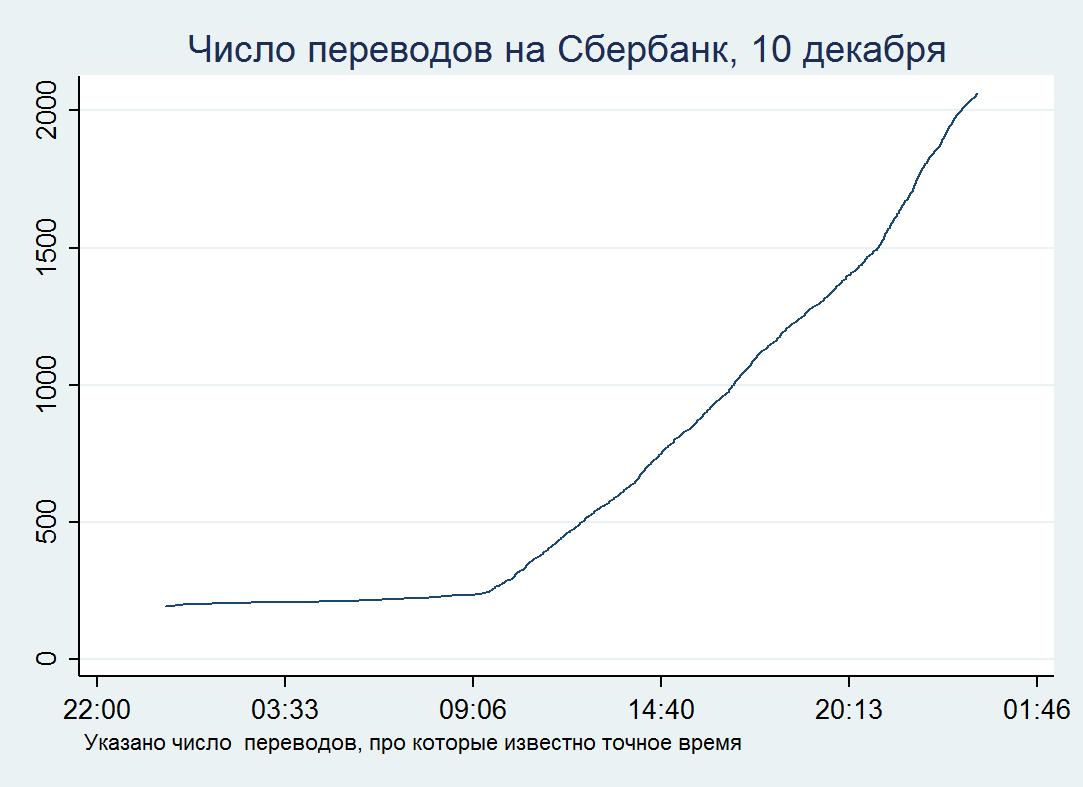
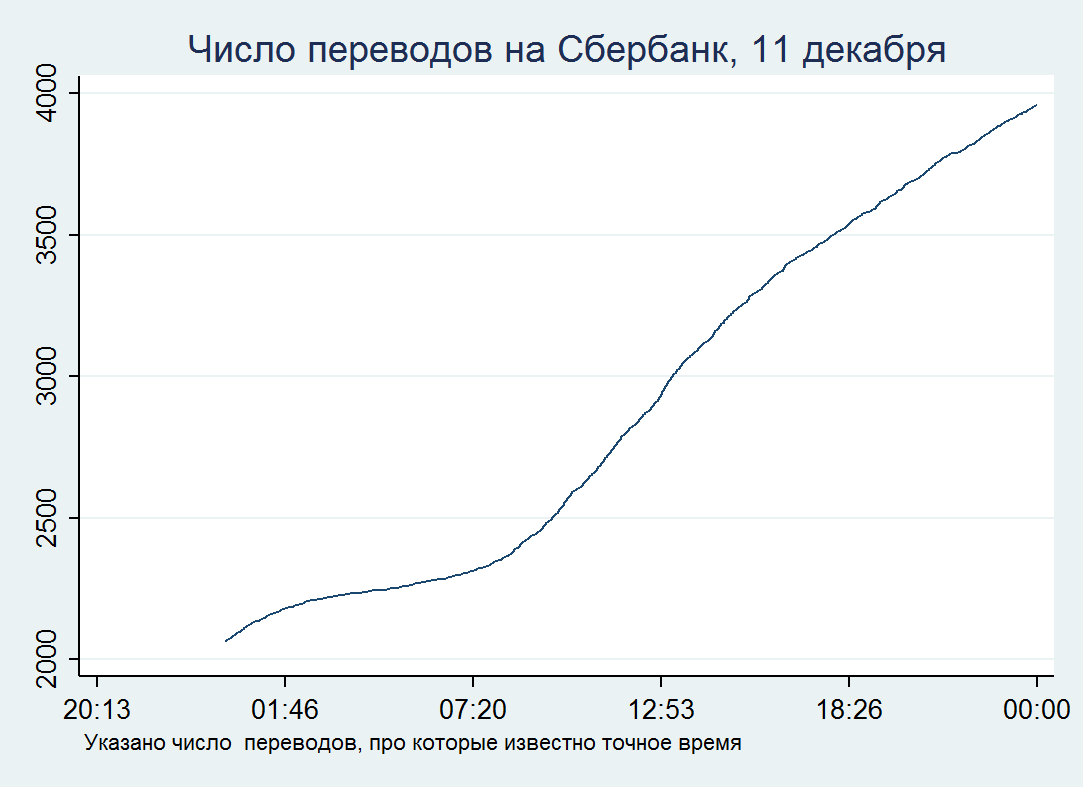


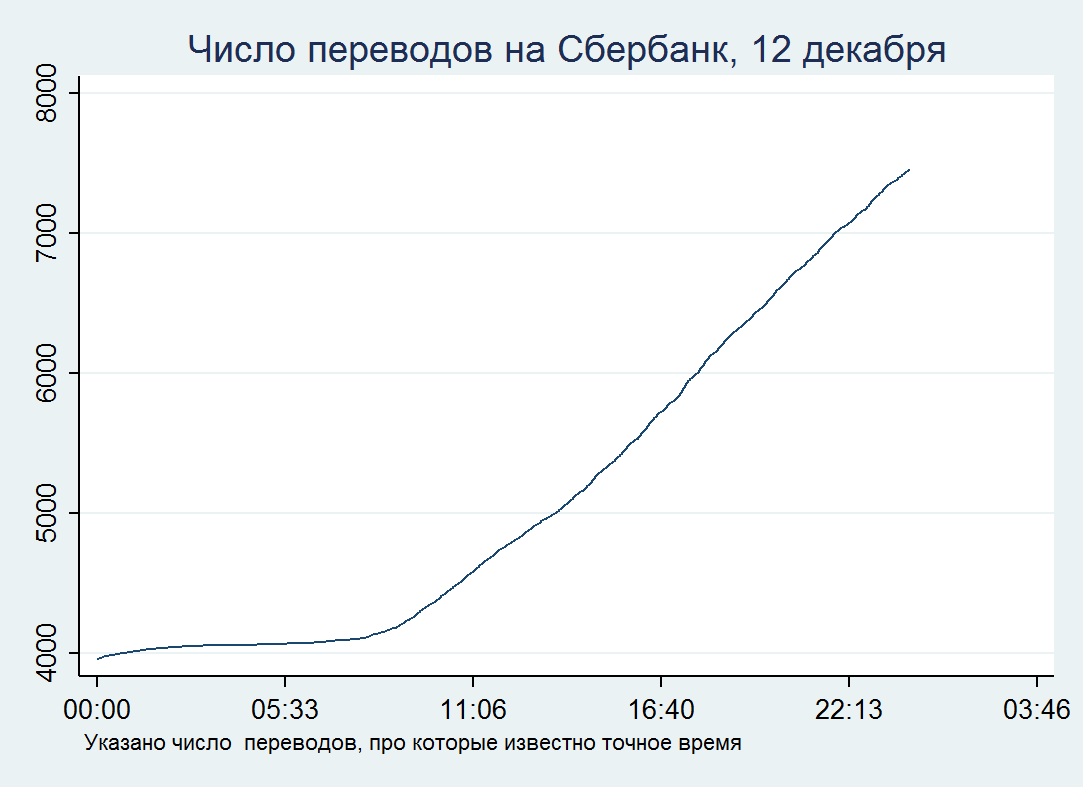

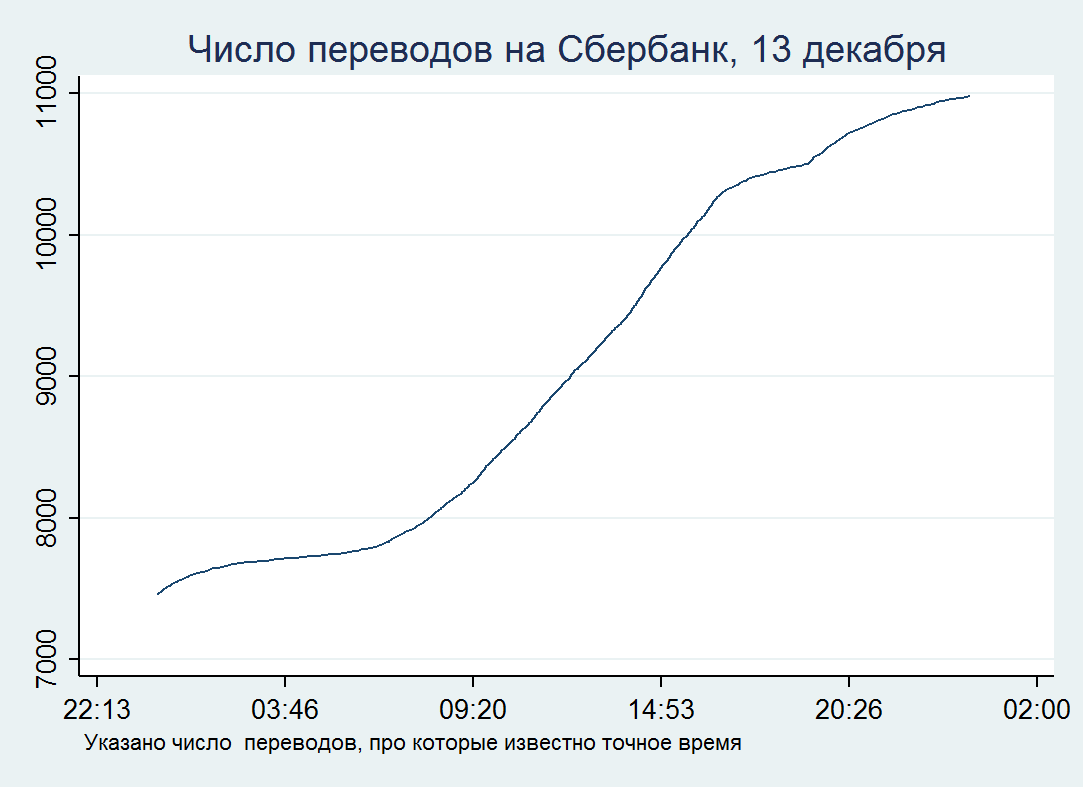

What became a trigger? An acute sense of injustice - in a couple of things they had now handed over, the guys were punished for 22 million rubles. - Isn't it any mess? The feeling that the authorities completely lost the shore? The protest growing in society is akin to the fact that he made people in Khakassia and Primorye vote for any candidate, if only not for a candidate of power? Or is it raising the head of a civil society, which begins to realize that there is nowhere to retreat further: they have already taken away most of the most important freedoms, to choose from the right to rally, and it is finally necessary to tell the authorities - no? By the way: the most frequent requirement in SMS-ki: "Do not give up!" Do not give up.
Future
The appeal in the Tver District Court, as expected, lost. The sentence entered into force. Now our cassation is requested by the Moscow City Court. Expectations are not too rosy, but ahead is the Supreme Court of Russia, the decisions of the three plenums of which are in full contradiction with the decision of the judge of the peace court of the Tver district of Moscow.
We gradually collect the editorial office and make plans: in The New Times, serious changes are coming, which we will submit to your court by the end of January.
But no matter what and no matter how it happens, these four days in November 2018 have already entered the history of the victories of Russian civil society, the educated class of the country, which found the courage to say power - "We will not allow!"
Thank you, our saviors, please stay with us in 2019. Be healthy and happy. And we will be alive.
Sincerely - your Evgenia Albats.