
Translated material
Mary Poppins Returns: Emily Blunt plays a magic nanny in an old -fashioned continuation of Disney classics
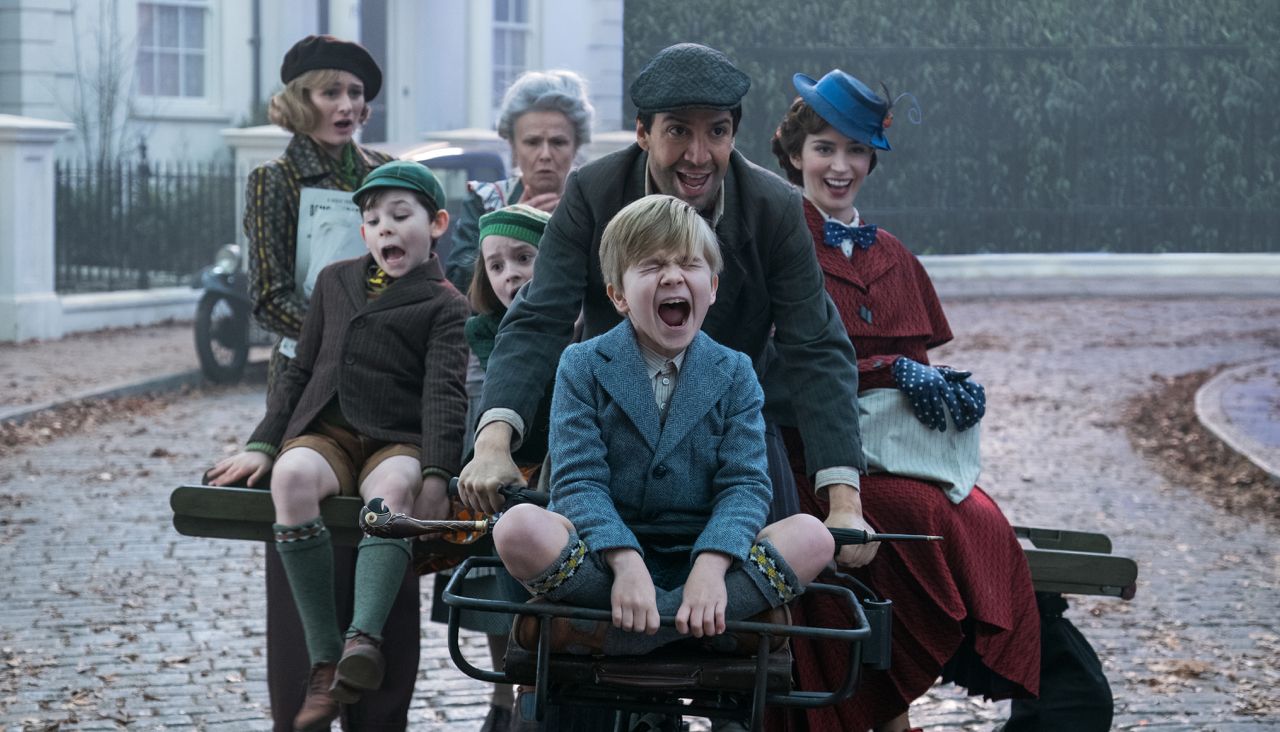
Mary Poppins returns to the Russian rental - a continuation of the famous picture of Disney studio, shot 54 years later. The main role in the film was played by Emily Blunt, and Ben Wishaw, Maryl Strip and Colin Ferte also played in it. The film critic of Medusa Anton Dolin believes that the new film adaptation of the British writer Pamela Travers is unlikely to be very much like Russian spectators, accustomed to the musical with the songs of Maxim Dunaevsky-but almost certainly will really captivate their children.
The main thing - and unsolvable - the problem with the new Hollywood Mary Poppins is that we will watch it not like the audience of the rest of the civilized world. They (Americans and the British are primarily) in front of their eyes are faced with the 1964 textbook tape. TU Mary Poppins was not without problems: the author of the book Pamela Travers was personally persuaded by Walt Disney personally; This was even shot about this in 2013 - "Save Mr. Banks." In fact, both the letter and the spirit of the original source were then violated in many important nuances. However, almost immediately the musical of Robert Stevenson gained a cult status, and the magical nanny, which descends into the foggy London straight from heaven, has since been associated only with Julie Andrews, who played the title role. Of course, 54 years later, the sequel is doomed to great success.
In Russia, they are not only poorly familiar with the classic Mary Poppins - this is half a bastard. Before the eyes of every second one, Mary, performed by Natalia Andreichenko, from another musical, shot in 1983 by Leonid Quinichidze, and the songs of Maxim Dunaevsky sound in his ears - of course, in no way like Robert and Richard Shermanov’s songs. We have our own problem of mismatch with the original source: the Purists criticize Andreichenko and Quinichidze for dissimilarity with the image of books known in the USSR on the translation of (very free) Boris Zakhoder. In general, everything is complicated.
Therefore, the main task for the audience of “Mary Poppins is returning” (this is not the “creative” of producers, but the name of one of the books of Travex) is to abstract from numerous primary sources if possible. Or, conversely, to carefully study all of them in order to understand the stylistic genesis of the film. In any case, the position of children for whom this “Mary Poppins” will become the first and canonical. They will definitely rejoice, sing along and dance without rear thoughts.
In Mary Poppins, the time of action is returned-the 1930s, which is quite logical: it is by this era that the children from the first book and the film, Jane and Michael Banks, have matured. Responsible Jane (Emily Mortimer) became a trade union activist, her scattered brother Michael (Ben Wishaw) became the father of three children, lost his wife and got into debt. They are about to take the house from them, and then Mary Poppins will go down from the sky on a glued old snake-as always, impeccable and mysterious, with a talking umbrella and a bottomless carpet bag. Adventures begin; This time their heroes will be young John, Annabel and Georgie Banks.
The picture is flagrant and defiantly old -fashioned. You can be indignant at how long the song-dance numbers are like aLapovata (of course, deliberately alapovata!) Two-dimensional animation, how simple-minded dialogs are, as a straightforward-appropriate acting game. The morality is off the outburst, as in the bad television adaptations of Dickens. But you can try to enjoy it. It is worth accepting the rules of the game, as the children first accept them, and then adults, at first not trusting the stiff pacification of Mary, and the receptors that are responsible for the dubious category of “taste” will be disconnected. They may not need children at all.
Of course, “Mary Poppins is returning” - by no means a naive game in an old -fashioned fairy tale. The director of the film is the famous American Rob Marshall, who resurrected the genre of the Hollywood kinouzik in the 21st century. He removed the “Oscar -winning” “Chicago”, and then less successful (but no less musical) “nine” and “than further into the forest”; Even the “Pirates of the Caribbean” in his performance were most similar to a comedy with dancing. Marshall perfectly studied the history of the issue in order to take a chance to play the golden 1960s with a call in the 1940s and 1950s.
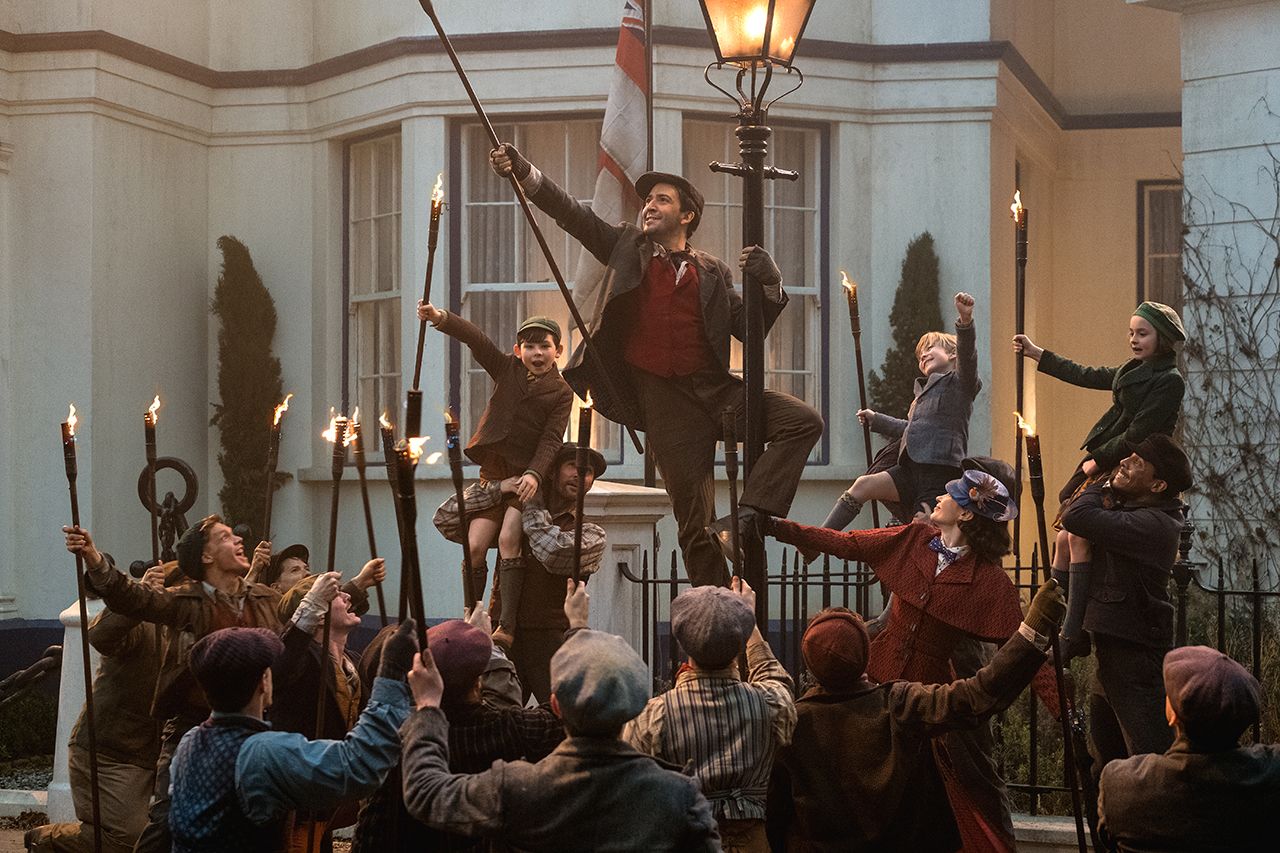
The game was worth the candles, although it did not come out entirely successful. Suppose an episode with diving into a giant bathtub turned out to be too “cardboard”, similar to Soviet television programs for preschoolers, but a scene with a night journey through an animated porcelain country looks charming. The dance of the lanterns seems endlessly monotonous, but one hundred percent theatrical episode in the good closet and - a surprise! - The Russian witch (it is played by the unrecognizable Maryl Streep) is brilliantly directed. Marshall intends to violate the laws of logic and physics: in the finale, all its heroes soar into heaven in balloons, each one at one ball, and it looks unnatural, and therefore magical.
In the picture, several acting successes-the caricature-young Colin Fert as a banker-prison, delighting the eyes of veterans Angela Lansbury and Dick Van Dike, whose career began once with the role of a chimney sweep in the original Mary Poppins. But, of course, the main bet is on Emily Blunt, who played Mary Poppins. If you try to separate her work from the context of an uneven film, then you can give the highest assessment. Restraint and rigidity, charm and mystery are qualities, from which the character of an incredible nanny in the books of Travex. There is something timeless in it, allowing the audience to fall into the past and to feel in it is quite comfortable. The image of a strong and feminine heroine in today's cinema in today's cinema embodied Blunt with a purely British unobtrusive elegance.
Anton Dolin