
Translated material
The results of the year. How to stay?
In society
 The results of the year. How to stay?
January 7, 2019 Nikolai Svanidze
The year 2018, if you survey it from the proud height of the Kremlin towers, started successfully, with the convincing and easy victory of Vladimir Putin in the next election. But he finished dreary and quite hopeless. The ratings go down, not fast, but systematically. In fact, we are talking only about one, main rating. There is no need to talk about the rest, both personal and institutional. A number of factors worked in this trend for a decrease. From the pension reform, which angered people not only with its predatory, but also an insulting character (they did not consult, did not respect, i.e. they spit it out), until disappointed in foreign policy. It is generally interesting here, because until recently it was the main trump card of power. However, as the economic situation and a decrease in social mood, the perception has changed. Firstly, there is an understanding of the link between international isolation and prices in stores, and secondly, the fear of war rises from genetic depths.
Of the major events of the past year, Ukrainian church schism is distinguished. And not by itself, but by the impression that he made on the Russian power. By itself, he was quite expecting. The Orthodox Church has always been closely connected with secular power and dependent on it. Therefore, when in the 17th century Ukraine became part of Russia, the Ukrainian church naturally became part of the Russian Orthodox Church. And that's exactly why, when Ukraine has sharply distanced from Russia, and this did not even happen in 1991, but in 2014, in connection with the Crimea and Donbass, the church was supposed to leave along with it. It was a matter of time only, and it was so transparent that the leadership of the Russian Orthodox Church occupied an unusually cautious, neat position in the situation with the Crimea. That is, the scale of the inevitable threat was obvious to everything except the state leadership of the Russian Federation, for which he was the same surprise as the city authorities for the seasons.
As for the next year, it will take place under the flag of the decision of the main and, in fact, the only issue that interests the Russian leadership, namely: how to stay at the steering wheel after 2024, without violating the constitution and avoiding an emotionally uncomfortable and not fully predictable operation “successor”.
Options, in fact, two. They both will work out. And the choice between them will be made depending on the results of this study. The first option is the transfer of the Center for Real Power from the Presidential Administration to any state-created state structure (conditional state council). The second option is territorial increments and the creation of a formally new state with a common leader (Belarus). At the moment, the second option seems to be incomparably more difficult in execution, but more desirable, since the constitution will remain intact, and the first person gains a halo of the unifying of the fraternal Slavic peoples.
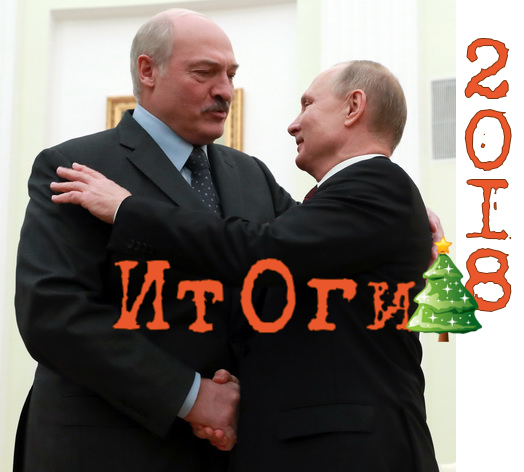
Photo: 12/29/2018. Russia. Moscow. President of Belarus Alexander Lukashenko and Russian President Vladimir Putin (from left to right) during a meeting in the Kremlin. Sergey Fadeichev/TASS