
Translated material
A thief nicknamed Spider-Man made a “robbery of the century” in the Paris Museum. This is how he did it: The New Yorker

In 2010, 42-year-old Veran Tomich robbed a Museum of Contemporary Art in Paris, stole a picture of Picasso, Matisse, Modigliani, Lege and a total cost of tens of millions of euros from there. The thief, whom the press began to be called "Spider-Man", was arrested a year later; He and his accomplices were convicted, but the location of the paintings is still unknown. The New Yorker magazine told in detail the history of the robbery and the biography of Tomich himself, the son of migrants from Bosnia, who claims that he has a special relationship with art.
The Frenchman of Bosnian descent Veran Tomich began to steal in childhood. He trained, jumping on the graves of the lashez
Veran Tomich was born in 1968 in Paris in a family of emigrants from Bosnia. Due to his mother’s illness, he was sent to his grandmother to his homeland of his parents in infancy. There, in his own words, for the first time he began to show bad inclinations, putting the spikes into the shoes of cousins, and also began to engage in a kind of parkor - for example, climbing the Stone Bridge across the Neretvoy River. In the Bosnian bridge, he made the first theft, penetrating through the window into the library and taking two old books from there - later his brother returned them.
At 11, Tomich returned to Paris. His parents were constantly quarreling; Subsequently, in letters to his girlfriend from prison, he wrote that they “stole his life”, taking him from Bosnia. In his own words, Tomich at a young age became interested in drawing, and at the age of 16 he saw Renoir’s paintings in the museum of the greenhouse - and remained under a very strong impression. As Tomich told the journalist The New Yorker, he announced his parents that he wanted to become an artist, but his father said that this was not a real job.
After that, Tomich began to think about the escape from the house, skip the school and spend time with friends in the Pere Lashez cemetery. There they actually engaged in parkor, jumping from a crypt to a crypt. The company occupied an abandoned house nearby and lived through the sale of glass products stolen from a local factory. Tomich and friends also began to climb into apartments and steal things from there.
Gradually, Veran Tomich became a single thief, robbing apartments in the rich areas of Paris and using his skills in parking. Sometimes he examined one apartment several times, trying to find the most valuable item - one crime allowed him to live several months on the Cote d'Azur. Among his victims were famous people-designer Philip Stark told the magazine that he was imbued with his thief (it was exactly Tomich) with respect due to the fact that he essentially lived with him for several days at home, remaining invisible.
The New Yorker notes that in letters from prison Tomich indicates his ability to act well in stressful situations and leave the water dry. In fact, even before the robbery of 2010, he went to prison several times-including due to impulsiveness and inattention. Once, forgetting his wallet and finding that he has no money for gasoline, Tomich robbed the bakery with the help of a toy pistol and spent a year in prison.
In May 2010, Tomich robbed a Museum of Modern Art in Paris. He went there behind one picture, and took out five
Most often, Tomich stole jewelry, but sometimes he took away from the houses and painting - if he really liked it. In 2000, he stole from an apartment in which the owners were sleeping at that time, several paintings, including two works of Renoir; He made his way into the apartment, shooting from a bow out the window and climbing it on the rope. It is difficult to sell a valuable work of art in the black market; Tomich, in his own words, kept the most favorite paintings at home on the wall. In a letter to the author of the article, he wrote that some paintings can make a very strong emotional impression on him, clarifying that in life he did not read a single book about art. Tomich’s friend explained The New Yorker that he “connects to the energy and vibrations” of the work, and compared the offender with the “shaman”.
The businessman and owner of the small gallery Jean-Michel Corve, the owner of the small gallery, helped to sell the stolen Tomich. He gave the robber a list of artists whose works are interested in buyers - we were talking about Modigliani, Monet, Shagale and Lege.
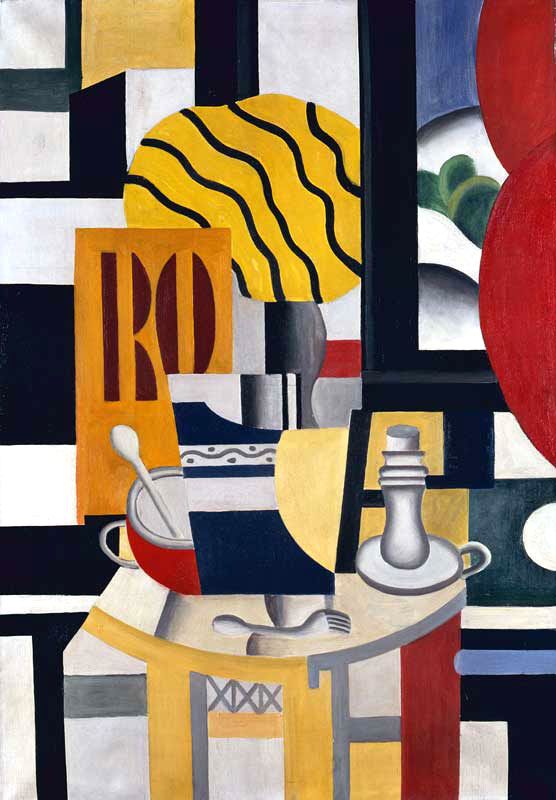
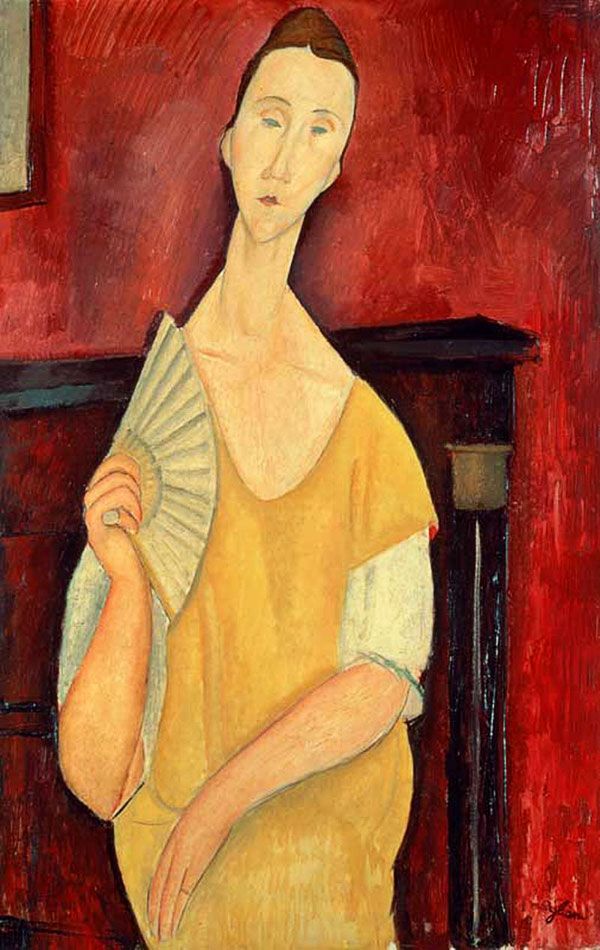
In May 2010, Veran Tomich noticed a cubist canvas in the window on the embankment of the Seine. The house turned out to be a museum of contemporary art in Paris - it is located in the eastern wing of the Tokyo Palace. Tomich drew attention to the design of window frames - and realized that he had already successfully opened such windows and easily climbed into the building. Having examined the museum inside, he found that some movement sensors do not work there. In the exposition there was a painting by Fernan Leger “Still Life with candlesticks” , rented from another museum and insured by four million euros. Tomich met with Corve and he invited him to steal the canvas for 40 thousand dollars. The thief agreed.
Preparations for robbery took six days. Starting from May 14, Tomich turned the screws in one of the windows at night, replacing them with fervuses. On the night of May 20, he finally took out the window, climbed inside for a while and got out again, checking the alarm. Realizing that she did not work, he returned to the museum and found a picture of Leger, for which he came. However, as Tomich later told the New Yorker journalist, he simply could not dwell on this - the paintings seemed to attract him to himself. The attention of the robber was attracted by the “pastoral” by Henri Matisse, the “woman with the fan” of Modigliani, as well as the “pigeon with green peas” Pablo Picasso and the “olive near the flyover” by Georges of the marriage.

Tomich says that he almost stole another picture - “a woman with blue eyes” by Modigliani - however, she allegedly “told him” that he would “regret until the end of her days” if she touches her. The robber in two gunsuits attributed the paintings to his car, and the next morning he gave them to Korve, receiving 40 thousand euros from him for a leage (the robber’s partner did not like that he had stolen five expensive paintings at once, but he still took them). In the evening, the largest works of art of art in recent years began to talk in all the news - of course, the incident was called the "robbery of the century."
Soon Tomich and his accomplices were arrested, tried and imprisoned. What happened to stolen paintings is certainly not known
Soon the police had a witness - a skateboarder who saw a suspicious person near the museum a few days before the robbery. As follows from the material of The New Yorker, in the first months the investigation was practically no evidence. However, in the fall, the name of Tomich surfaced in another investigation of robbery, and during the wiretapping of his telephone conversations, the police heard his restless discussions about the robbery of the museum. They began to follow him-in December 2010, the police saw how Tomich examines the emergency exits of the Paris Center Pompidu, and the next day he buys gloves, glue and suction cups. The answering machine on Tomich’s phone even reported that you can contact him about the purchase of five very expensive paintings.
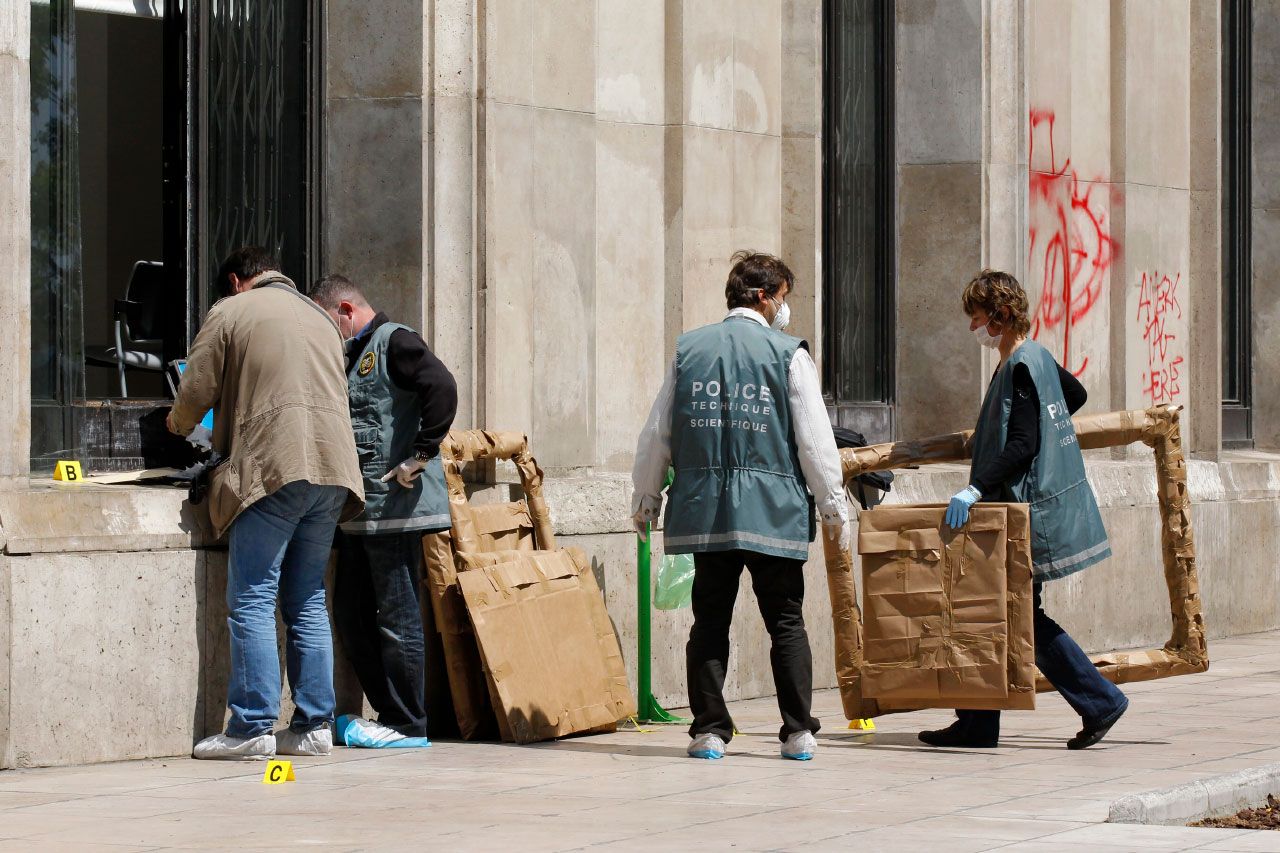
Corve stopped in touch with Tomich, which aroused suspicion among the robber; When they accidentally met at the station, Corve, according to Tomich’s memoirs, could not clearly answer him about the fate of paintings. Subsequently, Korve said that he had sold the picture of Leger - as it turned out later, the buyer really paid him 80 thousand for the picture, but two days later, frightened, he returned the canvas and did not ask for the money back. In addition, the robber’s partner said that he found a buyer for Modigliani-he turned out to be 33-year-old watchmaker Jonathan Burn. He allegedly at that moment stored the rest of the stolen paintings.
According to The New Yorker, Corve and Burn tried to sell paintings; For this, Burn even went to Israel (Korve told Tomich that they found a certain “Russian Jew who could take paintings”). How the negotiations ended, the article does not say. Meanwhile, Tomich began to end with money - and he decided to go to a new robbery.
He was going to rob the apartment near the Embassy of Canada. According to Tomich, in May 2011 he climbed there about 15 times, trying to find the most valuable item, and eventually took a picture of Camille Pissarro and a collection of watches. After that, Tomich was arrested - and during interrogation immediately confessed to the robbery of the Museum of Modern Art. It seemed to the prosecutor that Tomich was proud of his work.
The process was widely covered by the French press-journalists even began to call Tomsk a “spider man” because he climbed onto the walls to rob the apartments. At the trial, the robber stated that the paintings that he took from the museum belong to him - and confirmed this position in correspondence with the journalist of The New Yorker. In 2017, he was sentenced to eight years in prison.
Where the paintings are now is unknown. Jonathan Burn, who, together with Corve, was convicted as an accomplice in the crime, said in court that the police missed them during a search of his house, and then he allegedly destroyed them. Many - including Tomich - do not believe in these statements. The robber tried to find out the fate of the paintings in prison from Burn, in which they were at the same time, but the watchmaker evaded communicating with him and even asked the guard to block the glass door in his chamber by the mattress so that Tomich could not see him.
On the direct question of the journalist, whether the paintings were destroyed, Tomich answered this way. “Burn loves the paintings more than anything else, he would somehow protect them,” the robber wrote. “Once he will have to give them to the one to whom they belong.” That is, to me. "
The text of The New Yorker was read by Viktor Davydov