
Translated material
Nervous ruble-2019
Dedollarization turned into record income from investment in American currency
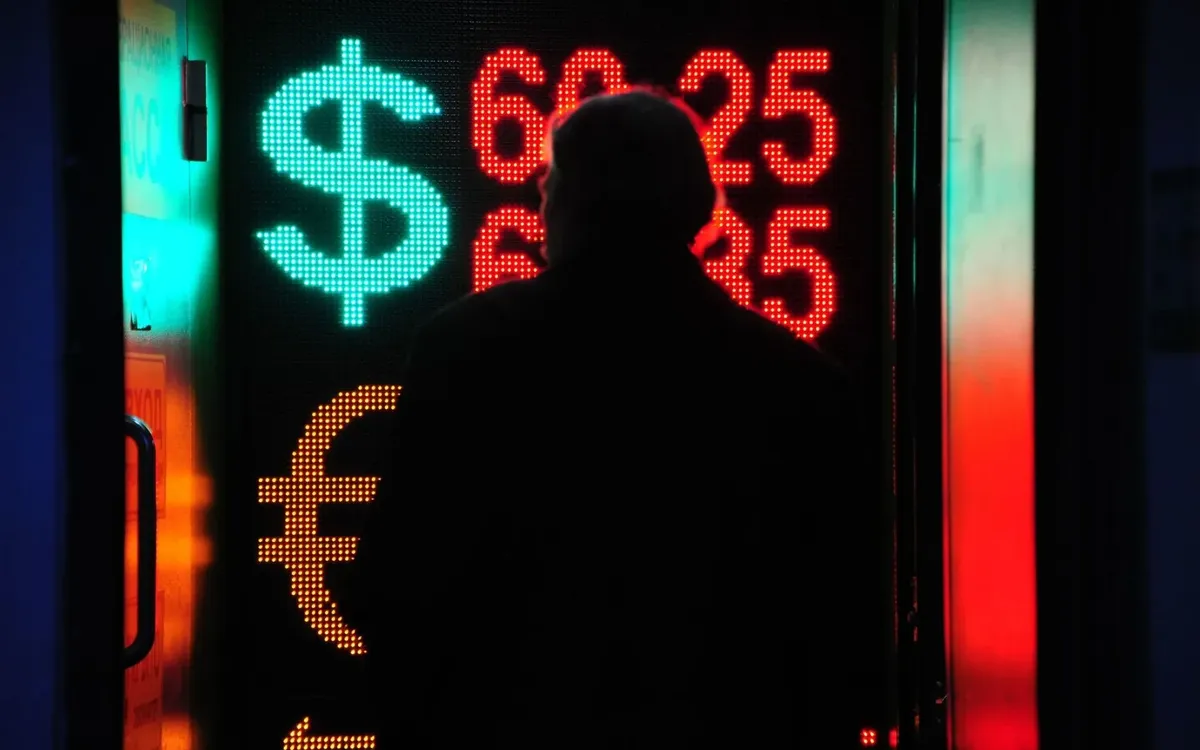
The plan for deadllarization has become one of the hottest points in the economic agenda of the government for 2018. He shows that the economic course of the authorities is increasingly taking off from the real needs of citizens. More than fears about the “ban on the dollar”, only “unpopular reforms” will be remembered for Russians: an increase in VAT rate, increasing the retirement age and accelerated indexation of excise taxes on gasoline.
Against such a background, dedollarization, despite associations with the Soviet experience of currency regulation, looks rather harmless. The government explained that the draft transfer of cross -border payments of Russian companies to alternative currencies does not imply the use of Knut, and so far this promise is being fulfilled. Street boards with currency courses fall under the ban, state control is growing over citizens' foreign exchange operations, but the right to freely buy dollars is formally inviolable.
For investors, this is certainly good news. In 2018, investments in the dollar brought the highest ruble income among widely accessible assets, RBC experts calculated. Over the year, the American currency has risen in price to the ruble by 20% (from 58 to 69.5 rubles per dollar). If the dollars lay on a currency deposit or were placed in low -risk Eurobonds, then the total profitability increased by another 1-3%. Compare this with 7%profitability, which was provided for a year by ruble deposits or OFZ.
However, most Russians do not have accumulations at all, and even more so do not compare investment capabilities in the currency and stock markets.
For the population, the fall of the ruble means only one thing: raising price tags in stores due to the fact that even basic foods are strongly dependent on imported components.
This is one of the reasons why the dollar exchange rate remains a universal economic indicator, which can be interpreted without the help of financial analysts.
The instability of the ruble not only hits the purchasing power of the population, but also sharply narrows the prospects of deadllarization. A currency with such volatility cannot be a convenient tool for external calculations and accumulations. Bitcoin’s decline is associated with the same problem, which could not become a means of payment, cheaper for 2018 by 4 times and heading the list of the most unprofitable assets.
The ruble ended the year much better than bitcoin or currencies of a number of other developing countries, but even the current situation is fraught with high costs associated with “geopolitical risks” and the instability of oil prices.
The path of “passive” deadllarization remains - the transition to more stable currencies of third countries. But the commissions for the departure from the generally accepted standards of world trade (almost all the raw materials exported by Russia, nominated in dollars) will still have to pay the Russian side. There is a project of the European Commission to increase the share of the euro in international calculations, but in the context of political and economic instability in the eurozone, it would be premature to bring great hopes on it.
On the other hand, in Russia, the natural processes of deadllarization that are not related to the activity of officials have been going on in Russia for several years. After 2014, there was a sharp reduction in the external debt of Russian companies in dollars and a decrease in the share of foreign exchange assets on banks.
Over the second half of last year, the Russians took several billion dollars from foreign exchange contributions.
By December, the volume of foreign currency in bank accounts of Russians dropped to a historical minimum of $ 85 billion banks, which were already limited in attracting foreign funding, were forced to increase the exchange rates on foreign exchange deposits up to 4%.
The dollar exchange rate to the Russian currency last year survived two sharp jumps, in April and in August. Both were largely due to the threat of tightening American sanctions. 2019 promises to be no less nervous for the ruble. The updated composition of the US Congress will soon begin discussion of new anti -Russian measures. Now three points look most dangerous: a ban for foreign investors for operations with new issues of Russian public debt, blocking dollar payments of Russian banks and turning Russia from the SWIFT system.
According to the Renaissance Capital Investbank, if foreign investors will sell half of their Russian assets under the influence of sanctions, then the average annual dollar rate will rise to 82 rubles. To this scenario, the risks of new shocks in the global economy and the continuation of the cycle of increasing the key rate of the Fed. Together, these factors will attract investors to reliable currencies, the number of which can be attributed last.