
Translated material
Hunting for liars
The development of Manafort and Veselnitskaya cases gives new arguments to the special prosecutor Müller
The leakage of information in the case of Paul Manafort and the charges against the lawyer Natalya Veselnitskaya “shed light” on the materials with which the independent commission of the special prosecutor Robert Müller, investigating the “Russian Presidential Elections-2016”.
The forgetfulness of Manafort
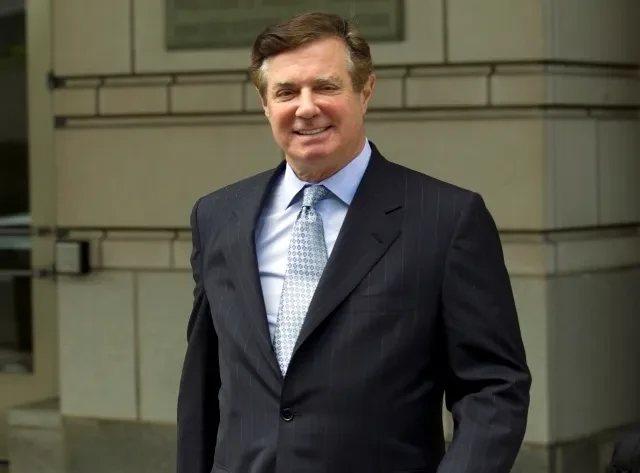
As it became known from the documents of the investigation of the Robert Muller commission, at the height of the presidential race in 2016, the head of the President’s election headquarters Paul Manafort, transferred data from the popularity of candidates in various states, collected by Trump's headquarters (that is, official materials) to the Russian Konstantin Kilimnik, whom the FBI and the Müller commission are considered “related to Russian intelligence”. With Kilimnik, Manafort also discussed a certain peace plan in Ukraine, which provides for the lifting of sanctions “For Crimea” from Russia.
Kilimnik, a native of Krivoy Rog, a citizen of Russia and Ukraine, began to work with Manafort as a translator when the American served as a political consultant of the Party of Regions and adviser to President Viktor Yanukovych.
According to the local media, the kilimnik is associated with the Russian oligarch Oleg Deripaska.
According to the London Financial Times and the investigators of the Muller commission, Kilimnik studied at the military university of the Russian Ministry of Defense, where they are also preparing translators for military intelligence, and at least at the beginning of his career was related to GRU.
The fact that Manafort shared with a former employee of the consulting company Kilimnik information from the Trump headquarters, which could be practically used by the Russian side, became known by chance. Manafort lawyers did not edit the parts of their petitions, the data from which remained a secret for the public. Thanks to this leakage, we have an idea of why the special prosecutor accused Manafort of repeatedly giving false testimonies. Manafort “forgot” to talk about a peaceful plan across Ukraine, and a meeting with a kilimnik in Madrid after the election, and much more. Found guilty of tax failure, banking fraud and concealment of information about offshore accounts (everything refers to the Ukrainian period of activity), Manafort went on a deal with the investigation to mitigate the punishment as much as possible. The court in Virginia must be sentenced on February 8.
Lawyers say: the lobbyist “did not lie”, but simply “forgot” about some details, because he was “exhausted” by imprisonment and related gout.
The American media write that through Kilimnika, Manafort transmitted data from Trump’s election headquarters to two Ukrainian oligarchs - Rinat Akhmetov and Sergey Levochkin. They paid Manafort "millions of dollars" when he worked as a "Ukrainian political strategist." Special prosecutor Robert Müller, a conducting investigation of the alleged conspiracy between Trump and the Kremlin, finds out, among other things, whether Moscow tried to persuade Trump to mediation between Russia and Ukraine.
Did Trump know about these contacts, is there a “conspiracy” here? As Senator Mark Warner notes, it is important that after transmitting data from Manafort, what the whole world now has happened-hacks of the US Democratic Demits, the creation of fake accounts and the placement of political and frankly propaganda materials on the discredit of Hillary Clinton in social networks and the American elections as a whole. The US intelligence services and the vast majority of American politicians are convinced that this is the work of Russian hackers related to intelligence and the Kremlin. Washington introduced sanctions, charged specific individuals and companies. Moscow rejects the charges.
Letter from the General Prosecutor Genera
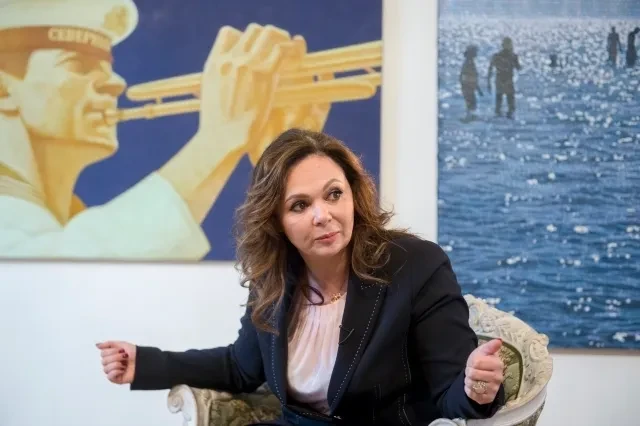
At the same time, the Russian lawyer Natalya Veselnitskaya, who is called the “secret lawyer of the Kremlin” in the local press, the prosecutor's office of the Southern District of New York was charged with obstruction of justice, threatening a prison period of 10 years. Veselnitskaya is known in the United States primarily by participating in a meeting with the son of President Donald Trump-Ml., President’s son-in-law Jared Kushner and all the same sex Manafort in June 2016 in the New York Trump Tower, where, as the media reported, the Americans came for the incrimination for Hillary Clannon. ” By that time, Trump became a presidential candidate from the Republican Party. According to the participants in this meeting (if you can believe them), in fact, it was about the abolition of the Magnitsky Law and a refusal to prohibit Russian children by Americans.
But in accusations against Veselnitskaya it is a completely different one. They are associated with the investigation of the activities of the Cyprus company Prevezon Holdings in the United States, which belonged to the son of the vice president of Russian Railways Peter Katsk-Denis. The investigation against Prevezon began in 2013 at the request of the head of the Hermitage Capital Foundation William Brauder. The company was suspected of laundering money in the United States, in particular, through the acquisition of real estate in New York. The large -scale scam from the Russian budget of $ 230 million was revealed by the Moscow auditor Sergei Magnitsky. Moscow denies the prosecution, the lawyer-player was arrested and died in the Sailor Silence Isolator before the sentence, he was condemned posthumously. Having accused Prevezon, American prosecutors claimed to be a trace of a small part of this money-about two million, for which Prevezon acquired real estate in New York. The prosecutor's office demanded to confiscate four apartments and two commercial premises. The lawsuit took four years and ended in 2017, as is often the case in America, a pre -trial agreement by which Prevezon paid $ 6 million to the American authorities, without pleading guilty. The American prosecutor’s office went to the world, not receiving from the Russian prosecutor's office a requested financial documentation. In response to the American request, the department of Yuri Chaika proposed the conclusions of his own investigation, in which the guilt for the theft of 230 million was assigned to Hermitage Capital (browser) and Magnitsky.
Now the American prosecutor's office accused Veselnitskaya of that she had false evaluations, giving official testimonies about this document, claiming that she had previously knew nothing about the content. In fact, according to the investigation, she was the “key author” of the official response of the Prosecutor General of the Russian Federation.
Natalia Veselnitskaya “secretly helped to compose” the letter of the Russian Prosecutor General’s Office, and this is a violation of the law because, being a Prevezon Holdings lawyer, she was a “interested party”.
Her correspondence with a "certain high -ranking Russian prosecutor" fell into the hands of the American side. As the mail Vecelnitskaya was among the Americans, the investigation does not indicate, but there are copies of secret correspondence in his hands. What it was - a hacking of a lawyer’s mail or a “drain of information” from an unknown Russian source - remains to guess. In the indictment, it is noted that Veselnitskaya was exchanged by emails with the Russian prosecutor, attaching drafts with changes and comments. Many of her proposals in the official response to the American colleagues of the Department of Yuri Chaika are “given almost literally, in a paraphrased form or with small changes,” the “United States against Natalia V. Veselnitskaya” said in the process of the process. A new word in jurisprudence: the lawyer of the accused is actually preparing an expert opinion on the case! Thus, the local experts note, Veselnitskaya proved that she really has ties with the Russian authorities (at least in the Prosecutor General’s Office) and, contrary to her statements, she did not act as a private person - “just Natalya, lawyer”.
The definition of a “high -ranking employee”, the American media write, is hiding the deputy head of the Office of the Russian Prosecutor General’s Office for the supervision of the investigation of especially important cases Sergey Bochkarev. Correspondence from Veselnitskaya actively went on July 31 and August 1, 2014. In a copy of the newsletter of one of the letters, the owner of the owner of Prevezon Peter Katsyv was the father of the owner of the company.
According to American state prosecutors, an employee of the Russian General Prosecutor General’s Office tried to help Veselnitsky deceive the American prosecutor's office.
She wrote a petition to the Prosecutor General of the Russian Federation to provide her with an official copy of the response of the department sent to the United States. Veselnitskaya wrote that the Prosecutor General’s Office refused to provide her with a copy of this answer.
The prosecutor of the Southern District of New York, Jeffrey Berman, emphasized that "the factory of evidence and the provision of fake and misleading the court in an attempt to influence the outcome of the process undermines the judicial system and threatens the state’s ability to perform justice." Experts call this story with the “puncture” of the Prosecutor General of the Russian Federation that has opened up. Veselnitskaya is put on an American wanted list. It can be detained in the "third country" and extradited to America. Her first commentary to the American media: "I study the prosecution, intends to restore my good name."
At first glance, the claims of the American Themis to Veselnitskaya are in no way related to the Kremlin’s contribution - real or imaginary - to the victory of Trump in the elections. However, the meeting in Trump Tower Veselnitskaya with leading representatives of Trump's headquarters is in the center of the investigation of the Müller commission. The assumption that it acted as a “representative of the Russian authorities”, one might say, now has an actual basis. The New Yorker notes that this should bother not only the direct participants in the meeting in the tower-Trump-Ml. And Kushner, but also the president himself. Did Trump Sr. knew about the meeting, which he calls “absolutely legal”? On the same days, at one of the rallies, he called on Russian hackers to find “the missing electronic letters of Hillary”. Coincidence? Experts ask the question:
Did the Kremlin promise Trump's people to publish Hillary Clinton's correspondence and conduct Internet operations in support of his candidate in exchange for a promise to get rid of the Magnitsky Law
And cancel the sanctions in the event of the election of Trump by the president? The answer to this and other questions (“Financial Relations”, “Costormate”, etc.) is trying to find the Müller commission.
The resignation that the President sought
The Deputy Prosecutor General of the United States Rod Rosenstein announced Trump that he would leave his post a few weeks as soon as the new Prosecutor General (Minister of Justice) would be approved. Former US Prosecutor General Jeff Sehnes resigned in early November last year, his duties are now performed by Matthew Whitacher. Trump proposed to the post of new Prosecutor General William Barra. Hearing in the Senate, at which they will discuss the candidacy for the position of general prosecutor, are scheduled for January 15. Both Wacher and Barr are known as critics of the investigation, which is conducted by the special prosecutor Müller. It was Rosenstein who proposed the candidacy of the former director of the FBI Muller to the post of head of the commission, investigating the “Russian trace” in the American elections, and later oversaw the work of the commission. Rosenstain often scolded the president on his twitter.
Recently, Trump posted on Twitter the photo collage of the "traitors" of the Motherland, who is waiting for the court, made by his supporters. "
In the picture, the President of Barack Obama, Bill and Hillary Clinton, the former General Prosecutors - Holder and Lynch, as well as the special prosecutor Müller and the Deputy Prosecutor Rosenstain, are placed in the picture for the prison grate.
In turn, Rosenstein immediately after the dismissal of the director of the FBI Komi proposed secretly record Trump's words in order to remove the president from his post “For incompetence”. The official himself denied a similar fact, and the defenders of Rosenstein said that it was "sarcasm."
Now the “high relations” of Trump and Rosenstein are coming to an end. Democrats in the Congress are worried that the departure of the Russian Investigation curator can create problems with the Müller team, whom Trump also wanted to remove earlier. The White House denies the possibility of closing the investigation, but President’s lawyer Rudy Juliani admits that part of the future report of Müller can be classified. Trump will not answer new questions of the commission, the presidential lawyers officially notified. According to Juliani, Müller subordinate, “if they want, they can send the president a summons,” but the White House will resist the court.
As they say, we are waiting for the development of events.