
Translated material
8 books about the prison that should be read

We talk about eight books on prison. Among them are the books of modern activists, Soviet dissidents and brother of a rustling candidate for president of Russia.
"Three and a half", Oleg Navalny
And then the day of the long -awaited publication has come. Finally, you could look at the zone in which I had to spend more than three years. But first - another terminological excursion. Many times I had to explain to the interlocutors by correspondence whether there is any difference between the zone, camp, prison, colony, etc. It is not that this educational program is required to understand the book, but still, I think, the general performance will not be superfluous. At least, there is a more useless knowledge (for example, where Valery Leontyev got so many fishing networks for stage productions).
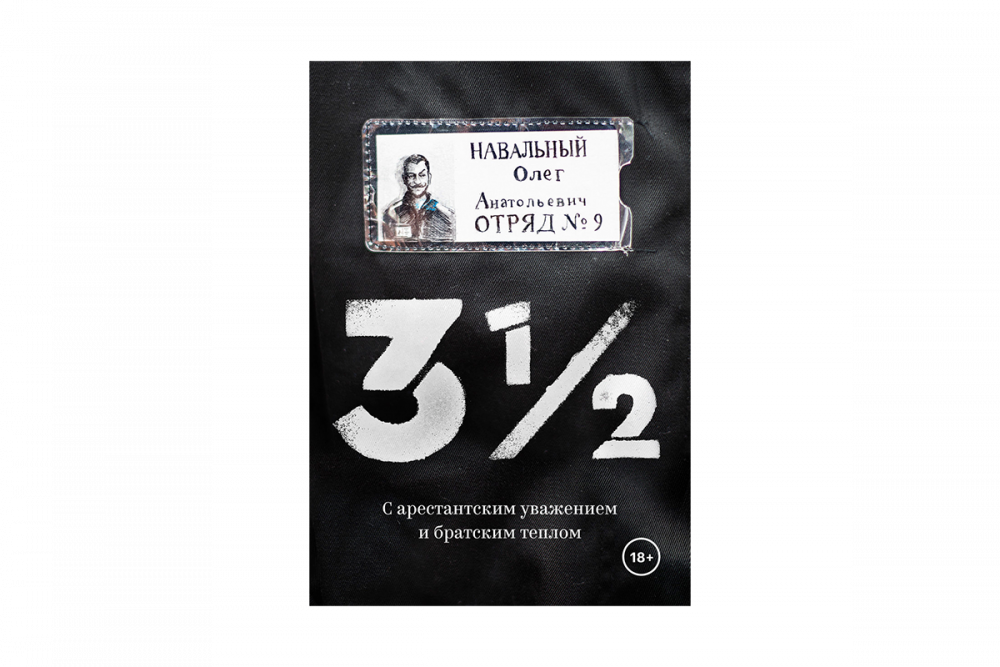
The brother of Alexei Navalny wrote a book about how and why he ended up in the zone, how he lived there, what the convicted Chubakka did and how the “decent” lifestyle differs from the “dishonorable”. In general, this book is about how a modern non-stupid Muscovite can entertain itself in a provincial camp, provided that the zone is more or less normal-that is, there is no comprehensive lawlessness. Navalny says that the prison can be funny, cheerful, funny. Of particular value are detailed memos devoted to everyday life in a pre -trial detention center and colony - how to correctly decorate “little ones”, “tune the road”, make chess from bread and whether it is worth washing in the bathhouse naked.
"Gaskarov correspondent in hell and other stories", Peter Silaev
We paced all day in a concrete court with drug dealers and raiders, played table tennis, twenty -one, nibbled apples, but my thoughts were far away - in the forever snowy hell of the Mozhaisk Central, where obvious bandits and villains want to torment me over the next 13 years. For what? Why are these people at all? Well, they will put me to me, the arrow (former mayor of Khimki Vladimir Strelchenko) will give them a prize-and then what? What will they do with them? Well, they will go to barbecue, get drunk, they will shoot from a service weapon - and then what? Darkness .
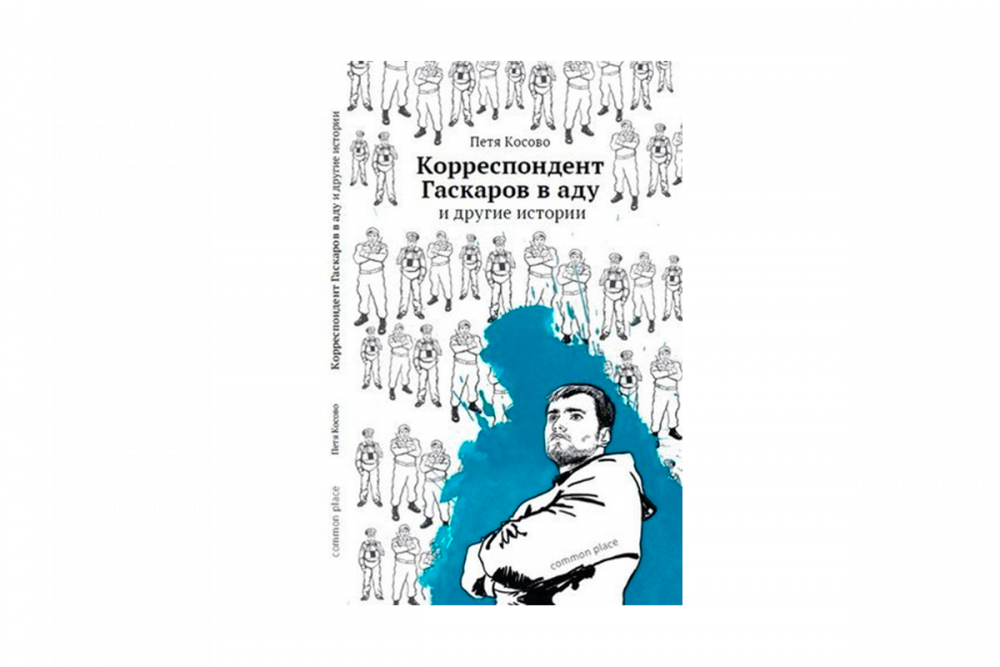
Peter Silaev, aka Petya Kosovo, aka DJ Stalingrad, aka Pete - the author of the “Exodus”, the Gospel of the anti -fascist ultranasia of the neo. The Russian authorities consider it the organizer of the pogrom of the Khimki administration in 2010, when three hundred or four hundred and four hundred dressed people came to draw graffiti on the walls of the institution and shoot from injuries. Peter himself would answer these accusations in the spirit: "This pogrom did not have a single chance not to happen, because the situation itself led to him." Silaev went to Europe so as not to be behind bars, and began to write texts about his adventures in different countries, about the Spanish prison, about the riots, about the anarchists and Interpol. The collection of his friend Alexei Gaskarov, who was recorded by Peter, opens the collection, who for some time hit the Mozhaisky pre -trial detention center on suspicion of participating in Khimki history. In the isolator, he experienced all the joys of communication with the substituted thieves. Gaskarov wrote a preface to the book “Butyrka”, where he was in the framework of the “swamp business”.
"Kolyma Stories", Varlam Shalamov
Our envy was stupid and powerless of hunger, like each of our feelings. We did not have the strength to look for work easier to walk, ask, ask ... We envied only friends, those with whom we appeared in this world, those who managed to get to work in the office, in the hospital, in the stable - there was no multi -hour heavy physical labor, glorified on the pediments of all the gates as a matter of valor and heroism. In a word, we envied only Shestakov. Only anything external could lead us out of indifference, to take us from a slowly approaching death. External, not internal power. Inside, everything was burned, devastated, we did not care, and then we did not make plans further .

“Kolyma Stories” is probably the most terrible and honest book about gulag. Shalamov served for 16 years in Kolyma, and in total in Soviet camps he was 19 years old, with a short break. The main lessons, about which he wrote his stories, was cold, hunger and exhaustion of convicts. Having descended into this circle of hopelessness, according to Shalamov, it is impossible to endure something useful or bright for yourself, to remain untouched, to resist the tests. There is nothing good in the camp and cannot be, Kolyma rubs into powder and dust of people, their beliefs and thoughts, replaces them with physiological needs and dullness. Having visited the heart of the Gulag, Shalamov, while all subsequent life, stubbornly avoided the role of the dissident, anti -Soviet. And he argued a lot with Solzhenitsyn, calling him a "weapon of the Cold War."
Riot Days, Maria Alekhina
She said that she came to the temple, began to wipe the candlesticks and then saw “some actions”. "What are the actions?" - specified the prosecutor. “Jumping, clear planned bouncing,” the candlestick answered .

Maria Alekhina gathered pieces of memories about the same action in the temple, the court and prison and connected it in a book that can be read in an hour and a half. This book from the time when the Pussy Riot gang has not yet become a brand and consisted of pankushki kissing the police in the subway. Then in Russia everyone said the word “revolution”, then to begin to speak the word “amnesty”. You can laugh a little with Alekhina and you can, of course, be loaded-because of the prison, because of people or due to the fact that the general naive of those years has remained in the past. It is especially interesting that the book about a women's prison is less such literature in Russian than about a male prison. So you can consider Riot Days another manifesto of Russian feminism. Moreover, this manifesto is rather non -casual.
"Food to Magadan", Igor Olenievich
It was Friday, three in the cell fell ill with the flu. It was shaking all night; Temperature, chills. The next morning we went to the doctor, he wrote out pills. In the evening they pulled me and Molchanov with all the clothes. Teached by bitter experience, we have laid out books and other difficult things. As usual, they lowered them to the gym, but for some reason with a step and without a roar. Suspiciously quiet. This did not portend anything good. Kesher and packages turn out, dumping the contents into one pile. Waiting barefoot on the concrete floor, naked. It began: “Collecting things!”, “Alive!”, “What is not clear? !!”, “Live!”, “I said !!!”, “Beggooooooo !!!!”.
On August 30, 2010, the court of the Russian Embassy in Minsk was thrown by Molotov cocktails. The responsibility for this was taken by the unknown group of the anarchists "Friends of Freedom." The action protested against the persecution of left -wing activists in Russia and solidarity with Russian political prisoners. Igor Olinevich - one of those whom the Belarusian KGB considered guilty in this attack. Onelevich ended up in the KGB isolator in the center of Minsk - in the infamous “American”, and then in the zone with the eight years. In December 2010, the permanent president of Belarus Alexander Lukashenko re-elected himself for the next term, and almost all presidential candidates and many opposition movements joined Olenevich in one way or another. Lukashenko announced the machinations of Polish and German special services. It is interesting that Olenevich was detained first in Moscow by the FSB officers, and only then he was handed over to colleagues from Belarus. “I'm going to Magadan” is a book about Belarusian prisons that are so similar to Russian.
"Diary", Ali Feruz
It is difficult to breathe. Two types of people are sitting in the special receiver: those who reconciled with arrest and wait for them to be sent home, and those who do not agree with the arrest and do not want to put up with the conditions of detention. The latter are low -communal people and prefer to sit aside. These two types of people intersect during a walk, but do not notice each other. Some play football, laugh, and when they score a goal, they dance. Others are sitting on a bench and watching anxiously around.
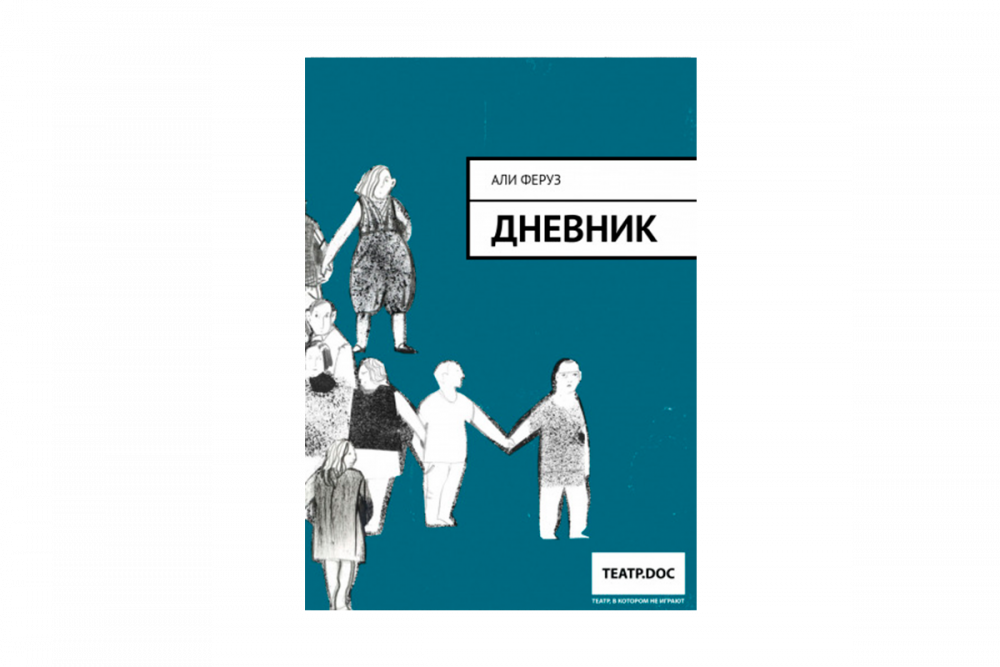
Ali Feruz (Vecheberdi Nurmatov) is a journalist in Novaya Gazeta, Gay, because of the interest of Uzbek intelligence agencies in TsVSIG-a center for the temporary detention of foreign citizens, in fact-in prison for emigrants. Ali was born in Uzbekistan, from where he had to leave due to the fact that the local special services tried to recruit him, and then subjected to torture. There he is still threatened with torture and, probably, death. In August 2017, the Russian authorities detained Feruz and decided to send to Uzbekistan, and only the emergency intervention of journalists, human rights activists and the European Human Rights Court in Strasbourg stopped this process. In TsVSIG, Ali spent seven months, after which Russia allowed him to leave for Germany. His small book, diluted by drawings - excerpts of the diary about internal experiences and about the people who were sitting with Ali in TsVSIG.
"My testimony", Anatoly Marchenko
Once a lecturer came to us, and the prisoners made a dispute with him the conversation about the situation in the camps.
- Why are you bad? - the lecturer was indignant. -Stadium, volleyball, a library, full of flowers!
“You forgot that flowers are also growing on the graves,” Rodygin answered him.
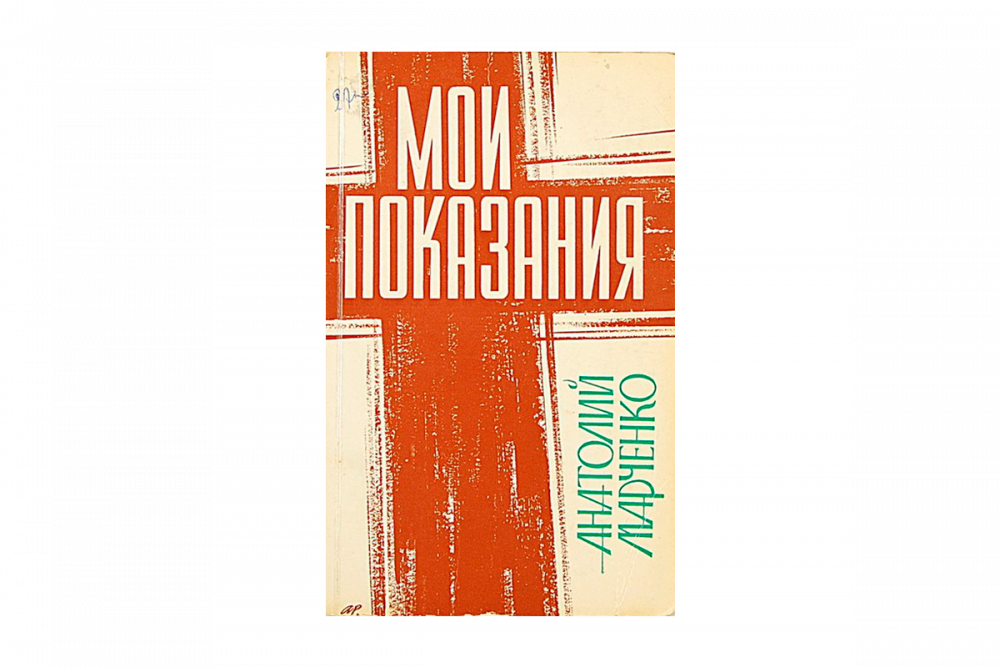
Anatoly Marchenko wrote his book in 1967, after the first eight years in the Karaganda correctional labor camp. Then he turned out to be at large, after which he again went to the camps, now for ten years. After staying for three years, Marchenko was again sentenced to ten years of camps and five years of exile in 1978. He did not go out to freedom. In 1986, Marchenko announced a hunger strike demanding to release all political prisoners of the Soviet Union, starved 117 days and died. Then Gorbachev was already in power, who proclaimed “democratic socialism”, was the first stage of perestroika. “My testimonies” is a terrible book about the post -Stalin political repressions and about the prisons in which the victims of these repression fell.
"Overtake and punish", Michelle Foucault
The fact that the punishment in general and the prison in particular belong to the political technology of the body, I learned not so much from history as from the present. In recent years, prison riots have occurred around the world. For their purposes, slogans, in how they developed, there was undoubtedly something paradoxical. Riots against the entire state of physical squalor, preserved for more than a century: against cold, stuffiness and crowding, against dilapidated rooms, hunger and beatings. But also riots against exemplary prisons, against tranquilizers, isolation, medical care, education. Were these riots pursuing purely material goals? Or conflicting riots: against dilapidation and decline, but also against amenities, against overseers, but also against psychiatrists?

It is believed that the prison has become a common place in the state due to the fact that it is obviously more humane than the death penalty or torture. However, according to Michel Foucault, the widespread victory of the prison is primarily connected with the fact that the mechanism of exercising power over a person has changed. The new government claims to fully control the entire activity of subjects, which means that he wants to achieve comprehensive power over the body of a person. The government preaches disciplinaryivity and requires the complete compliance of this disciplinaryivity - in prison, army, school, hospital or at a factory with optimized production. It is difficult to deny that when working on “overturning and punishing”, Foucault used his experience “Group of Information by Prisons” (GIT) - the initiative, at the source of which he stood. The task of GIT was to convey the voice of French prisoners to society, to tell about the problems of the contained in prisons. “We want to know what prisons are: who and how they send there, for what is happening there ...”, - wrote Foucault in the group manifest.