
Translated material
Anton Petrunin: Natural defrosting
Anton Petrunin  Board / Flickr.com
 Fuel refueling / pixabay.com
 Press Conference of V. Putin, December 2018 / Kremlin.ru
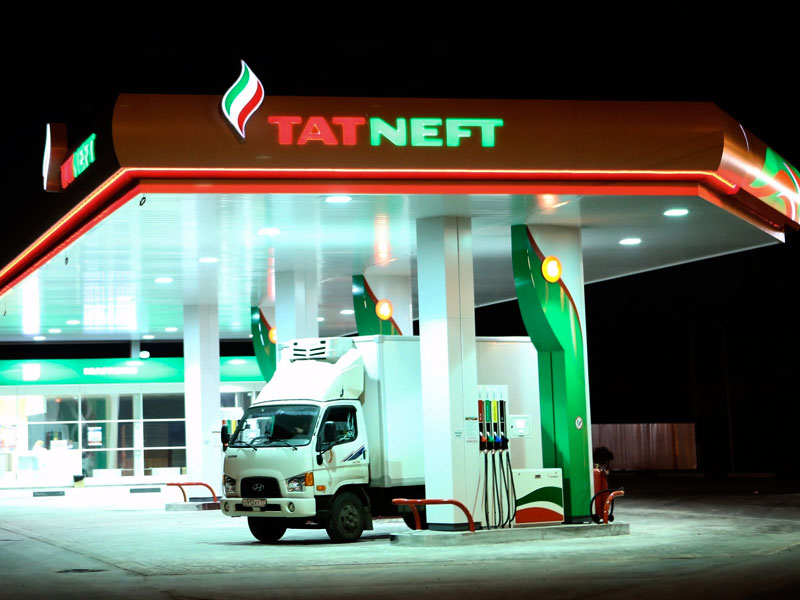 Tatneft auto
 Board / Flickr.com
In the New Year holidays, refueling at Russian gas stations has become more expensive. The rising price was affected by the European part of Russia and the Urals: first they were raised by large oil companies, and then independent. From January 1, VAT increased from 18 to 20 %, and excise taxes on car gasoline of the 5th grade and diesel fuel increased one and a half times. Further sharp rise in price in the near future is not expected, but it is already clear that there will be no cheapness either.
In accordance with the monitoring data of the Moscow Fuel Association dated January 9, since the end of December, the cost of the AI-92 liter increased on average by 19 kopecks, AI-95-by 20 kopecks, and AI-98 on average has risen by 31 kopecks. The most jumped in the price of a diesel engine - for 50 kopecks.
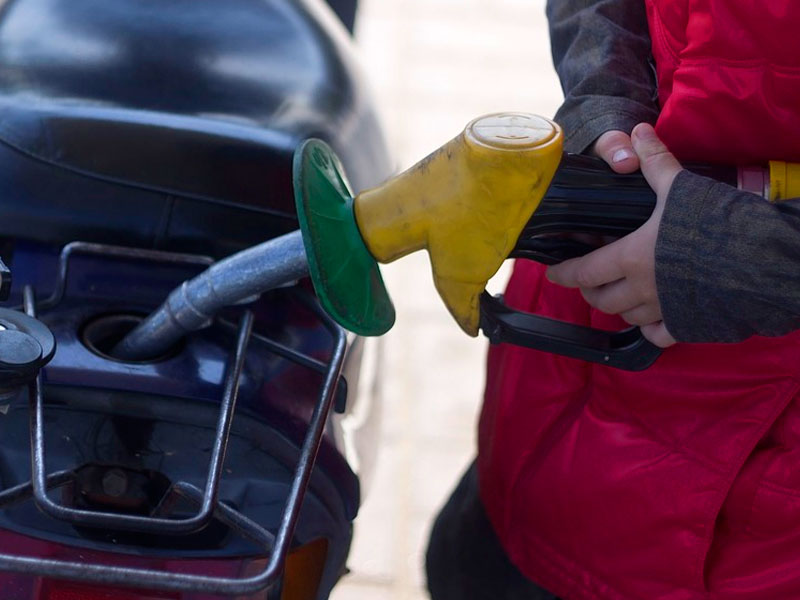
Fuel refueling / pixabay.comThe first rise in price of fuel in six months was no surprise: all this time prices were artificially frozen. In May 2018, due to a cheap ruble and expensive oil, gas and diesel grew recordly in foreign markets, and oil companies, trying to maintain business profitability, brought the price of the country's price to almost the same level. According to Rosstat then, in just a week, from May 21 to 27, the average price of gasoline in the country increased by 1.9%.
The government intervened, taking urgent fiscal measures. An increase in excise taxes planned for July 1 was canceled, and in June an additional decrease in bets was approved: 3 thousand rubles per ton of gasoline and 2 thousand rubles per ton of diesel. In response, the oil company promised to leave prices at the level of May 30.
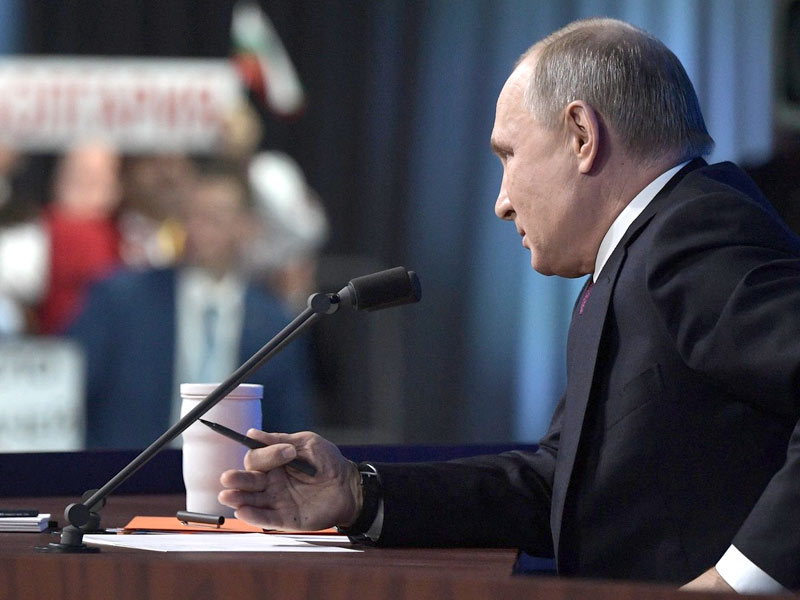
But this was not the only restraining measure proposed by the authorities. On June 7, during the “Direct Line”, President Vladimir Putin, answering the question of the driver Alexei Karavaev from St. Petersburg, commented on the current situation: “What is happening now is unacceptable. This is wrong. But we must admit that this is the result of an inaccurate, to put it mildly, regulation, which has recently been introduced in the field of energy, in the field of energy resources. ”
Press Conference of V. Putin, December 2018 / Kremlin.ruThe Minister of Energy Alexander Novak and Deputy Prime Minister, who oversees the fuel and energy complex, Dmitry Kozak, connected to answer the question on video communication. The latter "threatened" the oil workers with an increase in export duties. The Deputy Prime Minister promised that the corresponding bill giving the government the opportunity to do this quickly will be submitted to the State Duma in the near future, and the authorities will certainly take advantage of it if the oil workers do not keep their promise.
In early November, the heads of the 10 largest companies signed special agreements on stabilizing oil prices. The signatures were made by representatives of Rosneft, Lukoila, Gazprom and Gazprom Neft, Tatneft, TAIF groups, RUSNELEFTI, Neftegazholding, Eduard Khudainatov, Surgutneftegaz and New Stream. On the part of the government, the agreement was signed by representatives of the Ministry of Energy and the FAS, - RBC reports . For each region, an indicative wholesale price was determined, which the oil workers pledged to keep before the end of the year. And only from January 2019 they had the right to raise it, which happened. In the future, as planned, we can expect growth only within the limits of inflation - suggests the director of the EY oil and gas center Denis Borisovin an interview with RBC Tatarstan.
Tatneft autoSince this year, a damper has been earned in the country - compensation for the decision of the government for the supply of fuel to the domestic market. It will allow companies to partially compensate for the losses from holding prices in case they are again pressed by macroeconomic indicators, namely the ruble and oil rates. “The authorities allowed a rise in price by 2-5%. If the growth exceeds 5%, then the government will probably pay attention to this fact and ask for clarification companies, ”said Anna Kokoreva, deputy director of the Alpari information and analytical center. According to the expert, prices should remain at the current level at least until spring - on March 31, the November special settlements end.