
Translated material
In Canada, the Indians protest against the construction of the gas pipeline. They block roads, the police arrested 14 people
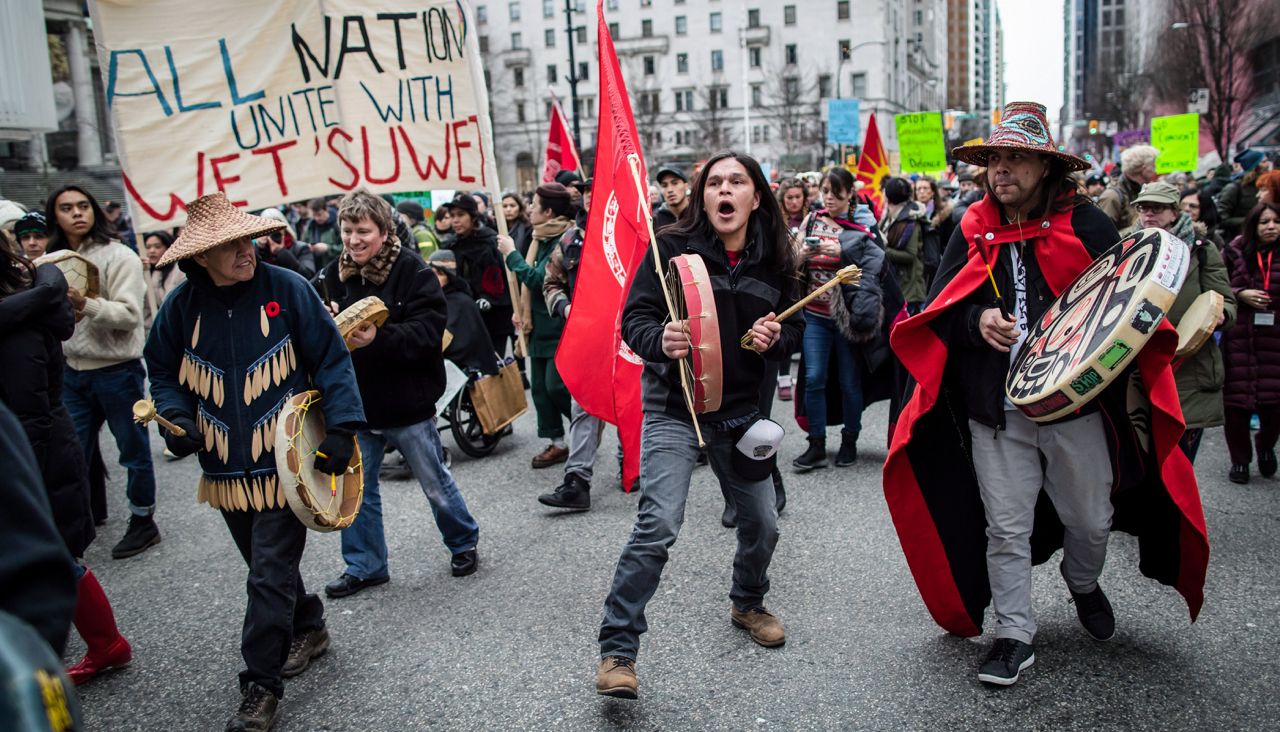
The construction of the gas pipeline in the west of Canada is engaged in Coastal Gaslink. The gas pipeline with a length of 670 kilometers is supposed to be used for the export of natural gas mined in the province of British Colombia. Work on the project has been underway since 2014 , during which time the company received all the necessary permits from the Canadian government. The cost of construction is estimated at 4.8 billion Canadian dollars.
The gas pipeline passes through the lands of the people vestsuvet . This is the union of tribes living in the territory of British Colombia - but do not consider their lands part of the territory of Canada (since the 19th century there are laws in many possessions of the British Empire, fixing the right to land with the right to land; in 2014, the Supreme Court of Canada confirmed that the unions of Indian tribes, including semi -nomadic, have the right to own the lands of their traditional residence).
In Canada, the rights of the Indians to land are enshrined in the Constitution, but their compliance in practice is difficult. “In fact, all reconciliation with the Indians [in Canada] boils down to the fact that they apologized to them,” writes the observer of one of the local newspapers. “Consultations on important issues that are guaranteed by the court are still not conducted with them.”
Since the end of 2018, Vettsuve has begun to block roads in their forests. Despite the fact that individual participants in the tribal union did not object to construction, all the tribal leaders were vested against, saying that the gas pipeline would harm the ecology, and, therefore, the lifestyle of the Indians, which depends on fishing and hunting. Near the settlement through which the gas pipeline route passes, a temporary camp was created and a checkpoint was organized: Coastal Gaslink representatives refused to miss until they were enlisted by the consent of the tribal leaders.
In January 2019, after clashes at one of the checkpoints, 14 people were arrested. The police special forces turned to force after the court in British Colombia declared the construction of the Indians illegal. After arrests in several cities in the west of Canada, demonstrations were held in support of Vehotsuvet. Several hundred people took part in the procession in Vancouver.
On January 10, the agreement was announced between Veadus and the police. In particular, police representatives promised to remove the actual blockade of the Indian settlements, which began after the arrests of the beginning of the month, and the Coastal Gaslink technique will be able to pass through the lands of the Indians. At the same time, a direct agreement between Veadus and a gas company was not reached.
Konstantin Benyumov