
Translated material
Save and lose
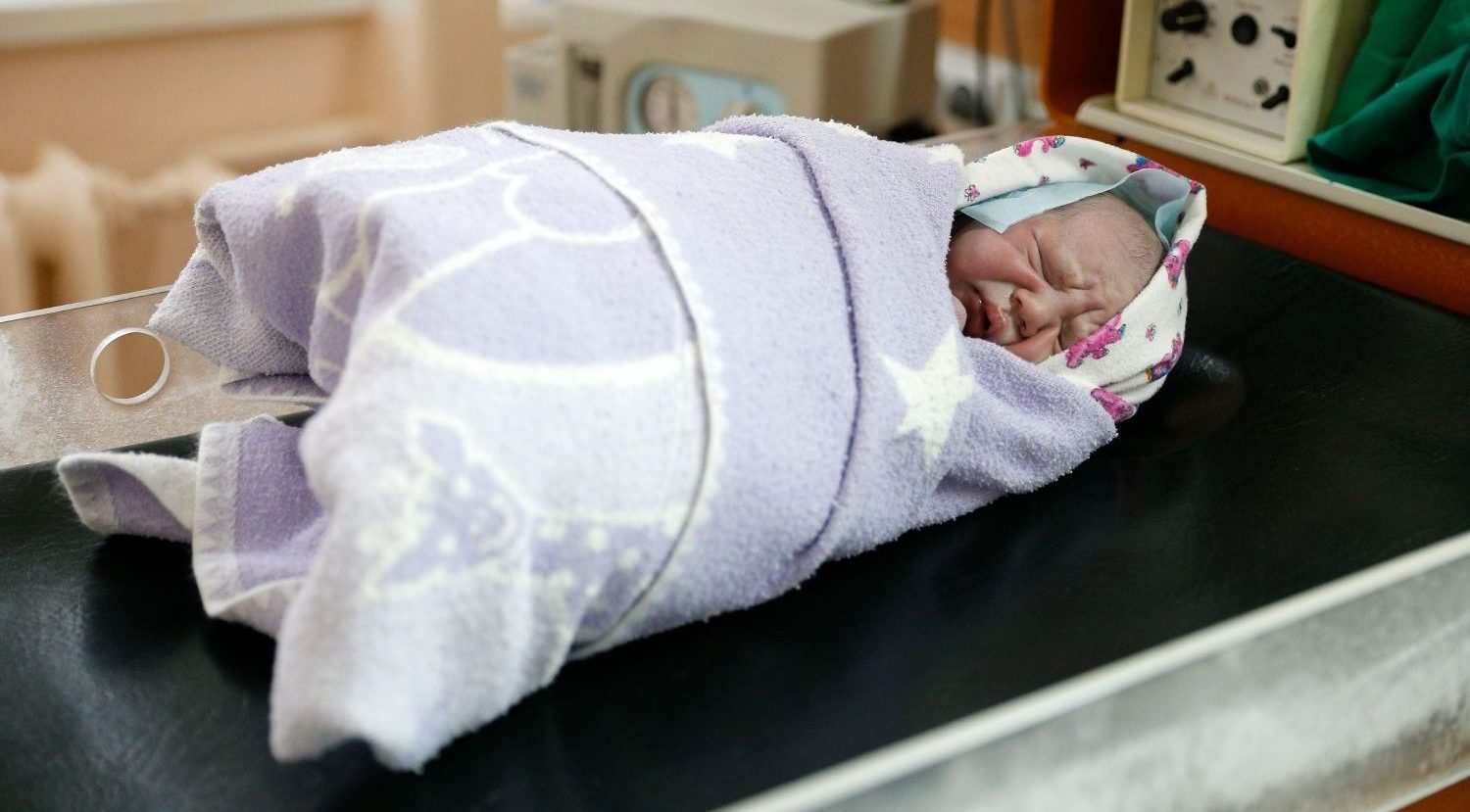
When a child with a rare disease is born, a long and complex struggle is ahead of parents. And when you have to obtain the necessary medicines with all its might, the struggle sometimes turns into a fatal
I will get such a tool
So that the son is not only childhood,
So that he gets youth.
So that in the future
The place for him is left.
Snezhana Mitina,
From the collection "Bouquet of the Physalis"
Great Hunter
“I go into the operating room and see the following picture: my Pavlik rides on the operating table, laughs and ghosts, and stunned surgeons stand and do not understand what to do. Instead of falling asleep, he became violent from anesthesia. Of course, they kicked me out of the operating room, but I immediately realized: something is very wrong. ”
Then the anesthesia nevertheless acted, almost three-year-old Pavlik was removed the umbilical hernia and were about to write it out. But Snezhana Mitina, an investigator with many years of experience, was not going to leave everything on its own. “It’s clearly something strange with my son, I demanded to leave him for examination,” recalls Snezhana. - It was a daily hospital in the Moscow hospital, they refused. She demanded the head physician - they said that he was not in place. Demanded a lawyer - the same answer. Then I stated that I would write a rejection of the child and they will be forced to leave him. They were so stunned by such a sunset that right there the head physician was in place, and the lawyer and Pavlik remained for the examination. ”
Snezhana from the very beginning seemed that her son was special. Pavlik was born as a hero - weighed 4730. “Even in the maternity hospital he had such a gaze, they say, I remembered you,” she recalls. - Strong, healthy, beautiful, everyone was touched for him. And he cried almost with bass: all the children were like children, and his voice could be recognized through the corridor. I did not know then that this is one of the signs of his illness. ”
The first two years Pavlik grew and developed as expected, even faster than the norm. He climbed above all on the playground, taught new words faster than others. But Snezhana was persecuted by the feeling that something was wrong with his son. I drove him to the doctors - everyone said that everything was fine with him. And it all seemed to her that he was a little alien: all so talked, large, calm. And only after the examination on which she forced the hospital to leave Pavlik, it became clear what was the matter.
After two and a half months in glass boxing, dozen examinations, daily groups of medical students did not find anything. They realized that some genetic anomaly, but did not know which one. In the end, Snezhanna is tired of it and she achieved a record of Gennady Grigoryevich Guseyev to the famous genreics. “We entered his office, and he did not have time to see Pavlik, as exclaimed:“ Wow, what a magnificent Hunter! ” I understood the first part of the phrase, because Pavlik was really amazing, but what Hunter is, I had no idea. He began to examine him, praise and photograph him. And then he explained. "
Love the son
Hunter syndrome, or mucopolysaccharidosis of the second type, is an ultraced genetic disease. It occurs as a result of a deficiency of a number of enzymes, which leads to the accumulation of protein-carbohydrate complexes and fats in cells. Signs of the syndrome appear at an early age: nostrils, lips, tongue, joints become less mobile thicken, the overall growth slows down. Facial features are rude, the skin thickens, the voice becomes low, the neck - short, teeth - rare. This disease is incurable.
“I asked him what to do. He said: “To love the son” - and sent home, ”says Snezhana. - We came home and began to look for medical encyclopedias. And there are terrible pictures of mutilated children and it is written that such children live a maximum of 6-8 years. ”
Snezhan and her husband refused to believe in the diagnosis for six months: it was impossible to imagine that such a strong and cool child suddenly began to die in terrible torment. But six months later, Pavlik began to forget the words, lose his hearing and returned to the diaper.
Gradually, Pavlik was excluded first from the usual garden (one teacher was a nurse and read somewhere that children with Hunter syndrome are aggressive), and then from a kindergarten for children with disabilities (“My child is true for disabled, he needs it than some freak to the lagging lag,” said Snezhana alone in the locker room). After that, Snezhan was forced to leave the Ministry of Internal Affairs, where she worked as a legal adviser and an investigator for ten years. “Too often I took sick leave because of Pavlik,” Snezhana says. “They thought I was buying them.” Snezhana left and got a job in a rehabilitation center to knock out a place for her son there.
When Pavlik was six (it was 2006), Snezhana found out that a medicine called Eraplaza appeared in America - the first drug that really improves the condition of people with Hunter syndrome. In Russia, no one knew about him, and Snezhana had a goal in life: to make Eraplaza register in our country. The lawyer and investigator in it raised and began to act.
“I began to write everywhere - to the States, to our officials to the Ministry of Health, to lawyers. Officials replied that it makes no sense to register such a rare medicine for the sake of one child. Then I rushed to look for other people with Hunter syndrome. Sometimes I found - basically they were parents who had already buried their children. ”
Gradually, the parents of children with other types of mucopolysaccharidosis (there are six types) began to turn to Snezhana, and she decided that it would be easier to knock out medicines together. She founded the patient organization Hunter Sindr MBOO and created patient registers.
In 2008, when Eraplaza was already registered in Russia, but has not yet been sold, Snezhana knocked out a trip to Germany - for the course of the drug and rehabilitation. Pavlik began to walk and speak again, and it became clear: this miracle really works. And in 2009, Eraaplaza was already sold in Russia.
Living miracles
Today in the patient’s patient Snezhana there are about 500 families with mucopolysaccharidosis of all types. Of these, about 100 - with Hunter syndrome, and all of them receive an “eraplaza” for free from the state. Often the drug had to be knocked out through the court - since 2009, the organization won more than 60 vessels throughout the country.
In the summer of 2018, the State Duma adopted in final reading the law on the expansion of the so -called program “Seven Nosologies”. Thanks to the amendments, the Ministry of Health now centrally purchases drugs to treat an expanded list of orphan diseases. It included a hemolytic-uremic syndrome, youth arthritis and mucopolysaccharidosis of the first, second and sixth types.
Now Pavlika is 18, unfortunately, he recently stopped walking and speaking. “Too much time was missed until they started taking the drug,” says Snezhana. - But now we have children who have started therapy in three years and for ten years on it are practically no different from the healthy ones. They go to ordinary schools, play sports, look great. Surprisingly: in childhood, all our little Hunters were like brothers and sisters, similar to each other. And then they grew up and with the “eraplas” began to resemble their parents. There are also completely wonderful cases: one girl of 16 years old sat in a stroller and moved only her eyes, and then she began therapy, she had an operation on the spine, and two years later she was already dancing on graduation. ”
Despite everything that Snezhana has achieved, she has new battles ahead. For almost a year, she has been suing for Pavlik to be recognized as incompetent, and she designed guardianship (since he was 18, by law she was nobody). In the future, it plans to fight for the accompanying living of people with disabilities.
“Yes, my son is a difficult disabled person. But every morning I wake up and kiss him, so alive, so beloved. And for the past ten years she could wear flowers on the grave every morning. What can you regret here? "
"I will not leave this so"
But not every struggle gives positive results. And sometimes there is simply no time for this struggle.
Six months ago, Ulyana and Igor left the morgue of the Moscow hospital. In the hands of Igor there was a small wooden coffin, in the hands of Ulyana - a pre -bought urn for dust. They called a taxi to go to the crematorium, to cremate their three -month Dima. The first taxi driver refused to lead them: seeing the coffin, he took up his head, healed something and left. The second agreed and even allowed to take the coffin in the salon, and not put it in the trunk.
View this post on InstagramA post Shared by Ulyana (@doocenko1103) on nov 11, 2018 at 11:22 pm pst
After the death of her first -born, Ulyana began to look on the Internet about all about cystic fibrosis, drugs, and communicate with funds and lawyers. Before that, there was no time for all this - every day from the birth of his son Ulyana was with him in hospitals. At home, Little Dima spent exactly two days - between an extract from one hospital and, when he suffocated, resuscitation in another.
When Ulyana came to his senses in the hospital after anesthesia and Caesarean, a doctor came to her and said with reproach: “Mommy, and you know that your child has an infection?” Ulyana, of course, was not in the know. The son was kept for three days, not showing the Ulyana, and then they sent to another hospital, without saying that with him.
They made tests and screening and said that Dima had cystic fibrosis, which impressed both lungs and intestines. “My husband and I never heard about this and could not understand where it was: we had nothing like that,” says Ulyana.
She was explained that this is a rare genetic breakdown, they said: “It happens” - and began to treat. They gave him the drugs "Creon" and "Ursofalk" - they had to relieve intestinal obstruction and relieve breathing.
After two months, the mother and son were discharged, and on the second day of Dima, Dima suddenly stopped breathing, turned blue and went limp. The frightened parents somehow brought him to his senses, called an ambulance and fell into intensive care. “The real hell began there,” recalls Ulyana.
“Every day of this month, something was wrong with him. Firstly, they immediately began to give him other medicines: “Mikrazim” and “Ursosan” instead of “Creon” and “Ursofalka”. When I asked what it was, they said that this was the same. But the baby became worse from them: he was breathing poorly and his tummy swollen. Later in his medical history, I read that he began to increase the liver and spleen. Secondly, at some point the doctor said: “Your son was tired of breathing”-and connected him to the Ivl apparatus. Later, in patient groups, I learned that children with cystic fibrosis should not be given generics and connect to the Ivl - their lungs should work all the time themselves. ”
View this post on InstagramA post Shared by Ulyana (@doocenko1103) on SEP 7, 2018 at 5:15 PM pdt
Ulyana has repeatedly heard how doctors said to each other that they had “some kind of incomprehensible with cystic fibrosis” and they do not know how to treat it. And Ulyana did not know all the more. Outside with horror, she, like a robot, went from a doctor to a doctor, in the department she was told one, in intensive care, another, and to whom to believe, she did not know. I only felt that something bad was happening and none of the doctors could give her an answer. The baby was getting worse, and after a long month in the hospital, he died. Ulyana does not even know when exactly. “They called me in the morning, they said that he died at 21:25 night before. It was exactly ten minutes after I left. Already in the hospital they told me that death occurred at 5:30, and in the death certificate 4:25 was written. I am sure that they were tired of saving him and they just quit him to die. ”
During these six months, Ulyana somehow could not go crazy. At first she closed, then went to the psychologist, found support groups in social networks, contacted the Light in Hands, which helps her parents who faced the death of the child, read the book of Anna Starobinsky “Look at him”. She began to tell her story to others, heard in response strangers, sometimes more terrible. I went to a new job. And gradually found the strength to fight.
Ulyana hired a lawyer and is now filing a complaint to the prosecutor's office. “I will not leave this like that. I want the staff to be fired for negligence. So that at least other children are not injured, like my Dima. With normal therapy and diet, babies with cystic fibrosis live up to adulthood, and then they turn in line for light transplantation. With successful transplantation, they can lead a normal life until old age. It is clear that it is difficult and at any stage something can go wrong, but this is a chance. My Dima was deprived of this chance. "
These are only two stories of struggle - of thousands of like. Every day they happen around us, next to us, with us.
The material uses links to publications of social networks Instagram and Facebook, as well as their names are mentioned. These web resources belong to Meta Platforms Inc. - It is recognized in Russia as an extremist organization and is prohibited.
The material uses links to publications of social networks Instagram and Facebook, as well as their names are mentioned. These web resources belong to Meta Platforms Inc. - It is recognized in Russia as an extremist organization and is prohibited.
Mother Medical Aid Orphan diseases Rare genetic diseases chronic and incurable diseases