Date
Author
Вячеслав Половинко, Арнольд Хачатуров, Елизавета Кирпанова
Source

Preserved copy
Translated material
To lie to everyone, Gorgaz works!
The authorities are thinking about creating a “gas police” with the powers of unhindered access to the apartments of Russians
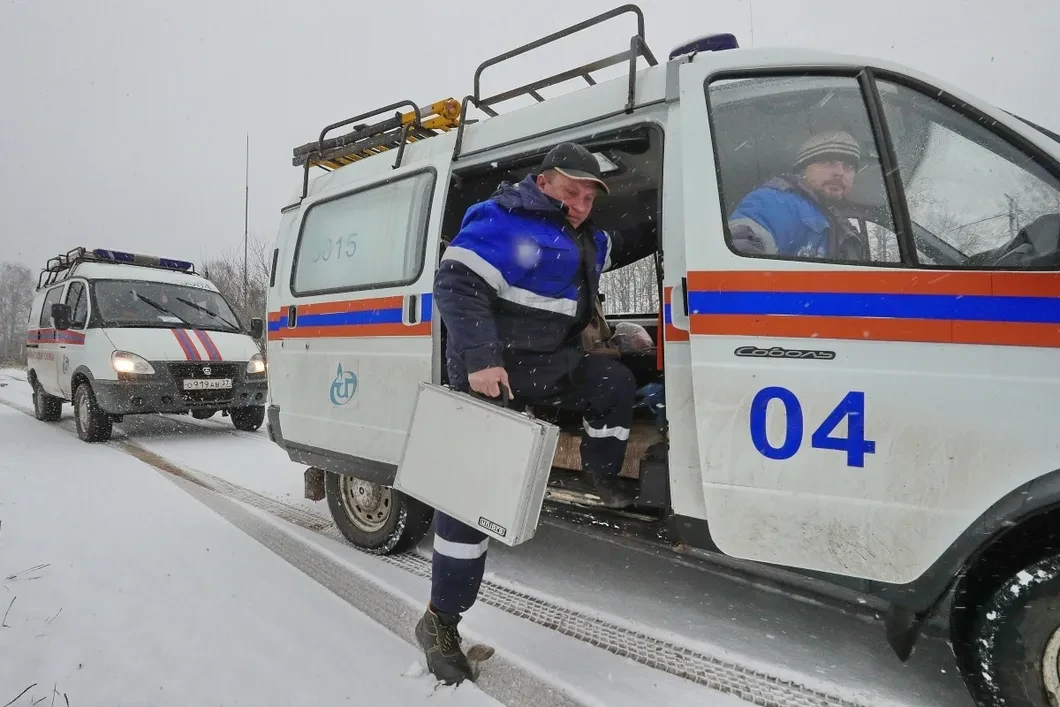
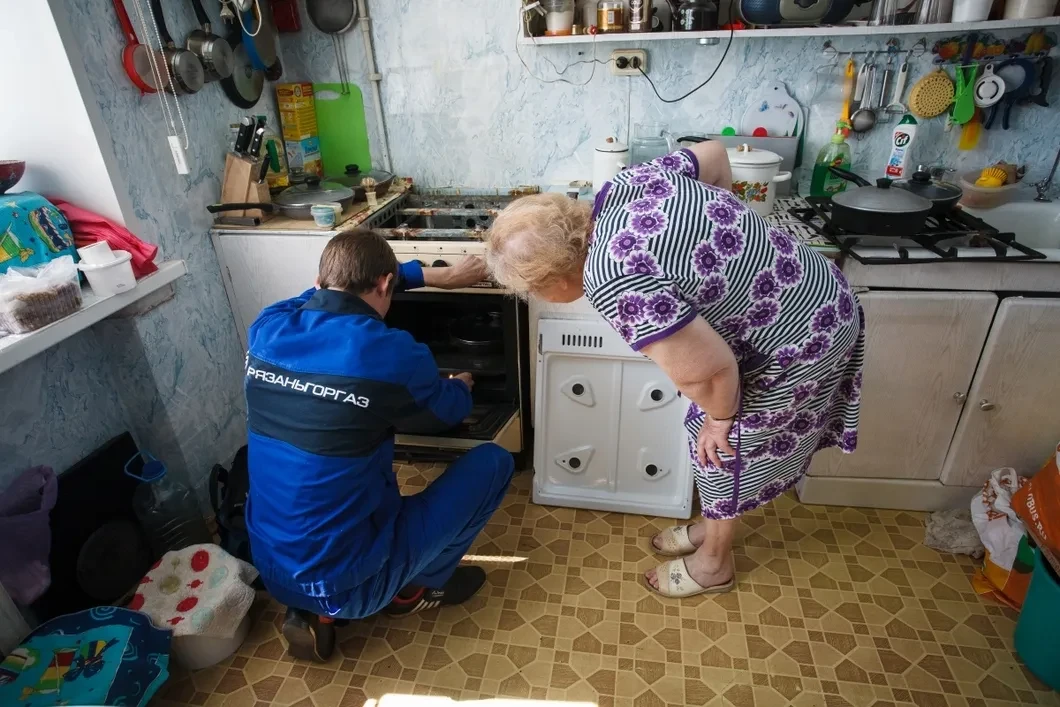
Mosgaz urgently worried about the inspections of gas equipment in residential buildings of the capital. The Novaya morning correspondent on the morning of January 15 discovered an announcement on the door of the entrance that gas workers would walk around the apartments with unscheduled inspections from 11 to 23 hours, and on this occasion they ask everyone to "take the necessary measures" and "provide access to the apartments." The doors will not knock out the doors yet, but to be fine for the fact that the residents do not open such “flying brigades”, they already want to. On January 14, the Public Chamber immediately after the explosion of household gas in the Rostov region proposed creating something like a “gas police”: they say that gas workers need real powers to fight leaks, and if they are not allowed into the apartments, they will explode further at home.

“At one time, we proposed a procedure for preventing and preventing gas explosions in residential buildings and, as part of public control, proposed to create a gas patrol,” says the author of the initiative, member of the Public Chamber, Artem Kiryanov. - Residents let representatives of gas services for inspection of equipment in very rare cases. Statistics tell us that 50–70% of apartments are closed to specialists who want to check the equipment. Huge explanatory work is needed. It is necessary to involve the management organizations working in the housing and communal services sector, and local governments, the State Housing Inspection, and Rostekhnadzor. ”
The Gas Police is not a power organ, but Kiryanov emphasizes new powers. The same fines for those who do not open the door:
“The first fine can be 1-2 thousand rubles, the second - 5 thousand. Further, you can also fine the relevant service bodies that did not show proper perseverance and could not establish communication with the owners of the premises. There could be fines from 50 thousand rubles, ”the representative of the Public Chamber clarifies. -The system should work on the ground: people should understand who comes to them, they must be sure that all the actions of the gas service are authorized and that these are not some other people's unfamiliar crooks come to them under the guise of a gas service. To do this, it is necessary to maintain constant contact with the owners and tenants. ”
Yes, there are problems with the Constitution and the right to the inviolability of a private dwelling, but this somehow needs to be decided: people should not die because of this, Kiryanov summarizes. Yes, and the Constitution provides for the possibility of restricting the inviolability of the home on the basis of federal laws and a court decision, says Alexander Inoyadov, head of the criminal practice of the BMS Law Firm BMS Law Firm:
“The Housing Code establishes that this right can be limited if it is necessary to ensure public safety in emergency situations, natural disasters, disasters, riots or other extreme circumstances. Therefore, in this case, we can just talk about public safety and the prevention of emergency situations. ”
Almost the fight against terrorism is obtained.
So far, the “gas police” format has not been defined, but it is worth noting that in the morning of January 14 this assumption looked like a gloomy joke from the human rights activist Pavel Chikov, and in the evening it was expressed at a more close level to power. This, in general, was obvious: household gas became the number one enemy for the authorities in early 2019. They fight as they can.
Who hisses behind the wall
The gas industry in Russia is one of the most problematic in the housing and communal services, states a member of the Chamber of Commerce and Industry, chairman of the Moscow Union of Housing Organizations, Konstantin Krokhin.
“According to the law, the responsibility for the improper use of equipment lies with the owner of the premises,” he says in an interview with the “new”. -At the same time, the gas supplier must conduct equipment checks, but he is an interested person (participates in the product purchase and sale scheme). The main drawback in this system is not an independent organization that would control, there is no special unit in a conditional housing inspection that could control the performance of the functions of monitoring technical equipment in relation to both the consumer and the gas supplier. ”
As a result, minimal control is perhaps in private households. There, gas is needed for almost everything (primarily for heating), which allows suppliers to insist on huge amounts for the connection and on the installation of gas analyzers.
“There are no similar opportunities in apartment buildings,” complains Krokhin. -
The cost of the service is scanty. Gas services are not interested in installing smart devices, it is unprofitable. The supplier is not interesting to work where there is no money. ”
As a result, the gas or not, the residents themselves and the management companies should be monitored. With the second, the situation is even worse than with ordinary owners of apartments: an exploding house in mines in the Rostov region (two dead) was served by the Criminal Code, which was, according to the media, in the three worst in the city. The debt of Zhilremservis to the counterparties amounted to 11 million rubles, its owner was registered with the police.
That is why the proposal for the “gas police” with all its flaler repressiveness is not initially excluded by anyone - neither officials, nor lawyers, nor experts. Konstantin Krokhin, for example, proposes to create a separate structure that will take on purely controlling functions. And on unscrupulous contractors who carry out construction work with gas cylinders (another cause of explosions in residential buildings), you can set the district police officers, which are now, in fact, they have eliminated such works.
Another proposal for the traces of the last two explosions is the complete return of the gas industry to state control. This is offered by Senator Frank Klintsevich and calls such a step “an extreme measure”, but we say, they say, about the “life and safety of people”. In this probability, it is still difficult to believe: to take on additional responsibility in the industry, where only in the last two years there were at least 44 large emergencies with gas (according to RIA Novosti), the state is unlikely to want to.
Actually, the whole reaction of power now is a consequence of the information wave and hype, according to economist and politician Vladimir Milov.
“Discussions are taking place every time,” he says “new”. -
“The previous loud case was in Izhevsk. There was the same wave that gas should be prohibited in houses. But then the discussion calms down, because this is a laborious business. ”
-( continues ) I can say that our authorities do not like to do something that is connected with labor capacity, fuss, including do not like such rigid discussions. Therefore, they postpone the problem for later. ”
The current resonance is additionally heated by the fact that the tragedy in Magnitogorsk happened on December 31-but the question is whether the authorities have enough fuse to make some important decisions.
Total control is impossible
For ordinary consumers, however, the issue of security is far from the first in the list of priorities. Most often, household gas is used for cooking. Gas slabs are relatively cheap, while electric stoves have higher consumer characteristics, but less democratic price tag. Plus, because of the difference in tariffs, you need to pay for gas significantly less than for electricity (only 50-100 rubles per month per person).
The desire for savings turns into increased operational risks.
“If you have a gas stove, then you are a source of danger to others, even if you follow all safety rules. Your neighbors, who lead an asocial lifestyle, can also be a source of danger, ”says Krokhin, chairman of the Union of Housing Organizations of Moscow.
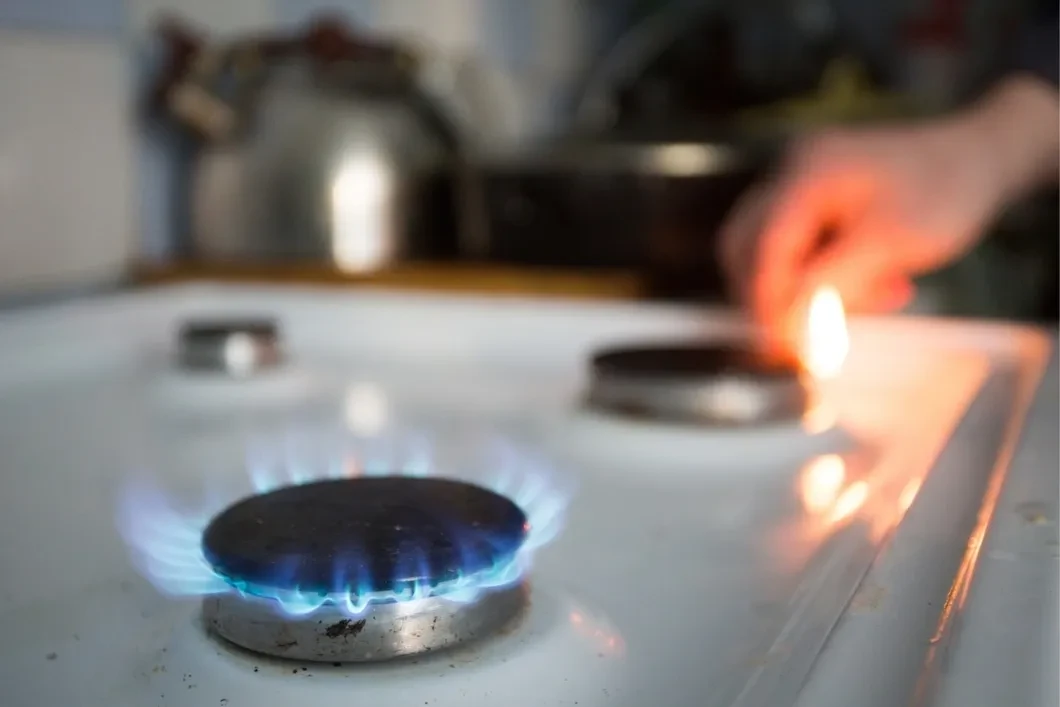
Experts in the housing and communal sphere, the United Front advocate the dismantling of the apartment gas economy, but diverge in tactical reasons. The radical position is that gas in houses, with some exceptions (professional heating boiler rooms), is an unacceptable risk that needs to be eliminated immediately. The state should launch the process of “forced replacement for electric stoves as soon as possible”, wrote Milov in social networks.
“Gas from the houses needs to be removed. You can put any control system, but you, for example, have a neighbor-a 90-year-old old woman who has forgotten and is not able to control the gas normally, or alcoholics, ”says Milov“ New ”.
“One problematic apartment is enough for a house, no control is exercised somewhat, or an explosion is deliberately made.”
According to Rosstat, at the beginning of 2015, 22% of Russian households were equipped with electric stoves. Milov believes that a program for electrification of houses can cost a budget of several billion rubles, that there are not so many compared to the cost of eliminating losses from regular explosions. Recall that as a result of the tragedy in Magnitogorsk, 101 family remained without a roof over the head, which the government will provide with new housing for 147 million rubles. In total, more than 50 people died from domestic gas in the country for 2018.
The cost of the country's transfer to electricity is very difficult to calculate, objects Konstantin Krokhin. “It depends on the specific region, its specifics, on the composition of the housing stock. Such serious events take years, ”the expert explains.
“It will cost several billion rubles,” suggests Vladimir Milov. -This is not that some big money, it’s just a laborious business, and not all residents can want it. They say that it is cool to cook on gas, a gas stove is safe if you put gas control. But the problem is that you cannot control every apartment in the house. ”
Nevertheless, the transition to more reliable gas systems takes into account existing financial and temporary restrictions and is a compromise option. Household gas is used in many countries, but in Europe, increased safety requirements are presented for gas equipment. In developed countries, the mandatory element of the gas stove is the GAZ-Control system, which automatically blocks the gas supply, if there is no fire. Residential buildings are equipped with gas analyzers - with special sensors that determine the aggression of the room and in real time notifying of the emergency leakage.
It is believed that the main cause of domestic gas explosions is precisely the “human factor”.
But if reliable equipment is installed in the apartment, then deaths with death are excluded almost guaranteed.
The risks of alcohol intoxication, childish pranks or banal forgetfulness are easily leveled by modern electronics - unless, of course, intentional attempts to provoke an explosion.
Another question is that in Russian houses good gas equipment is a real rarity. A new gas stove with automatic gas lock can cost from 10 thousand rubles, several thousand rubles can be asked for installation. For people living in old houses, the amount is often absolutely unbearable (in the new high -rise buildings, gas boards are not provided, although gas is sometimes used for heating or heating of water).
The risk zone is houses that require major repairs, notes Galina Khovanskaya.
“Gas stoves in such houses are 40-50 years old. The poor citizens who receive subsidies for payment for housing and utilities are not able to buy a new stove at their own expense, ”she says. In old houses, the state should subsidize the replacement of the slabs, and new buildings must be equipped with “smart systems” by default, said the chairman of the State Duma Committee on Housing Policy and Housing and Public Utilities Galina Khovanskaya from Fair Russia.
The Socialist -Revolutionaries have already amended the Housing Code and offer to install equipment at the expense of the budget or at the expense of overhaul, and the party expects that United Russia will support their undertaking.
The installation of gas analyzers is precisely the operational measure that will reduce the accident rate in a short time, Krokhin adds.
“It will cost about 3-7 thousand rubles per apartment depending on the model. It may be quite lifted if it is financed at the expense of the budget or extrabudgetary organizations according to the type of overhaul fund, ”the expert says.
Re-equipment of kitchens on slabs with gas control is an intermediate step towards the maximum program, which is a complete rejection of household gas devices. But an additional problem arises here: in most old houses, the electrical wiring is so dilapidated that it may not withstand additional load on the mains.
The wear of the housing and communal services engineering networks in some regions reaches 80%.
As a result, the gas problem can be eliminated, but the risk of fires will grow (however, some experts believe that the load on the network will grow insignificantly, and among the causes of fires, problems with wiring are far from first place). According to statistics, fires in houses occur much more often than explosions of domestic gas, although the amount of damage from the latter is incomparably higher. Therefore, such houses will need a complete replacement of the wiring and installation of modern protective devices.
“We must centrally begin the transition to power supply, the installation of electric stoves and the modernization of interdoma networks in order to transfer residential areas to power supply for household services,” says Krokhin.
Here we can talk about millions of rubles for one house.
True, it is still difficult to imagine where the state will find money for a large -scale program for updating electric networks, given that even the most pressing needs of the housing stock are difficult to cover for overhaul. In 2017, the Ministry of Construction calculated that the installation of gasket sensors would cost 230 billion rubles, and decided to even abandon this idea. But the last tragedies should bring the authorities closer to the understanding that the solution of the “gas problem” cannot be postponed indefinitely.