Date
Author
Татьяна Васильчук, Лилит Саркисян
Source

Preserved copy
Translated material
Where he sleeps famously
Problems in the economy woke up the protest potential: what to wait in 2019?
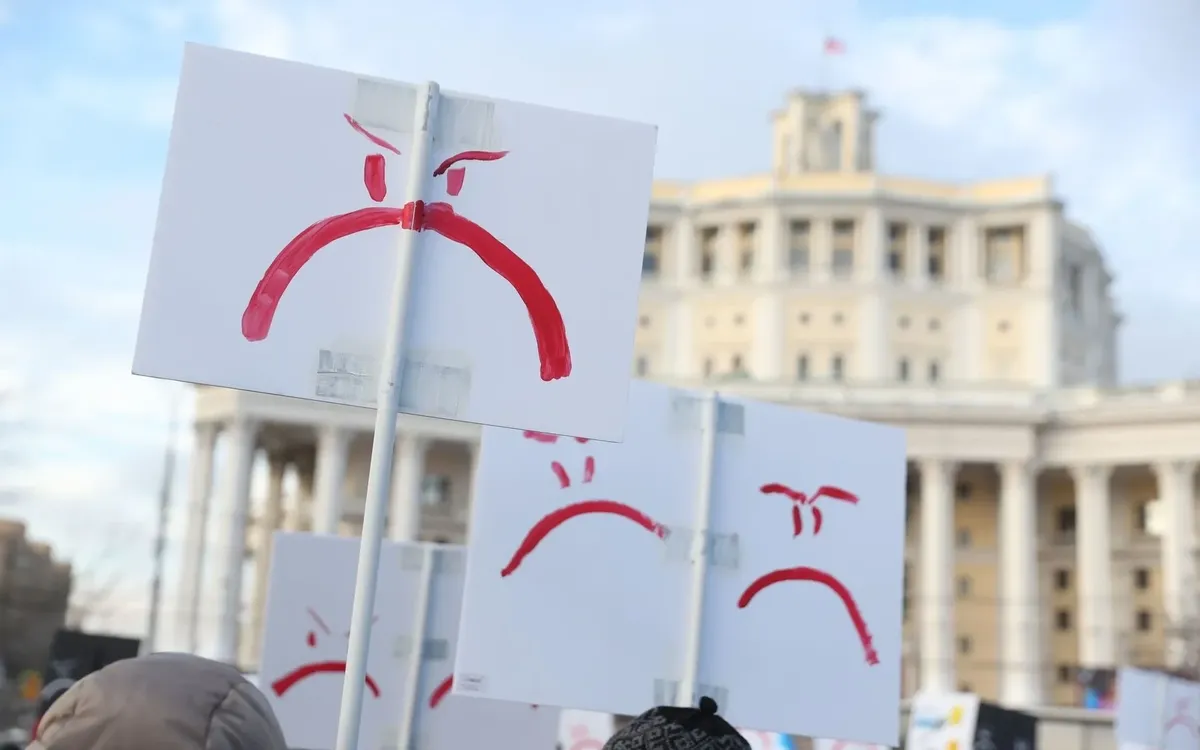
More than half of the Russians advocate the resignation of the current composition of the government-this is said by the data of the Levada Center for December 2018. According to society, 53% of citizens does not approve of the activities of the Cabinet of Ministers: this is the highest indicator since 2002. The main claims of the population are the inability of the authorities to cope with the increase in prices and the fall of income, to provide people with work and the weakness of social protection. Among the reasons for discontent, the work of ministers also call the economic crisis, corruption and even an unstable situation in the North Caucasus. At what level is the protest potential of Russians today and where to wait for political conflicts in the new year? Correspondents of the "Novy" talked with experts.
The high percentage of disapproval of all power institutions and especially the government became the logical result of 2018, which adopted the laws that were extremely unpopular among Russians - on raising the retirement age and growth of VAT. Since the announcement of the Prime Minister Medvedev Plan of Pension Reform on the day of the beginning of the World Cup, protest moods among the townspeople grew up and resulted in summer rallies and autumn protest votes in the governor's elections in the regions.
In the coming year, government reforms begin to come true: from January 1, an increase in VAT came into force, which entailed the increase in prices on store shelves. But the effect of raising the retirement age is dulling its phased: the transition period will last until 2028.
“The real problem of the state now is the impossibility of increasing the [level of life of the population,” explains Denis Volkov, the sociologist of the Levada Center. - For four years in a row, the incomes of the population have been falling and, judging by our polls, the last three years people have been feeling poorer. An increasing number of people classify themselves to the poor. The inability to stop this trend is the main problem of power, which can result in a mass protest.
There is no need to hope for the promised economic breakthrough in conditions of increasing fiscal load, inflation and Western sanctions, the analyst says. In the context of the Crimean effect, people are increasingly worried about internal economic problems and social agenda, so “the risk of destabilization of the situation is, although it is hardly possible to talk about overthrowing the regime,” Volkov said.
Protest: scale against locality
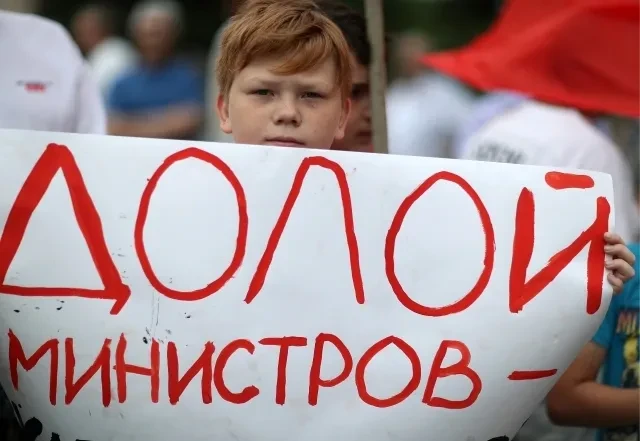
In itself, the disapproval of the majority of citizens of the government’s activities does not indicate the readiness of people to protest: there is no direct correlation between the data of the last hundred -poll with protest potential. According to the political scientist and associate professor of the Institute of Social Sciences of the RANEPA Ekaterina Shulman , "the government has never been a particularly popular authority."
Nevertheless, the “normalization of protest”, that is, the understanding, “that protest activity is normal in itself, and the state should not pursue for it”, occurred in mid -2017 (then large -scale protests by Alexei Navalny took place), the political scientist says. But it is impossible to predict the likelihood of protest activity based on the numbers of hundreds of polls: it is impossible:
-We can see one thing: the authorities as a whole, the system of power as a whole does not use any more significant, tangible public support. It enjoys residual loyalty, inertial loyalty, but not support.
“We cannot say whether people will protest or not, but if the protests happen, they will be treated well or neutral.”
“The protests will probably be, but local,” says political analyst Dmitry Oreshkin . “Somewhere in a separate city where they do not pay a salary for a year and a half due to the fact that the whole city works at a monopoly enterprise, and the company closed or the owner stole everything.”
“The fact is that“ now people, apparently, are most concerned and annoying to local problems - where is the garbage, where are construction, where are the demolitions, where are cutting and landing, ”Schulman explains. “But all this happens against the backdrop of general irritation from the behavior of power as a whole.”
Primorye 2.0
In addition to street demonstrations, there is another option to express the protest potential - voting. During the governor's elections in the four regions of the country, the authorities could not win the first round, and in the second people voted for any candidate, the main thing was not for United Russia.
This year, regional campaigns of different levels will be held on September 8: Russians, among other things, will choose heads of 16 constituent entities of the Russian Federation, including the Governor of St. Petersburg. In the capital at this time, elections to the Moscow City Duma will be held.
Last fall, dissatisfaction with power was directly expressed in the election results: in the Primorsky Territory, Khakassia, Vladimir Region and the Khabarovsk Territory, they voted not for, but against. The protest vote becomes the most effective way to canalize the disapproval of the current administration: “As soon as the people begin to seriously experience discomfort - and they start now - then he thinks: is it not to go vote against? In this sense, the elections just begin to play their role, ”says Oreshkin. “It is in this situation that the elections for the authorities begin to seriously pose a threat.”
Oppositionist Alexei Navalny took the tactics of consolidated voting against candidates from United Russia in campaigns of any level as a basis for his Smart Voting online site. The project determines the most popular candidate from the opposition (systemic and non -systemic) in each constituency and proposes to vote for it - in this way the politician proposes to take away all elected positions from the United Russia. Roskomnadzor has already managed to introduce the website of Navalny to the register of violators of the rights of personal data subjects.
A consolidated election protest in September 2019 is possible only if “if there are additional factors”, Natalya Zubarevich , an expert in the field of socio-economic development of the regions, is sure. In four “problematic” regions, a protest vote was recorded thanks to two factors - the conflict of elites with the governor and dissatisfaction of the population, and “the opposition of elites is a rarity”.
The authorities responded to the threat of new protest elections “an increase in the number of paratroopers” from the federal center, believing that they have more chances to win than old -timers.
Whether it will be possible to repeat the success of last year’s consolidated voting in the conditions of ongoing public irritation is unclear. Anything can happen until September. However, the mood “tired” is preserved and expressed in low ratings of all organs and representatives of the authorities - from traditionally unpopular State Duma to the Presidential population.