
Translated material
The bet on collapse
Russia plans to get Venezuela out of the crisis so as not to bury Rosneft investments? The opinion of Sergei Aleksashenko
On January 10, Nicholas Maduro again took office as president of Venezuela. He took the oath not in the opposition parliament, but in the Supreme Court, surrounded by supporters. 12 leading countries of Latin America calculated the procedure illegal. Paraguay immediately broke the diplomatic municipality with the karakas, and recalled Peru with a temporary attorney. The United States and the European Union did not recognize Maduro by the legal president. The ceremony was attended by representatives of Russia, China, Turkey, Cuba, Bolivia, Nicaragua and Salvador. The first decision of Maduro was the sale of 15% of oil for cryptocurrency. On January 13, Venezuela's intelligence for a short time detained the head of the parliament, and the Foreign Ministry said that the countries of Latin America destabilize the situation in the country on the instructions of Washington. All these events take place against the backdrop of intensive negotiations between Maduro with Russia, which became an exclusive partner of his regime several years ago. Sergei Aleksashenko talks about the economic aspects of this cooperation.
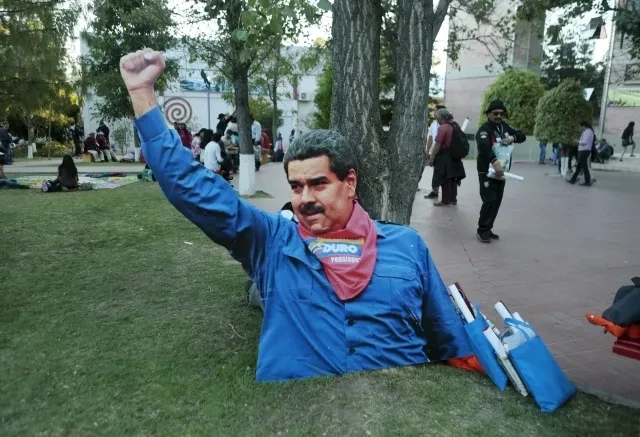
Venezuela has the world's largest proven oil reserves, about 10-15% more than in Saudi Arabia. With a traditional market view of circumstances, the long -term development of relations with such a country, building mutually beneficial ties is an absolutely correct way. So it would be possible to characterize Russia's policy regarding Venezuela and, first of all, the actions of Rosneft, if not for the influence of Igor Sechin's specific views on it, the features of the autocratic regime of Russia on the one hand and the personality of Maduro on the other.
Therefore, to understand the consequences, it is important to keep in mind the path traveled to us.
Starting more than ten years ago, economic cooperation with the Chavez regime, the Chinese aimed to achieve sustainable oil supply in very serious volumes. Today they have already invested there already $ 62 billion.
At the same time, oil production in Venezuela was reduced three times, interruptions in deliveries began. In 2017, American newspapers already wrote about the trial claims of China against Venezuela in connection with the created debts under contracts.
Why did it happen? Venezuelan oil is heavy, with a high sulfur content. To extract it, Western technologies, spare parts and chemicals are needed. That is, working capital is needed in the currency for their purchase. But in conditions of hyperinflation, the value of the currency from oil exports for the regime was higher than any circumstances. The Chavez government removed it from PDVSA (state monopoly that produces oil and gas on the Continental and Marine Shelf of Venezuela) is completely. At the same time, the squeezing of foreign mining companies began from the industry, which soon did not remain in the market.
Thus, the only national operator began to degradation of production, and in fact, they had the necessary capabilities of foreigners. The highest ranks of Venezuela stated that they would cope with the production of oil themselves. The decline in prey did not have the nature of the collapse, it all started with small numbers, but it came to grandiose losses.
Obviously, the amount invested by China in Venezuela did not help to achieve their goals. About 32 million people live there, this is a little less than the real population of modern Ukraine (and the Venezuela Square is a third more). But with the most rainbow expectations of political advances after the revolutionary events of 2014 in Kyiv, Venezuela received many times more money.
The result is catastrophic: today Venezuela is bankrupt, default has come for all external obligations. This is the result of the policy of Chavez and Maduro. The near future of the country in detail is unknown, since the main details of the agreements by which Venezuela received Chinese money is unknown. It is only clear that they consisted at the level of states, and Rosneft invests funds at the level of companies. Knowing how patient and stubborn negotiators are the Chinese, I tend to assume that their investments are protected as much as possible.
Maduro’s government should give up with oil, and Beijing knows that if deliveries are below the contractual supplies this year, they will return in subsequent years. Nevertheless, after 2013, the PRC decided that it was not ready to finance this financial pit - the risks of non -return are unacceptable.
And Venezuela lured Rosneft to her. On what conditions Igor Sechin finances Maduro, we do not know. There is evidence that the total amount is close to $ 10-12 billion.
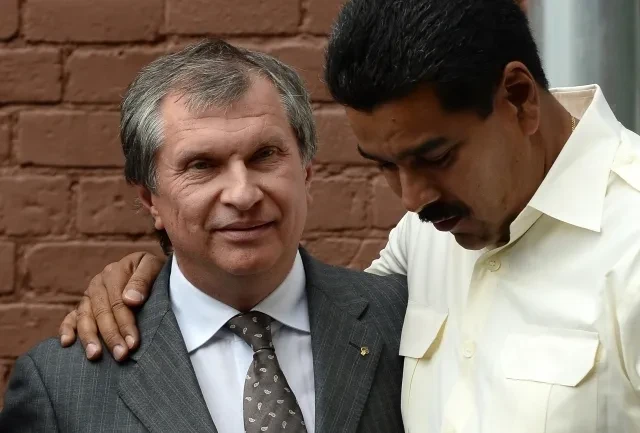
Rosneft belongs to the share in five leading oil assets of Venezuela. Maduro promises to allow her managers in 9 more projects. The Office of Sechin received 49% Citgo, the largest Venezuelan oil refinery in the south of the United States, owning a network of its own gas stations.
However, a policy from which in this case does not go anywhere, does not promise guaranteed dividends. Yes, Maduro himself appoints judges, including in the Constitutional Court. He himself decides what the future constitution will be and brought the real role of the National Assembly (Parliament) of Venezuela almost to zero.
But the Venezuela dictator is a populist, and his support decisive by rural voters is kept on subsidies, handouts and benefits. That is, on the same finances that he never knew how to dispose of, leading the country to bankruptcy.
The political collapse of the current Venezuelan regime is not at all a distant probability.
Given that the Chinese economy is six times more than ours, Russia's expenses for this country "approached the Chinese border." In the case of Maduro’s fall, the main creditors of the world will hold negotiations on the restructuring of debts and their partial write -off with the future democratic leadership of the country. Together with everyone, they will have to forgive the duty of Russia, which in the recent past led such negotiations as an almost hopeless debtor.
With this circulation, the Venezuelan policy of Russia in the short term is very risky. Rosneft came here at a time when the fall of oil production and the financial disaster did not appear so much. However, I believe that today in Moscow they understand the risks and partly replace financial injections with verbal interventions and a moderate demonstration of the flag, such as the flight of two strategic Tu-160 bombers at the Libertador air base east of Karakas. But in the remote future, in which there will be neither Putin nor Sechin and Maduro, the mutually beneficial relations of Russia with Venezuela can bear good fruits.