
Translated material
Another Russian world
Underground Russia cycle
Another Russian world.
A study of how many Russians leave the country
Project team, January 16, 2019
The third presidential term by Vladimir Putin was noted by the new peak of emigration from Russia. Young, educated and highly qualified specialists are leaving, the rich leave. The “project” figured out the fragmented statistics of emigration from Russia to show the scale of human losses of the era of stability.
As we thought
There is no complete and reliable statistics about the number of those who retired from Russia. The only way to get an idea of the scale of emigration is to contact Russian and foreign data simultaneously. In order to get a more complete picture, we also analyzed: the nature of the outflow of Russians (property, social, educational status), the scale of the “Russian diasporas” in some countries, the number of investment visas issued to Russians abroad, the number of asylum requests and indicators of emigration moods of the population.
In Russia, Rosstat collects statistics on the number of emigrants, but these data cannot reliably answer the question of how many people are leaving the country. The problem in the Rosstat methodology itself, which records only those who independently deregister in the Russian bodies of the Ministry of Internal Affairs when moving. Not everyone does this: it is beneficial for someone to maintain citizenship and registration at the place of residence-for example, to those who go to study or work. Thus, the data of Rosstat is obviously underestimated.
The second problem is that most of the statistics of Rosstat are incorrect residents of Russia - temporary labor migrants. The Rosstat methodology takes into account everyone who previously registered at the place of stay for a period of 9 months, and then left the country. For example, a CIS citizen came to Russia to work, and after 9 months he returned to his homeland. As a result, he will be among those who retired from Russia - even if he returns in a couple of months. In addition, data about emigrants are formed automatically, so all migrants with the expired stay - regardless of whether they left or remained illegally, get here.
It is also difficult to analyze the data of Rosstat in development: the accounting methodology has changed several times. The last change occurred in 2011. Just then, labor migrants began to fall into statistics. Therefore, it is possible to compare the data of Rosstat on emigrants only within the boundaries of individual temporary intervals: from 2007 to 2011 and from 2012 to the present.
To weed out from the total number of emigrants not the indigenous inhabitants of the country, we additionally turned to the Rosstat data on the retired citizens of Russia. This does not solve the problem of the absence of Russians in the statistics who have gone without deregistration, but makes it possible to compare with other years.
Another way to calculate the number of emigrants is to turn to foreign statistics of those who have arrived from Russia, given of national statistical departments, the UN, Eurostate and the Organization of Economic Cooperation and Development. Foreign data are also imperfect, this is due to the fact that in different countries they understand the status of an immigrant in different ways: someone, for example, does not consider the visitors the one who has already received the citizenship of the new country. The source of arrival is also interpreted in different ways: in the country of departure, by citizenship or at the place of birth. Nevertheless, there is more trust in foreign statistics. Entering the country is considered more accurately than those who leave it, because it is beneficial for a person who has arrived in a new place to register there in order to get legal status.
2017 - new record
In October 2018, Vladimir Putin signed a new concept of migration policy, which should be an attempt to return compatriots from abroad to Russia. There is reasons for concern in power - 2017 was noted in the statistics of Rosstat with a sharp increase in the number of emigrants. In 2017, Rosstat reported 377 thousand people who left the country. This is a record indicator for the last period that is compared. The number of emigrants has grown three times compared to 2012.
Not only the total number of those who left (along with labor migrants) grew, but also the number of those who left for the countries of the far abroad. As for Russian citizens, the situation is the same. In 2017, almost twice as many Russian citizens left than in 2012. In total, 1.7 million people left for the third term of Putin’s presidency - only according to Rosstat.
“90% of Russian citizens who go abroad for a long time do not withdraw from migration accounting and do not fall into statistics,” the Senior Researcher of the Institute of Demography of the Higher School of Sciences, leading a researcher at the Institute of Social Analysis and Forecasting of the RANEPA, Julia Florinskaya, quoted the results of their research . According to her estimates, the annual number of emigrants from Russia to the countries of the far abroad is 100-120 thousand people.
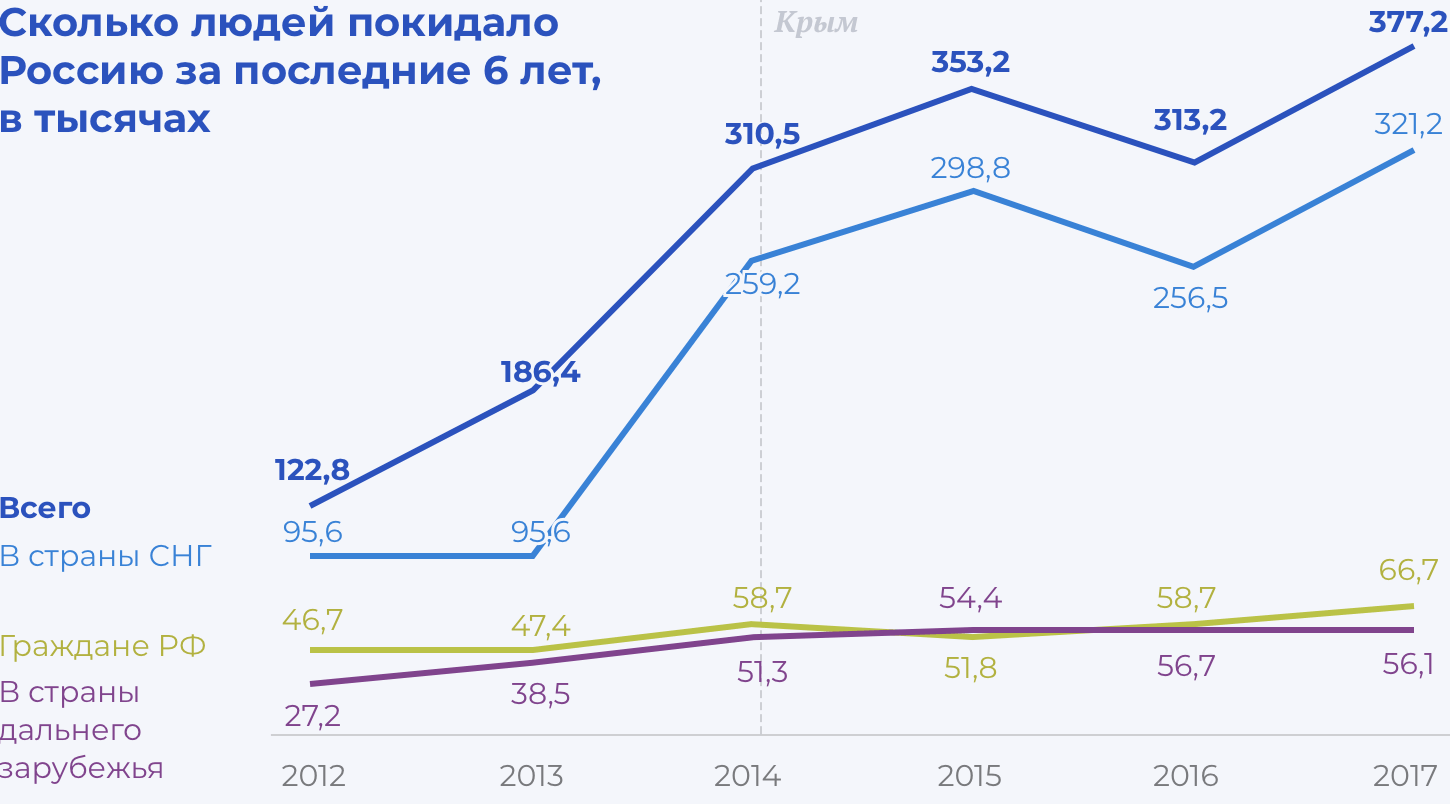
1.7 million
Man left Russia for the third term of the presidency of Vladimir Putin
Including at least 330 thousand citizens of the Russian Federation
According to Rosstat
Rosstat underestimates data at times
A comparison with the statistics of other countries by those who arrived from Russia shows: the data of Rosstat is incurred at times. Fresh data (the latter for 2017) are available only for some countries, and this is what they say. The US Department of Internal Security in 2017 counted 6 times more Russians who recorded by Rosstat. The most strongly from the numbers of Rosstat differ data on the Czech Republic and Hungary - 12 and 14 times. In general, in the 24 countries of the OECD, according to which foreign data for 2016 are available, 6 times more people left Russia than they say in Rosstat.
The Rosstat recognizes the fact of lack of emigrants: “Many are not withdrawn from registration and do not fall into the number of emigrants. These people according to the documents are listed in Russia, and actually live in other countries, ”said Svetlana Nikitina, head of the Department for Statistics of the Population and Health.
The discrepancy between the data of the Federal State Statistics Service and foreign sources
The number of those who have arrived
According to Rosstat, OECD, Eurostat and National Statistical Department for 2016
Rosstat data in comparison with foreign sources on average lower:
6 times
Huge Russian world
The concept of “Russian world” under Putin has turned into a political statement: the term often sounds in the speeches of the president and his environment - in particular, Patriarch Kirill, for example, in October 2018, at the World Congress of compatriots living abroad, the president once again mentioned the “huge Russian world”, which, in his expression, collected and united all those who were spiritually spiritually, who was spiritually spiritualized It is connected with Russia who feels a spiritual connection with our homeland, who considers themselves native speakers of the Russian language, culture, Russian history. ” The same “Russian world”, whose invasions are afraid in many countries, can have a completely different meaning: our study shows how large the number of people in the world who consider themselves Russians and Russians.
Russia is in third place in the world in the number of “losses” for 2017 - 10.6 million people who left the country live in the world. This is 7% of the total population of Russia in 2017, and 4% of the total number of emigrants from all countries such an estimate of the number of emigrants was presented by the UN in the International Migrant Stock collection.
The number of emigrants in the world in the country of origin, millions of people
According to the UN
By the number of emigrants in the world, Russia occupies
3rd place
For comparison - in the first place in the number of emigrants there is India with 16.6 million people, in the second Mexico with 12.9 million people. Russia overtakes the most densely populated country: China left 9.9 million people, the fifth is Bangladesh - 7.5 million emigrants. Russia and dysfunctional countries with a large number of forced migrants are overtaken: in the top ten, Syria, Pakistan and Ukraine fell.
If we compare Russia with developed countries, it turns out that the number of emigrants from the United States is three times less - 3 million people. From Germany and Great Britain - two times less - 4.2 million people and 4.9 million people. Emigrants from Japan around the world are even less - 831 thousand people.
The increase in the number of migrants is a world trend. Globalization has led to a sharp growth in emigrants from most countries of the world in recent decades.
How the number of emigrants in the world from different countries changes, millions of people
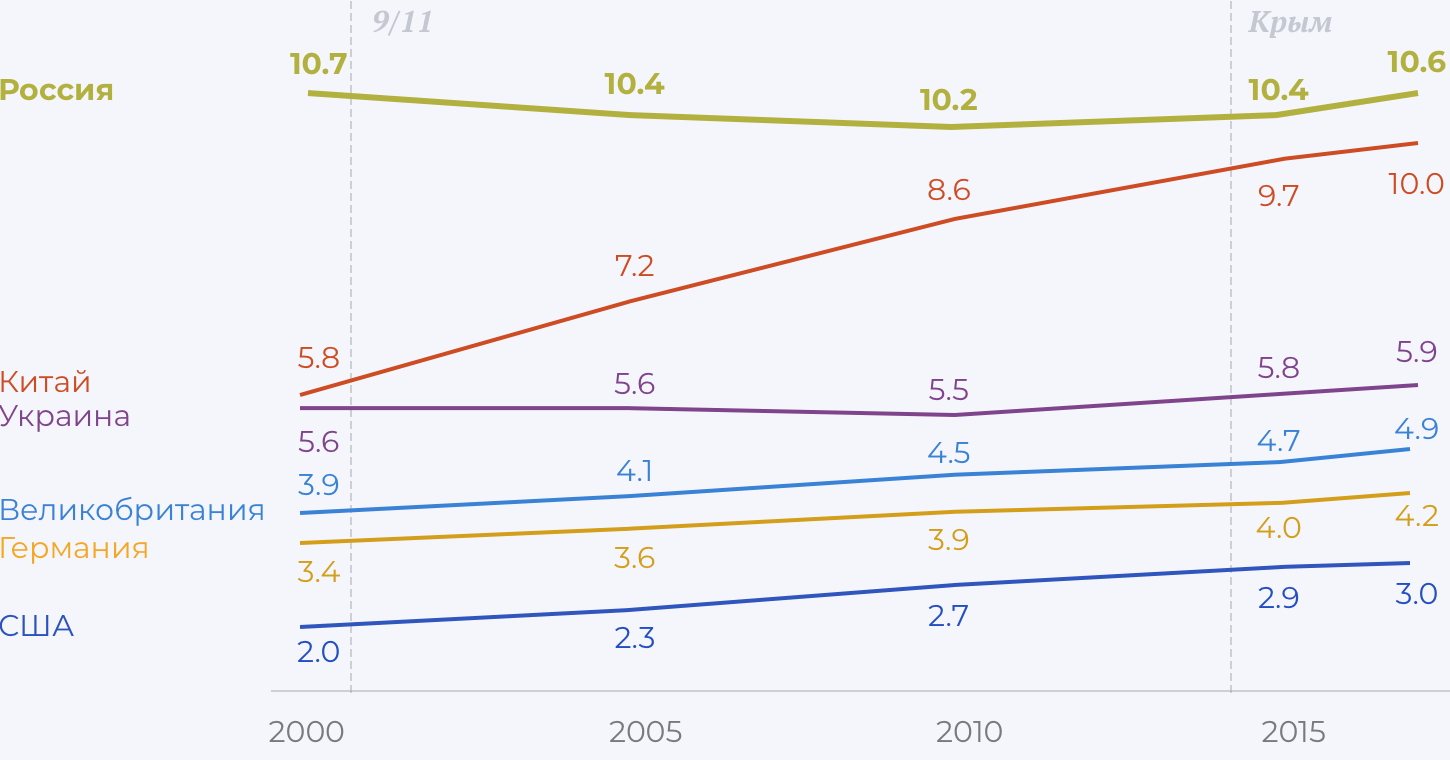
According to the UN
. For its calculations, the UN takes data from national censuses of the population, statistical studies of the number of international migrants in each country. In most countries, a person who was born abroad is equated with an international migrant. In those countries where there is no birthday, data on the country of citizenship were taken.
10.6 million
emigrants from Russia in the world for 2017
According to the UN
The scale of the “Russian world” is much larger than can be calculated. Those who themselves consider themselves to be Russians, but are no longer in citizenship, are lost from statistics. The descendants of the emigrants who have preserved national identity and connection with the language do not fall into it either. In the broad sense of the word in the world, there are much more Russians than the statistics of emigration are monitored. Their total number is unknown - there are numbers only in a number of countries.
In the USA, for example, in 2017, 2.6 million people declared their Russian origin. The origin here is the ethnicity of a person, his “roots”, the place of birth of his or ancestors. The number of such people has been reduced in recent years: in 2010 there were more - 2.9 million. The return tendency is observed in the issue of using the Russian language. If in 2010 the Russian indicated as the main language of communication at the house of 854 thousand people, then in 2017 - 936 thousand people. In 2018, the Russian language was in 9th place in the ranking of the most common languages of communication at home in the United States.
Another country, in demand by Russians - Germany - does not count how many people themselves consider themselves immigrants from Russia. The country calculated that out of 19 million citizens of foreign origin in 2017, it had 1.4 million people with Russian origin. This means that they, or their ancestors came to Germany from Russia-this includes both foreigners living in the country and those who have already received German citizenship.
As for the language, about 14% of German households speak Russian, for which the main language is foreign. According to the calculations of the “project”, an average of 1.1 million people in Germany speak houses mainly in Russian. Russian in Germany is in second place in the use of a house among foreign after Turkish.
The main reason for emigration is to search for the best living conditions
According to Rosstat, the most common motives for emigration are personal and family reasons: marriage, moving to children or parents. According to Rosstat, about 1 thousand Russian citizens left for work, according to Rosstat, and about 300 people to study. Less than a hundred citizens left to buy housing or get an inheritance.
Only a few, as the reason for the departure, indicated an exacerbation of the criminal situation and interethnic relations. In fact, there are many more such people. The Rosstat data leave the reasons for the emigration of those who are not the first time leaving Russia - their answer is taken into account in statistics as “returning to the previous place of residence”, and such are the majority.
Another picture is drawn by sociological surveys. In 2016, the Levada Center conducted a survey that it makes people think about emigration. Most chose the best living conditions and the arrangement of life abroad, and also complained about an unstable economic situation in Russia. The rest wanted to provide children with a worthy and reliable future, to leave due to the lack of protection from the arbitrariness of the authorities in Russia. A considerable percentage of people substantiated the desire to move the opportunity to receive better medical services abroad. Among other reasons are business conditions in Russia, the political situation and the lack of opportunities for professional growth.
What makes you think about emigration
According to Levada Center
33%
called the reason for moving a higher standard of living and salaries
15%
Social insecurity and instability in Russia, and 13% replied that they did not like the policy pursued by the authorities.
According to the VTsIOM survey in 2017
Russia loses young
Most emigrants of 2017 are people of working age, Rosstat data say. More often they choose far abroad countries than the CIS countries. Most of all they are attracted to China, South Korea and India. Older people for a calm old age choose Germany, Georgia and Israel.
Most of all, young Russians are prone to emigration. The largest number of emigrants are among people aged 20 to 34 years. At the same time, the youngest are chosen by the countries of the far abroad - people from 20 to 24 years old seek there. Those who for 30 are more often sent to the CIS countries.
Distribution of leaving Russians by age
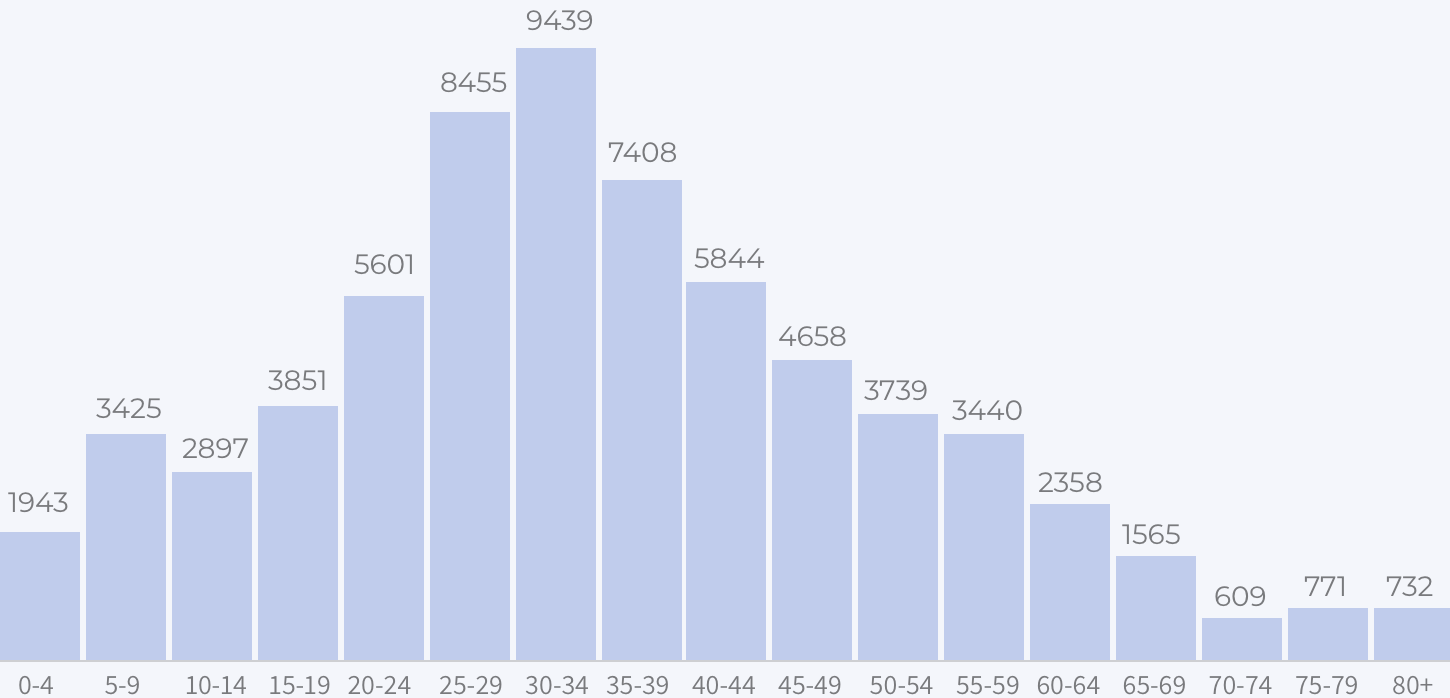
According to Rosstat
The most common age of emigration
30-34 years
Separately for Russian citizens, the situation is different. Most of those who have left from 25 to 34 years old. Half of those who leave Russia to the countries of the far abroad have not yet had time to start a family here and have never been married - this increases the chances of consolidation in another country.
More and more regions are involved in exile
Which regions are leaving more from
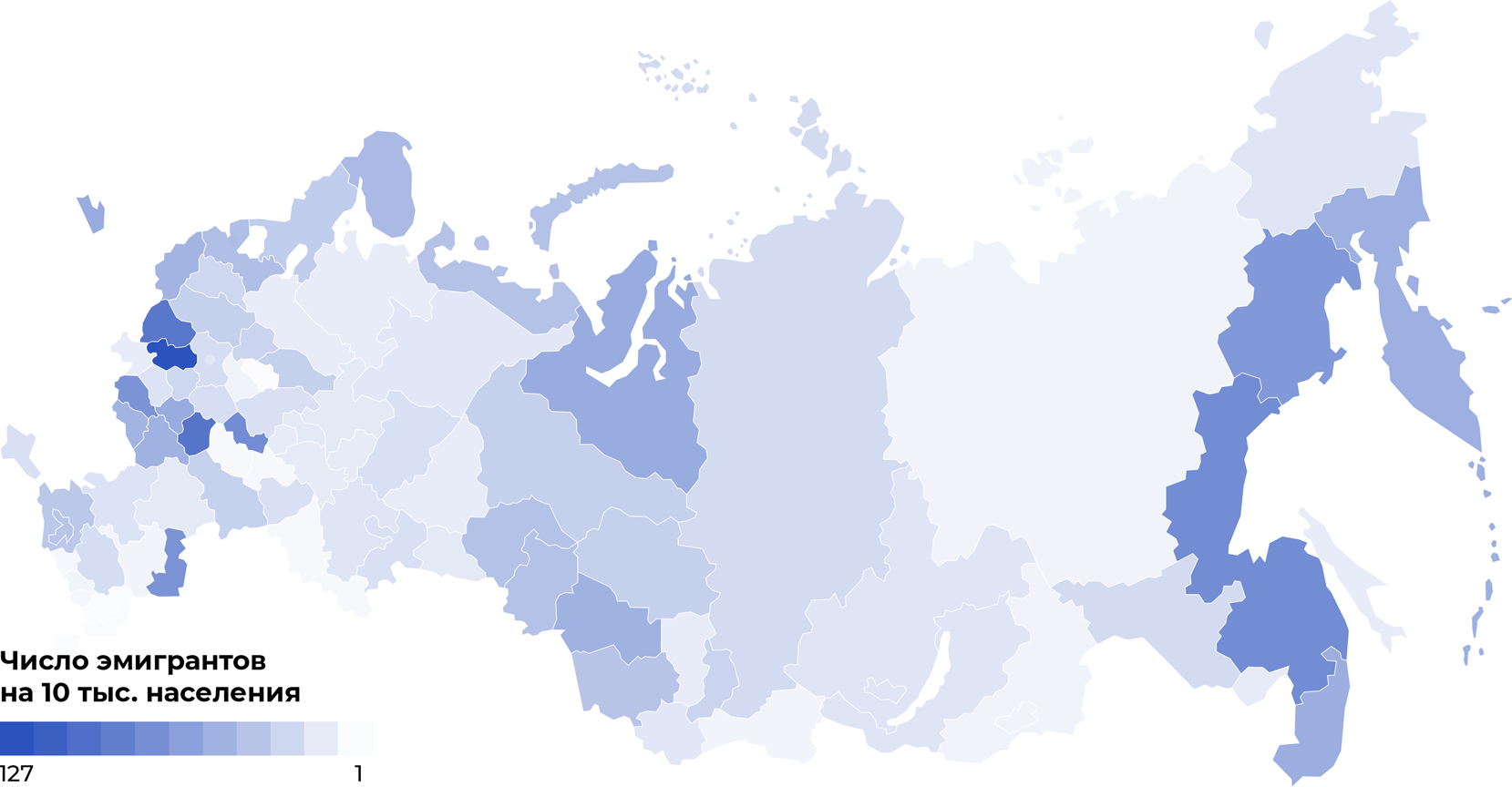
In recent years, more and more regions of Russia have been involved in emigration. Less prosperous regions are pulled to Moscow and regions with other states. If in 2001 the share of emigrants from Moscow and St. Petersburg in total was 26%, then in 2017 it dropped to 11%. The first places in terms of those who have traveled in terms of the population are occupied by the Kaluga, Tambov, Smolensk regions, the Khabarovsk Territory and the Republic of Mordovia - these are median regions in the ranking of Russian subjects for GRP.
The number of emigrants with higher education is growing
Gains pace and "brain leak." 22% of emigrants in 2017, the data on which Rosstat is known to Rosstat, have higher education, including academic degrees. From year to year, the number of emigrants with higher education is growing: from 17% in 2012 to 22% today. Before changing the methodology for accounting for emigrants Rosstat, the same increase was observed: from 28% in 2008 to 34% in 2011. Most labor migrants from the CIS countries have no higher education, and this influenced the fall of the share in the future.
Most of Russians with higher education in 2017 left for Germany, the USA, Israel and China. The same countries of the far abroad are leading in the number of emigrating from Russia with higher education over the past decade: in the first place in Germany, then the USA, Israel, China and Canada.
40% of emigrants who have been from Russia a year have higher education, according to the demograph in Julia Florinskaya. She notes that obtaining education is one of the leading channels of modern emigration: “After 2014, the labor market for specialists with Western education in Russia was very blown away. The number of representative offices of foreign companies was reduced, and there was nowhere to return. ”
How the number of those leaving with higher education is growing
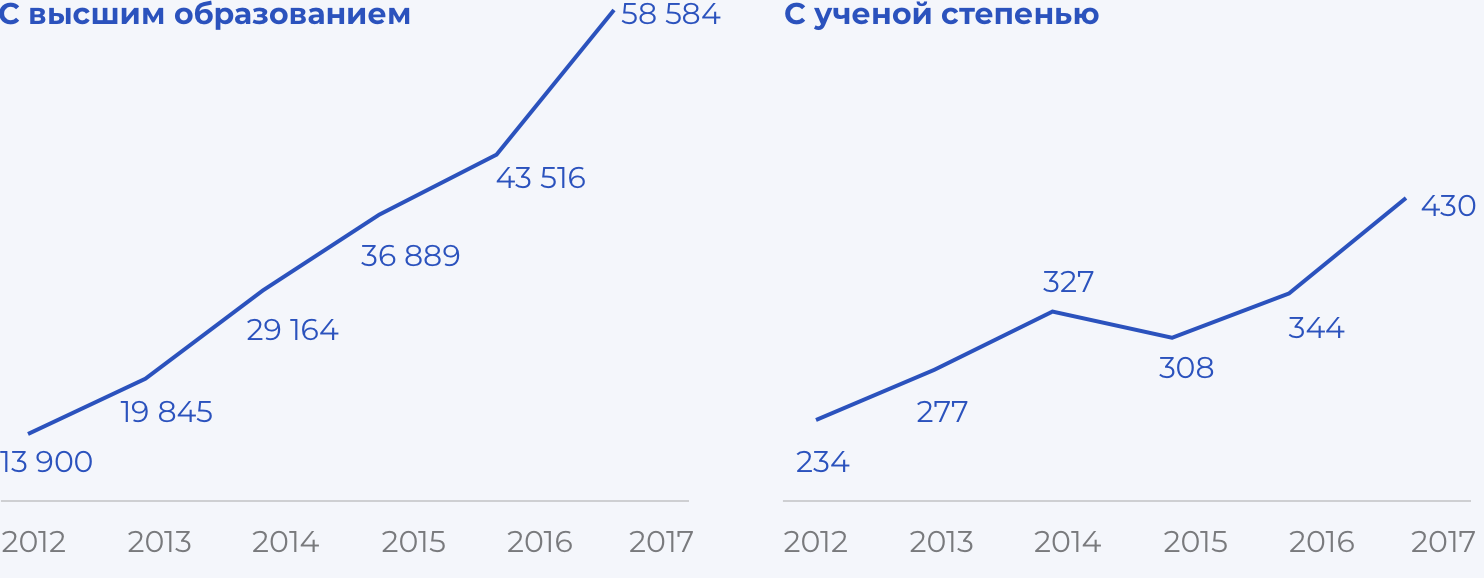
According to Rosstat
58 thousand
A person with higher education left Russia in 2017
On the example of the United States, it is clear that a large number of Russian emigrants strive in the most technological places of the country. California was chosen by 22% of Russian emigrants - this is almost 2 thousand people. In the area of the Bay of San Francisco, where the Silicon Valley is located, about 800 Russians settled on the main statistical units San Francisco-Oakland-Hayward, Ca and San Jose-Sunnyvale-Santa Clara, Ca. The total number of Russian emigrants in Bay Area is not available due to the blur of the boundaries of the region.
The number of applications for intellectual property, subjects abroad, also speaks of the intention of educated Russians in other countries. According to the World Intellectual Property Organization (WIPO), in 2016 the largest number of patent applications abroad - 1.2 thousand - Russians submitted to the United States. In second place is the European Patent Department, in the third - China.
"Golden visas" lure rich Russians abroad
Together with highly educated emigrants from Russia, people with great money leave. According to the Global Wealth Migration Review 2018 consulting company New World Wealth, Russia is in sixth place in the world in the world of dollar millionaires who left the country in 2017. According to them, about 3 thousand millionaires left Russia, mainly in the USA, Cyprus, Great Britain, Portugal and the Caribbean country. This number includes only those who really left the country - in the study they are considered people who have held more than six months in the new country (Russians, who only receive a residence permit in the second country, but do not actually move there are not taken into account here).
More than half of the ultra-godly people of Russia-a fortune of $ 50 million-has a second passport or dual citizenship, and 45% consider the option of emigration to another country forever, Knight Frank calculated. According to them, in 2017, the number of Russian requests for the purchase of real estate abroad doubled.
The idea of the scale of emigration of wealthy Russians is given by data on the issuance of “gold visas”, which provide for the receipt of citizenship or residence permit in exchange for investments in the country of arrival. По такой схеме Олег Дерипаска, который занимает 19-е место в списке 200 богатейших бизнесменов России, в 2017 году получил гражданство Кипра. В обмен на кипрский паспорт он должен был вложить как минимум €2 млн в недвижимость страны или €2,5 млн в местные компании или гособлигации. Общее число россиян, инвестирующих в зарубежные страны, вычислить нельзя, но есть данные по отдельным странам.
45%
ультра-богатых людей России рассматривают вариант эмиграции в другую страну
По данным Knight Frank
Где россияне оформляют золотые визы
США: 71 виза в 2017 году, 7 место среди получателейВ США россияне заняли 7 место по количеству получателей американской инвестиционной визы EB-5 в 2017 году. Их число увеличивается с каждым годом: в 2016 году такую визу получил 51 человек, а в 2017 году — уже 71 человек. Впервые россияне получили EB-5 в 2008 году, тогда их было всего шестеро.
Греция: 450 виз в 2017 году, 2 место среди получателейГреция предлагает вид на жительство в обмен на инвестиции в страну: в бизнес или недвижимость. В 2017 году россияне оказались на втором месте после китайцев по количеству выданных в Греции видов на жительство в обмен на инвестиции. Всего — 395 человек. Их число растет: только за январь—сентябрь 2018 года 450 россиян получили «золотую визу» Греции.
Великобритания: 48 виз в 2017 году, 2 место среди получателей
В Великобритании действует инвестиционная виза Tier-1, которой пользовался, в частности, Роман Абрамович. С 2008 по 2017 годы россияне получили 807 виз Tier-1 (Investor) и оказались на втором месте в списке всех стран — выше только Китай. С годами число получателей Tier-1 росло: если в 2008 году ее получили всего 5 человек, то в самом пиковом 2014 году — 230 человек. С 2015 года требования к соискателям виз усложнились: выросла сумма необходимых инвестиций и участились финансовые проверки. В итоге число получателей визы в 2015 году резко сократилось. Несмотря на это, рост после падения медленно восстанавливался: с 37 человек в 2016 году до 48 в 2017 году.
В первоначальной версии статьи было сказано, что Великобритания в декабре 2018 года приостановила выдачу виз инвестора до 2019 года. На самом деле, власти Великобритании не приостановили программу по выдаче инвестиционных виз, несмотря на обещания МВД страны.
Латвия: 7417 виз до 2018 года, 1 место среди получателей
В Латвии на 1 января 2018 года насчитывается около 7 тысяч россиян с видом на жительство, полученным в обмен на инвестиции. Эта цифра включает инвесторов всех типов — тех, кто вложился в бизнес, недвижимость, банки, или государственные ценные бумаги, а также членов их семей. В рейтинге стран-получателей латвийского ВНЖ в обмен на инвестиции Россия на первом месте. Одним из первых россиян, которые в 2010 году получили вид на жительство страны в обмен на инвестиции, стал Аркадий Ротенберг,вложив деньги в латвийский банк. ВНЖ Ротенберга действовал до 2013 года.
Португалия: 232 виз с 2012 по 2018 год, 5 место среди получателей Вид на жительство в Португалии в обмен на инвестиции с 2012 года по октябрь 2018 года получили 232 россиянина — это пятое место в рейтинге всех стран.
Испания: 834 визы с 2013 по 2017 год, 2 место среди получателейРоссия также попала на второе место в рейтинге получателей вида на жительство Испании в обмен на инвестиции в недвижимость: с 2013 по 2017 годы россиянам выдано 834 «золотые визы», что составляет 27% от всех получателей.
По данным миграционных служб и ведомств стран Государственного департамента США, Хоум-офиса Великобритании, Министерства миграционной политики Греции, Министерства экономики Испании, Министерства иностранных дел Португалии, Министерства внутренних дел Латвии.
Россияне в поисках убежища
Бегут не только благополучные россияне. Еще одно проявление эмиграции — запросы убежища в других странах из-за проблем на родине. Демограф Юлия Флоринская объясняет, что сейчас из-за политической ситуации в число тех, кто запрашивает убежище, стали попадать оппозиционеры, находящиеся под уголовным преследованием, и люди нетрадиционной сексуальной ориентации. Всего в 2017 году в 28 стран Евросоюза поступило 12,7 тыс. запросов на убежище от россиян. На первом месте по количеству заявлений — Германия. В пятерке стран — Франция, Польша, Австрия и Финляндия.
Россияне ищут убежища не только в Европе — еще 2,7 тыс. заявлений от россиян в 2017 году поступило в США. Если общие данные по странам Евросоюза сокращаются с 2014 года, то убежище в США с каждым годом ищут все больше россиян. В 2000 году было зафиксировано 856 таких человек, затем их число превысило тысячу в 2014 году, а уже в 2016 году возросло еще в два раза.
Топ-10 стран Евросоюза, в которых россияне просили убежище в 2017 году
По данным Евростата
Как росло количество запросов на убежище в США от россиян
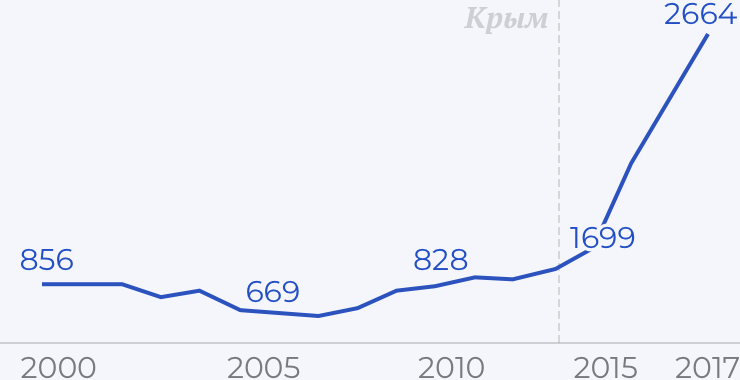
Россияне чаще всего искали информацию об эмиграции в 2014 и 2018 годах
Запросы «как эмигрировать из России» от россиян
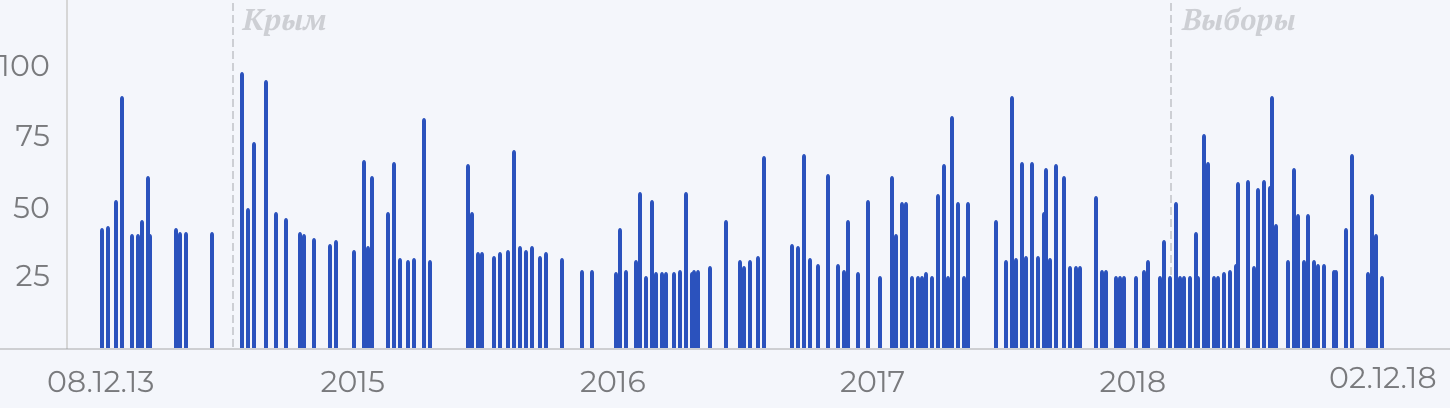
Сколько россиян потеряет страна в 2018 году, предугадывать рано. И все же эмиграционные настроения россиян в 2018 году уже проявились: их можно проследить по статистике запросов об эмиграции в поисковых системах. Например, пик запросов «как эмигрировать из России» за последние пять лет пришелся на зиму 2014 года — период украинского кризиса, свидетельствуют данные Google Trends. Еще один скачок относится к марту 2018 года, месяцу когда Путин победил на президентских выборах в четвертый раз.