
Translated material
Theory of small affairs
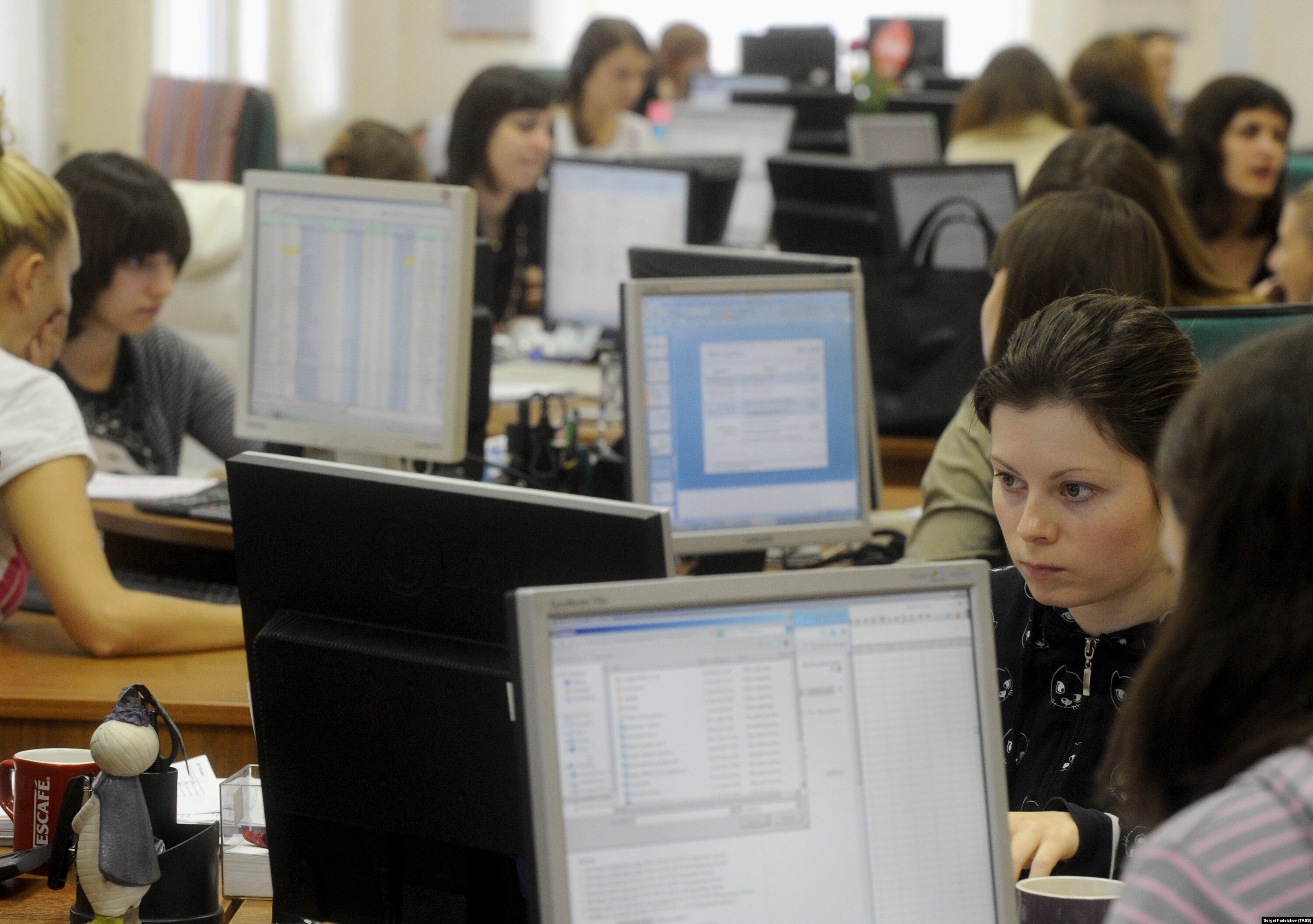
Will Russia save Russia from below?
- Russian life is surprising by contrast: an authoritarian rollback and the decay of political institutions are combined with the "modernization of everyday life."
- New modern life forms, new market niches and services appear in the country.
- Civil society is gradually being formed, people are united around political and social initiatives.
- In order for the sprouts of the new to turn into public institutions, it takes time.
- The state, lying above all this, like a concrete slab, is also subject to pressure from the lower modernization.
Sergey Medvedev: Today I want to talk about one of the types of schizophrenia of Russian life, when you are sitting with a cup of Latte in some fashionable cafe, all so fashionable around, there is city life around (as Moscow has become prettier in Sergey Sobyanin!), And at the same time the Rosguard car drives around, preparing to disperse the next rally of the opposition. And the question arises - how does this all this superficial or lower modern modernization of Russian life with the very deep archaic mechanisms of the Russian state combine?
Our guest is Maria Volkenstein , General Director of the Research Company Validata , and Alexander Rubtsov , head of the Center for the Analysis of the ideological processes of the Institute of Philosophy of the Russian Academy of Sciences .
Video version of the program
Do you have a sensation of a schizophrenic state? You read what is happening regarding the tightening of the regime, and on the other hand, the absolutely relaxed life of the European metropolis, where there are advanced digital services, where everyone is engaged in financial planning. How can you combine these two things in your head?
I notice the perception of progress, which is easy, like a knife in oil, enters into everyday life of people
Maria Volkenshtein: I do not particularly notice European relaxation, but I notice the perception of progress, which is easy, like a knife in oil, enters into everyday life of people. This applies to all digital technologies, and attitude to work, and to the family, and to everything else. All this changes gradually and quite easy.
But there is a sphere to which people relate irrationally - this is a state. That's how much I work (and this is for more than 25 years), there is a feeling that you are talking to people, and they have a rational attitude to business, they somehow correctly and easily perceive their reality surrounding them. But when it comes to the state, something happens to them. They have something that in psychology is a "delay" and such a block before the eyes. They begin to speak in an absolutely not logical way and, most importantly, from completely different positions. One position is to say that "everything is terrible, the power is monstrous, they treat us as a cattle," and so on. On the other hand, they speak of this state as if it were perfect. This is a strange phenomenon. It in a very strange way has grown from Soviet ideology and adaptability to it. We adapt very well, we know how to get around any obstacle to the path.
Sergey Medvedev: There is a very important thing here that Yuri Levada noted at the time - this is an incredible adaptation and double -minded. This is the heritage of the Soviet or generally traditional Russian lifestyle, when there is a giant Leviathan, and a person prays to the state, but at the same time equips his personal affairs.
Alexander Rubtsov: The question of whether the lower modernization at the level of everyday practices can somehow influence the formation of large modernized institutions of the authorities, whether it can lead to the transformation of state institutions. The society below is transformed, but the state in its political hypostasis remains authoritarian. We always say that this does not lead to the transformation of the state, to democracy, to genuine liberalism. But if there were no this grassroots modernization, where would we be now? This is some stopper that does not give society, including the authorities, to roll back. If it were not for this grassroots modernization, then with the current appetites of authoritarianism, we would live in a completely different society. Former, maybe they did not advance very much, but we are unlikely to be back ... And he somehow moves forward. If we look from the space, we will see that there is a trend, there are kickbacks, but they are somehow blocked at different levels somehow. In history there is macothendation.
Sergey Medvedev: Maria, in your article you write that the shifts that occur in demography, in the family, in relation to children, to education, to young people, to finances are cumulative. Do they create a certain network of possible? Or is it a very special capsulated sphere - is Russian history rolling its own way?
Maria Volkenstein: This is a thin and soft thing. A very important story is that people have learned to be organized in groups, thanks to the Internet, social networks. This is a new phenomenon.
Sergey Medvedev: This is one of the classical signs of modernization - the transition from the community to society, when a person, like an atom, has multivalence, and he begins to exist in different social strata.
Maria Volkenstein: The unification in groups in itself, of course, contributes to the emergence of civil society. It is, but this thing is soft, and she needs time to reach something.
Sergey Medvedev: I have an example of China before my eyes. How many research we read! Here is a lower -based democracy in the Chinese village, so they choose all there ... so what? China is now with all its iPhones, nets, with its own sovereign Internet, a complete combatant step goes to authoritarianism, preserving all its traditional systems with all this superficial grassroots modernization. Will it be the same in Russia?
Maria Volkenstein: Wolly watered with water, and it grows. And if you smear it properly on it, then it will not grow. This is the problem.
Alexander Rubtsov: With the Chinese, we interact very tightly about modernization. There are a lot of economy and Western techniques borrowed. These are reports with a huge zifir, including about us. Everything is clearly designed for them, they work wonderful with this, they are not puzzled by any extra ideology. But there it is very clearly visible, for example, lower liberalism at the level of how entrepreneurship is arranged. We have to swim on their backs before for 100 years. When I tell them how technical regulation works with us, their narrow eyes become round! They do not believe, laugh! There you can open an enterprise several times in a week, which you will push you for months.
Sergey Medvedev: Despite the ideology, on party dictatorship, control and police observation, are they much more modernized at a purely institutional level?
Alexander Rubtsov: Yes. The lower modernization, at least in this, and here they are very ahead of us. There are a lot of throwing in our history, and we turn into our own opposite from the point of view of attitude to the state, atomization or, conversely, collectivism, attitude to ideology. All the time it seems to us that there are some archetypes, but in fact historical shifts occur here. For example, the pre -revolutionary communal collectivism was used in the Soviet model, but brought to the full limit, to such a state that the phrase "I do not want to be a member of any collective" is a Soviet statement. It is clear that the team, on the one hand, is a large and warm body to which a weak person wants to lean. But when this team climbs into your soul, in your pocket, in the brain, under the blanket, and all this is fraught with the loss of freedom, or even life ...
Sergey Medvedev: There is a reaction that we see now.
Alexander Rubtsov: Yes. And this Soviet atomization arises, collectivism is rejected. The same thing happens with ideology. The ideologism of Russian society in the Soviet model was brought to such a limit that the same phrase "with the word" ideology "my hand itself is known where" is also a Soviet statement. Ideological idiosyncrazia is also a product of this hypertrophy.
And the same with the state. This term of the party and the state is arranged in a special way. He hypertrophies the state, but at the same time destroys it as an amateur institution. State institutions turn into controlled prostheses that themselves cannot. And when the party leaves, it seems to us that now there will be emancipation of the state from the party, but we find that the knight has left and there is an empty armor. The state is destroyed, we quickly skip in the 90s, and immediately it turns out that we are again yearning for ideology, by ideology. Again, we want an elbow and shoulder against the enemy, we want some rally (we are a well-known part of the public).
Sergey Medvedev: Russia returns to its circles.
Alexander Rubtsov: And these throwing of society turn into contrast. Last year, the studies of Misha Dmitriev showed that everything unfolds again, the control locus changes from the external to the internal one. People do not believe in the state, they make a large bet on their own strengths and opportunities.
Studies show catastrophic growth in the consciousness of the problem of justice. Such a reverent attitude to justice and to social injustice in our time sways to a much greater extent than before. Everyone experienced this injustice, but somehow it was more calm to it until recently. It was last year that more acute processes began, just cascading changes. This, it seems to me, is connected precisely with the fact that the authorities, when something does, it would seem, does it with its monarch will, but in fact it also reacts freely or involuntarily to changing moods (though late).
Studies show catastrophic growth in the consciousness of the problem of justice
Why did the authorities still have more or less calmly bypass this glaring problem? Because social inequality is 15 times more than somewhere in the world. It seems that a person has some kind of tank for justice, and it should be filled, and what justice it is-it does not matter. There is a victory over global injustice: let's say, the country was offended, insulted, and we are now restoring this justice - we get up from the knees, the Americans are afraid of us and so on.
Sergey Medvedev: And it does not matter that the neighbor was taken away from a business, and a person is tortured in the police. The main thing is that we were responsible for Kosovo.
Alexander Rubtsov: Yes! With this justice, we pushed this injustice somewhere to the background. But according to the same studies, we see that the attitude to foreign policy is already changing, which displaces domestic problems: people are not at all up to it.
Maria Volkenstein: It seems to me that foreign policy is extremely important. And there it’s not at all about justice, but about the fact that a person, especially when he feels somewhat humiliated, transfers his self -esteem to the state, wants to draw it from him. And in this sense it works.
And about justice - rather the opposite. I would say that before my eyes the attitude to the rich improves, and not worsen. We started with the fact that people should be approximately the same, and when someone crawls out and starts to earn a lot, it is not good, we must give him a hat. But now this is not so: people are ready to perceive entrepreneurs normally.
Sergey Medvedev: Drivers seemed to become more polite to each other. They began to treat other people's wealth more loyal. But where will these sprouts lead if a concrete slab lies above all this?
Maria Volkenstein: But it depends on how exactly one should adapt to this life. A person in this sense, especially the Russian and in our conditions, knows that he needs to live better than financially, more freely, more out of place. And if he feels that the political sphere is closed to him, he will not get there. Very small groups of the population will always climb, which are and will probably somehow develop. This sprout takes time so that they turn into institutes.
Before my eyes, such elements of social activity began, surprisingly, in schools. In the 2000s, we had a study on where the NGOs came from. Many NPOs have grown out of all parental committees, since children are a very close and important sphere for people. They began to unite to protect their children, and from there such sprouts began to grow. It just takes time to make it institutions.
Sergey Medvedev: What other modernization zones are there?
Maria Volkenstein: School and attitude to children are a very important story. Attitude to work. In Soviet times, the idea was that you have to find the perfect place, work in it and not go anywhere, maybe only to Moscow. Now everything is wrong. Even if you live in some region, you have a lot of different opportunities in order to change work, and you begin to perceive work as another step and not have planning forever. This is a rather important modernization. It gives a person flexibility, an idea of diversity, another attitude to self -education, to what skills he needs to learn. This is an important sprout in order for society to change.
Sergey Medvedev: Can this result in something?
Maria Volkenstein: This is poured into another type of social communication. This is the most important story - how people begin to communicate, their boundaries disappear. They communicate in social networks, and this is all digital, on the phone and right in front of you. You communicate with the whole world. You are slowly playing games, you learn English, which is international. You are watching TV shows. The country is fenced off from the world and says: “We are in the ring of enemies,” and at the same time a much greater expansion of human life occurs from below. I'm not talking about tourism ...
Alexander Rubtsov: Here, sometimes it is much more interesting what happens in place without any tourism. A year and a half ago, we made a report by the forces of the free historical society and the Committee of Civil Initiatives . There are interesting sociological phenomena: a second story arises. People distance from ideological historicism, which imposes power through the TV and so on, but interest in local history is growing - family, my place, environment, village, city, region. They do not particularly conflict with an official history. I believe that this can be called lower modernization, because it is a movement towards privacy, distance from a centralized state.
Sergey Medvedev: Motion away from the state ... We go on a very important topic: modernization now happens in the areas that the state leaves. This is a sphere of privacy, locality, local initiatives. In fact, it turns out that where the state weakened its presence, and these sprouts break through.
Alexander Rubtsov: As for historical consciousness, it did not weaken at all: on the contrary, the whole ideology is fixed on history, and this official historical narrative is pushed.
But I am interested in something else here. When we say "state", for us it is already a priori something nasty modernization. Moreover, we believe that this is a monolithic plate that lies, and neither there and here. I have the impression that this is not entirely true: this monolithic plate gives cracks. Someone supports her all the time, pushes somewhere. Power sometimes itself is forced to do something with it, because the so-called "Medvedev modernization" also arises for a reason. We say: well, all this ended with scrapers, traditions and so on ... But, excuse me, we again changed his ties. We again returned to the same modernization. Just in order not to repeat the words, we have euphemism - “digitalization”, “artificial intelligence”, “breakthroughs” ... This is the same modernization, it just returned in a new guise.
And this plate is also forced to react. If she does not respond to these lower movements, then I do not know what will happen to her. There will definitely be nothing good. In principle, people feel it, but, however, with some delay.
Sergey Medvedev: Maybe all this colos, a new urbanization, all these civilian initiatives are a kind of thunderbate, do they give up the possibility of further political reform? And in the future, this Putin state will continue to exist, it will be 2024, a change in the constitution, war with the outside world, and people will do their daily affairs, and two Russia will exist in parallel.
Maria Volkenstein: There are two positions. One says that the worse the better, the faster the changes will occur. And the other says: no, the better, the better. It seems to me that the more people have the opportunity to live relatively freely, satisfying their intellectual, sincere and what needs, the better for society. And if they become more embittered-this is still a big question whether someone will become better from this, and what can come from these changes.
Sergey Medvedev: Do not flatter yourself that all these new forms of lower life will somehow change political institutions.
In Russia there is a very stable idea that changes occur on top
Maria Volkenstein: Of course, they cannot change them. В России есть очень устойчивое представление о том, что изменения происходят сверху. И если вглядеться, то это не только народ, который ждет хорошего царя: и в нашем кругу это так. И как это может меняться? Происходящие изменения очень важны, но чтобы они перешли в политическую сферу, им нужно очень много времени. Это такие зеленые росточки. Но росточек умеет и пролезать сквозь трещинки.
Александр Рубцов: И может расколоть эту плиту.
Сергей Медведев: Насколько возможен сценарий Франко? Испания была под этой плитой Франко несколько десятилетий, в течение которых вчетверо вырос ВВП на душу населения, сформировалось достаточно зрелое гражданское общество. И при снесении политического режима буквально за несколько лет Испания просто выстрелила в сферу демократии и либерализма. Is such a scenario possible? Все это вызревает, вызревает, и как только уйдет отмирающая верхушка...
Александр Рубцов: Есть большие процессы: что-то происходит с сознанием людей, что-то происходит с этим государством наверху. Как монолит, он сверху модернизирует, хочет или не хочет, но делает это под давлением снизу. Но есть другой тип процессов, который гораздо ближе к нашей ситуации, – это бифуркационная логика. Это черный ящик, в котором малый сигнал на входе дает непредсказуемо сильные эффекты на выходе, и неизвестно, что там происходит внутри. Может быть все, что угодно.
Когда мы говорим о том, что у нас недооценивают низовой подпор модернизации снизу, который не дает отката, - это примерно так же, как критикуют системных либералов, говорят: "Ну, вы же ничего не сделали, вы же не привели к демократии! Больше того, вы сделали многое для укрепления этого авторитаризма!" Но никто не спрашивает себя: а где бы мы сейчас были, если бы их не было?
Почему все это происходит таким странным образом? Это как раз вопрос бифуркационной логики, а она предполагает немножко другую ответственность и другую мораль. У нас очень модно рассуждать о том, что этот авторитаризм был порожден ельцинизмом, 1993 годом, 1996-м, потом 2000-м… И главное, что здесь не надо никакой смелости – валить все на не всегда трезвого Бориса Николаевича. Гораздо сложнее остановиться на авторитаризме Ельцина и анализировать все эти бифуркационные развилки: что получилось потом, как формировался уже нынешний авторитаризм, этот персоналистский режим. Тут нужна другая ответственность.
Сергей Медведев: А нынешний персоналистский режим реформируем, или только его снесение даст дорогу этому молодому и зеленому?
Александр Рубцов: Здесь может произойти все, что угодно. Может быть очень много разных сценариев, и все их надо держать в поле зрения. Эти метания от традиционализма к идеологии модернизации тоже происходят не просто так. Это тот же самый режим. И сейчас они кинулись на регулятивную гильотину. Это то, что было в начале 2000-х – стратегия дерегулирования, реформы технического регулирования, административная реформа. И теперь они опять возвращаются к этому, причем даже с еще более резкими заявлениями. Эти колебания не случайны и не бесполезны.
Сергей Медведев: Я хочу поговорить о том, что в вашем исследовании Лев Гудков называет амальгамным человеком, амальгамным сознанием. Один и тот же человек может вести вполне модернизационную стратегию в отношении финансов своей семьи, кредитных карт, иметь возможность пользоваться различными финансовыми инструментами, может быть, даже купить и продать биткоин, но он выключает свое сознание и логику, когда речь заходит о государстве, о 9 мая, о памяти, об истории: "у нас была великая эпоха"… Это нечто типично российское?
Мария Волькенштейн: Здесь есть российская специфика, связанная с историей. Странная советская идеология, особенно времен застоя, сейчас имеет хвост. Она как бы была идеологией, и в то же время ее уже не было, от нее уже отстраивались. Двоемыслие росло бурным цветом.
Сергей Медведев: Сознание человека многослойно.
Мария Волькенштейн: Оно всегда многослойно, человек всегда спокойно противоречит сам себе. Он устроен вполне противоречивым образом. Но вот иметь такой специальный закрытый блок, который гораздо меньше подвержен давлению, как отношение к государству… Это поражает воображение, потому что представление о том, что государство должно брать на себя все социальные, правоохранительные, правовые, этические и так далее функции равно неверию в то, что оно может это сделать! Это неким странным способом уживается в одном сознании.
Александр Рубцов: Это классический постмодерн. Это вполне нормальное состояние для такого постсовременного сознания. Скорее было бы странно, если бы было иначе.
Сергей Медведев: И современные медийные технологии позволяют это делать, то есть, с одной стороны, мы ими пользуемся как абсолютно модернизованные люди, а с другой стороны, они транслируют совершенно архаичные вещи: силовой блок, все эти традиционные модели русской истории…
Александр Рубцов: Это тоже уже начинает уходить. Здесь тоже срабатывают перевертыши.
Сергей Медведев: Во Франции на протяжении многих десятилетий, практически столетий, литераторы собирались в кафе "Прокоп" напротив "Комеди Франсез" и обсуждали политические процессы в обществе. Прошло какое-то количество времени, и случилась Великая Французская революция. Сработала низовая модернизация.